




A Comprehensive Analysis of Salt Fog Corrosion Testing: Standards, Methodologies, and Technological Implementation
Introduction to Accelerated Corrosion Testing
The degradation of materials and components due to atmospheric corrosion represents a significant economic and safety challenge across global manufacturing sectors. Among the various corrosive environments, saline atmospheres—prevalent in coastal regions and exacerbated by road de-icing salts—are particularly aggressive. To predict long-term performance and material suitability, industry relies on standardized accelerated corrosion tests. The salt fog (or salt spray) test stands as the most established and widely referenced methodology for this purpose. This procedure subjects specimens to a controlled, corrosive mist of sodium chloride solution, compressing years of environmental exposure into a manageable laboratory timeframe. The results provide critical, comparative data on the relative corrosion resistance of metallic materials, protective coatings, and surface treatments. The validity and reproducibility of these tests are wholly dependent on strict adherence to published international standards and the precision of the testing apparatus employed.
The Electrochemical Foundations of Salt Fog Corrosion
The corrosive mechanism enacted within a salt fog chamber is fundamentally electrochemical. The deposited salt solution film on the test specimen acts as an electrolyte, facilitating the flow of ions and enabling oxidation (anodic) and reduction (cathodic) reactions. The primary anodic reaction is the dissolution of the base metal (e.g., Fe → Fe²⁺ + 2e⁻). The corresponding cathodic reaction is typically oxygen reduction (O₂ + 2H₂O + 4e⁻ → 4OH⁻). The presence of chloride ions (Cl⁻) is particularly deleterious, as they penetrate passive oxide layers, promote localized pitting, and increase the electrolyte’s conductivity, thereby accelerating the corrosion rate. The test does not precisely replicate natural weathering, which involves wet-dry cycles, UV radiation, and pollutant variations. Instead, it provides a severe, constant environment that highlights inherent weaknesses in material systems and manufacturing processes, such as coating porosity, poor adhesion, inadequate sealing, or galvanic incompatibility between dissimilar metals.
Deconstructing Prevalent International Salt Fog Test Standards
A multitude of standards govern salt fog testing, each tailored for specific industries, materials, or evaluation criteria. Understanding their nuances is paramount for test specification and result interpretation.
ASTM B117 – Standard Practice for Operating Salt Spray (Fog) Apparatus: This American standard, established in 1939, is the historical benchmark. It specifies a continuous, uninterrupted spray of a 5% ± 1% sodium chloride solution at a pH of 6.5 to 7.2 and a chamber temperature maintained at 35°C ± 2°C. It is a general-purpose test primarily used for comparative ranking. The standard meticulously details chamber construction, solution preparation, collection rate (1.0 to 2.0 ml/80cm²/hour), and conditioning procedures, but it does not prescribe exposure durations or pass/fail criteria, which are defined by the referencing product specification.
ISO 9227 – Corrosion tests in artificial atmospheres – Salt spray tests: This international standard from the International Organization for Standardization encompasses several test methods:
- Neutral Salt Spray (NSS) Test: Essentially equivalent to ASTM B117, using a 5% NaCl solution at neutral pH and 35°C.
- Acetic Acid Salt Spray (AASS) Test: The salt solution is acidified to pH 3.1-3.3 using glacial acetic acid. This creates a more aggressive environment, particularly effective for testing decorative coatings like nickel-chromium or copper-nickel-chromium.
- Copper-Accelerated Acetic Acid Salt Spray (CASS) Test: Further acceleration is achieved by adding 0.26 g/L of copper(II) chloride dihydrate to the acidified solution, maintained at 50°C ± 2°C. This is the most severe of the three, commonly used for rapid testing of anodized aluminum, automotive trim, and similar components.
IEC 60068-2-11 – Environmental testing – Part 2-11: Tests – Test Ka: Salt mist: This standard from the International Electrotechnical Commission is critical for the electrical and electronics industries. It aligns closely with ISO 9227 NSS but includes specific guidance for testing electronic assemblies, electrical enclosures, and insulating materials. It emphasizes the inspection for functional degradation, not merely cosmetic corrosion.
JIS Z 2371 – Methods of salt spray testing: The Japanese Industrial Standard is broadly similar to ISO 9227 and is widely referenced across Asia-Pacific markets, particularly for automotive and electronics components.
Industry-Specific Derivations: Many sectors publish their own tailored standards that reference these core methods. For instance, automotive manufacturers (e.g., GM, Ford, Chrysler) have proprietary test specifications (like GM 4298P or Ford CETP 00.00-L-467) that often prescribe cyclic corrosion tests incorporating salt fog, humidity, and drying phases to better simulate real-world service conditions.
Instrumentation for Precision: The LISUN YWX/Q-010X Salt Spray Test Chamber
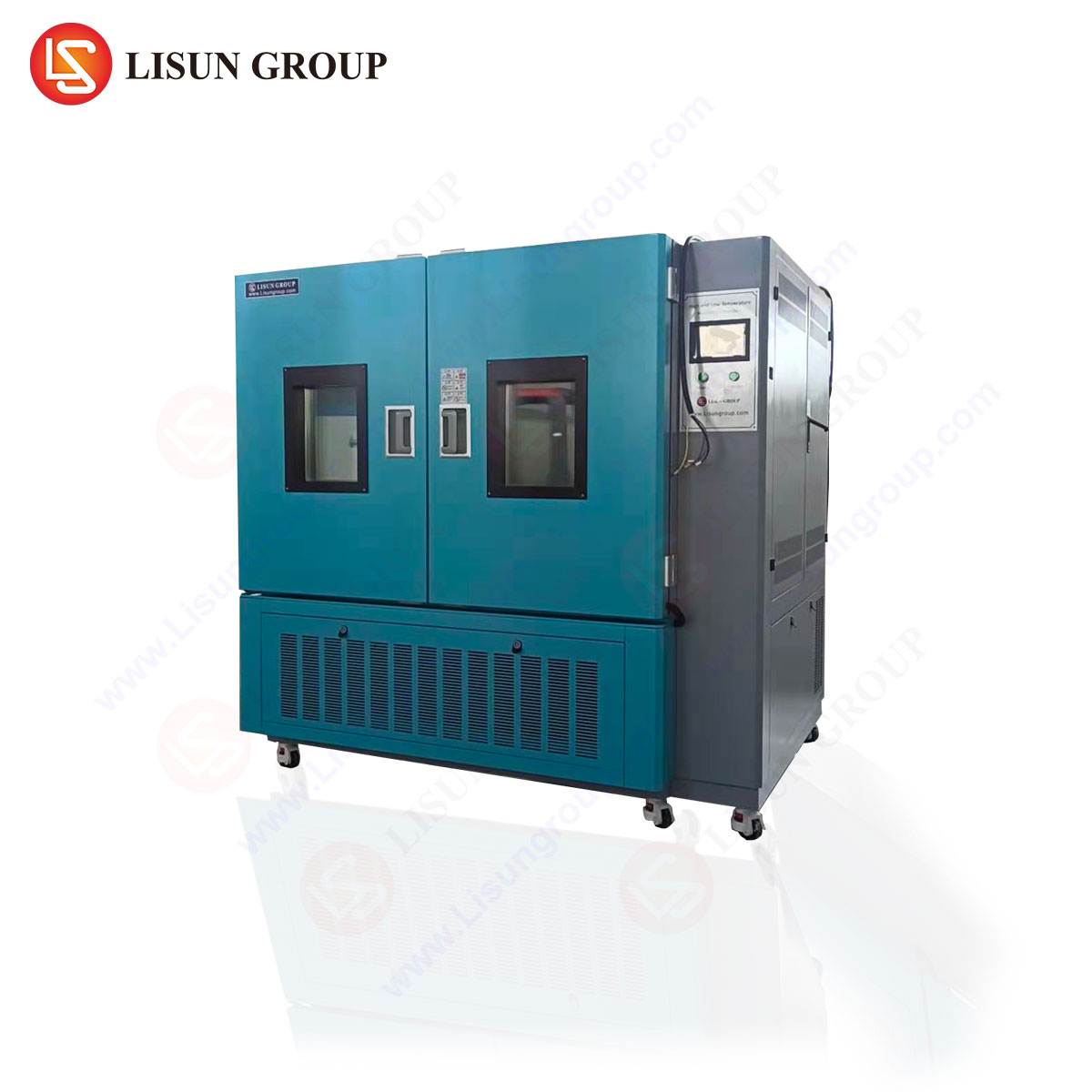
The integrity of any standardized test is contingent upon the precision and reliability of the equipment. The LISUN YWX/Q-010X Salt Spray Test Chamber exemplifies the technological implementation required to meet rigorous international standards. This apparatus is engineered to deliver consistent, repeatable test conditions essential for valid comparative analysis.
Core Testing Principle and Chamber Design: The YWX/Q-010X operates on the principle of pressurized atomization. A compressed and purified air supply is bubbled through a heated saturator tower to achieve near 100% relative humidity and thermal equilibrium. This conditioned air is then forced through a specialized nozzle, drawing the prepared salt solution from a reservoir and creating a fine, settled fog within the test workspace. The chamber is constructed from corrosion-resistant, rigid polymer materials, featuring a triple-wall insulated design for thermal stability. A transparent, impact-resistant lid allows for observation without interrupting the test environment.
Critical Specifications and Control Systems:
- Temperature Control: Utilizes a PID (Proportional-Integral-Derivative) digital controller to maintain chamber temperature within ±0.5°C of the setpoint (typically 35°C or 50°C), a tolerance stricter than many standard requirements.
- Spray System: Employs a pneumatic atomizing nozzle and independent control for air pressure and solution flow, allowing precise adjustment to achieve the mandated solution collection rate of 1.0-2.0 ml/hour per 80 cm².
- Solution Management: Includes a large-capacity, temperature-controlled reservoir with automated level monitoring and pH adjustment capabilities for AASS and CASS tests.
- Workspace Volume: Available in standardized volumes (e.g., 600L, 900L) to accommodate a range of specimen sizes and quantities, suitable for everything from small electrical connectors to large automotive brackets.
Competitive Advantages in Technical Implementation: The YWX/Q-010X distinguishes itself through several engineered features. Its air pre-saturation system ensures the fog is heated and humidified before entry, preventing a cooling effect and ensuring consistent droplet thermodynamics. The nozzle design minimizes clogging and produces a highly uniform fog distribution. Advanced models integrate data logging interfaces, allowing for continuous recording of temperature, spray cycles, and test duration, which is crucial for audit trails and compliance documentation in regulated industries like medical devices and aerospace.
Industry-Specific Applications and Evaluation Criteria
The application of salt fog testing varies significantly by sector, driven by unique failure modes and performance requirements.
- Automotive Electronics & Components: Tests assess connectors, sensor housings, engine control units (ECUs), and wiring harnesses. Failure criteria focus on functional loss, increased contact resistance, and corrosion that could lead to short circuits. The CASS test is often used for plated decorative elements.
- Aerospace and Aviation Components: Testing is severe and often involves extended durations per standards like MIL-STD-810. It is applied to alloy specimens, fasteners, and avionics enclosures to ensure integrity in marine-influenced atmospheres.
- Electrical & Electronic Equipment/Industrial Control Systems: Enclosures, circuit board conformal coatings, and terminal blocks are tested per IEC 60068-2-11. Evaluation prioritizes insulation resistance, dielectric strength, and the prevention of creepage corrosion across conductors.
- Lighting Fixtures & Outdoor Telecommunications Equipment: For streetlights, floodlights, and 5G antenna housings, tests evaluate the integrity of powder coatings, gaskets, and seals to prevent ingress that could lead to luminaire failure or signal degradation.
- Medical Devices: Implant materials are tested in simulated physiological saline, while external device housings (e.g., for diagnostic equipment) are tested to ensure no corrosive byproducts contaminate the clinical environment and that controls remain functional.
- Consumer Electronics & Household Appliances: Tests on smartphone chassis, appliance control panels, and socket covers are often shorter duration “spot checks” for coating quality and aesthetic durability, referenced in quality assurance protocols.
Post-Test Evaluation: After exposure, specimens are carefully rinsed to remove salt residues and dried. Assessment is not standardized but is defined by the material specification. Common methods include visual inspection against pictorial standards (e.g., ASTM D610 for rust grade, ISO 10289 for rating numbers), measurement of corrosion creep from a scribe (e.g., ASTM D1654), weight loss measurements for uncoated metals, or functional testing for electronic assemblies.
Limitations and Complementary Cyclic Corrosion Methodologies
A critical acknowledgment within materials science is that the traditional continuous salt fog test has well-documented limitations. Its constant wetness does not replicate the drying phases present in natural environments, which can alter corrosion products and mechanisms. It may produce misleading rankings, particularly for coated samples where natural weathering would involve UV degradation of the polymer matrix.
Consequently, Cyclic Corrosion Tests (CCT) have gained prominence, especially in the automotive industry. These automated, multi-step cycles might include phases of salt fog, controlled humidity condensation, air drying, and sometimes freezing or UV exposure. Standards like SAE J2334, Volkswagen PV1210, and ISO 11997-1 define such cycles. While more complex and equipment-intensive, CCT protocols generally provide better correlation with real-world performance. The LISUN YWX/Q-010X platform can serve as a foundational component in such cyclic systems, often interfaced with environmental chambers to automate these sophisticated test regimens.
Conclusion: The Role of Standardized Testing in Product Assurance
Salt fog testing remains an indispensable tool in the qualification and quality assurance toolkit. Its value lies not in predicting exact service life, but in providing a controlled, severe, and reproducible environment to screen materials, identify processing flaws, and compare competitive products on a level playing field. The evolution from simple continuous spray to complex cyclic protocols reflects the industry’s pursuit of greater correlative accuracy. The effective execution of these standards, however, is fundamentally dependent on the precision engineering of test equipment like the LISUN YWX/Q-010X, which transforms written procedure into reliable, empirical data. As materials and coatings advance, and as products are deployed in increasingly diverse and demanding environments, the disciplined application of these accelerated corrosion tests will continue to be a cornerstone of durable and reliable design.
Frequently Asked Questions (FAQ)
Q1: What is the key difference between the ASTM B117 and ISO 9227 NSS tests?
There is no significant technical difference in the core test parameters (5% NaCl, 35°C, neutral pH). The standards are essentially equivalent and harmonized. The primary distinction lies in the administrative and procedural documentation requirements of the respective standards bodies. Results from a properly conducted test are generally accepted as compliant with both.
Q2: Why is the pH of the salt solution so tightly controlled, especially in the AASS and CASS tests?
pH is a critical variable in electrochemical corrosion rates. A slight shift can dramatically alter the aggressiveness of the environment, compromising test reproducibility. In AASS and CASS tests, the acidic pH actively breaks down the passive layers on many metals and coatings, accelerating corrosion. Precise pH control (to within ±0.1 for AASS) is therefore mandatory for consistent, standard-compliant results.
Q3: Can the YWX/Q-010X chamber test non-metallic materials like plastics or printed circuit boards (PCBs)?
Yes. While traditionally for metals and coatings, salt fog testing is extensively used for electronic assemblies (per IEC 60068-2-11). It evaluates the protective quality of conformal coatings on PCBs, the corrosion resistance of metallic traces, and the integrity of plastic enclosures and seals. The test assesses electrical functionality and insulation resistance after exposure.
Q4: How do I determine the appropriate test duration for my product?
The test duration is never determined by the chamber or the base standard (e.g., ASTM B117). It is specified by the relevant product specification, industry standard, or internal quality agreement. For example, a automotive component may require 720 hours per a specific OEM standard, while a consumer electronic housing may only require 96 hours for a quality check. Consultation with industry specifications is essential.
Q5: What is the purpose of the air saturator tower in the test chamber design?
The saturator tower heats and humidifies the compressed air before it atomizes the salt solution. This serves two vital functions: First, it prevents a cooling effect from evaporative cooling of the fog, which would cause chamber temperature fluctuations. Second, it ensures the collected fog has the correct concentration; if dry air were used, evaporation within the nozzle would produce a higher salinity mist, invalidating the test.