




A Comprehensive Guide to Salt Spray Chamber Operation for Corrosion Resistance Evaluation
Introduction to Accelerated Corrosion Testing
Corrosion remains a pervasive and economically significant challenge across global manufacturing sectors, necessitating robust predictive methodologies to assess material and component durability. Salt spray (fog) testing, an established accelerated corrosion technique, simulates and intensifies atmospheric conditions to evaluate the relative corrosion resistance of materials, protective coatings, and finished products within a controlled laboratory environment. This operational guide delineates the standardized procedures, underlying principles, and critical considerations for executing reproducible and reliable salt spray tests. The objective is to furnish engineers, quality assurance professionals, and laboratory technicians with a definitive framework for conducting tests that yield data with high correlative value to real-world service performance, thereby informing material selection, design improvements, and quality control protocols.
Fundamental Principles of the Salt Spray (Fog) Test Method
The salt spray test operates on the principle of creating a highly corrosive, saline environment through the atomization of a prepared sodium chloride solution. This generates a dense, settling fog within an insulated test chamber, maintaining constant temperature and humidity parameters. The test is not intended to replicate exact field conditions but serves as a comparative and qualitative tool. The corrosive mechanism primarily involves electrochemical reactions facilitated by the electrolyte (salt solution) film on the test specimen’s surface. Chloride ions are particularly aggressive, penetrating protective layers, promoting anodic dissolution of base metals, and exacerbating galvanic corrosion in multi-material assemblies. The test accelerates degradation by maintaining continuous wetness, elevated temperature (typically 35°C ± 2°C), and a constant supply of corrosive agents, compressing time-to-failure observations from years into hundreds or thousands of hours.
Core Components and Functional Specifications of Modern Test Chambers
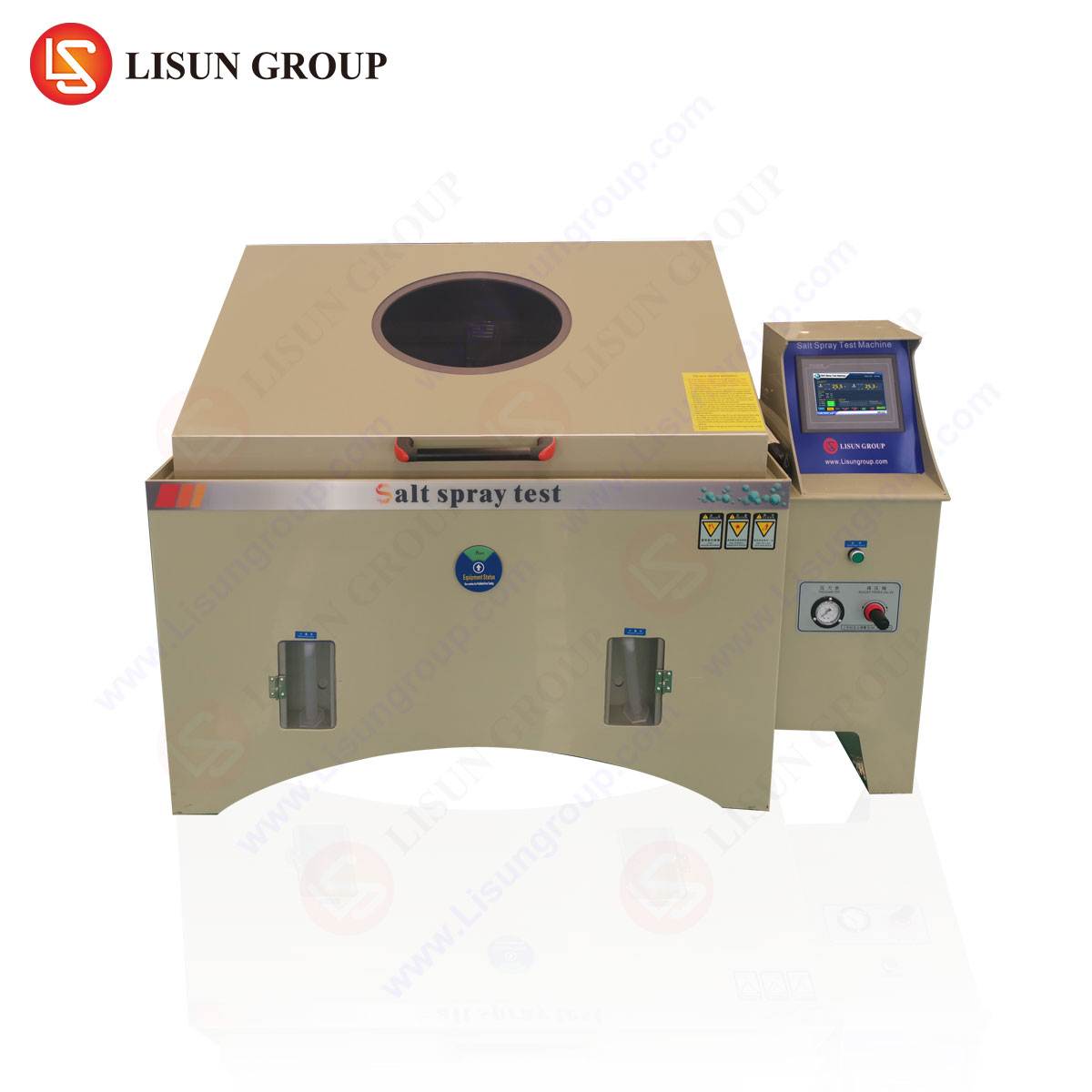
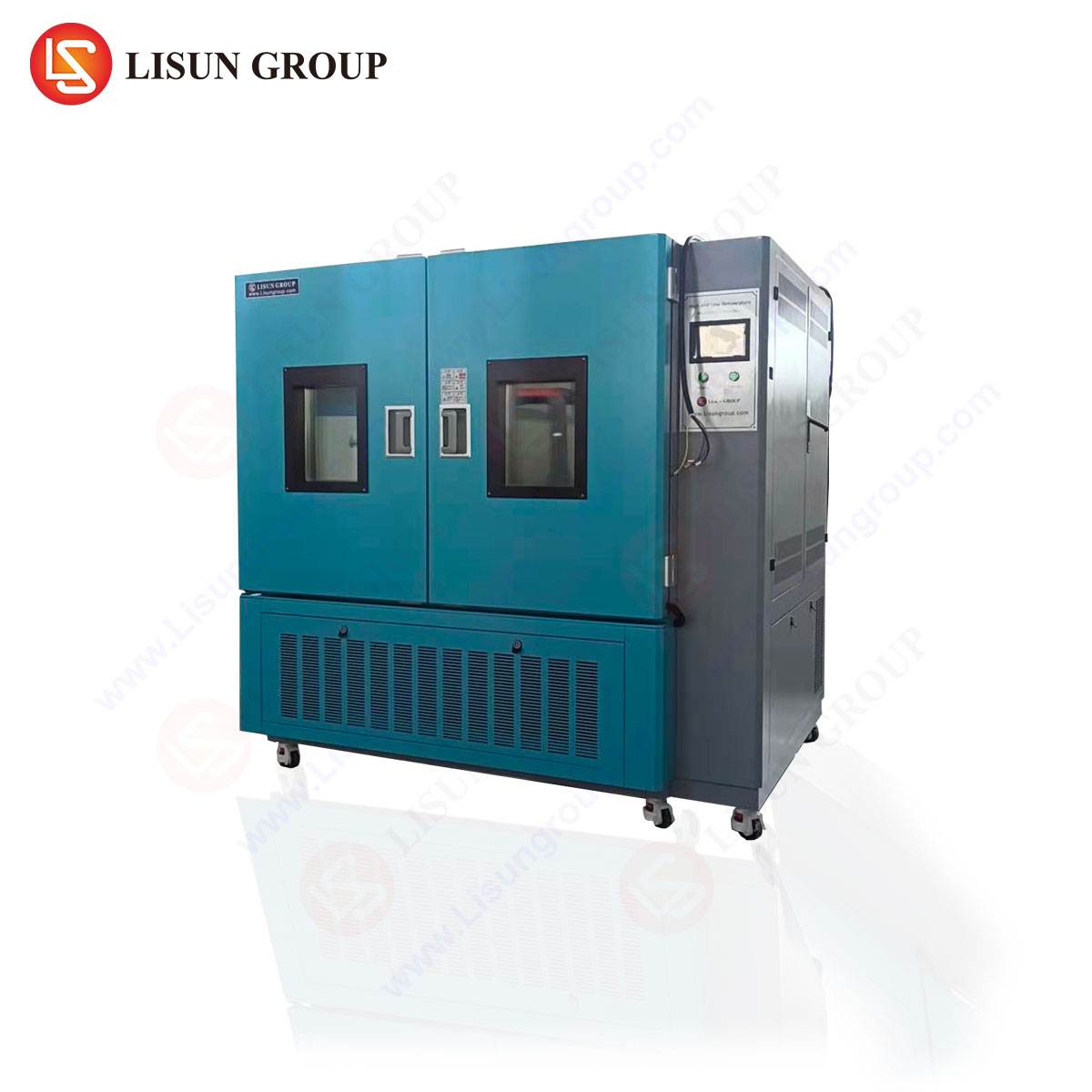
A contemporary salt spray chamber is an integrated system comprising several key subsystems. The chamber body, constructed from corrosion-resistant materials such as polypropylene or fiber-reinforced plastic, houses the test environment. A precisely regulated air saturation tower conditions compressed air by heating and humidifying it before it enters the atomizer nozzle, ensuring consistent droplet size and solution concentration. The reservoir holds the test solution, which is fed to the atomizer via a metering system. Critical to performance are the chamber’s temperature control system, typically employing PID-controlled heaters and air-jacketed designs for uniformity, and the collection apparatus for monitoring fog settlement rate. Modern units, such as the LISUN YWX/Q-010X Salt Spray Test Chamber, incorporate advanced digital microprocessors for parameter management. This model features a standardized test volume of 108 liters, maintains a temperature range of ambient +5°C to 55°C with a uniformity of ±2°C, and ensures a consistent fog settlement rate of 1.0 to 2.0 ml/80cm² per hour, adhering to stringent calibration requirements.
Preparation of Test Specimens and Solution Formulation
Specimen preparation is paramount, as contaminants can invalidate results. Components must be cleaned using appropriate non-abrasive, non-reactive solvents (e.g., ethanol, acetone) to remove oils, fingerprints, and particulates, followed by thorough drying. The method of suspension or placement within the chamber must prevent electrolytic contact between dissimilar metals unless galvanic effects are under study, and must allow free flow of fog over all surfaces. Masking of critical areas or edges must be performed with inert, non-absorbent materials like wax or specialized tape, applied carefully to avoid creep of the electrolyte beneath the mask.
The test solution must be prepared from reagent-grade sodium chloride (NaCl) and deionized or distilled water with a conductivity below 20 µS/cm. The standard concentration is 5% ± 1% by mass (50 g/L). The pH of the collected solution must be adjusted to fall within 6.5 to 7.2 when measured at 25°C, often requiring the careful addition of dilute analytical-grade sodium hydroxide (NaOH) or hydrochloric acid (HCl). For testing copper-accelerated acetic acid salt spray (CASS), specific additives are introduced per relevant standards.
Operational Protocol and Chamber Calibration Procedures
Initiation of a test requires systematic steps. First, ensure the chamber interior, reservoir, and air saturator are clean and filled with the correct solutions. Place pre-cleaned, measured collection funnels inside the chamber. Load the prepared specimens onto non-conductive racks, ensuring they do not contact each other or chamber walls. Seal the chamber and initiate the temperature control system, allowing the interior to stabilize at the setpoint (e.g., 35°C) before starting the fog generation.
Calibration of the fog settlement rate is a critical quality control activity. It involves placing at least two clean collection funnels with an area of 80 cm² each in strategic locations within the empty test zone. After operating the chamber for a minimum of 16 hours, the solution collected in each funnel is measured volumetrically. The average settlement must be 1.0 to 2.0 ml per hour per 80 cm². Deviations necessitate inspection of the atomizer nozzle for blockage or wear, verification of air pressure, and confirmation of solution feed rate and air saturator temperature.
Industry-Specific Applications and Test Standard References
Salt spray testing is mandated across diverse industries to validate product longevity and safety. In Automotive Electronics and Electrical Components, tests per ASTM B117 or ISO 9227 assess the integrity of connector housings, switch enclosures, and printed circuit board assemblies. Aerospace and Aviation Components often undergo more severe acidified salt spray tests per ASTM G85 to simulate harsh flight environments. For Household Appliances and Consumer Electronics, such as washing machine control panels or smartphone external casings, testing evaluates coating adhesion and cosmetic corrosion resistance.
The LISUN YWX/Q-010X is engineered to support these varied applications, facilitating tests compliant with IEC 60068-2-11, JIS Z 2371, and other national standards. Its programmable controller allows for complex cyclic corrosion tests (CCT), which intersperse salt spray, humidity, and drying phases, offering improved correlation for Electrical and Electronic Equipment and Telecommunications Equipment exposed to intermittent wet/dry cycles in service.
Post-Test Evaluation and Interpretation of Results
Upon test completion, specimens must be handled carefully to preserve corrosion products for evaluation. A gentle rinse under lukewarm running water (< 38°C) to remove salt deposits is followed by drying with compressed air or blotting with a clean, lint-free cloth. Evaluation is predominantly qualitative but can be semi-quantified. Common metrics include time to first red rust (for steel substrates), assessment of blister size and density per ASTM D714, measurement of creepage from a scribe per ISO 4628, or counting of corrosion spots. For Lighting Fixtures and Industrial Control Systems, functional testing post-exposure—checking for electrical continuity, insulation resistance, or mechanical operation—is often as critical as visual inspection. It is imperative to document results with high-resolution photographs under consistent lighting before and after cleaning.
Advanced Testing Modes: Cyclic Corrosion and Custom Profiles
While the neutral salt spray (NSS) test is foundational, its limitations in correlating to certain real-world environments are recognized. Cyclic Corrosion Tests (CCT) provide enhanced simulation by introducing phases of humidity, condensation, drying, and sometimes freeze-thaw cycles. These profiles, such as those in SAE J2334 or GM 9540P, are particularly relevant for Automotive Electronics and exterior Electrical Components, where daily thermal and humidity fluctuations drive corrosion mechanisms different from constant wetness. Chambers like the YWX/Q-010X, with their programmable logic controllers, enable the automation of these complex profiles, enhancing test reproducibility and reducing manual intervention.
Maintenance, Safety, and Troubleshooting Guidelines
Consistent chamber performance hinges on disciplined maintenance. Daily checks should include solution levels, air pressure, and chamber temperature. Weekly tasks involve cleaning the reservoir and saturator tower to prevent biological growth or salt crystallization. Monthly maintenance should include a thorough inspection and cleaning of the atomizer nozzle and all air lines.
Safety is paramount. Operators must wear appropriate personal protective equipment (PPE)—safety glasses, gloves, and lab coats—when handling specimens, solutions, or performing maintenance. The chamber exhaust must be properly vented to the exterior to avoid inhalation of corrosive mist. Common operational issues include low fog settlement (clogged nozzle, low air pressure), temperature fluctuations (faulty heater, sensor, or PID settings), or excessive condensation (saturator temperature mismatch, high humidity ambient air). A systematic checklist should be employed for diagnostics.
Comparative Advantages of Integrated Digital Control Systems
The transition from analog to digital control represents a significant advancement in test reliability. A microprocessor-based system, as implemented in the promoted chamber model, offers precise PID temperature control, digital timers for test duration and cycle programming, and real-time monitoring of key parameters. The LISUN YWX/Q-010X provides features such as automatic water replenishment for the saturator, fault alarm indicators for low solution or temperature deviation, and data logging capabilities. These features minimize operator-induced variables, ensure strict adherence to standard parameters, and provide an auditable trail of test conditions—a critical requirement in quality-critical fields like Medical Devices and Aerospace and Aviation Components.
Frequently Asked Questions (FAQ)
Q1: What is the significance of adjusting the pH of the collected salt spray solution?
The pH of the settling fog directly influences the corrosion mechanism. An acidic or alkaline pH can drastically accelerate attack or promote different failure modes compared to the neutral range specified in standards like ASTM B117. Maintaining pH between 6.5 and 7.2 ensures test consistency and allows for valid comparative evaluations between different test runs or laboratories.
Q2: Can the YWX/Q-010X chamber be used for testing both coated and bare metal specimens?
Yes, the chamber is designed for both applications. For coated specimens (e.g., painted appliance housings or plated connectors), the test evaluates coating porosity, adhesion, and corrosion resistance. For bare metals or alloys, it provides a comparative ranking of inherent corrosion resistance. The test protocol and evaluation criteria, however, differ and are defined by the relevant material or product specification.
Q3: How often should the fog settlement rate be calibrated, and what are the consequences of an out-of-spec rate?
Calibration should be performed prior to initiating any new test series and at minimum monthly intervals during continuous operation. An out-of-spec settlement rate—either too low or too high—invalidates the test’s acceleration factor and compromises its standardization. Low rates extend test duration artificially, while high rates can introduce droplet runoff, altering the corrosion mechanism and producing non-representative results.
Q4: What are the key considerations for placing specimens inside the chamber?
Specimens must be oriented to parallel the principal direction of fog flow, typically at a 15° to 30° angle from vertical. They must be arranged to avoid shielding each other and to prevent drips or condensation from one specimen falling onto another. All specimens should be electrically isolated from the rack and each other unless a specific galvanic couple is under test.
Q5: Is salt spray testing sufficient as a sole predictor of outdoor corrosion performance for automotive electronics?
While valuable, neutral salt spray (NSS) alone is often insufficient for complex automotive environments. Cyclic tests incorporating wet, dry, and humidity phases (e.g., CCT) generally provide better correlation for automotive electronics because they simulate the cyclic environmental stresses encountered in real service, including drying phases that can concentrate corrosive salts. The YWX/Q-010X’s programmability makes it suitable for such advanced cyclic testing protocols.