




Corrosion Simulation and Accelerated Testing: A Technical Analysis of Salt Spray Chambers and Governing Standards
Introduction to Accelerated Corrosion Testing
The degradation of materials due to atmospheric corrosion represents a significant economic and safety challenge across global manufacturing sectors. To predict long-term performance and validate material selections, protective coatings, and manufacturing processes, industry relies on accelerated corrosion test methodologies. Among these, salt spray (fog) testing stands as a fundamental, internationally recognized technique. This procedure subjects specimens to a controlled, corrosive environment within a specialized test chamber, compressing years of field exposure into a manageable test duration. The data derived informs critical decisions regarding product design, quality control, and compliance with stringent industry specifications. This technical article examines the operational principles, governing standards, and applications of salt spray test chambers, with a detailed analysis of a representative industrial solution.
Fundamental Operational Principles of Salt Spray Chambers
At its core, a salt spray chamber creates a consistent, corrosive mist by atomizing a prepared electrolyte solution—typically a 5% sodium chloride (NaCl) solution per ASTM B117 and ISO 9227. The chamber’s operational integrity hinges on several interdependent subsystems. A reservoir holds the test solution, which is pumped through a conditioned air supply to a precision nozzle assembly. This nozzle, often constructed of corrosion-resistant materials like borosilicate glass or specialized polymers, generates a fine, dense fog. The conditioned air, saturated and heated, ensures the fog remains suspended and uniformly distributed throughout the test zone.
Temperature regulation is paramount. The chamber interior and a separate saturated air barrel (or bubble tower) are maintained at a stable equilibrium, commonly 35°C ± 2°C for neutral salt spray (NSS) tests. This precise thermal control ensures consistent condensation and corrosion kinetics. Test specimens are mounted on non-conductive, inert racks at an angle (typically 15° to 30° from vertical) to allow condensate to run off without pooling, which could produce non-representative results. The chamber interior, including the vapor hood, is fabricated from materials such as polypropylene, glass-reinforced plastic (GRP), or titanium-stabilized polymers to resist degradation from the saline environment. Continuous operation, often for hundreds or thousands of hours, demands exceptional reliability from all components, from the saline solution pH monitoring system to the high-purity compressed air filters that prevent contaminant introduction.
International Standards and Testing Methodologies
Salt spray testing is not a singular test but a family of procedures defined by international standards organizations. Adherence to these documented protocols ensures reproducibility and allows for comparative analysis of data across laboratories and supply chains.
ASTM B117 – Standard Practice for Operating Salt Spray (Fog) Apparatus: This long-established American standard defines the foundational parameters for creating and maintaining the salt spray environment. It specifies solution composition, pH, temperature, collection rate (1.0 to 2.0 ml/hour per 80 cm²), and chamber cleanliness requirements. It is the benchmark upon which many product-specific specifications are built.
ISO 9227 – Corrosion tests in artificial atmospheres – Salt spray tests: This international standard encompasses several distinct tests: Neutral Salt Spray (NSS), Acetic Acid Salt Spray (AASS), and Copper-Accelerated Acetic Acid Salt Spray (CASS). NSS mirrors ASTM B117. AASS involves acidifying the salt solution with glacial acetic acid to a pH of 3.1–3.3, creating a more aggressive environment for decorative coatings like nickel-chromium. CASS, the most aggressive, adds copper chloride to the acidified solution, primarily used for rapid testing of copper-nickel-chromium coatings.
Other industry-specific standards frequently reference these core practices while tailoring acceptance criteria. Examples include MIL-STD-810 for military equipment, SAE J2334 for automotive coatings, and IEC 60068-2-11 for electrical and electronic components. The choice of standard—NSS, AASS, or CASS—is dictated by the material system under evaluation and its intended service environment.
The YWX/Q-010 Salt Spray Test Chamber: A Technical Specification Overview
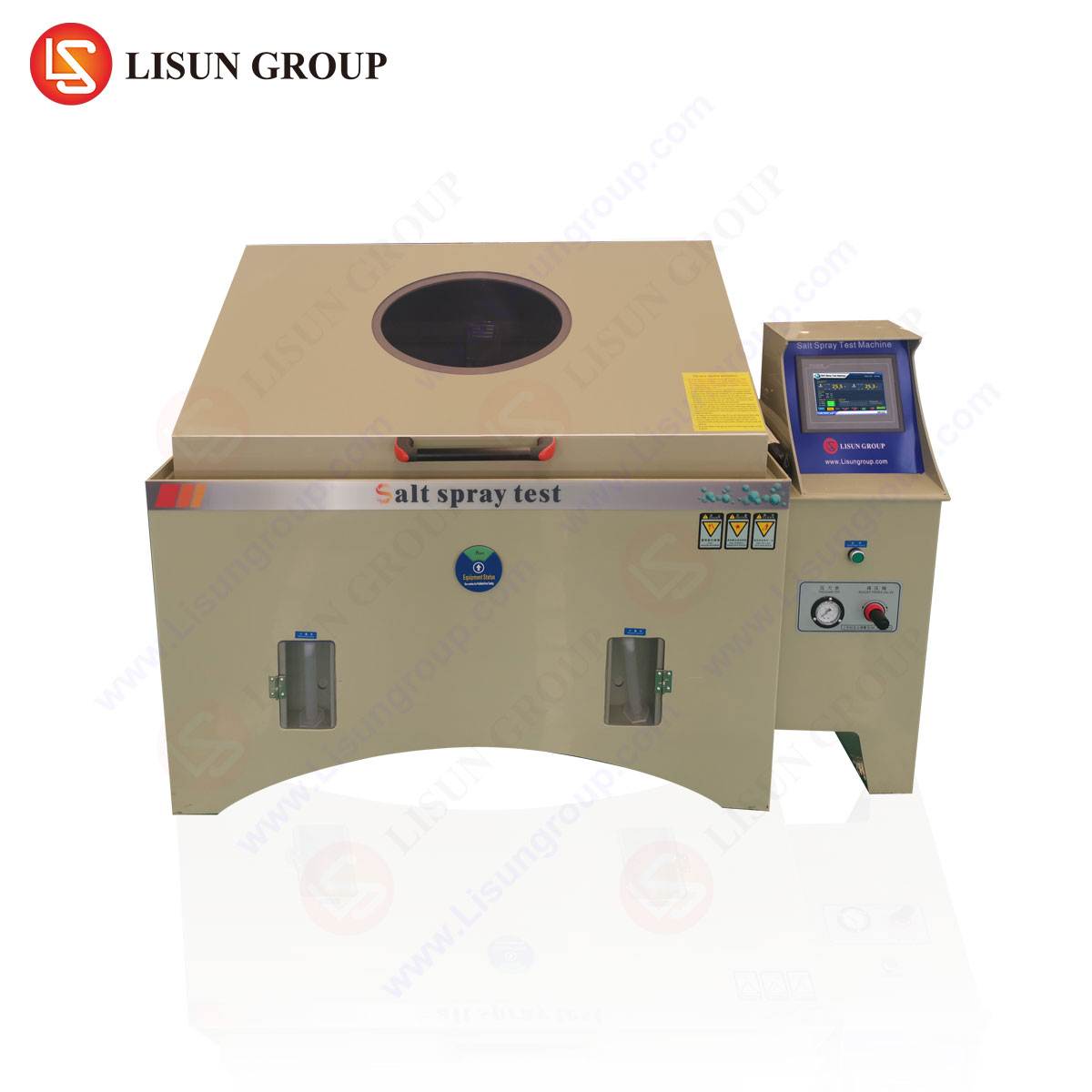
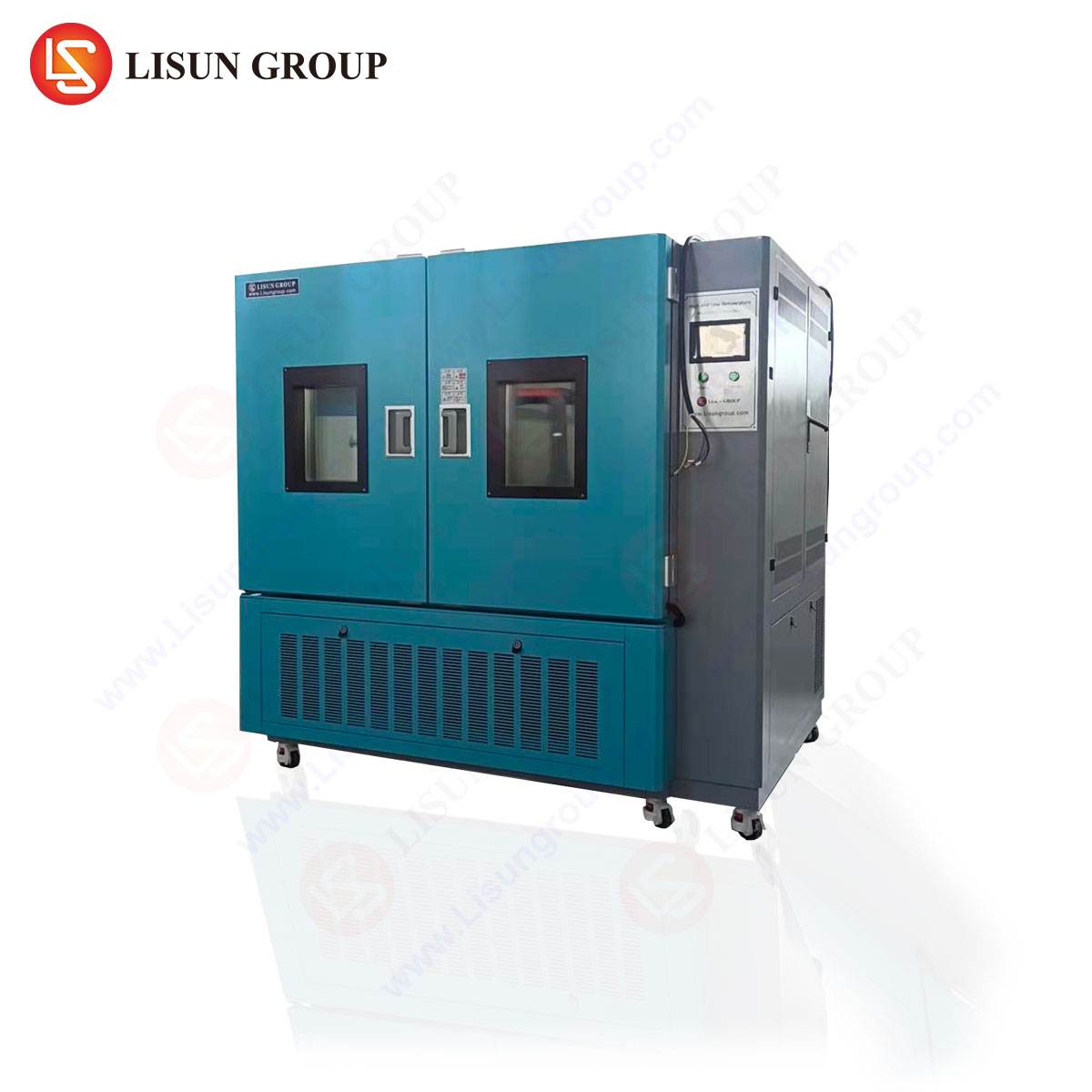
The LISUN YWX/Q-010 salt spray test chamber embodies the engineering required for precise, standards-compliant accelerated corrosion testing. Designed for reliability in quality control and research & development environments, its specifications address the critical parameters defined in ASTM B117 and ISO 9227.
Chamber Construction and Capacity: The test interior is constructed from imported grey rigid PVC plate, offering excellent corrosion resistance and thermal stability. The external housing utilizes powder-coated mild steel for structural rigidity. The chamber features a large 600-liter test volume, accommodating substantial or numerous specimens. A transparent polycarbonate canopy allows for continuous visual inspection without disturbing the test environment.
Precision Control Systems: Temperature regulation is achieved via a digital PID controller managing a titanium heating tube. The chamber maintains a test zone temperature of 35°C ± 1°C and a saturated barrel temperature of 47°C ± 1°C, ensuring precise adherence to standard conditions. The air supply system incorporates a two-stage pressure regulation, an oil filter, and an automatic air saturator (bubble tower) to heat and humidity the compressed air before it reaches the atomizer.
Atomization and Solution Management: The chamber employs an adjustable tower-type atomizer with a high-purity quartz nozzle, known for its resistance to crystallization and consistent fog output. The solution level is automatically maintained via a reservoir with a large 50-liter capacity, reducing manual intervention during long-duration tests. An integrated humidity function allows the chamber to be configured for cyclic corrosion tests (CCT) that alternate between salt spray, humidity, and drying phases, providing a more realistic simulation of natural environments.
Key Specifications Table:
| Parameter | Specification |
| :— | :— |
| Internal Material | Grey Rigid PVC Plate |
| External Material | Powder-Coated Steel |
| Test Volume | 600 Liters |
| Temperature Range | Ambient +10°C to +55°C |
| Temperature Uniformity | ±2°C |
| Temperature Fluctuation | ±0.5°C |
| NSS Test Temp. | 35°C ± 1°C (Chamber), 47°C ± 1°C (Saturated Barrel) |
| Solution Reservoir | 50 Liters |
| pH Control | Manual adjustment per standard preparation |
| Air Pressure | 0.2–0.4 MPa (Controlled & Regulated) |
| Fog Collection Rate | Adjustable to 1.0–2.0 ml/80cm²/hr |
Industry-Specific Applications and Use Cases
The YWX/Q-010 chamber facilitates critical testing across a diverse range of industries where corrosion resistance is a key performance indicator.
Automotive Electronics and Components: Connectors, engine control units (ECUs), sensor housings, and wiring harness terminals are subjected to NSS tests to validate the integrity of conformal coatings, plating (e.g., tin, silver, gold), and sealants against road salt and under-hood environments.
Electrical and Electronic Equipment & Telecommunications: Printed circuit board assemblies (PCBAs), server racks, outdoor antenna housings, and industrial control systems are tested to ensure metallic components (e.g., brass, steel, aluminum) and their finishes can withstand corrosive atmospheres, preventing dendritic growth and electrical failure.
Lighting Fixtures and Aerospace Components: Aluminum housings for streetlights, aviation landing light assemblies, and interior cabin components undergo salt spray testing to evaluate anodized layers, paint adhesion, and the potential for galvanic corrosion between dissimilar metals.
Medical Devices and Consumer Electronics: The metallic exteriors of diagnostic equipment, surgical tool coatings, smartphone chassis, and wearable device components are tested to assess cosmetic durability and functional integrity against perspiration and incidental exposure.
Cable and Wiring Systems: Cable glands, connector backshells, and the jacketing materials themselves are tested to verify that seals remain effective and that corrosion does not compromise shielding or conductive elements.
Comparative Advantages in Engineering Design
The technical design of chambers like the YWX/Q-010 confers several operational advantages essential for laboratory integrity. The use of a quartz nozzle, as opposed to lower-cost alternatives, significantly reduces clogging and ensures a consistent, fine mist particle size over extended test durations, directly impacting the reproducibility of the corrosion rate. The independent, precise control of both chamber and saturated air barrel temperatures is not a universal feature and is critical for maintaining the correct equilibrium for proper fog generation and specimen wetness as per ASTM B117.
The large-capacity, corrosion-resistant PVC interior minimizes the risk of chamber-induced contamination from previous tests, a factor that can invalidate results. Furthermore, the inclusion of CCT capability within a standard salt spray chamber offers enhanced value, allowing laboratories to perform more sophisticated, sequence-based tests that better correlate with real-world weathering without investing in separate, dedicated CCT equipment. This flexibility is increasingly important as industries move beyond simple NSS to more predictive cyclic methodologies.
Interpretation of Test Results and Common Pitfalls
Test conclusion is not merely the cessation of spray. Evaluation requires a systematic, often standardized, assessment of corrosion products. This may involve visual inspection against pictorial standards (e.g., ISO 10289), measurement of the extent of creep from a scribe, weight loss analysis, or electrochemical measurements. It is crucial to remember that salt spray testing is primarily a comparative, qualitative tool for detecting porosity and relative performance; it does not precisely predict a service life in years.
Common pitfalls include improper specimen preparation (residual oils, inadequate scribing), overloading the chamber, which disrupts fog circulation, and using non-compliant salt or water purity (ASTM D1193 Type IV or better is typically required). Neglecting to monitor and adjust the pH of the collected solution during long tests can also lead to non-standard, and thus non-comparable, results. Chambers must be meticulously cleaned between tests to prevent cross-contamination.
Future Trends in Corrosion Test Methodology
While salt spray remains a cornerstone, industry demand is driving evolution. There is a marked shift towards Cyclic Corrosion Tests (CCT), which incorporate wet, dry, and humidity phases. These multi-step profiles better simulate diurnal cycles and produce failure modes more representative of outdoor exposure, particularly for painted and coated systems. Furthermore, the integration of in-situ monitoring sensors—for parameters like chloride deposition rate, relative humidity, and specimen electrochemical potential—is moving testing from a black-box duration-based approach to a more data-rich, kinetic analysis. Chambers that can seamlessly integrate these complex profiles and data acquisition systems, while maintaining the foundational precision of standards like ASTM B117, will define the next generation of corrosion testing equipment.
Frequently Asked Questions (FAQ)
Q1: What is the required purity of water and salt for ASTM B117 testing?
The standard mandates the use of sodium chloride that is predominantly sodium chloride with specific limits on impurities like iodine and copper. The water must be deionized or distilled with a resistivity of no less than 0.3 MΩ-cm and a pH between 6.0 and 7.0, typically conforming to ASTM D1193 Type IV specifications. Using tap or impure water introduces contaminants that drastically alter corrosion kinetics and invalidate test results.
Q2: How often should the nozzle and air saturator be checked or maintained?
For continuous testing, a daily check of the fog collection rate is recommended to ensure the nozzle is not clogged or dripping. The quartz nozzle in chambers like the YWX/Q-010 requires less frequent replacement but should be inspected weekly. The air saturator (bubble tower) water level must be maintained daily, and the water should be replaced weekly to prevent biological growth or salt carryover, which can affect humidity and temperature equilibrium.
Q3: Can the YWX/Q-010 chamber be used for tests other than Neutral Salt Spray (NSS)?
Yes. While configured for NSS, the chamber is capable of performing Acetic Acid Salt Spray (AASS) tests by modifying the solution chemistry as per ISO 9227. Furthermore, its programmable controller and humidity function enable it to run simple cyclic corrosion tests (CCT) that alternate between salt spray, high humidity, and dry-off periods, provided the specific temperature and transition profiles are within its operational range.
Q4: What is the significance of the specimen placement angle (15°-30°)?
Angled placement standardizes the exposure of the test surface to the settling fog and prevents the horizontal accumulation of solution, which leads to pooling. Pooling creates an unnaturally aggressive, continuously immersed condition that is not representative of most atmospheric exposures and can cause premature and inconsistent failure, particularly along pool edges, compromising the comparative value of the test.
Q5: How do I correlate 500 hours of salt spray testing to real-world years of service?
There is no universal, mathematically valid conversion factor. Correlation is highly dependent on the specific material system, the actual geographic environment (marine, industrial, rural), and the failure mode being evaluated. Salt spray testing is best used as a comparative quality assurance tool—e.g., “Coating Batch A withstands 720 hours vs. Batch B’s 600 hours”—or for detecting processing flaws. Quantitative service life predictions require longer-term exposure testing or more advanced electrochemical methods.