




An Analytical Examination of Salt Spray Test Equipment: Principles, Standards, and Technological Implementation
Introduction to Accelerated Corrosion Testing
The evaluation of material and component resistance to corrosive environments represents a critical phase in the product development and quality assurance lifecycle across numerous industrial sectors. Among the various accelerated corrosion test methodologies, salt spray (fog) testing remains a globally recognized and standardized technique for assessing the relative corrosion resistance of materials and protective coatings. This procedure subjects test specimens to a controlled, aggressive saline atmosphere within a dedicated environmental chamber, simulating and accelerating the effects of long-term exposure to marine or road salt-laden environments. The primary objective is not to precisely replicate real-world conditions in a temporal sense, but to provide a reproducible, comparative benchmark for evaluating performance, identifying design or manufacturing flaws, and validating conformance to international specifications. The reliability of the data generated is intrinsically linked to the precision, stability, and compliance of the test equipment employed.
Fundamental Operational Principles of Salt Spray Chambers
At its core, salt spray test equipment operates on the principle of creating and maintaining a highly controlled corrosive environment. A saline solution, typically a 5% sodium chloride (NaCl) solution per ASTM B117 or ISO 9227 standards, is atomized into a fine fog using compressed air. This process occurs within a saturated tower (Bridger) to warm and humidify the air-salt mixture before it is introduced into the main test chamber. The chamber itself is constructed from corrosion-resistant materials, such as polypropylene or glass-reinforced polyester, and is equipped with precise heating elements and humidification systems to maintain constant temperature and saturation conditions, usually at 35°C ± 2°C and near 100% relative humidity.
The test specimens are positioned within the chamber on non-conductive, inert supports at an angle specified by the relevant standard (often 15° to 30° from vertical) to ensure uniform condensation and salt settlement. The duration of exposure can range from 24 hours to several thousand hours, depending on the product specification and required severity. Throughout the test, parameters including chamber temperature, saturation tower temperature, solution pH, collection rate, and solution concentration are meticulously monitored and logged to ensure adherence to stringent standard requirements. Any deviation can invalidate test results, underscoring the necessity for equipment with exceptional control stability and data integrity.
Critical Design Parameters and System Architecture
Modern salt spray test chambers incorporate a sophisticated architecture to achieve the requisite environmental control. Key subsystems include the chamber body, salt solution reservoir, compressed air preparation unit, saturation tower, fog dispersion system, electronic control system, and safety interlocks.
The air preparation unit is paramount, involving filtration, pressure regulation, and humidification. Air must be oil-free and pressurized to a specific level (typically 0.7-1.2 bar) before being bubbled through heated distilled water in the saturation tower. This ensures the air is heated to a temperature exceeding the chamber temperature, preventing a drying effect upon entering the test zone and guaranteeing a consistent, saturated fog. The salt solution delivery system employs a precision peristaltic or diaphragm pump to draw solution from the reservoir, mixing it with the saturated air at the nozzle for atomization. Solution pH must be maintained between 6.5 and 7.2 for neutral salt spray (NSS) tests, often requiring daily checks and adjustments.
The electronic control system integrates programmable logic controllers (PLCs) and touch-screen human-machine interfaces (HMIs). These systems manage PID-controlled heating, humidification, timing functions, and comprehensive data logging. Advanced chambers feature network connectivity for remote monitoring and integration into laboratory information management systems (LIMS). Safety features typically include low-solution level protection, over-temperature cut-offs, and chamber over-pressure relief.
Adherence to International Testing Standards and Protocols
The validity of salt spray testing is contingent upon strict conformity to published international standards. These documents prescribe every critical parameter of the test method.
- ASTM B117 – Standard Practice for Operating Salt Spray (Fog) Apparatus: The foundational American standard, detailing apparatus requirements, solution preparation, and procedure for neutral salt spray testing.
- ISO 9227 – Corrosion tests in artificial atmospheres – Salt spray tests: The parallel international standard from the International Organization for Standardization, encompassing Neutral Salt Spray (NSS), Acetic Acid Salt Spray (AASS), and Copper-Accelerated Acetic Acid Salt Spray (CASS) tests.
- IEC 60068-2-11 (Test Ka): An International Electrotechnical Commission standard for salt mist testing applicable to electrical and electronic products.
- JIS Z 2371: The Japanese Industrial Standard for salt spray testing methods.
- Various OEM Specifications: Automotive (e.g., GM, Ford, Volkswagen), aerospace (e.g., SAE, Airbus), and military (e.g., MIL-STD) specifications often derive from or specify modifications to these core standards.
Compliant equipment must demonstrably meet the geometric, material, and performance criteria outlined in these standards, particularly regarding fog collection rate (1.0 to 2.0 ml/80cm²/hour for NSS), chamber temperature uniformity, and solution chemistry.
Industry-Specific Applications and Material Evaluation
Salt spray testing serves as a critical gatekeeper for product durability in a vast array of industries. The test evaluates both base material susceptibility and, more commonly, the efficacy of protective coatings such as electroplating (zinc, nickel, chrome), paint systems, powder coatings, anodizing, and galvanizing.
- Automotive Electronics & Components: Testing connectors, sensor housings, brake components, and electronic control unit (ECU) enclosures for resistance to road salt exposure.
- Electrical & Electronic Equipment: Assessing the corrosion resistance of printed circuit board (PCB) finishes, server rack components, and external housings for industrial control systems and telecommunications equipment.
- Aerospace and Aviation Components: Validating the performance of fasteners, landing gear components, and avionics casings where saline atmospheres are encountered.
- Lighting Fixtures: Evaluating the integrity of outdoor and automotive lighting housings, reflectors, and electrical contacts.
- Medical Devices: Ensuring the longevity and safety of portable devices, surgical tool coatings, and diagnostic equipment that may be subjected to cleaning agents or environmental exposure.
- Consumer Electronics & Household Appliances: Testing the durability of coatings on smartphones, laptops, washing machine drums, and refrigerator components against perspiration or humid, saline coastal air.
- Cable and Wiring Systems: Assessing the corrosion resistance of metallic braiding, connectors, and conduit systems.
Technical Analysis of the LISUN YWX/Q-010 Series Salt Spray Test Chambers
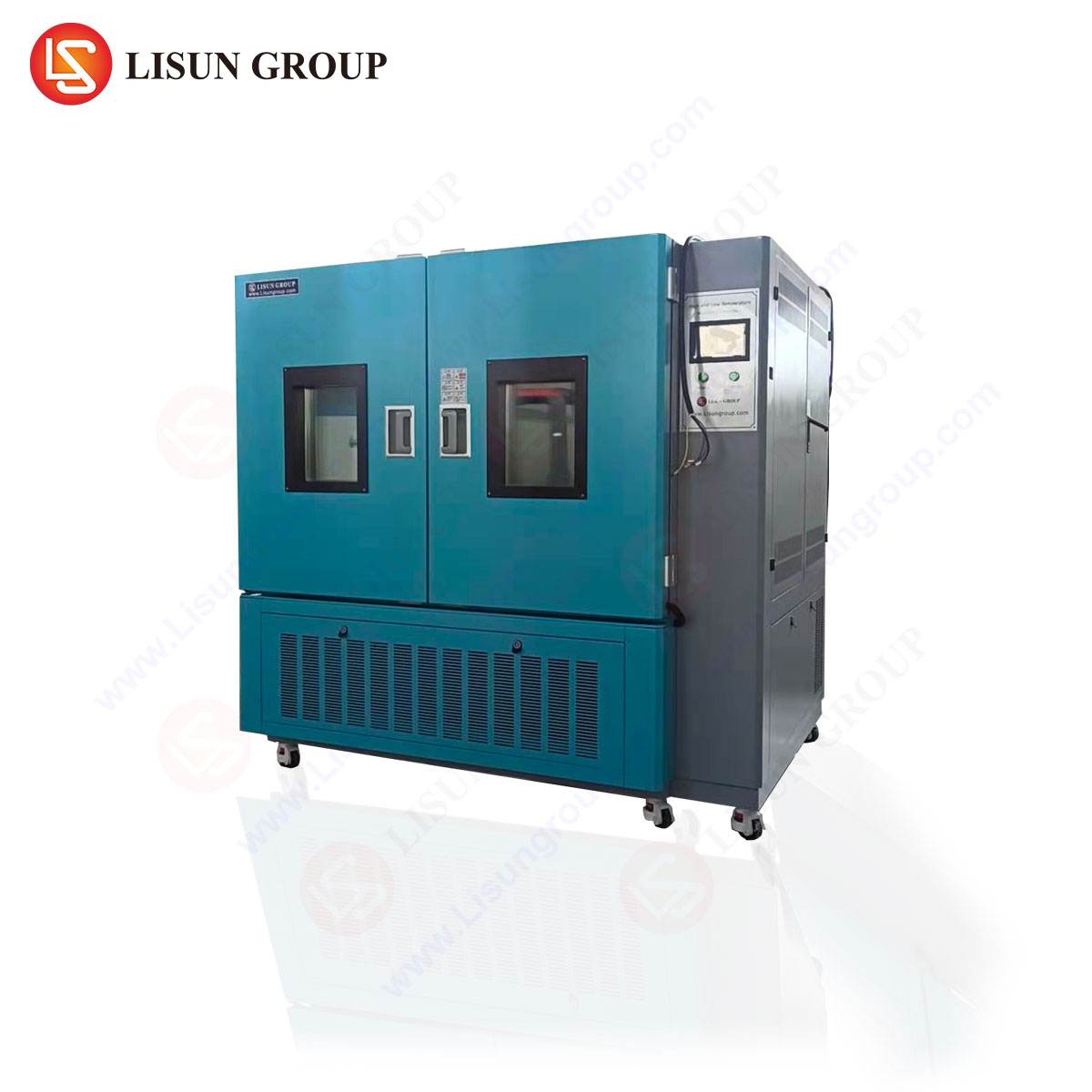
The LISUN YWX/Q-010 and its enhanced counterpart, the YWX/Q-010X, represent implementations of standard-compliant salt spray test technology designed for reliability and precise control in laboratory settings. These chambers are engineered to meet the core requirements of ASTM B117, ISO 9227, and related standards.
Testing Principle: The chambers utilize the conventional pressurized atomization method. Compressed air is humidified and heated in a saturation tower before being mixed with a precisely metered flow of salt solution at the nozzle, creating a dense, uniform corrosive fog distributed throughout the test workspace.
Key Specifications:
- Chamber Volume: Standard models offer a defined internal workspace (e.g., 1080L for a 010 model variant).
- Temperature Control Range: Ambient to +55°C for chamber temperature; ambient to +65°C for saturation tower temperature.
- Control System: Digital PID controller with touch-screen interface for parameter setting, real-time monitoring, and fault diagnosis.
- Construction: Chamber interior utilizes imported corrosion-resistant polypropylene (PP) plate. The outer casing is typically powder-coated steel.
- Fog Dispersion: Tower-type (Bridger) design with adjustable baffles for optimized fog distribution and settlement.
- Compliance: Designed to maintain a consistent fog collection rate within the 1.0-2.0 ml/80cm²/hr range as mandated by standards.
Industry Use Cases: The YWX/Q-010 series is applicable across all previously mentioned sectors. For instance, a manufacturer of industrial control system enclosures would use it to qualify a new powder coating. A producer of automotive electronic connectors could test the corrosion resistance of different zinc-nickel alloy plating formulations. A lighting fixture company might validate the lifespan of an aluminum housing with an anodized finish intended for coastal installations.
Competitive Advantages: The design emphasizes several operational and maintenance benefits. The use of industrial-grade polypropylene for the inner chamber offers superior long-term resistance to the corrosive environment compared to some PVC-based alternatives, extending equipment service life. The integrated air pre-conditioning system (filtration, pressure regulation, humidification) ensures consistent input air quality, a critical factor for test reproducibility. The modular nozzle and tower design facilitates easier cleaning and maintenance, reducing downtime. Furthermore, the programmable controller with data logging capability aids in audit trails and quality documentation, a necessity for ISO/IEC 17025 accredited laboratories.
Data Interpretation and Post-Test Evaluation
Upon completion of the prescribed exposure period, specimens are carefully removed, gently rinsed to remove salt deposits, and dried. Evaluation is conducted according to the acceptance criteria defined in the product specification or a relevant qualitative rating standard.
Common evaluation methods include:
- Visual Inspection: Assessing the percentage of surface area affected by red rust (for steel substrates) or white corrosion products (for zinc or aluminum coatings). Standards like ISO 10289 provide pictorial ratings for this purpose.
- Measurement of Corrosion Progression: Using scribed lines through the coating to measure undercutting or creepage from the defect.
- Adhesion Testing: Performing cross-cut or tape tests on corroded areas to determine if corrosion has undermined coating adhesion.
- Functional Testing: For electrical components, verifying continued electrical continuity, insulation resistance, or operational functionality post-exposure.
It is crucial to note that salt spray test results are primarily comparative and qualitative. They are excellent for detecting relative performance differences between batches, processes, or materials but do not directly predict a precise service life in years. Correlation with real-world field data is essential for meaningful life prediction.
Advanced Testing Modifications: CASS and AASS
Beyond the standard Neutral Salt Spray (NSS) test, modified salt spray tests offer increased aggressiveness for specific applications.
- Acetic Acid Salt Spray (AASS): The salt solution is acidified with glacial acetic acid to a pH of 3.1-3.3. This test is more corrosive and is often used for evaluating decorative copper-nickel-chromium or nickel-chromium electroplates on steel or zinc die-castings.
- Copper-Accelerated Acetic Acid Salt Spray (CASS): Further modification involves adding copper chloride to the acidified salt solution. This is an extremely aggressive test used primarily for rapid testing of decorative nickel-chromium and copper-nickel-chromium plating on steel, zinc alloys, and aluminum, as well as anodized aluminum. Equipment capable of these tests requires enhanced material resistance to the acidic environment.
Frequently Asked Questions (FAQ)
Q1: What is the significance of maintaining the pH of the salt solution within 6.5 to 7.2 for an NSS test?
A: The pH is critical for test reproducibility and standardization. A solution that is too acidic or alkaline will alter the corrosion mechanism, potentially accelerating it unrealistically or inhibiting it. Daily pH checks and adjustments ensure the test severity remains consistent with the defined standard, allowing for valid comparisons between tests run at different times or in different laboratories.
Q2: Can a salt spray test chamber like the LISUN YWX/Q-010 be used for testing both coated metals and bare electronic circuit boards?
A: Yes, but the test purpose and evaluation criteria differ significantly. For coated metals, the test evaluates coating integrity and substrate protection. For bare PCBs, it assesses the corrosion resistance of the surface finish (e.g., HASL, ENIG, immersion silver) and its ability to prevent copper migration or dendrite growth, which can cause electrical shorts. The chamber creates the environment; the test specimen and its pass/fail criteria are defined by the relevant product standard.
Q3: How often should the nozzle and saturation tower of the chamber be cleaned, and why is this necessary?
A: Regular cleaning, typically recommended weekly or as part of a preventative maintenance schedule, is essential. Salt crystallization can clog the nozzle orifice, disrupting fog consistency and collection rate. Scale buildup in the saturation tower reduces heating and humidification efficiency. Both issues lead to non-compliant test conditions, risking invalid results and potential equipment damage.
Q4: What is the primary difference between the standard YWX/Q-010 and the YWX/Q-010X model?
A: While specific configurations may vary, the “X” designation typically indicates an enhanced or expanded feature set. This could include a larger chamber volume, a more advanced touch-screen controller with extended data logging and connectivity options (USB, Ethernet), higher-grade sensors for improved stability, or additional safety interlocks. The core testing principle remains identical, but the “X” variant often offers greater automation, data management, and user convenience for high-throughput or accredited testing laboratories.
Q5: Why is compressed air preparation so critical, and what happens if unfiltered plant air is used?
A: Unfiltered plant air contains oil, water, and particulate contaminants. Oil will coat specimens, inhibiting corrosion and invalidating the test. Water droplets can alter the solution concentration and fog characteristics. Particulates can clog the nozzle. The integrated air preparation system—comprising a filter, pressure regulator, and humidification tower—ensures the air input is clean, at the correct pressure, and properly saturated, which is a fundamental requirement for generating a standardized, reproducible corrosive fog.