




Sand and Dust Test Chamber: Ensuring Product Reliability in Harsh Environments
The relentless ingress of particulate matter—fine dusts, abrasive sands, and granular contaminants—represents a persistent and multifaceted threat to the operational integrity of modern engineered systems. In environments ranging from arid deserts and construction sites to industrial floors and agricultural settings, the penetration of these particulates can precipitate catastrophic failures, including mechanical seizure, electrical short circuits, optical obstruction, and thermal management breakdowns. Consequently, the simulation and evaluation of a product’s resilience to such conditions are not merely a quality assurance step but a critical engineering imperative. Sand and dust test chambers serve as the definitive laboratory instrument for this purpose, enabling manufacturers to validate product durability, ensure compliance with international standards, and mitigate field failure risks through controlled, reproducible environmental stress screening.
The Physics of Particulate Ingress and Its Failure Mechanisms
Understanding the operational necessity of dust testing chambers requires a foundational grasp of the failure modes induced by particulate matter. The primary mechanisms are categorized into three domains: abrasive, obstructive, and conductive.
Abrasive wear occurs when hard, angular particles, such as silica sand (SiO₂), impinge upon or settle between moving components. This leads to progressive material loss, increased friction, and eventual seizure. In automotive electronics, for instance, sand ingress into connector housings or actuator mechanisms can degrade contact integrity and impede mechanical operation. Obstructive failures arise when particulates accumulate, blocking ventilation pathways, cooling fins, or optical sensors. This can cause thermal runaway in power supplies, industrial control systems, or LED lighting fixtures, where heat dissipation is paramount. Conductive or hygroscopic failures are particularly insidious with certain dust types. Fine, metallic dusts or salts can create unintended current paths across printed circuit boards (PCBs) in telecommunications equipment or medical devices, while hygroscopic dust can absorb atmospheric moisture, leading to electrochemical migration and corrosion on sensitive electrical components like those found in aerospace avionics.
The particle size distribution is a critical variable. Standards typically define “dust” as particles below 150 microns and “sand” as particles between 150 and 850 microns. The smaller dust fraction is more prone to infiltration through minute gaps and seals, while larger sand particles exert greater kinetic energy for abrasion. A comprehensive test regimen must therefore account for both fractions to accurately simulate real-world conditions.
International Standards Governing Sand and Dust Testing
Product validation against particulate ingress is rigorously defined by several key international standards, which prescribe specific test conditions, procedures, and acceptance criteria. Compliance is often a contractual or regulatory requirement for market access.
The IEC 60529 standard, commonly known as the IP (Ingress Protection) Code, is ubiquitous. Its second numeral defines protection against solid objects. IP5X denotes “dust protected,” where a limited amount of dust ingress is permitted but must not interfere with operation. IP6X is “dust tight,” requiring a vacuum-induced test with talcum powder and permitting no ingress. For sand, MIL-STD-810G, Method 510.6 is a foundational U.S. military standard widely adopted in aerospace, defense, and automotive sectors. It outlines procedures for blowing sand and blowing dust, specifying wind velocities, particulate composition, temperature cycles, and exposure durations to simulate operational and storage conditions. Other relevant standards include ISO 20653 (road vehicles – degrees of protection), SAE J575 (lamp dust tests), and various ASTM procedures.
These standards dictate the essential performance parameters of a test chamber, including particle feed rate control, airflow velocity and uniformity, temperature conditioning capability, and test chamber geometry to ensure a homogenous particulate cloud.
Architectural and Operational Principles of a Modern Test Chamber
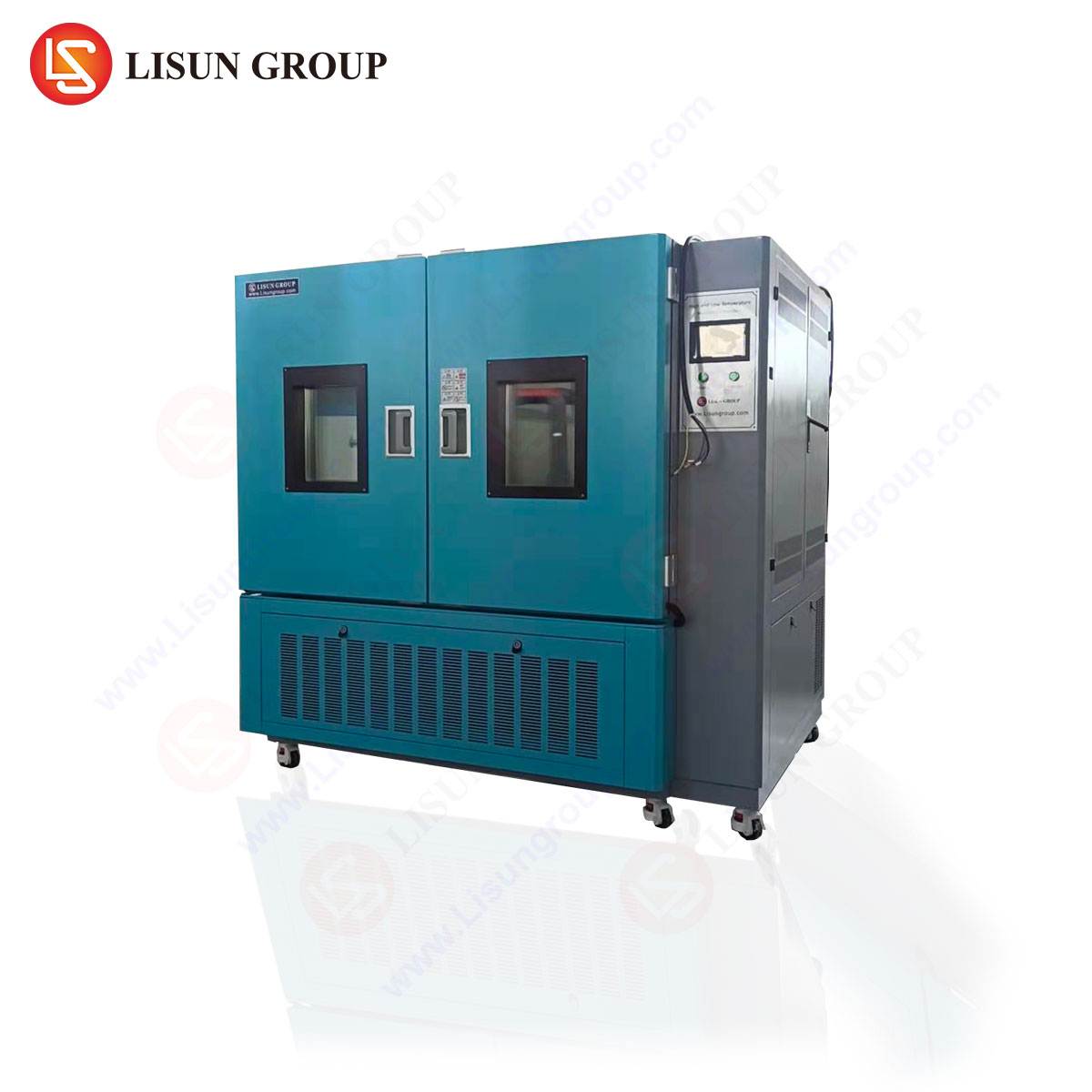
A contemporary sand and dust test chamber, such as the LISUN SC-015 Dust Sand Test Chamber, is an engineered system designed to precisely replicate the environmental stresses defined by these standards. Its architecture integrates several key subsystems to achieve controlled, repeatable testing.
The core chamber is a sealed workspace, typically constructed from SUS304 stainless steel for corrosion resistance, with a reinforced viewing window and internal lighting. A circulating airflow system, driven by a centrifugal blower, generates the required wind speed—often variable from 1 to 30 m/s to accommodate different test profiles. The particulate injection system is central to the chamber’s function. A controlled feeder, often using a vibrating sieve or screw mechanism, introduces a standardized test dust (like Arizona Road Dust per ISO 12103-1, A4 Fine or A2 Coarse) or sand into the airstream at a precise and consistent rate (e.g., 2-10 g/m³). This creates a uniform, suspended cloud within the test volume.
For comprehensive testing, integrated environmental conditioning is vital. Many chambers incorporate a heater and refrigeration unit to control internal temperature, typically across a range from ambient to +60°C or higher, as some standards require testing under elevated temperatures to simulate desert conditions. A dedicated vacuum system is integral for IP6X testing, drawing air through the device under test (DUT) to create a pressure differential that challenges its seals. Control and monitoring are managed via a programmable logic controller (PLC) and human-machine interface (HMI) touchscreen, allowing for the creation, storage, and automatic execution of complex test profiles that cycle through different temperatures, durations, and particulate concentrations.
The LISUN SC-015 Dust Sand Test Chamber: A Technical Examination
The LISUN SC-015 exemplifies the integration of these principles into a robust, laboratory-grade instrument. Designed for compliance with IEC 60529, IEC 60068-2-68, ISO 20653, and MIL-STD-810G, it provides a versatile platform for rigorous particulate testing.
Key Specifications and Design Features:
- Test Volume: A 0.75 cubic meter workspace accommodates a wide range of products, from small electrical components to sizable assemblies like automotive headlamp units or industrial control cabinets.
- Particulate System: It employs a precise vibrating sieve injection mechanism for dust and a separate sand feeder, ensuring accurate particle concentration control. Standard test dust is included.
- Airflow and Velocity: A high-capacity blower and specially designed wind channel produce a vertically circulating, uniform airflow. Wind speed is continuously adjustable via frequency conversion control, meeting the stringent velocity requirements of blowing sand (18-29 m/s) and blowing dust (1.5-8.9 m/s) tests.
- Environmental Conditioning: An integrated temperature system offers a range from RT+10°C to +60°C, enabling combined temperature-dust stress testing.
- Vacuum System: For IP5X and IP6X testing, an integrated vacuum pump and flow meter system (0-10 L/min) create the specified pressure differentials inside the DUT.
- Control and Interface: A 7-inch color touchscreen PLC controller allows for programmable test parameters, real-time monitoring of temperature, time, wind speed, and vacuum flow, and features data logging capabilities.
Testing Principle in Practice: In a typical blowing dust test per MIL-STD-810G, the operator places the DUT—for example, an outdoor telecommunications router—inside the chamber. A profile is selected on the HMI specifying a temperature of 60°C, a wind velocity of 1.5 m/s, a dust concentration of 10.6 g/m³, and a duration of 6 hours. The chamber seals, heats to setpoint, and initiates the dust feeder and blower. A homogenous dust cloud envelops the router, testing its seals, cooling vents, and external connectors. Post-test, the unit is inspected for ingress, and its functionality is verified.
Industry-Specific Applications and Validation Use Cases
The application of sand and dust chambers spans virtually every sector where electronics and mechanics interface with the external environment.
- Automotive Electronics & Lighting: Validating the sealing of engine control units (ECUs), sensors, infotainment systems, and LED headlamps against road dust and off-road sand is critical for vehicle longevity. The SC-015 can test complete headlamp assemblies for optical clarity retention after sand abrasion.
- Electrical & Electronic Equipment/Industrial Control Systems: Enclosures for PLCs, motor drives, and switchgear must achieve IP5X or IP6X ratings to operate reliably in factories, mines, or outdoor installations. The chamber’s vacuum system directly tests the efficacy of gaskets and cable glands.
- Aerospace & Aviation: Components for aircraft operating in desert regions or unmanned aerial vehicles (UAVs) must withstand severe sandstorms. Testing per MIL-STD-810G ensures avionics bays, navigation systems, and communication gear remain functional.
- Consumer Electronics & Household Appliances: From smartphones claiming dust resistance to robotic vacuum cleaners operating in dusty homes, particulate testing validates marketing claims and prevents field returns. Outdoor security cameras and smart garden devices are also key candidates.
- Medical Devices: Portable diagnostic equipment and ventilators used in field hospitals or ambulances must be immune to contaminant ingress to ensure patient safety and device reliability.
- Telecommunications & Cable Systems: Outdoor 5G radio units, fiber optic terminal enclosures, and submarine cable repeaters are exposed to wind-blown particulates. Testing ensures signal integrity and prevents connector corrosion.
- Office Equipment: Printers and copiers used in construction site offices or warehouses are susceptible to paper feed jams and internal contamination from airborne dust.
Competitive Advantages of Engineered Test Solutions
Selecting a test chamber like the LISUN SC-015 over basic or improvised setups confers significant technical and commercial advantages. Its primary benefit is test repeatability and reproducibility. The precise control over all environmental variables ensures that tests conducted today and six months later, or in different laboratories using the same standard, yield directly comparable results. This is fundamental for quality benchmarking and supplier qualification.
Operational efficiency and safety are enhanced. The closed-loop system contains hazardous particulates like silica dust, protecting laboratory personnel. Automated test profiles free engineers from manual monitoring, while robust data logging provides defensible evidence for compliance reports and certification audits with agencies like UL, TÜV, or Intertek.
Furthermore, a dedicated chamber offers superior simulation fidelity. The ability to combine temperature cycling with particulate exposure creates a more realistic and punishing stress test than dust-only exposure, uncovering latent design flaws in seals (which may harden or soften with temperature) and thermal management systems. This proactive failure discovery during the design verification phase prevents costly recalls, warranty claims, and brand reputation damage, ensuring that products are truly fit-for-purpose in the world’s harshest environments.
Frequently Asked Questions (FAQ)
Q1: What is the difference between IP5X and IP6X testing, and can the SC-015 perform both?
A1: IP5X (Dust Protected) testing involves circulating talcum dust inside the chamber with the device under test (DUT) operating normally, permitting limited, non-harmful ingress. IP6X (Dust Tight) is more severe; it requires drawing a vacuum on the interior of the DUT to create an internal pressure lower than the chamber’s dust cloud, actively pulling particles against seals. The LISUN SC-015 is equipped with both a circulating dust system and an integrated vacuum pump with flow meter, enabling it to perform full IP5X and IP6X compliance testing per IEC 60529.
Q2: What type of test dust is used, and is it included?
A2: The chamber is designed to use standardized test dusts, most commonly “Arizona Road Dust” as specified in ISO 12103-1. This includes specific grades like A4 Fine Dust (0-80 micron) and A2 Coarse Dust (0-180 micron). The LISUN SC-015 typically includes an initial supply of this standardized test dust with the unit. Users must replenish it with the same specification-grade dust to maintain test validity.
Q3: Can the chamber test for both “blowing dust” and “blowing sand” as per MIL-STD-810G?
A3: Yes. The SC-015 is explicitly designed to meet Method 510.6 of MIL-STD-810G. It features separate control mechanisms for dust and sand feeding. The key difference in the test parameters is wind velocity: blowing dust tests use lower velocities (1.5 – 8.9 m/s), while blowing sand tests require much higher velocities (18 – 29 m/s). The chamber’s variable speed blower system via frequency conversion can accurately achieve and maintain both required velocity ranges.
Q4: How is the uniformity of the dust cloud inside the chamber ensured?
A4: Cloud uniformity is achieved through integrated chamber design. The SC-015 utilizes a vertical wind channel design where air is drawn from the top, mixed with injected dust in a diffusion section, and then uniformly circulated down through the test workspace by a centrifugal fan. This design, coupled with the precise particulate feed system, ensures a consistent concentration of particles throughout the test volume, which is critical for repeatable and standard-compliant testing.
Q5: What industries beyond automotive and military benefit from this testing?
A5: Virtually any industry producing equipment for non-climate-controlled environments utilizes dust testing. Key examples include: Telecommunications (outdoor 5G radios, fiber cabinets), Industrial Automation (sensors, robotic arms in factories), Consumer Electronics (dust-resistant cameras, smartphones), Lighting (outdoor and industrial LED fixtures), Medical (portable field equipment), and Energy (solar inverter enclosures, wind turbine control systems). It is a universal test for mechanical and electrical robustness.