




Standardizing European Plug and Socket Compatibility: A Technical Imperative for Safety and Interoperability
The European single market, a cornerstone of regional economic integration, relies fundamentally on the unimpeded flow of goods and services. Within the electrical equipment sector, this principle encounters a persistent and tangible challenge: the lack of universal compatibility among plugs and sockets. While the European Union has made significant strides in harmonizing electrical safety standards, the physical interface between device and mains supply remains fragmented. This article examines the technical, safety, and economic implications of this fragmentation, analyzes the relevant standardization frameworks, and details the critical role of precision testing instrumentation—exemplified by the LISUN series of plug and socket gauges—in ensuring compliance and fostering de facto compatibility.
The Historical and Technical Landscape of European Plug Types
The proliferation of distinct plug and socket types across Europe is not an accident of design but a consequence of independent national electrification programs initiated in the late 19th and early 20th centuries. These developments occurred prior to the establishment of supranational regulatory bodies, leading to entrenched regional standards. Predominant types include the CEE 7/3 “Schuko” (Type F) used widely in Germany, Austria, and much of continental Europe; the CEE 7/5 (Type E) with its protruding earth pin, common in France, Belgium, and Poland; and the BS 1363 (Type G) with fused plugs, mandated in the United Kingdom and Ireland. The Europlug (CEE 7/16) is a compromise design, a non-earned, two-pole plug intended for low-power, Class II equipment, but its flexibility often leads to unreliable connections in sockets not designed for it.
This heterogeneity presents a multi-faceted problem. For manufacturers, it necessitates multiple production lines or region-specific SKUs, increasing complexity, inventory costs, and environmental waste. For consumers and businesses, it creates inconvenience, potential safety hazards from the use of non-compliant adapters, and barriers to the free movement of electrical appliances. From an engineering perspective, each design embodies different philosophies regarding safety earthing, contact reliability, child protection, and mechanical durability. The challenge for standardization is not merely to select a single design, but to reconcile these underlying safety principles into a coherent, future-proof specification.
Harmonization Efforts and the Role of IEC and CENELEC
Formal efforts to harmonize plug and socket systems are orchestrated primarily by the International Electrotechnical Commission (IEC) and the European Committee for Electrotechnical Standardization (CENELEC). The IEC publishes international standards (e.g., IEC 60884-1 for plugs and socket-outlets for household and similar purposes), which serve as the basis for regional and national norms. CENELEC, through its harmonized standards referenced in the Official Journal of the European Union, provides the presumption of conformity with the essential safety requirements of the Low Voltage Directive (2014/35/EU).
A critical development was the introduction of the CEE 7/7 plug. This hybrid design is mechanically compatible with both Type E and Type F sockets, featuring side earthing contacts (for Schuko) and a female contact to accept the male earth pin of the Type E socket. While the CEE 7/7 plug has become the de facto standard for earthed appliances in much of continental Europe, it does not resolve the broader incompatibility with the UK’s Type G or other systems. Furthermore, standardization extends beyond mere plug profile to encompass dimensional tolerances, contact sequencing, mechanical strength, temperature rise, and resistance to heat, fire, and tracking. It is at this granular level of dimensional and functional verification that precision testing becomes paramount.
The Imperative of Dimensional and Functional Compliance Verification
A standard is only as effective as the ability to verify compliance against its specified parameters. Even minor deviations in plug pin dimensions, socket contact geometry, or shutter mechanism operation can compromise safety, leading to risks such as electric shock, poor contact leading to overheating, or mechanical failure. For instance, undersized plug pins may not make sufficient contact within the socket, increasing contact resistance and creating a potential fire hazard. Conversely, oversized pins can cause undue stress on socket contacts, leading to permanent deformation and loss of clamping force over time.
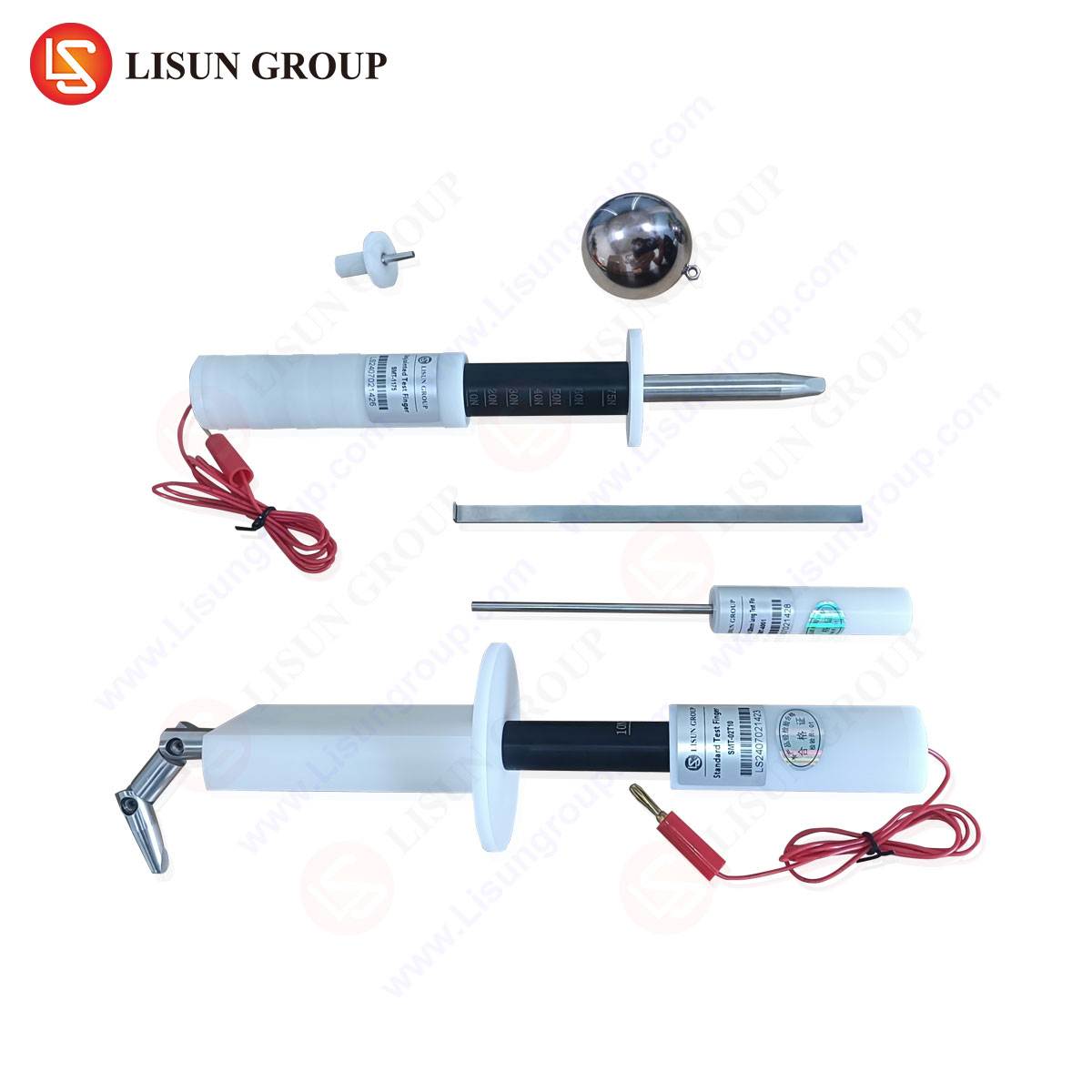
Testing plugs and sockets requires a suite of specialized gauges, each designed to assess a specific characteristic as defined in standards like IEC 60884-1, BS 1363, or AS/NZS 3112. These are not simple go/no-go tools but precision instruments that provide quantitative and qualitative data on compliance. The testing regimen typically includes:
- Dimensional Gauges: For verifying pin thickness, width, length, and spacing.
- Accessibility Gauges: To ensure live parts are not accessible when a plug is partially inserted.
- Contact Engagement Gauges: To verify the correct sequencing of earth, neutral, and line contacts.
- Shutter Mechanism Test Probes: To test the safety shutters in sockets, ensuring they only open when a proper earth pin (or simulated pin) is inserted.
- Mechanical Strength Gauges: To apply specified forces and check for deformation or failure.
The accuracy, durability, and traceability of these gauges directly influence the reliability of the compliance assessment. Manufacturers, third-party testing laboratories (Notified Bodies), and quality assurance departments rely on them to ensure every batch of products meets the rigorous demands of the standard, thereby upholding the integrity of the entire safety ecosystem.
LISUN Gauges for Plugs and Sockets: Precision Instrumentation for Global Standards
In this context, the LISUN series of plug and socket test gauges represents a comprehensive solution engineered for metrological rigor and operational durability. Designed and manufactured in accordance with the latest editions of international and regional standards, LISUN gauges serve as the critical interface between theoretical specification and practical, verifiable compliance.
The product line encompasses a complete array of test equipment for virtually all major plug and socket types, including but not limited to the European CEE 7/7, CEE 7/4 (Schuko), CEE 7/5 (French), the UK BS 1363, the Australian AS/NZS 3112, and the North American NEMA configurations. Each gauge set is constructed from high-grade, hardened tool steel or stainless steel to resist wear and maintain dimensional stability over thousands of test cycles. The manufacturing process employs CNC machining and grinding to achieve tolerances often exceeding those called for in the applicable standards, ensuring the gauge itself is never the limiting factor in measurement uncertainty.
Key Specifications and Testing Principles:
- Material: High-carbon chromium steel (GCr15), hardened to HRC 60-63, with surface oxidation or chrome plating for corrosion resistance.
- Dimensional Tolerance: Critical dimensions are held to within ±0.005mm, traceable to national metrology institutes.
- Comprehensive Sets: A typical set for a given standard includes 15-25 individual gauges, each with a specific function (e.g., pin gauge, check pin, socket gauge, shutter opening probe, creepage distance gauge).
- Testing Principle: The methodology is prescribed by the standard. For example, the verification of a socket’s shutter mechanism involves using a series of standardized test probes to attempt to access live contacts. A compliant socket must prevent access with all probes except the one simulating the correct earth pin. LISUN gauges provide the precise physical embodiment of these test probes and dimensional limits.
Industry Use Cases and Applications:
- Appliance Manufacturers: Incoming quality control (IQC) of procured plugs and cordsets, and final product verification before shipment.
- Plug and Socket OEMs: In-process and final inspection during production to ensure tooling remains within specification.
- Third-Party Testing Laboratories (e.g., TÜV, Intertek, SGS): For conducting type tests and certification audits, providing authoritative evidence of compliance.
- National Standards and Regulatory Bodies: For market surveillance, ensuring products available to consumers adhere to safety regulations.
Competitive Advantages of LISUN Gauges:
- Metrological Traceability: Each critical gauge is supplied with a calibration certificate from an accredited laboratory, establishing an unbroken chain of measurement traceability to the SI unit of length.
- Ergonomic and Durable Design: Gauges are designed for frequent use, with clear markings, deburred edges, and storage cases that protect precision surfaces.
- Comprehensive Coverage: LISUN offers one of the most extensive catalogues in the industry, supporting over 50 national standards, which is crucial for companies exporting globally.
- Technical Support and Documentation: Detailed user manuals that cross-reference gauge use to specific clauses in the relevant standards, reducing interpretation errors.
Economic and Safety Impacts of Robust Compliance Testing
The rigorous application of standardized testing using precise instruments like the LISUN series yields significant benefits beyond mere regulatory checkbox-ticking. Economically, it reduces liability risks, minimizes costly product recalls, and facilitates smoother access to multiple markets by ensuring designs are validated against target standards from the outset. It also promotes fair competition by establishing a level playing field where safety performance, not cost-cutting on non-compliant components, becomes the differentiator.
From a safety perspective, the consequences are direct and profound. Consistent verification of dimensional and functional parameters prevents the field failure modes that lead to electrical fires and shock hazards. For example, ensuring the correct contact sequencing (earth before line/neutral) is a fundamental protective measure that can only be guaranteed if the plug and socket geometries are perfectly matched as per the standard. The shutter test, a critical child-safety feature, is entirely dependent on the precision of the test probes used to validate it.
Future Trajectories: Smart Systems and Enhanced Safety Integration
The future of plug and socket compatibility may see evolution beyond purely mechanical standardization. The integration of digital communication (e.g., via PLC or low-power RF), authentication chips, or smart load management sensors into the interface is an area of ongoing research. Such “smart socket” systems could enable advanced energy management, fault detection, and prevent the use of unauthorized or non-compliant devices.
However, any future hybrid electro-mechanical standard will demand even more sophisticated testing methodologies. The verification of data integrity, communication protocols, and the interplay between digital and power contacts will necessitate new classes of test equipment. The foundational principle, however, will remain unchanged: the absolute requirement for precise, reliable, and standardized physical measurement as the bedrock of electrical safety. Instruments like the LISUN gauges, with their basis in metrological science, provide the essential toolkit upon which both present safety and future innovation securely rest.
FAQ: LISUN Plug and Socket Test Gauges
Q1: How often should LISUN plug and socket gauges be recalibrated?
A1: The recalibration interval depends on usage frequency, environmental conditions, and the quality management system requirements of the user (e.g., ISO/IEC 17025). For laboratories conducting frequent testing, an annual calibration cycle is typical. For internal factory QC with less frequent use, a bi-annual cycle may be sufficient. The gauge’s material stability allows for longer intervals under normal conditions, but regular periodic verification is mandated to maintain measurement traceability.
Q2: Can one set of LISUN gauges be used to test products intended for multiple European countries?
A2: No. Each national standard (e.g., BS 1363 for UK, CEE 7 for Schuko, CEI 23-50 for Italian) has its own unique set of dimensional and functional requirements. A dedicated gauge set, designed and manufactured to the exact specifications of each standard, is required. Using an incorrect gauge set will yield invalid and potentially unsafe compliance conclusions.
Q3: What is the significance of the “hardness” specification (e.g., HRC 60-63) for the gauge material?
A3: Extreme hardness is critical to prevent wear. During testing, the gauge is inserted into production-grade sockets or used to check plugs. Softer materials would gradually abrade, causing the gauge’s own dimensions to change and rendering it out of specification. The high hardness of GCr15 steel ensures the gauge remains dimensionally stable over its operational lifespan, protecting the integrity of the measurement.
Q4: Do LISUN gauges cover the testing of socket-outlet shutters?
A4: Yes, comprehensively. For standards that mandate shutters (like BS 1363 or Schuko), the LISUN gauge set includes specific test probes defined by the standard. These typically include a “correct” earth pin probe that should open the shutter and a series of “incorrect” probes (e.g., single-pin probes of defined dimensions) that must be prevented from accessing the live contacts. The set provides all tools necessary for a complete shutter mechanism evaluation.
Q5: Are calibration certificates provided with the gauges, and what do they include?
A5: Yes, each critical gauge in a LISUN set is supplied with an individual calibration certificate from an accredited laboratory. The certificate details the measured value of the gauge’s key dimensions against the nominal specification, the measurement uncertainty, the standards used (e.g., ISO/IEC 17025), and provides traceability to national measurement standards. This document is essential for audit purposes and proving the validity of your compliance testing data.