





Corrosion Resistance Validation: Methodologies, Standards, and Instrumentation for Component Reliability
Introduction to Accelerated Corrosion Testing in Modern Manufacturing
The long-term operational integrity of manufactured components across diverse industrial sectors is fundamentally contingent upon their resistance to environmental degradation. Among the myriad of failure modes, corrosion remains a preeminent concern, representing a significant economic burden and a critical safety risk. The electrochemical deterioration of materials, particularly metals and their protective coatings, can lead to catastrophic system failures, diminished performance, and reduced product lifespan. Consequently, the implementation of rigorous, standardized corrosion validation protocols is not merely a quality control step but a foundational pillar of product development and reliability engineering. Accelerated corrosion testing, specifically salt spray (fog) testing, serves as a pivotal methodology for simulating years of environmental exposure within a controlled laboratory timeframe. This article delineates the technical principles, governing international standards, and practical implementation of salt spray testing, with a detailed examination of its application through advanced instrumentation such as the LISUN YWX/Q-010X Salt Spray Test Chamber.
Electrochemical Foundations of the Salt Spray (Fog) Test
The salt spray test operates on the principle of accelerating the natural atmospheric corrosion process by creating a controlled, aggressive environment. The core mechanism involves the atomization of a prepared sodium chloride (NaCl) solution into a fine, dense fog within a sealed test chamber. This fog uniformly settles on the specimens under test, forming a continuous, conductive electrolyte film. The presence of chloride ions (Cl⁻) is particularly aggressive, as they readily penetrate passive oxide layers on metals like steel, aluminum, and zinc, initiating and propagating pitting and crevice corrosion. The test environment, typically maintained at an elevated constant temperature (e.g., 35°C ± 2°C), increases the kinetic rates of the electrochemical reactions involved in corrosion, thereby accelerating the degradation process. The primary anodic reaction is metal dissolution (e.g., Fe → Fe²⁺ + 2e⁻), while the cathodic reaction is predominantly oxygen reduction (O₂ + 2H₂O + 4e⁻ → 4OH⁻) facilitated by the thin, aerated electrolyte layer. The test does not precisely replicate any single natural environment but provides a severely corrosive, reproducible, and comparative environment to rapidly evaluate the relative protective qualities of metallic coatings, platings, paints, and surface treatments.
Governing International Standards and Testing Protocols
The credibility and reproducibility of salt spray testing are underpinned by a suite of internationally recognized standards. These documents prescribe precise parameters for solution chemistry, chamber conditions, specimen preparation, exposure duration, and evaluation criteria. Adherence to these standards ensures that test results are consistent, comparable, and meaningful across different laboratories and manufacturing sites.
- ISO 9227:2017 – Corrosion tests in artificial atmospheres – Salt spray tests: This is a comprehensive international standard that defines several test methods, including the Neutral Salt Spray (NSS) test, the Acetic Acid Salt Spray (AASS) test, and the Copper-Accelerated Acetic Acid Salt Spray (CASS) test, each with increasing aggressivity. It specifies requirements for the test solution (5% NaCl, pH 6.5-7.2 for NSS), chamber construction, and calibration procedures.
- ASTM B117-19 – Standard Practice for Operating Salt Spray (Fog) Apparatus: A widely adopted standard in North America and globally, ASTM B117 establishes the operating conditions for the apparatus used to create and maintain the salt spray environment. It details specifications for the salt solution, air supply purity and pressure, chamber temperature, and collection rate of the fog.
- IEC 60068-2-11:2021 – Environmental testing – Part 2-11: Tests – Test Ka: Salt mist: This standard is critical for the electrical and electronic industries, outlining salt mist tests for components and equipment. It is often referenced in sector-specific standards for automotive, telecommunications, and industrial control equipment.
- JIS Z 2371:2015 – Methods of salt spray testing: The principal Japanese industrial standard, providing detailed guidelines for test methods and evaluation.
These standards converge on critical operational parameters, as summarized in the following table for a standard Neutral Salt Spray (NSS) test:
Table 1: Key Parameters for Neutral Salt Spray (NSS) Testing per ISO 9227/ASTM B117
| Parameter | Specification | Purpose & Rationale |
| :— | :— | :— |
| Test Solution | Sodium Chloride (NaCl), 5% ± 1% by mass | Provides a consistent, conductive electrolyte rich in aggressive chloride ions. |
| Solution pH | 6.5 to 7.2 (at 25°C) | Ensures a neutral, non-acidified environment for baseline comparative testing. |
| Chamber Temperature | 35°C ± 2°C | Accelerates electrochemical reaction kinetics in a controlled manner. |
| Settling Rate | 1.0 to 2.0 ml/h per 80 cm² (ASTM) | Ensures a consistent, uniform deposition of corrosive fog on all specimens. |
| Air Pressure for Atomization | 0.7 to 1.4 bar (10-20 psi) | Generates a fine, uniform fog; pressure stability is crucial for consistent settling rate. |
| Compressed Air Purity | Oil- and dirt-free, humidified to 95-98% RH | Prevents contamination of the test solution and ensures consistent droplet formation. |
Instrumentation for Precision Testing: The LISUN YWX/Q-010X Salt Spray Test Chamber
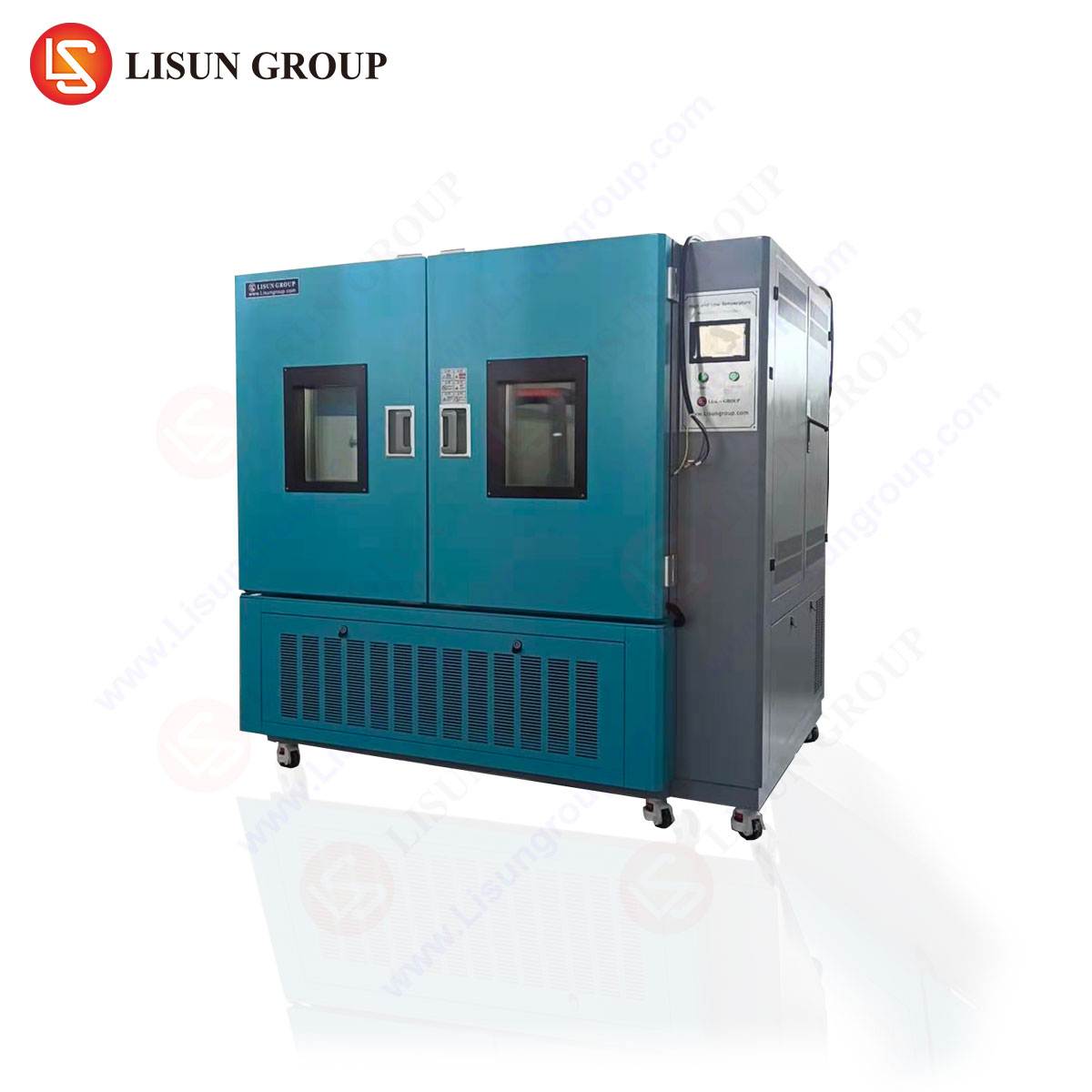
The reliable execution of standardized salt spray tests necessitates instrumentation engineered for precision, durability, and consistent performance. The LISUN YWX/Q-010X Salt Spray Test Chamber exemplifies a modern apparatus designed to meet and exceed the stringent requirements of international standards.
Core Specifications and Design Principles:
The YWX/Q-010X chamber is constructed from corrosion-resistant materials, typically thick, welded PVC or polypropylene, ensuring long-term integrity against the corrosive environment it contains. Its design incorporates a temperature-controlled saturated air barrel (or “bubbler”) that pre-heats and humidifies the compressed air before it atomizes the salt solution. This is critical for maintaining the specified chamber temperature and preventing evaporation cooling of the fog, which would lead to an inconsistent settling rate. The chamber features a transparent lid for specimen observation, an internal specimen support structure of non-reactive materials, and a heated reservoir for the salt solution. Precise digital controllers regulate chamber temperature and saturated barrel temperature independently, a feature essential for maintaining the strict environmental tolerances mandated by ASTM B117 and ISO 9227.
Testing Principles in Practice:
Within the YWX/Q-010X, the testing cycle is automated and precisely controlled. Pre-conditioned, humidified air is forced through a venture nozzle, drawing the salt solution from the reservoir and creating a dense, fine fog. This fog is dispersed evenly throughout the chamber volume, settling on vertically or angled-mounted specimens. The chamber’s heating system and insulated walls maintain a homogenous temperature. The collection of fog in specialized graduated cylinders placed within the chamber allows for the quantitative verification of the settling rate, a mandatory calibration step to validate the test’s integrity before and during a test run.
Industry-Specific Applications and Use Cases
The universality of corrosion as a failure mode makes salt spray testing applicable across a vast spectrum of industries. The following examples illustrate its critical role in product validation.
- Automotive Electronics & Components: Modern vehicles contain hundreds of electronic control units (ECUs), sensors, and connectors. Tests per ISO 16750-4 or SAE J2334 often reference salt spray to validate the corrosion resistance of housing materials, connector pins, PCB conformal coatings, and under-hood components exposed to road salt and splash.
- Electrical Components & Wiring Systems: Switches, sockets, circuit breakers, and cable terminations must maintain electrical integrity and mechanical safety. Salt spray testing evaluates the performance of metallic finishes (e.g., nickel, silver, or tin plating) on contacts and the sealing effectiveness of insulating housings.
- Aerospace and Aviation Components: While often subjected to more complex “cyclic corrosion tests,” standard salt spray is used as a screening test for fasteners, hydraulic fittings, and non-critical structural components to ensure they meet baseline material and coating specifications like AMS 2404 or MIL-STD-810.
- Lighting Fixtures: Outdoor and automotive lighting fixtures (headlamps, streetlights) are exposed to harsh weather. Testing ensures the integrity of aluminum housings, reflector coatings, and lens sealing against fogging and corrosion-induced failure.
- Medical Devices: For both external and implantable devices, corrosion resistance is synonymous with biocompatibility and reliability. Salt spray tests may be used on the external casings of diagnostic equipment or as an accelerated test for certain metallic components prior to more specialized biocompatibility testing.
- Telecommunications Equipment: Outdoor enclosures for 5G antennas, fiber optic network terminals, and coastal communication infrastructure are validated using salt spray to guarantee decades of reliable service in marine-influenced atmospheres.
- Industrial Control Systems: Components within factory automation, robotic systems, and process control panels, which may be exposed to industrial atmospheres, are tested to prevent downtime caused by corroded connectors or circuit boards.
Comparative Analysis and Methodological Limitations
While an indispensable tool, it is crucial to recognize that the continuous salt spray test is an accelerated comparative test, not an exact simulation of real-world service life. Its primary value lies in ranking the relative performance of different materials, coatings, or processes under identical, severe conditions. It is highly effective for identifying gross deficiencies, such as poor coating adhesion, inadequate thickness, or the presence of pores.
However, natural atmospheric corrosion involves cyclic conditions—wet/dry cycles, UV exposure, temperature fluctuations, and varying pollutant concentrations. These cycles significantly influence corrosion mechanisms. Therefore, many industries are supplementing or replacing standard salt spray with more sophisticated Cyclic Corrosion Tests (CCT), such as those defined by Volvo VCS 1027,149, GM 9540P, or ISO 11997-1. These tests incorporate phases of salt spray, humidity, drying, and sometimes UV exposure, providing a better correlation with field performance for many coating systems.
The YWX/Q-010X, while optimized for standard NSS, AASS, and CASS tests, represents a foundational apparatus. Its precise control over temperature and fog settlement forms the baseline upon which more complex cyclic testing protocols can be developed when integrated with broader environmental testing systems.
Evaluation Metrics and Post-Test Analysis
Upon completion of the prescribed test duration (commonly 24, 48, 96, 240, 500, or 1000 hours), specimens undergo meticulous evaluation. The assessment is guided by the product’s acceptance criteria, which are often defined by internal corporate standards or industry-specific specifications. Common evaluation methods include:
- Visual Inspection: The primary method, often conducted per ASTM D1654 or ISO 10289. Specimens are rinsed, dried, and examined for the type, extent, and distribution of corrosion products (red rust, white corrosion on zinc), blistering of paint, or creepage from scribed lines.
- Measurement of Corrosion Products: Removal of corrosion products using specific chemical solutions (e.g., per ASTM G1) followed by weighing to determine mass loss.
- Adhesion Testing: Assessing the adhesion loss of organic coatings near scribes or corroded areas using tape tests (e.g., ASTM D3359).
- Functional Testing: For electrical components, verifying that the device still operates within its electrical parameters (contact resistance, insulation resistance, dielectric strength) after exposure and cleaning.
The results are typically documented with photographic evidence and a detailed report citing the standard followed, chamber calibration data, test parameters, and the quantitative/qualitative evaluation.
Conclusion
Salt spray testing remains a cornerstone of material and coating qualification, providing a fast, reproducible, and standardized method for assessing corrosion resistance. Its effectiveness is rooted in strict adherence to international standards and the use of precision instrumentation capable of maintaining exacting environmental conditions. As exemplified by the LISUN YWX/Q-010X chamber, modern test apparatus delivers the reliability required for meaningful comparative analysis. While understanding its limitations as a constant-condition test is vital, its role in screening materials, validating production processes, and preventing field failures across industries from automotive electronics to medical devices is unequivocal. In an era of increasing product complexity and reliability expectations, robust accelerated corrosion testing is not an option but a fundamental requirement for engineering durable and safe products.
Frequently Asked Questions (FAQ)
Q1: What is the critical difference between the NSS, AASS, and CASS tests, and how do I choose?
The Neutral Salt Spray (NSS) test is the baseline, using a 5% NaCl solution at neutral pH. The Acetic Acid Salt Spray (AASS) test acidifies the solution to pH 3.1-3.3 with acetic acid, increasing aggressivity, particularly for decorative copper-nickel-chromium or nickel-chromium platings. The Copper-Accelerated Acetic Acid Salt Spray (CASS) test adds copper chloride to the acidified solution, further accelerating corrosion and used primarily for rapid testing of decorative copper-nickel-chromium coatings on zinc die castings or steel. The choice is dictated by the material system being tested and the relevant industry specification (e.g., automotive, plumbing, hardware).
Q2: Why is the collection and measurement of the salt fog settling rate so important?
The settling rate is a direct calibration of the test severity. A rate that is too low will extend the test time unrealistically, while a rate that is too high can cause droplet runoff, altering the corrosion mechanism and leading to non-uniform results. Standards like ASTM B117 require the collection rate to be verified every 24 hours to ensure the test’s consistency and validity from one run to the next. An apparatus like the YWX/Q-010X must be capable of maintaining this rate within the narrow specified range.
Q3: Can salt spray test chambers test complete assembled products, or only small samples?
While often used for standardized flat panels or small components, chambers like the YWX/Q-010X are available in various sizes. Larger walk-in chambers are used to test entire assemblies—such as a complete automotive ECU, a bicycle frame, or a set of industrial valves. The key principle remains the same: creating a uniform corrosive fog around the specimen. The test standard or internal protocol must then define evaluation criteria specific to the assembly’s function.
Q4: How do I prepare metallic specimens with a scribe, and what is its purpose?
A scribe is a deliberate scratch through the coating down to the substrate, made using a standardized tool. Its purpose is to evaluate the coating’s ability to resist “undercutting” or “creepage” from an area of intentional damage, which simulates stone chips or scratches in service. Evaluation involves measuring the average corrosion creepage distance from the scribe mark after testing, providing a quantitative measure of coating adhesion and cathodic protection (in the case of zinc-rich coatings).
Q5: Our components are exposed to industrial pollution, not a marine environment. Is salt spray testing still relevant?
Yes, though it may be part of a broader test suite. Industrial atmospheres often contain sulfur compounds (SO₂) which form acidic solutions. While a standard NSS test with chloride ions is still a valid general corrosion stimulant, testing per ISO 10062 (polluting gas test with SO₂, NO₂, etc.) or a cyclic test incorporating a dilute acid spray phase may provide better correlation. The salt spray test remains a valuable, severe baseline for comparing the fundamental corrosion resistance of material options.