





The Straight Test Probe: A Foundational Instrument for Electrical Safety Compliance
Introduction to Mechanical Hazard Assessment in Electrical Equipment
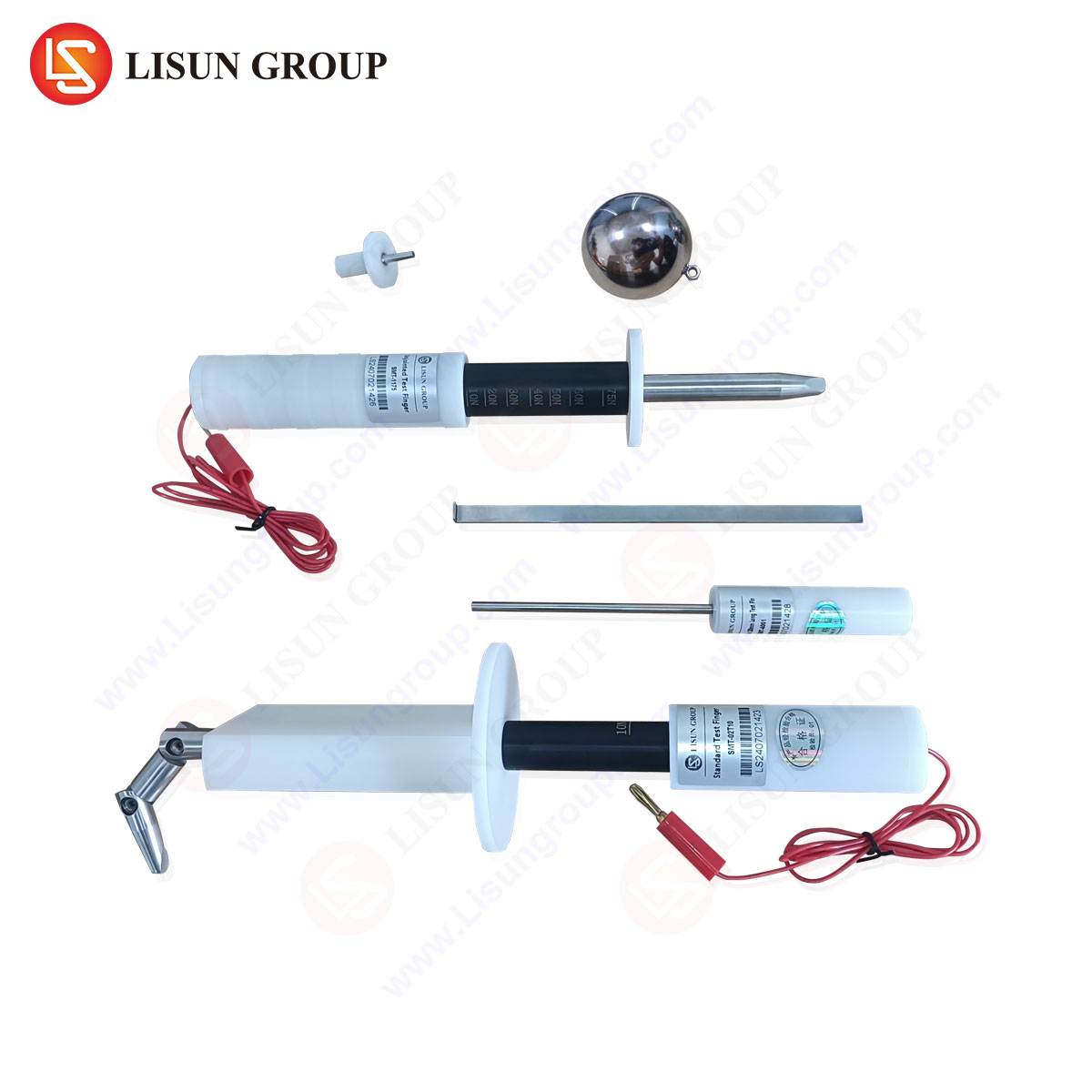
The proliferation of electrical and electronic equipment across domestic, commercial, and industrial environments necessitates rigorous safety validation to mitigate risks of electric shock, fire, and mechanical injury. Among the suite of tools employed for compliance testing, the straight test probe, often standardized as the “test finger” or “test pin,” serves as a critical simulation device. It is engineered to assess the adequacy of enclosures and protective barriers against accidental contact with hazardous live parts or moving components. This article provides a comprehensive technical examination of the straight test probe, its governing standards, operational principles, and its indispensable role in validating product safety across a diverse spectrum of industries. The analysis will incorporate specific reference to the LISUN Straight Test Probe (Model: LS-TP-01A), detailing its specifications and application as a representative exemplar of this essential test apparatus.
Anthropomorphic Simulation and Standardized Geometries
The fundamental design premise of the straight test probe is anthropomorphic simulation. It replicates the dimensions and probing capability of a human finger, small tools, or wires that might inadvertently breach an enclosure during use, maintenance, or foreseeable misuse. International safety standards, primarily the IEC 61032 “Protection of persons and equipment by enclosures – Probes for verification” and its regional derivatives (e.g., UL, CSA, GB), define a series of precisely dimensioned test probes. The straight test probe, typically corresponding to Figure 1 (Test Probe A) in IEC 61032, is the most frequently employed for evaluating protection against access to hazardous parts.
The probe’s geometry is not arbitrary; it is the result of extensive ergonomic and statistical analysis. Its diameter, typically 12mm, and length are calibrated to represent a child’s finger or a slender object. A hemispherical tip ensures the probe does not mimic a sharp tool for puncture testing (a role reserved for other probes like the test pin or chain probes) but rather simulates blunt exploration. This distinction is crucial: the straight test probe assesses “finger-safe” design, ensuring that openings, grilles, slots, or gaps in an enclosure are sufficiently narrow or deep to prevent dangerous contact.
Technical Specifications and Material Considerations for the LISUN Test Probe
The efficacy of a test probe is contingent upon strict adherence to dimensional tolerances and material properties. The LISUN LS-TP-01A Straight Test Probe is manufactured to comply fully with the specifications outlined in IEC 61032, UL 61010-1, GB 4706.1, and other cognate standards. Its construction embodies the necessary precision and durability for reliable, repeatable testing.
Key Specifications:
- Standard Compliance: IEC 61032 Fig. 1 (Test Probe A), UL 61010-1, GB 4706.1.
- Material: The main body is constructed from high-strength, insulating engineering polymer, ensuring it does not conduct electricity and simulates a human finger’s insulating properties. Joints are metallic to allow for articulation under force.
- Dimensions: Total length of 100mm, with a cylindrical shaft diameter of 12mm ±0.1mm. The tip is a perfect hemisphere of 20mm radius.
- Joint Configuration: A single, centrally-located articulated joint simulates the knuckle, allowing the probe to pivot. This articulation is critical for probing into openings at various angles.
- Force Application: The probe is designed to be applied with a standardized force, typically 30N ± 10% for certain tests and 1N for others, to simulate reasonable pushing or poking force without causing unrealistic deformation of the equipment under test (EUT).
Table 1: LISUN LS-TP-01A Dimensional Tolerances
| Feature | Specification | Tolerance |
| :— | :— | :— |
| Overall Length | 100 mm | ±0.5 mm |
| Cylinder Diameter | 12 mm | ±0.1 mm |
| Tip Radius | 20 mm | ±0.1 mm |
| Joint Pivot Range | 90° minimum | – |
| Insulating Material | Surface Resistance > 10^12 Ω | – |
This precise engineering ensures that test results are not artifacts of probe variability but true indicators of the EUT’s safety design.
Operational Principles and Testing Methodology
The application of the straight test probe follows a systematic methodology prescribed by end-product safety standards such as IEC 60335-1 (household appliances), IEC 60601-1 (medical devices), IEC 60950-1/62368-1 (IT/AV equipment), and IEC 60598-1 (lighting). The core principle is to apply the probe to every external opening, aperture, or gap of the equipment in its fully assembled, ready-for-use state, with covers and doors as intended by the manufacturer.
The test procedure involves articulating the probe at its joint and applying it with the specified force in every possible orientation and direction. The objective is to determine if:
- The probe can contact a hazardous live part (defined as a part exceeding certain safety extra-low voltage limits, e.g., > 42.4V peak AC or > 60V DC).
- The probe can contact an uninsulated live part that is inadequately secured, potentially leading to a short circuit.
- The probe can contact moving parts like fans, gears, or belts that could cause mechanical injury.
- The probe can bypass an interlock switch intended to de-energize hazardous parts upon access.
A successful test outcome is one where the probe cannot make contact with the defined hazardous part. In some cases, if contact is possible, the standard may permit it only if the part is deemed not hazardous (e.g., properly insulated, SELV) or if an additional protective measure, like a grounded barrier, is interposed.
Industry-Specific Applications and Use Cases
The universality of the finger-safe principle makes the straight test probe a ubiquitous tool in compliance laboratories serving numerous sectors.
- Household Appliances & Consumer Electronics: For food processors, blenders, electric heaters, and power adapters, the probe verifies that ventilation slots or openings for controls cannot be used to touch internal wiring or live terminals. In toys, it ensures battery compartments are inaccessible to small fingers.
- Lighting Fixtures: The probe tests the accessibility of live parts through lampholders, diffuser openings, or seams in the housing of LED drivers and luminaires, both during lamp replacement and in the installed state.
- Industrial Control Systems & Automotive Electronics: In control panels, PLC housings, and automotive ECUs (Electronic Control Units), the probe checks cable entry ports, connector shrouds, and panel seams to prevent contact with mains-voltage terminals or high-current busbars.
- Telecommunications & Office Equipment: For servers, routers, printers, and power distribution units, it ensures user-accessible areas are safe, particularly where modular components are inserted or removed.
- Medical Devices: A critical application where patient and operator safety is paramount. The probe tests ports, interfaces, and covers on devices like patient monitors, infusion pumps, and diagnostic equipment to prevent accidental shock.
- Aerospace and Aviation Components: In-flight entertainment systems, cockpit control panels, and galley equipment, the probe validates that vibration and frequent handling do not create access paths to hazardous circuits.
- Electrical Components: For switches, sockets, and connection terminals, the probe is used to confirm that live contacts are not accessible when the device is in the “off” position or when a plug is partially inserted.
Comparative Analysis with Supplementary Test Probes
While the straight test probe is the primary tool for finger-safe assessment, it is part of a family. The LISUN Test Pin (Model: LS-TP-02B), conforming to IEC 61032 Figure 2 (Test Probe B), is a slender, rigid, non-conductive rod with a defined tip radius. Its purpose is distinctly different: to evaluate protection against access by small, slender objects like wires or tools that might be inserted into openings, potentially bridging creepage and clearance distances or contacting live parts behind grilles that stop a finger. Another variant is the articulated test finger, which may have multiple joints for more complex simulations.
The selection of probe is dictated by the standard’s clause for “resistance to access by foreign objects.” A comprehensive safety evaluation often requires a sequential or parallel application of multiple probes to fully assess the enclosure’s protective design.
Competitive Advantages of Precision-Engineered Test Probes
The value of a test probe like the LISUN Straight Test Probe lies beyond mere compliance. Its advantages are realized in the integrity of the testing process itself.
- Metrological Traceability and Repeatability: Precision machining ensures dimensional conformity. This guarantees that a “pass” or “fail” result is a function of the EUT’s design, not probe inconsistency, providing defensible data for certification bodies.
- Material Durability and Long-Term Stability: High-quality polymers and metals resist wear, deformation, and environmental factors (e.g., humidity, laboratory chemicals), maintaining calibration over thousands of tests and years of use.
- Ergonomic Design for Operator Consistency: A well-balanced probe with clear force application points allows technicians to apply the standardized force consistently, reducing human error and subjective interpretation of the test.
- Comprehensive Documentation and Certification: Reputable manufacturers supply detailed specification sheets and, where applicable, certificates of conformity traceable to national standards, which are required for accredited laboratory audits.
Integration within a Broader Safety Testing Regime
It is imperative to contextualize the straight test probe as one instrument within a holistic safety testing framework. A complete evaluation of electrical equipment involves a battery of tests: dielectric strength (hipot) testing, earth bond continuity, temperature rise, abnormal operation, and environmental stress tests. The mechanical assessment with test probes is a prerequisite, ensuring that subsequent electrical tests are performed on a product whose basic enclosure integrity is validated. Failure at the probe test stage often indicates a fundamental design flaw that must be rectified before proceeding to more complex and costly validation stages.
Frequently Asked Questions (FAQ)
Q1: Can the straight test probe be used to test for sharp edges?
No. The straight test probe is designed for assessing access to hazardous parts, not for evaluating mechanical hazards like sharp edges or burrs. Sharp edge testing is performed using dedicated tools, such as a sharp edge tester or a specified test gauge, as outlined in standards like IEC 61032.
Q2: How often should a test probe be calibrated or verified?
While there is no universal mandated interval, best practice in accredited laboratories (per ISO/IEC 17025) dictates regular verification. An annual dimensional inspection using calibrated calipers and micrometers is recommended to confirm critical parameters like diameter, tip radius, and joint integrity remain within the strict tolerances of the standard. Visual inspection for damage should be performed before each use.
Q3: What is the consequence if my product fails the straight test probe assessment?
Failure indicates a non-compliance with the fundamental safety requirement for protection against electric shock or mechanical injury from moving parts. The product design must be modified before it can be submitted for certification. Modifications may involve adding internal barriers, redesigning vent patterns with baffles, reducing gap sizes, or improving the interlocking mechanism for service access points.
Q4: Are there different sizes of “test fingers” for different product categories?
The IEC 61032 standard defines several probes (A, B, C, etc.) for different purposes. While the straight test probe (Probe A) is the most common, certain product-specific standards may reference other probes. For example, toys may require a “small parts cylinder” to assess choking hazards, which is a separate apparatus. It is essential to consult the specific end-product standard for the exact probe requirements.
Q5: Does the probe need to be electrically connected during testing?
Typically, no. The standard test is a mechanical access check. The equipment is not energized during the probe test. However, in some specific evaluations (e.g., testing interlock switches), the circuit may be monitored with an electrical indicator to see if contact is made. The probe itself is insulating, so it does not need to be part of an electrical circuit for the basic accessibility test.