




Abstract
The SW-6 Power Cord Flexibility Bending Tester is a sophisticated, multi-station apparatus engineered for the rigorous validation of power cord and flexible cable durability. Its core purpose is to automate and standardize the critical bending test mandated by international safety standards, simulating years of real-world flexing stress in a controlled laboratory environment. By ensuring compliance with key standards such as IEC 60884-1 and IEC 60745-1, this equipment provides R&D and quality assurance professionals with reliable, repeatable data on cord integrity, conductor continuity, and insulation resilience. The SW-6 Power Cord Flexibility Bending Tester delivers exceptional value through its high-throughput, six-station design, advanced PLC-controlled servo drive system, and precise current-monitoring judgment, making it an indispensable tool for manufacturers aiming to enhance product safety and reliability while streamlining the certification process.
1.1 The Critical Role of Bending Tests in Product Safety
Flexibility or bending tests are fundamental validation procedures in electrical product safety. Their primary objective is to assess the mechanical endurance of power supply cords, appliance couplers, and flexible cables under repeated bending stress—a common failure mode in daily use. A cord that fails prematurely can lead to broken conductors, compromised insulation, and ultimately, electrical shock or fire hazards. By subjecting samples to thousands of controlled bending cycles while under electrical load, this test accurately predicts service life and identifies design weaknesses in the cord, its terminations, and the strain relief components. For manufacturers, passing this test is not merely a regulatory hurdle but a direct indicator of product longevity and user safety, forming a cornerstone of a robust Design for Reliability (DfR) strategy.
1.2 Governing Standards and Test Methodologies
The test methodology for the SW-6 Power Cord Flexibility Bending Tester is strictly defined by several international and national standards, ensuring global recognition of test results. The apparatus is designed to meet the specific clauses within these documents, which dictate parameters like bending angle, speed, load current, and pass/fail criteria.
- IEC 60884-1 (Plugs and socket-outlets for household and similar purposes): Clause 24 details the flexing test for cord anchorages, a critical assessment for plug and connector integrity.
- IEC 60745-1 (Hand-held motor-operated electric tools): Clause 22 specifies the flexing test for power cords of portable tools, which endure significant mechanical stress.
- IEC 60335-1 (Household and similar electrical appliances): Clause 25.14 outlines the flexing test requirements for appliance cords, covering a vast range of consumer products.
- GB/T 2099.1 (Chinese national standard for plugs and sockets): This standard harmonizes with IEC 60884-1, making the tester essential for both export and domestic Chinese market compliance.
2.1 Core System Components and Functional Overview
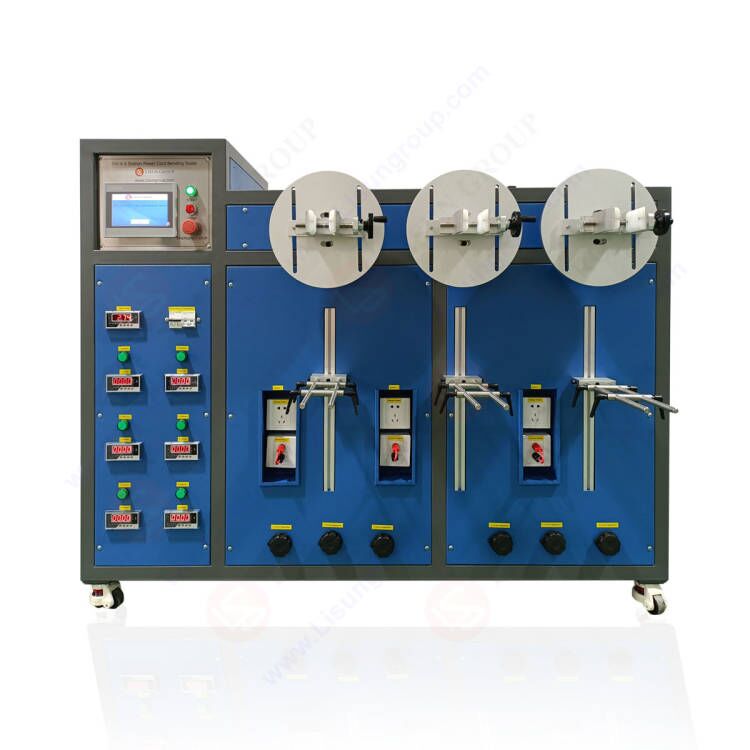
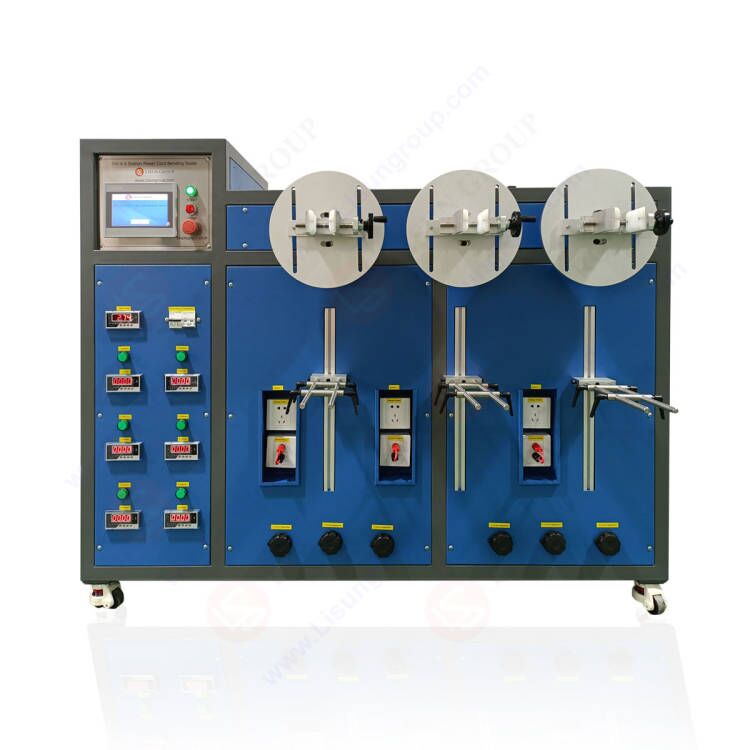
The LISUN SW Series represents a modern, automated approach to flexibility testing, moving beyond manual or semi-automatic methods. The system’s architecture is built around precision mechanics, reliable actuation, and intelligent control. Key components include a rigid aluminum alloy frame providing stable oscillation, high-precision servo motors for smooth and accurate angular displacement, and interchangeable test fixtures (bending arms and clamps) designed to accommodate various cord types and standard geometries. The electrical subsystem is equally critical, incorporating a programmable load current source and a sensitive monitoring circuit that continuously checks for conductor breakage throughout the test duration. This integrated design ensures that every aspect of the standard—mechanical motion and electrical monitoring—is executed with repeatable accuracy.
2.2 Advanced Control and Judgment Systems: PLC and Servo Drive
At the heart of the SW-6’s reliability is its Programmable Logic Controller (PLC) and servo motor drive system. The PLC serves as the central brain, allowing for the digital input and storage of all test parameters: number of cycles (typically 10,000 to 50,000+), bending angle (e.g., 90°, 180° as per standard), speed (in cycles per minute), and dwell time at extreme positions. The servo motor, driven by precise commands from the PLC, delivers consistent, low-vibration motion that is crucial for test repeatability. Unlike simpler systems, this setup eliminates variability from mechanical wear or inconsistent manual operation. The true technical sophistication lies in the integrated judgment system, which monitors the current flowing through the test specimen. If the current is interrupted—indicating a broken conductor—the system automatically halts, records the cycle count at failure, and alerts the operator, providing unambiguous and auditable test results.
3.1 High-Throughput Design for Production and Laboratory Testing
The SW-6 Power Cord Flexibility Bending Tester is specifically configured for high-volume testing environments. Its six independent test stations operate simultaneously from a single control unit, offering a dramatic increase in throughput compared to single or dual-station models. This design is invaluable for quality control laboratories handling batch acceptance testing, for R&D departments conducting comparative studies on multiple cord designs or materials, and for third-party certification labs that require efficient processing of client samples. The parallel operation does not compromise individual station control; each station’s parameters are set globally, but the PLC monitors and records the outcome for each specimen independently. This capability transforms a traditionally time-consuming test into a highly efficient, data-rich process, accelerating time-to-market and improving statistical confidence in test outcomes.
3.2 Operational Workflow and Parameter Adjustment
Operating the SW-6 involves a logical sequence designed for technician efficiency. The process begins with mounting the test sample into the appropriate fixture, ensuring the cord is clamped at the specified distances from the accessory (plug or appliance inlet). The bending arm is then attached to the cord at the prescribed point. On the human-machine interface (HMI) touchscreen, the operator inputs the test parameters directly aligned with the target standard’s clause. Once initiated, the test runs autonomously. A key advantage is the system’s flexibility; parameters such as bending angle, speed, and load current are not fixed but are fully adjustable within the physical limits of the machine. This allows the same SW-6 Power Cord Flexibility Bending Tester to be configured for different standards or even for creating accelerated life test profiles beyond standard requirements for internal quality benchmarking.
4.1 Model Specifications and Selection Criteria
The LISUN SW Series offers scalable solutions to match varying testing volumes and budgetary considerations. The primary differentiator is the number of test stations. The SW-1 is an ideal, cost-effective unit for low-volume testing, prototype validation, or educational use, providing full compliance in a single-station format. The SW-2 dual-station model offers a balance, allowing for a control sample and test sample to be run concurrently, which is useful for comparative material studies. The SW-6 Power Cord Flexibility Bending Tester is the flagship model for high-demand environments. Selection should be based on projected sample throughput, laboratory space, and the need for parallel testing to generate statistically significant data sets quickly.
4.2 Technical Parameter Benchmarking Table
The following table provides a technical comparison of key operational parameters across the SW Series models, benchmarking them against a common standard requirement.
| Parameter | SW-1 Single Station | SW-2 Dual Station | SW-6 Six Station | IEC 60884-1 Clause 24 Typical Requirement |
|---|---|---|---|---|
| Test Stations | 1 | 2 | 6 | 1 (per test) |
| Bending Angle | 0-180° adjustable | 0-180° adjustable | 0-180° adjustable | 90° (for cord anchorage test) |
| Bending Speed | 5-60 cycles/min | 5-60 cycles/min | 5-60 cycles/min | Approx. 0.33 Hz (20 cycles/min) |
| Max Load Current | 0-20A adjustable | 0-20A adjustable | 0-20A adjustable | 0.5A, 1.25A, or 2.5A (depending on cord type) |
| Cycle Counter | 0-999,999 | 0-999,999 | 0-999,999 | 10,000 cycles (typical) |
| Drive System | Servo Motor & PLC | Servo Motor & PLC | Servo Motor & PLC | Not specified (method defined) |
| Judgment Method | Current Monitoring, Auto Stop | Current Monitoring, Auto Stop | Current Monitoring, Auto Stop | Conductor continuity check |
5.1 Household Appliance and Power Tool Manufacturing
For manufacturers of vacuum cleaners, kitchen appliances, power drills, and angle grinders, the power cord is a high-stress component. The SW-6 Power Cord Flexibility Bending Tester is used to validate cord assemblies from different suppliers, qualify new cord designs with enhanced flexibility, and verify that strain relief mechanisms effectively prevent stress from being transmitted to electrical terminations. Testing to IEC 60335-1 and IEC 60745-1 ensures that products can withstand the twisting, pulling, and bending encountered in typical use, reducing warranty returns and mitigating safety risks. The six-station capability is particularly useful for running full validation tests on multiple product lines simultaneously.
5.2 Plug, Socket, and Connector Component Suppliers
Component manufacturers must demonstrate that their products enable end devices to meet final safety standards. A plug or appliance inlet’s cord anchorage is specifically evaluated using the test method in IEC 60884-1 Clause 24. Suppliers use the bending tester to perform type tests on new molds and designs, conduct routine quality audits on production samples, and provide certified test data to their customers (the appliance manufacturers). The automatic current-monitoring feature provides clear, objective evidence that the anchorage design maintains electrical continuity throughout the mandated bending cycles.
5.3 Automotive and Specialized Electronics
While not the primary audience, manufacturers in automotive electronics (e.g., for charging cables, portable devices in vehicles) and other specialized fields also utilize cable flexibility testing. Cables in these applications face unique vibration and flexing environments. The adjustable parameters of the SW-6 allow engineers to create custom test profiles that simulate these specific conditions, going beyond standard consumer tests to validate durability for harsh operational lifecycles.
6.1 Developing a Comprehensive Test Plan
Effective utilization of the SW-6 Power Cord Flexibility Bending Tester begins with a well-defined test plan. This plan should specify the exact standard and clause being assessed, the sample selection criteria (including sample size and preconditioning, if any), and the precise test parameters (angle, speed, load current, number of cycles). It must also detail the fixture setup—the distances from the clamp to the accessory and from the accessory to the bending arm are critical and standard-dependent. A robust plan includes not only pass/fail criteria (no break in conductors) but also post-test inspection requirements, such as examining the cord for insulation damage or measuring displacement at the cord anchorage.
6.2 Data Interpretation and Failure Analysis
The tester provides clear output: a pass or a failure with the exact cycle count at which conductor breakage occurred. Interpreting this data is crucial. A failure well before the target cycle count (e.g., 2,000 cycles vs. 10,000) indicates a fundamental design or material flaw. A failure near the target may suggest a marginal design. Engineers must then perform root cause analysis on failed samples. This involves dissecting the cord at the failure point to determine if the break was in the conductor strands, at a solder joint, or due to insulation cracking that led to shorting and fuse blowout (which also interrupts current). This analysis feeds directly back into the design process for continuous improvement.
The LISUN SW-6 Power Cord Flexibility Bending Tester embodies a critical convergence of mechanical engineering precision, automated control, and standardized electrical safety validation. Its technical merits, including a PLC-servo drive system for unmatched consistency, a current-based automatic judgment mechanism for objective results, and a high-throughput six-station design, address the core needs of modern manufacturing and testing laboratories. By rigorously applying the methodologies of IEC 60884-1, IEC 60745-1, and related standards, it transforms a subjective assessment of durability into a quantifiable, repeatable metric of product reliability.
For end-users—R&D engineers, quality managers, and compliance specialists—the practical value is multifaceted. It significantly accelerates the testing cycle, enabling faster design iteration and product release. It provides defensible data for safety certifications, reducing market access barriers. Most importantly, it serves as a proactive tool for risk mitigation, identifying potential cord failures before they reach the consumer. In an industry where safety and reliability are paramount, investing in such a comprehensive validation instrument is not merely an operational expense but a strategic commitment to product excellence and brand integrity. The SW-6 facilitates this commitment by delivering the technical rigor necessary to ensure that the humble power cord, a component often taken for granted, meets the highest standards of performance and safety.
Q1: How does the SW-6’s automatic stop and judgment system work, and why is it superior to manual observation?
A: The system operates by passing a pre-set, standard-compliant load current (e.g., 0.5A, 1.25A) through the conductors of the test specimen. A sensitive monitoring circuit continuously measures this current. If a conductor breaks at any point during the tens of thousands of bending cycles, the circuit opens and the current drops to zero. The PLC instantly detects this change, halts the servo motor, and records the exact cycle count at which the failure occurred. This method is objectively superior to manual observation, which relies on an operator noticing a flickering lamp or listening for a relay click, introducing risk of human error, especially during unattended long-duration tests. The automated method ensures 100% detection reliability, provides precise failure timing data for analysis, and creates an unambiguous electronic record for audit trails.
Q2: Can the SW-6 Power Cord Flexibility Bending Tester be used for standards beyond IEC 60884-1, such as those for medical or industrial equipment cords?
A: Yes, the fundamental principle of the test—repeated bending under load—is common across many standards. The SW-6’s key advantage is its fully adjustable parameters. While pre-configured settings can be saved for common standards, an engineer can manually set the bending angle, speed, load current, and cycle count to match the specific requirements of other documents, such as IEC 60601-1 for medical equipment or various UL standards for North America. The machine’s capability to perform the mechanical action and electrical monitoring is universal. The responsibility lies with the testing laboratory to program the device with the correct parameters as stipulated in their target standard, making the SW-6 a highly versatile platform for flexibility testing across multiple industries.
Q3: What are the key maintenance considerations for ensuring the long-term accuracy and reliability of the SW-6 tester?
A: Maintaining calibration and mechanical integrity is crucial for consistent results. Primary maintenance focuses on the servo system and fixtures. Periodic checks should verify the bending angle accuracy using a digital protractor or angle gauge. The linear bearings and guide rails require regular cleaning and light lubrication to ensure smooth, friction-free oscillation. The test clamps and bending arms must be inspected for wear or deformation that could improperly grip the cord and invalidate the test. Electrically, the load current output should be verified annually against a calibrated multimeter or current shunt. Finally, keeping the PLC software updated ensures access to the latest features and stability. A simple daily check of system homing and a trial run with a known-good sample can confirm overall operational readiness.