




Abstract
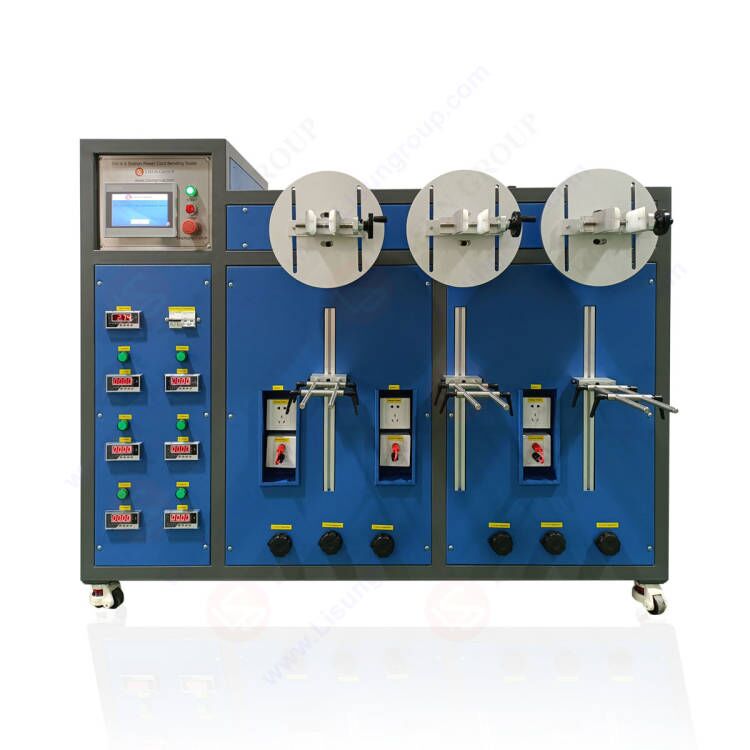
The LISUN SW-6 Power Cord Flexibility Bending Tester is a sophisticated, automated instrument designed to validate the mechanical endurance and electrical integrity of power supply cords and flexible cables under repeated bending stress. This six-station system simulates real-world operational wear, ensuring compliance with critical international safety standards such as IEC 60884-1, IEC 60745-1, and IEC 60335-1. For R&D and quality assurance professionals in appliance manufacturing, power tool production, and component supply, the SW-6 provides high-throughput, repeatable testing. Its core value lies in its PLC-controlled precision, servo-driven motion, and current-monitoring failure detection, delivering objective, data-driven validation of cord reliability essential for product safety certification and market access.
1.1 The Critical Role of Bending Endurance in Product Safety
Power cords and flexible cables are the lifelines of portable and stationary electrical equipment, subjected to repeated mechanical stress throughout their operational life. Bending, twisting, and flexing can lead to internal conductor fatigue, insulation degradation, and eventual failure, posing significant electrical shock and fire hazards. Reliability validation through standardized flexibility testing is therefore a mandatory step in the design verification and type-testing phases for a wide range of electrical products. This process objectively quantifies a cord assembly’s ability to withstand mechanical wear without compromising its electrical safety or functional integrity.
1.2 Core Principles of the Bending Test Method
The standardized test method involves clamping a cord sample in a specific configuration and subjecting it to a defined number of bending cycles at a prescribed angle and rate. A specified load mass is attached to the free end to simulate practical stress. Throughout the test, the electrical continuity of the conductors is monitored. Failure is typically defined as a break in the conductor, indicated by a loss of current flow. The number of cycles endured before failure, or the successful completion of a mandated cycle count (e.g., 10,000, 20,000, or 40,000 cycles), serves as the key performance metric. This method provides a reproducible and comparable assessment of cord construction quality.
2.1 Product Line Architecture and Model Differentiation
The LISUN SW Series is engineered to cater to varying laboratory throughput and testing volume requirements. The series comprises single-station (SW-1), dual-station (SW-2), and six-station (SW-6) configurations. While all models share the same core technological principles—PLC control, servo motor drive, and current-based failure judgment—their primary distinction lies in testing capacity. The SW-6 Power Cord Flexibility Bending Tester represents the high-productivity solution, enabling simultaneous testing of six independent cord samples. This parallel operation drastically reduces validation time for batch testing and quality control sampling, making it ideal for high-volume manufacturers and third-party laboratories.
2.2 Technical Specification Comparison Across Models
The following table provides a comparative overview of key operational parameters across the SW series, benchmarked against typical requirements from foundational standards like IEC 60884-1.
| Parameter | SW-1 Single Station | SW-2 Dual Station | SW-6 Six Station | Typical IEC 60884-1 Requirement |
|---|---|---|---|---|
| Test Stations | 1 | 2 | 6 | 1 (per test setup) |
| Bending Angle | 0° – 180° adjustable | 0° – 180° adjustable | 0° – 180° adjustable | 90° ± 1° (Clause 23.2) |
| Bending Speed | 10-60 cycles/min adjustable | 10-60 cycles/min adjustable | 10-60 cycles/min adjustable | Approx. 0.33 Hz (20 cycles/min) |
| Cycle Count | 0-999,999 programmable | 0-999,999 programmable | 0-999,999 programmable | e.g., 10,000, 20,000 cycles |
| Load Current | 0-3A adjustable for failure detection | 0-3A adjustable per station | 0-3A adjustable per station | Sufficient to indicate break (e.g., 0.1A or 0.25A) |
| Control System | PLC + Touch Screen HMI | PLC + Touch Screen HMI | PLC + Touch Screen HMI | Manual or automated control |
3.1 Precision Motion Control: PLC and Servo Drive Integration
At the heart of the SW-6 tester is a Programmable Logic Controller (PLC) integrated with a high-resolution touch-screen Human-Machine Interface (HMI). This system provides precise command and monitoring of a servo motor drive system. Unlike simpler AC motor setups, the servo drive offers exceptional control over angular position, speed, and acceleration. This ensures each bending cycle is executed with exact repeatability—the angle is consistently achieved, and the motion profile is smooth and controlled. The PLC allows for the pre-programming of complex test profiles, including total cycle count, speed, and angle, which are stored and recalled for different product standards.
3.2 Intelligent Failure Detection: Current Monitoring Circuitry
The system’s failure judgment mechanism is a critical differentiator. Each of the six test stations is equipped with an independent, adjustable current monitoring circuit. During testing, a low-voltage, low-current signal (typically 0.1A to 3A, adjustable) is passed through the cord’s live conductor. The system continuously monitors this current. If a conductor breaks due to fatigue, the circuit opens, and the current drops to zero. The PLC instantly detects this change, records the exact cycle count at which the failure occurred, and can automatically stop the specific station or alert the operator. This objective, electrical method eliminates subjective visual inspection and ensures accurate, reliable failure reporting.
3.3 Mechanical Structure and Sample Fixturing
The tester features a robust mechanical frame constructed from high-strength aluminum profiles and precision-machined components to ensure stability and minimize vibration during high-speed operation. Each station includes a top clamping device to secure the cord near the strain relief and a bottom oscillating arm to which the cord and load are attached. The clamping mechanisms are designed to accommodate a wide range of cord diameters and types without damaging the sheath. The geometry of the fixture is designed to comply with the bending radius and free length specifications outlined in standards such as GB/T 2099.1 (the Chinese national standard harmonized with IEC 60884).
4.1 Applicable Standards and Specific Clause References
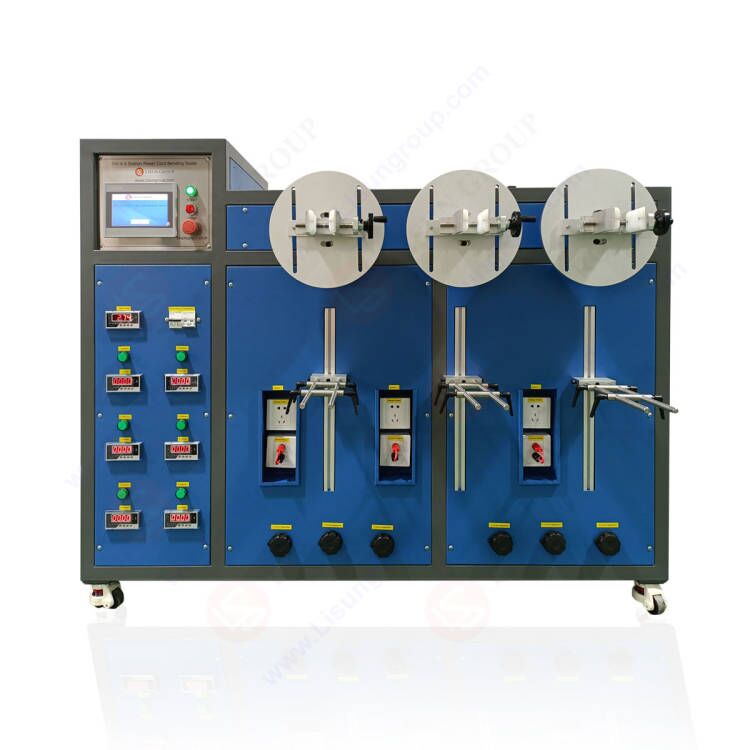
The LISUN SW-6 is designed to facilitate compliance testing for a broad spectrum of international and national standards governing the safety of electrical accessories and equipment. Its adjustable parameters allow it to meet the exact test conditions stipulated in these documents. Key standards include:
- IEC 60884-1: Plugs and socket-outlets for household and similar purposes. Clause 23, “Flexibility of cables and cord anchorage,” details the bending test procedure for non-rewirable and rewireable plugs.
- IEC 60745-1: Hand-held motor-operated electric tools. Clause 25, “Supply connection and external flexible cords,” references the need for cord flexibility testing as part of durability validation.
- IEC 60335-1: Household and similar electrical appliances. Clause 25, “Supply connection and external flexible cords,” includes requirements for cord anchorage and flexibility, often verified through a bending test.
- GB/T 2099.1: The Chinese national standard equivalent to IEC 60884-1, with identical core technical requirements in its corresponding clauses.
4.2 Configuring Test Parameters for Standard-Specific Validation
To execute a compliant test, engineers must configure the SW-6’s parameters according to the relevant standard’s clause. For example, testing a plug per IEC 60884-1 Clause 23.2 typically requires setting a 90-degree bending angle, a speed of approximately 20 cycles per minute, and a load mass as specified in the standard’s tables based on cord type. The test is run for the mandated number of cycles (e.g., 10,000 for ordinary cords). The load current is set to a low value, such as 0.1A, to sensitively detect any break. The system’s programmability allows labs to create and save dedicated test recipes for each standard and product type, ensuring consistent and repeatable application of test conditions.
5.1 Step-by-Step Testing Procedure
- Sample Preparation & Fixturing: The power cord sample is prepared according to the standard (e.g., appropriate free length). It is securely clamped in the top fixture, and the specified load mass is attached to its free end, which is then fixed to the oscillating arm.
- Parameter Programming: The operator uses the touchscreen HMI to select or input the test recipe: bending angle (e.g., 90°), speed (e.g., 20 cpm), total target cycles (e.g., 20,000), and failure detection current (e.g., 0.25A).
- Test Execution & Monitoring: The test is initiated. All six stations operate simultaneously but independently. The HMI displays real-time data for each station: current cycle count, status (running/passed/failed), and elapsed time.
- Result Recording & Analysis: Upon test completion (either reaching the target cycle count or upon failure), the system stores the final result for each station. A pass/fail report can be generated, noting the cycle count at failure for any failed samples. This data is crucial for statistical process control and design improvement.
5.2 Target Industries and Application Scenarios
- Household Appliance Manufacturers: Validating the cords on items like vacuum cleaners, blenders, and lamps that are frequently moved and bent during use.
- Hand-Held Electric Tool Producers: Ensuring the ruggedness of cords on drills, grinders, and saws used in demanding industrial and construction environments, as per IEC 60745-1.
- Plug, Socket, and Cord Set Suppliers: Performing type tests and batch quality checks on components to certify compliance with IEC 60884-1 or GB/T 2099.1 before shipment to OEMs.
- Third-Party Testing Laboratories: Providing certified compliance testing services to multiple clients, where high throughput and unwavering repeatability are critical for accreditation and business efficiency.
- Automotive Electronics: Testing the durability of low-voltage flexible cables and harnesses used in vehicle applications where vibration and flexing are concerns.
6.1 Enhanced Productivity through Multi-Station Parallel Testing
The primary advantage of the SW-6 model is its dramatic increase in testing throughput. By conducting six tests in parallel, the time required to validate a production batch or complete a multi-sample test matrix is reduced by approximately 80% compared to using a single-station tester. This parallel capability is not merely a convenience; it is a critical economic factor for quality control departments facing high-volume production and short lead times, enabling more comprehensive sampling without creating a bottleneck.
6.2 Data Integrity and Automated Reporting Functions
The system transcends simple mechanical testing by being a data acquisition node. Every test parameter and result is digitally recorded. This eliminates manual transcription errors and creates an auditable trail for quality management systems (e.g., ISO 9001). The ability to generate automatic test reports, either on-screen or via connected printer/PC, streamlines documentation for certification submissions and internal quality reviews. This feature is particularly valued in accredited laboratories where traceability and documentation are paramount.
6.3 Safety and Reliability Design Elements
Built-in safety features protect both the operator and the equipment. These include emergency stop buttons, mechanical safety guards around moving parts, and software limits to prevent over-travel. The independent control of each station means a failure or emergency stop on one station does not affect the others. The use of high-quality servo components and precision bearings ensures long-term mechanical reliability and minimizes maintenance downtime, contributing to a lower total cost of ownership over the instrument’s lifecycle.
The LISUN SW-6 Power Cord Flexibility Bending Tester represents a significant advancement in automated reliability validation technology. By integrating precise PLC-servo motion control with intelligent, current-based failure detection across six independent stations, it delivers the accuracy, repeatability, and high throughput demanded by modern manufacturing and compliance testing. Its design directly addresses the rigorous requirements of key international standards, including IEC 60884-1, IEC 60745-1, and IEC 60335-1, providing engineers with a trustworthy tool for objective safety assessment. For professionals in appliance manufacturing, power tool production, and component supply, the practical value of the SW-6 is clear: it accelerates the validation cycle, enhances data integrity, and provides definitive evidence of product durability. Ultimately, employing such a system is an investment in risk mitigation, ensuring that power cord failures are identified in the laboratory long before they can become a hazard in the field, thereby safeguarding both brand reputation and end-user safety.
Q1: How does the SW-6 tester’s failure detection system work, and why is it more reliable than visual inspection?
A: The system employs an electrical monitoring method. A small, adjustable current (e.g., 0.1A – 3A) is passed through the conductor under test. The PLC continuously monitors this current in real-time. When internal strand breakage due to fatigue occurs, it creates an open circuit, causing the current to drop to zero. The PLC instantly registers this event, records the exact cycle count, and can halt the test. This method is objective and immediate, eliminating the subjectivity and potential delay of an operator visually inspecting for a break, which can be subtle and intermittent in early failure stages. It ensures consistent, unambiguous pass/fail judgments aligned with standard definitions of failure.
Q2: Can the SW-6 be used to test cords for hand-held power tools according to IEC 60745-1, and what specific configurations are needed?
A: Yes, the SW-6 is well-suited for testing cords per IEC 60745-1, Clause 25. The standard references a flexibility test where the cord is bent repeatedly under load. The tester must be configured to the specific parameters called out in the relevant part-2 standard for the particular tool type (e.g., drills, sanders). This typically involves setting the appropriate bending angle (often 90°), a specified load mass attached to the cord, a defined bending speed, and a target number of cycles (commonly 20,000). The adjustable load current on the SW-6 is set to sensitively detect breaks. The machine’s programmability allows saving these parameters as a dedicated test recipe for IEC 60745-1 compliance.
Q3: What are the key maintenance considerations for ensuring the long-term accuracy and reliability of the SW-6 Bending Tester?
A: Maintaining calibration and mechanical integrity is crucial. Periodically, the angular displacement of the bending arm should be verified using a digital angle gauge to ensure it matches the HMI setting. The timing and cycle count accuracy should be checked against a reference timer. Mechanically, guide rails and bearings require regular cleaning and lubrication as per the manufacturer’s schedule to ensure smooth, low-friction operation. The clamping fixtures should be inspected for wear that could affect grip or sample alignment. Finally, the electrical failure detection circuit’s accuracy can be validated by simulating an open circuit with a test sample. Adhering to a preventive maintenance schedule preserves the tester’s repeatability and extends its service life.