

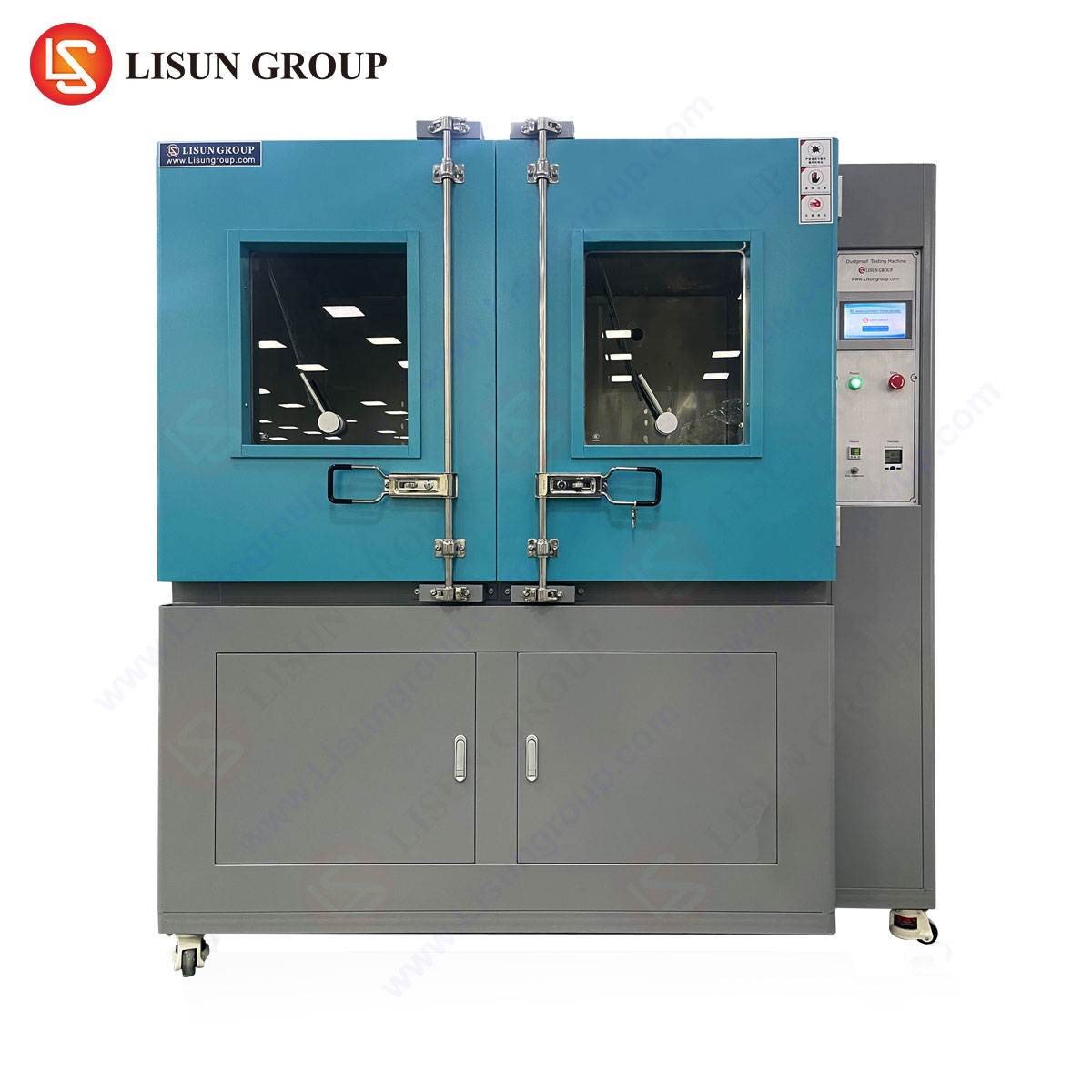



A Technical Guide to Thermal Cycling Chambers: Principles, Applications, and Implementation
Thermal cycling chambers, also known as temperature cycling test chambers, represent a cornerstone of environmental stress screening (ESS) and reliability verification within modern manufacturing and R&D. These instruments subject components, assemblies, and finished products to precisely controlled, repetitive fluctuations between extreme high and low temperatures. The primary objective is not merely to assess operational limits but to accelerate the manifestation of latent defects—fatigue failures, interconnect issues, and material degradations—that would otherwise emerge over a product’s operational lifespan. This guide provides a detailed examination of thermal cycling chamber technology, its underlying principles, critical application sectors, and key implementation considerations, with a specific focus on advanced solutions such as the LISUN HLST-500D Thermal Shock Test Chamber.
Fundamental Principles of Accelerated Thermal Stress Testing
The operational premise of a thermal cycling chamber is rooted in the physics of thermal expansion and contraction. Dissimilar materials within an electronic assembly—such as silicon dies, ceramic substrates, copper traces, solder joints, and plastic encapsulants—possess distinct coefficients of thermal expansion (CTE). During a temperature cycle, these materials expand and contract at different rates, inducing mechanical stress. Repetitive cycling leads to cyclic fatigue, which can culminate in failure modes including solder joint cracking, die attach separation, wire bond fracture, and delamination of layered structures.
The rate of temperature change, or ramp rate, is a critical parameter. More aggressive ramp rates generate higher thermal gradients and greater transient stresses, often accelerating failure mechanisms. Chambers are designed to achieve specified ramp rates while maintaining spatial temperature uniformity across the test volume, ensuring consistent stress application to all specimens. The dwell time at temperature extremes allows the unit under test (UUT) to thermally stabilize, ensuring the full thermal stress is applied. Testing standards such as IEC 60068-2-14 (Test N: Change of temperature), MIL-STD-810G Method 503.6, and JESD22-A104 define specific cycling profiles, including temperature extremes, transition rates, and cycle counts, tailored to different reliability assessment goals.
Architectural Configurations: Two-Zone vs. Single-Zone Chambers
Thermal cycling chambers are primarily categorized by their architectural approach to generating temperature transitions. The two-zone, or thermal shock, configuration utilizes separate high-temperature and low-temperature chambers. A mechanically driven basket or elevator rapidly transfers the test specimens between these zones, achieving extreme temperature change rates often exceeding 15°C per minute. This method is designed to induce severe thermal shock, simulating conditions like a device powering on in a frigid environment or being transported between vastly different climates.
In contrast, single-zone chambers use one workspace where the temperature is programmatically ramped up and down. While maximum ramp rates are typically lower than in a two-zone system, single-zone chambers offer superior control for more gradual, realistic profiling and are often used for temperature cycling with humidity (Temperature Humidity Bias, THB). The selection between these architectures depends on the specific failure mechanisms under investigation and the relevant industry compliance standards.
In-Depth Analysis: The LISUN HLST-500D Thermal Shock Test Chamber
The LISUN HLST-500D exemplifies the two-zone thermal shock chamber architecture, engineered for high-stress screening of components and assemblies. Its design prioritizes rapid transition, temperature stability, and operational durability, making it a pertinent instrument for sectors where reliability under extreme thermal transients is non-negotiable.
Core Specifications and Operational Parameters:
The HLST-500D features a nominal test volume of 500 liters, accommodating sizable or批量 test items. Its high-temperature zone operates up to +200°C, while the low-temperature zone reaches -65°C, covering a broad spectrum of military, automotive, and aerospace grade requirements. The chamber achieves a critical performance metric: the transition time from the high-temperature extreme to the low-temperature extreme (or vice versa) is typically less than 10 seconds. The subsequent recovery time, for the test load to stabilize at the target temperature, is within 5 minutes, ensuring efficient and rigorous test execution.
Testing Principle and Mechanical Design:
The chamber operates on a vertical transfer system. The test basket, holding the UUT, resides in a neutral pre-chamber position. Upon initiation of a cycle, the basket is swiftly lowered into either the high or low zone. This mechanical transfer, driven by a robust pneumatic or electrical lift system, is the key to achieving true thermal shock. Advanced models incorporate air circulation systems within each zone to ensure uniformity and optimize heat transfer to the specimens. The control system manages the intricate sequencing of basket movement, zone temperature regulation, and dwell timing with high precision.
Industry Use Cases and Application Examples:
- Automotive Electronics: Testing engine control units (ECUs), sensors, and infotainment systems for reliability against shock from under-hood heat to cold winter startup.
- Aerospace and Aviation Components: Qualifying avionics, satellite components, and communication modules for rapid temperature changes experienced during ascent/descent or in orbital environments.
- Telecommunications Equipment: Screening base station components, optical transceivers, and network switches for resilience to thermal shocks in outdoor enclosures.
- Medical Devices: Validating the robustness of implantable device components, diagnostic equipment, and handheld monitors against sterilization cycles or accidental exposure.
- Electrical Components: Accelerating life tests for connectors, relays, and switches where differing material CTEs can lead to contact failure.
Competitive Advantages in Rigorous Testing:
The HLST-500D’s advantages are manifested in several key areas. Its rapid transition capability ensures the application of a true shock stress, rather than a gradual ramp, which is essential for activating specific failure modes. The large workspace allows for testing of multiple units or sizable sub-assemblies simultaneously, improving throughput. Robust construction with high-grade insulation and reliable transfer mechanisms ensures minimal downtime and consistent performance over extended test durations, which may involve thousands of cycles. Furthermore, compliance with major international test standards provides assurance that data generated is acceptable for qualification and certification processes.
Sector-Specific Testing Protocols and Standards
The application of thermal cycling is dictated by sector-specific requirements and failure mode concerns.
- Electrical & Electronic Equipment/Consumer Electronics: Adherence to IEC 60068-2-14 is common. Testing focuses on solder joint integrity (per IPC-SM-785), PCB laminate stability, and connector reliability. For instance, a smartphone motherboard may undergo 1,000 cycles from -40°C to +85°C to simulate global use.
- Automotive Electronics: The AEC-Q100/101/200 series of standards mandates rigorous thermal cycling for integrated circuits and discrete components. Profiles often range from -55°C to +125°C or higher, with aggressive ramp rates to mimic automotive under-hood conditions.
- Lighting Fixtures (e.g., LEDs): IES LM-80-22 and TM-21 standards govern lumen maintenance testing, which often involves long-duration thermal cycling to predict LED lifespan and color shift. The integrity of the LED package, wire bonds, and thermal interface materials is critically assessed.
- Aerospace and Defense: MIL-STD-810G and MIL-STD-883 (Test Method 1010.8) define extreme thermal shock profiles. Components may be subjected to transfers between +125°C and -65°C in less than a minute to validate survival in launch or high-altitude scenarios.
- Medical Devices: ISO 13485 quality systems require verification of device performance under environmental stresses. Thermal cycling validates everything from the seals on in-vitro diagnostic cartridges to the battery contacts in portable monitors.
Critical Considerations for Chamber Selection and Test Design
Selecting an appropriate thermal cycling chamber requires a meticulous analysis of technical requirements.
- Test Volume and Load Considerations: The chamber’s workspace must accommodate the UUT without obstructing airflow. The thermal mass of the load significantly impacts the chamber’s ability to meet advertised ramp and recovery rates. A chamber’s performance specifications are typically defined for a defined aluminum load; user loads with higher mass will yield slower transitions.
- Temperature Range and Rate: The required extremes and transition speed must align with the target standard and the intended failure mechanism. A shock test (fast transition) and a cycle test (slower ramp) are not interchangeable.
- Control System and Programmability: The controller should allow for complex multi-segment profiling, cycle counting, and real-time monitoring of both chamber and, if used, device-under-test (DUT) monitoring signals. Interfaces for remote monitoring and data logging are essential for unattended long-term tests.
- Instrumentation and Fixturing: Proper fixturing is required to hold specimens without insulating them or creating atypical stress points. Ports for bringing electrical signals into the chamber for in-situ functional testing (often called “powered cycling” or “bias”) are crucial for detecting intermittent failures during the test.
- Calibration and Compliance: Regular calibration of sensors and performance verification per standards like ISO/IEC 17025 is mandatory to ensure test data integrity. The chamber should be capable of demonstrating temperature uniformity and stability per ASTM E145 or similar guidelines.
Integrating Thermal Cycling into a Broader Reliability Strategy
Thermal cycling is rarely employed in isolation. It is a core element within a suite of environmental stress tests. It is frequently combined with humidity testing (as THB or HAST) to evaluate corrosion and electrochemical migration. Vibration testing, either sequentially or in combination (combined environment), is used to replicate real-world scenarios like transportation or operational stress in vehicles. The data derived from thermal cycling feeds into reliability prediction models, such as those based on the Arrhenius equation and Coffin-Manson relationship, to extrapolate field failure rates and mean time between failures (MTBF).
Effective failure analysis (FA) is the critical next step post-test. Any failures induced during cycling must be analyzed using techniques like scanning acoustic microscopy (CSAM), X-ray inspection, and cross-sectional microscopy to identify the root cause—be it a design flaw, material incompatibility, or manufacturing process weakness. This closed-loop process of test, fail, analyze, and correct is the essence of reliability growth.
Conclusion
Thermal cycling chambers are indispensable tools for validating product robustness and accelerating reliability growth across the technologically driven industries of today. The selection between thermal shock and temperature cycling methodologies, the careful design of test profiles, and the integration of findings into the product development lifecycle are all determinants of a successful reliability engineering program. Instruments like the LISUN HLST-500D Thermal Shock Test Chamber provide the necessary performance envelope—rapid transitions, wide temperature range, and reliable operation—to meet the stringent demands of modern qualification protocols. By understanding and leveraging these technologies, engineers can proactively mitigate field failures, enhance product quality, and ensure compliance in an increasingly regulated and reliability-conscious global market.
Frequently Asked Questions (FAQ)
Q1: What is the fundamental difference between a “thermal shock” test and a “temperature cycling” test?
A1: The key distinction lies in the rate of temperature change. A thermal shock test, typically performed in a two-zone chamber like the HLST-500D, subjects the specimen to an extreme, nearly instantaneous transfer between hot and cold zones, creating maximum transient stress. Temperature cycling, often done in a single-zone chamber, involves more controlled, programmatic ramping between extremes. The former is better for detecting flaws in assemblies with gross CTE mismatches, while the latter is more representative of slower, diurnal cycles.
Q2: How do we account for the thermal mass of our product when specifying a chamber’s ramp rate?
A2: Published chamber specifications for ramp and recovery rates are typically based on a standardized test load (e.g., aluminum blocks of a defined mass). A user’s actual product, with its specific heat capacity and mass, will always result in a slower effective rate. It is crucial to conduct a performance validation test with a representative product load to determine the actual achievable profile. Chamber manufacturers can often provide guidance based on load weight and material.
Q3: Why is in-situ functional monitoring (live electrical testing) during thermal cycling considered critical?
A3: Many thermal-mechanical failures, such as hairline cracks in solder joints, are intermittent. They may manifest only at a specific temperature or during the transition phase when stress is highest. Continuous functional testing allows for the detection of these transient failures, which would be missed if functionality was only checked before and after the test. This provides a much more accurate assessment of reliability.
Q4: For automotive electronics testing to AEC-Q100, is a two-zone shock chamber always required?
A4: Not necessarily. The AEC-Q100 standard specifies a required temperature range and a minimum number of cycles (e.g., 1000 cycles from -55°C to +125°C). While it defines a “temperature cycling” test, certain failure mechanism analyses or customer-specific requirements may demand the more severe stress of a true thermal shock. The test method should be selected based on the component’s technology, package type, and intended application severity.
Q5: How often should a thermal cycling chamber be calibrated and performance verified?
A5: A full calibration of all control and monitoring sensors should be performed annually, traceable to national standards. Additionally, a quarterly or semi-annual performance verification (also called a uniformity and stability survey) is recommended. This involves mapping the temperature at multiple points within the workspace under loaded and unloaded conditions to ensure it continues to meet the specifications required by the relevant testing standards (e.g., ±2.0°C uniformity).