




A Comprehensive Guide to Thermal Shock Chamber Testing: Principles, Applications, and Methodologies
Introduction to Thermal Shock Testing
Thermal shock testing represents a critical, accelerated reliability assessment within the broader domain of environmental stress screening. Its primary objective is to evaluate the robustness of materials, components, and finished products when subjected to extreme, rapid transitions between high and low temperature extremes. Unlike steady-state temperature cycling, thermal shock induces severe mechanical stresses due to the differential expansion and contraction rates of dissimilar materials within an assembly. These stresses can precipitate latent defects, including solder joint fractures, delamination of printed circuit boards (PCBs), ceramic substrate cracking, seal failures, and cohesive breaks in encapsulants or conformal coatings. The methodology is therefore indispensable for predicting field failure modes and validating product design integrity across a multitude of industries where operational reliability under fluctuating environmental conditions is non-negotiable.
Fundamental Principles of Thermal Shock Stress Induction
The underlying physics of thermal shock testing is governed by principles of thermodynamics and material science, specifically the coefficient of thermal expansion (CTE). When a test specimen composed of multiple materials—such as a PCB with copper traces, FR-4 substrate, silicon ICs, and solder alloys—experiences a rapid temperature change, each material expands or contracts at a distinct rate. This CTE mismatch generates shear and tensile stresses at material interfaces. The severity of these stresses is a function of the temperature delta (ΔT), the rate of temperature transfer (dT/dt), and the physical geometry of the specimen.
Two primary transfer methods are employed to achieve the requisite rapid transition: two-zone (basket transfer) and three-zone (lift) systems. In a two-zone chamber, a mechanically driven basket shuttles the test load between independently controlled hot and cold zones. This method typically achieves transition times as specified in standards like MIL-STD-883, Method 1010.9, often requiring a move from one extreme to the other in less than one minute. The three-zone system utilizes a stationary test area flanked by hot and cold zones, with a damper or lift mechanism that exposes the specimen to the conditioned air from either zone. The selection between these methodologies depends on the test standard, specimen mass, and desired thermal transfer medium (air or liquid).
The HLST-500D Thermal Shock Test Chamber: System Architecture and Specifications
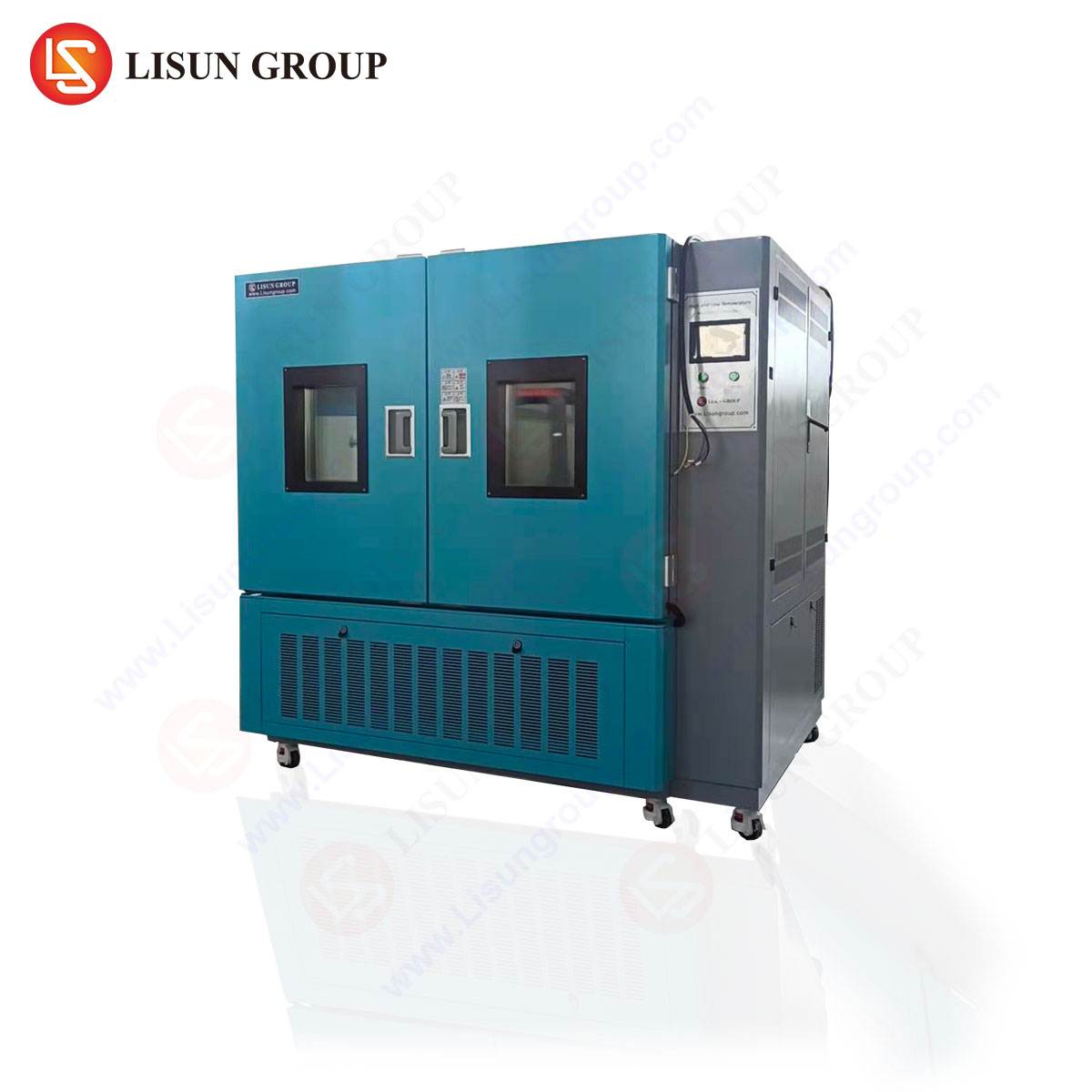
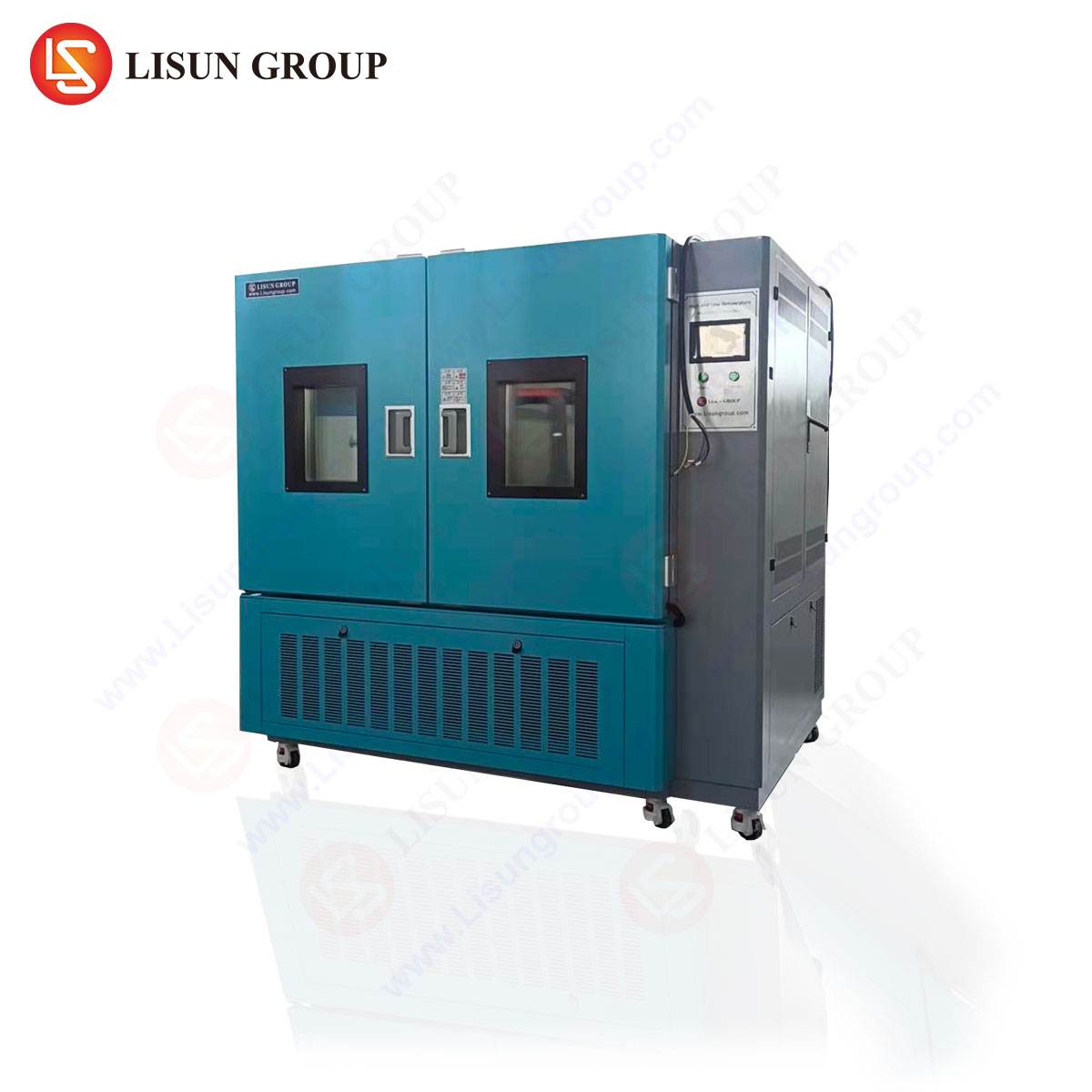
The LISUN HLST-500D thermal shock test chamber embodies a sophisticated three-zone (lift) air-to-air design, engineered to deliver precise and repeatable thermal shock conditioning. Its architecture is optimized for rigorous compliance with prevalent industry standards, including IEC 60068-2-14, GB/T 2423.22, and MIL-STD-202. The chamber’s operational parameters are defined by a robust set of specifications that dictate its testing capabilities.
The HLST-500D features a high-temperature zone capable of reaching +200°C and a low-temperature zone extending down to -65°C, providing a broad thermal range suitable for the most demanding applications. The critical metric of transition time, defined as the duration for the chamber to stabilize within the specified temperature tolerance after the specimen is moved, is a key performance indicator. The HLST-500D is designed for rapid transitions, facilitating stringent test profiles. The chamber’s internal test space dimensions are 500 x 500 x 500 mm (W x H x D), accommodating a substantial load volume for batch testing of components or small assemblies.
A programmable touch-screen controller manages complex test profiles, allowing for the definition of dwell times at temperature extremes, number of cycles, and overall test duration. The system incorporates redundant safety protections, including over-temperature monitors, compressor delay protection, and real-time fault diagnostics. The use of high-efficiency insulation and precision-controlled airflow ensures temperature uniformity within each zone, a prerequisite for consistent, reproducible test results.
Defining the Test Profile: Standards, Dwell Times, and Cycle Definition
A standardized thermal shock test is not merely an arbitrary alternation between hot and cold; it is a carefully prescribed procedure. Industry standards provide the framework, but the specific profile—temperature extremes, dwell times, and number of cycles—is tailored to the product’s intended use case.
Dwell time, the period the specimen remains at the target temperature, is paramount. It must be sufficient for the entire specimen, not just its surface, to achieve thermal equilibrium. Inadequate dwell time invalidates the test by failing to induce the full CTE mismatch stress throughout the material stack. For electronic assemblies, dwell times typically range from 30 minutes to several hours, as referenced in standards like JESD22-A104. The number of cycles can vary from a handful for qualification testing to hundreds or thousands for lifetime reliability prediction, often employing accelerated models like the Coffin-Manson relationship.
Common reference standards include:
- IEC 60068-2-14 (Test N): Provides broad guidelines for electronic components and equipment.
- MIL-STD-883, Method 1010.9: A stringent military standard for microelectronics.
- AEC-Q100: The automotive electronics qualification standard, which mandates specific thermal shock requirements (e.g., 1000 cycles from -55°C to +125°C) for integrated circuits.
- JESD22-A104: A JEDEC standard for temperature cycling of solid-state devices.
The test profile for an automotive engine control unit (ECU) will differ significantly from that of a consumer smartphone, reflecting their disparate operational environments and reliability expectations.
Industry-Specific Applications and Failure Mode Analysis
The utility of thermal shock testing spans the entire spectrum of modern manufacturing. Its application reveals potential failure modes unique to each sector.
Automotive Electronics: Components like ECUs, sensors, and power modules must endure the thermal inertia of an engine compartment followed by cold winter starts. Testing with a chamber like the HLST-500D can uncover solder fatigue in ball grid array (BGA) packages, cracking in ceramic capacitors, or delamination within insulated-gate bipolar transistor (IGBT) modules. Adherence to AEC-Q100/200 is mandatory.
Aerospace and Aviation Components: Avionics face extreme temperature swings from ground operation to high-altitude flight. Thermal shock testing validates the integrity of connector seals, the stability of RF components in radar systems, and the reliability of flight control circuitry.
Medical Devices: Implantable devices and diagnostic equipment require absolute reliability. Testing can identify failures in hermetic seals of pacemakers, bond wire integrity in sensors, or plastic enclosure embrittlement.
Telecommunications Equipment: Base station electronics and optical transceivers deployed outdoors are subject to diurnal cycles. Testing precipitates failures in fiber optic connectors, plated-through holes (PTHs) on PCBs, and thermal interface materials.
Lighting Fixtures (e.g., LED assemblies): LED drivers and the LED packages themselves are susceptible to thermal mismatch. Testing accelerates phosphor degradation, solder joint failure in COB (Chip-on-Board) arrays, and lens yellowing.
Electrical Components & Wiring Systems: Connectors, switches, and cable insulation are tested for contact resistance stability, plastic housing integrity, and insulation cracking after repeated flexing induced by thermal expansion.
Competitive Advantages of the Three-Zone Lift Design in the HLST-500D
The three-zone lift architecture of the HLST-500D confers several distinct advantages over traditional two-basket transfer systems, particularly in testing scenarios common to the industries listed.
First, it eliminates the mechanical movement of the test specimen. The specimen remains stationary on a lift platform, while the conditioned air is alternated around it. This is critical for testing delicate or instrumented specimens (e.g., those with monitoring wires) that could be disturbed or damaged by physical basket acceleration and deceleration. Second, it typically offers faster temperature recovery rates post-transition, as the mass of the moving basket is removed from the thermal equation. The system only needs to stabilize the air temperature in the test zone. This leads to more consistent and repeatable thermal shock conditions, a key factor in laboratory accreditation and audit compliance.
Furthermore, the design often results in reduced long-term maintenance. The complex mechanical drive system for a heavy, temperature-soaked basket is replaced by a lift mechanism for the lighter damper assembly, potentially decreasing wear and tear. For high-throughput quality assurance labs testing batches of electrical components or PCBs, this reliability translates to higher uptime and lower cost of ownership.
Correlation of Chamber Performance to Real-World Reliability
The ultimate value of accelerated thermal shock testing lies in its correlation to field performance. A well-designed test profile, executed on a precise instrument like the HLST-500D, acts as a failure mode amplifier. A crack that might take five years to propagate in the field can be induced in 500 laboratory cycles. The objective is not to simulate five years of real-time aging, but to apply an equivalent cumulative mechanical stress in a compressed timeframe.
This correlation is validated through failure analysis. Post-test inspection techniques—such as scanning acoustic microscopy (CSAM) for delamination, cross-sectional analysis for solder joint integrity, and electrical continuity testing—are used to identify the failure mechanisms. When these lab-induced failures match known field failure modes, the test protocol is considered correlated and valid for predictive quality control. This process allows manufacturers of industrial control systems or automotive electronics to release designs with a quantifiably higher mean time between failures (MTBF).
Integrating Thermal Shock into a Broader Test Regimen
Thermal shock testing is rarely performed in isolation. It is a core component of a holistic environmental stress screening (ESS) or qualification program. A typical sequence might involve:
- Temperature & Humidity Cycling: To assess moisture ingress and electrochemical migration (using a chamber like the LISUN GDJS-015B for preconditioning).
- Thermal Shock: To evaluate mechanical integrity under extreme thermal transients (using the HLST-500D).
- Vibration/Shock Testing: To assess structural robustness and the interaction of thermal stresses with mechanical resonance.
- Electrical Performance Testing: Conducted at interim intervals and upon test completion to quantify parametric shifts or functional failures.
This integrated approach ensures that a telecommunications router or aerospace component can withstand the combined, synergistic stresses of its operational lifecycle, not just individual environmental factors.
Conclusion
Thermal shock chamber testing remains an indispensable, non-negotiable practice for ensuring product reliability in an era defined by technological miniaturization and escalating performance demands. The methodology’s power to rapidly uncover latent material and workmanship defects provides invaluable feedback for design improvement and manufacturing process control. The selection of appropriate testing equipment, characterized by precision, reproducibility, and adherence to standardized methodologies as exemplified by the LISUN HLST-500D three-zone thermal shock chamber, is fundamental to generating credible, actionable data. As product complexity grows and supply chains globalize, rigorous environmental testing transitions from a quality check to a strategic imperative, safeguarding brand reputation and ensuring user safety across every sector from medical devices to automotive electronics.
FAQ Section
Q1: What is the primary difference between temperature cycling and thermal shock testing?
A1: The key differentiator is the rate of temperature change. Temperature cycling involves relatively gradual ramps between setpoints, typically ranging from 3°C to 15°C per minute, focusing on slower fatigue mechanisms. Thermal shock enforces an extreme, rapid transition (often achieving a temperature change in under one minute) to induce maximum stress from CTE mismatch, targeting more immediate catastrophic failures like cracking or immediate solder joint fracture.
Q2: For testing a batch of automotive sensor modules, how do I determine the appropriate dwell time in the HLST-500D?
A2: Dwell time must be sufficient for thermal stabilization of the entire test load, particularly the most thermally massive specimen or the core of the largest assembly. It is determined empirically by placing thermocouples at the slowest-to-heat/cool points of representative samples during a trial cycle. The dwell time is set to exceed the time required for all monitored points to reach and stabilize within the specified tolerance band of the target temperature, as required by the relevant standard (e.g., AEC-Q100).
Q3: Can the HLST-500D chamber be used for two-zone (basket transfer) test standards?
A3: No, the HLST-500D is specifically a three-zone (lift) chamber. Its operational principle—moving conditioned air to a stationary test specimen—differs fundamentally from the two-zone system where the specimen basket moves between stationary chambers. While both methods achieve rapid thermal transition, they are mechanically distinct. Test standards sometimes specify the transfer method; it is crucial to verify that the chamber’s methodology aligns with the compliance requirements of your chosen standard.
Q4: What are the critical maintenance routines for ensuring the long-term accuracy of a thermal shock chamber?
A4: Essential maintenance includes regular calibration of temperature sensors (per ISO 17025 or internal quality schedules), cleaning of condensate drains and evaporator coils to prevent icing or water ingress, checking and tightening electrical connections subject to thermal cycling, verifying the integrity of door seals, and monitoring compressor oil levels and refrigerant pressure. For the HLST-500D’s lift mechanism, periodic inspection for smooth operation and alignment is also recommended.
Q5: How does the size of the test load impact the performance of the chamber?
A5: The test load acts as a thermal mass, directly impacting temperature recovery rates and stability. An overloaded chamber will exhibit prolonged transition and stabilization times, potentially falling outside the parameters defined by stringent standards. It can also reduce temperature uniformity. The chamber’s specifications, such as those for the HLST-500D, define maximum load capacity. Best practice is to perform a characterization study with a representative load to confirm the chamber meets all performance criteria under actual use conditions.