








The Role of Articulated Probe Testing in Mitigating Hazards from Accessible Openings
Within the comprehensive framework of product safety engineering, the evaluation of accessibility to hazardous live parts and moving components constitutes a fundamental requirement. The articulated test probe, as defined and mandated by standards such as UL 1278, serves as a critical simulation tool for assessing these risks. This technical examination delves into the principles, applications, and execution of articulated probe testing, with particular emphasis on the design and deployment of standardized test equipment, including the LISUN Test Finger, Test Probe, and Test Pin. The objective is to elucidate how this form of testing underpins safety compliance across a diverse spectrum of industries, from consumer electronics to aerospace components.
Defining the Articulated Probe and Its Anthropomorphic Basis
The articulated test probe, colloquially known as a “test finger” or “jointed probe,” is a calibrated mechanical apparatus designed to simulate the dimensions and articulation of a human finger. Its primary function is to investigate whether, under standard or foreseeable conditions of use, a part of the human body can access hazardous areas within an equipment’s enclosure. The hazard in question is typically electric shock from live parts, but it also extends to burns from hot surfaces, physical injury from moving parts like fans or gears, or entrapment.
The design is not arbitrary; it is derived from anthropometric data representing a substantial portion of the global population. Standards such as IEC 61032 and UL 1278 provide precise dimensional specifications for the probe’s diameter, joint articulation, and applied force. The probe must be capable of being inserted into any opening in the enclosure with a force not exceeding specified limits (e.g., 30 N for UL 1278). If the probe, representing a curious child’s finger or an adult’s probing finger, can contact a hazardous part, the equipment design is deemed non-compliant. This evaluation is performed with the equipment in its normal operating configuration and, critically, after the application of specific stress tests that may enlarge openings or deform enclosures.
Mechanical Specifications and Functional Principles of Standardized Probes
The efficacy of the test is wholly dependent on the precision and consistency of the test equipment. A typical test set, such as those manufactured to exacting standards by LISUN, includes several complementary tools.
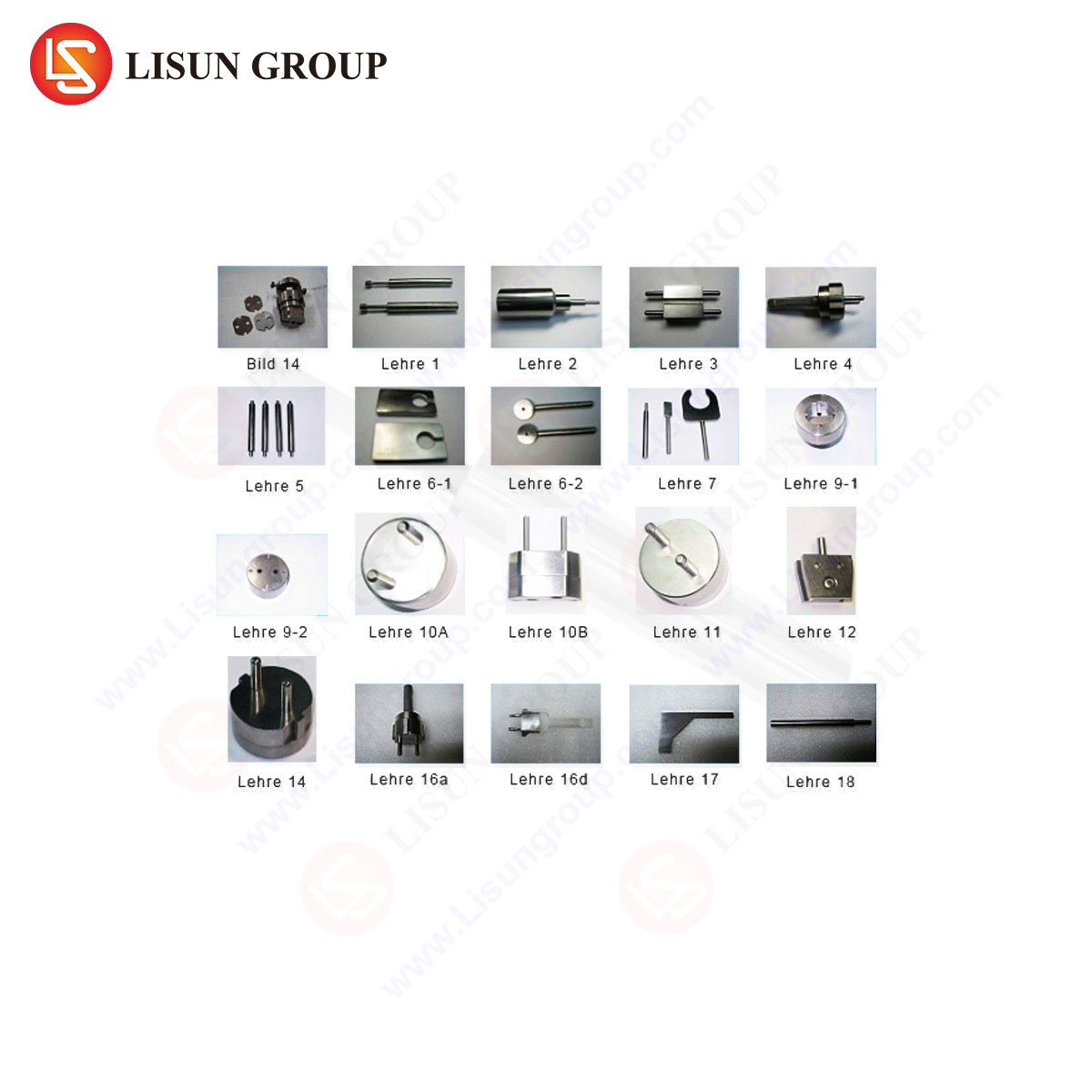
The LISUN Test Finger (IEC 61032 Figure 2 / UL 1278 Probe B) is the primary articulated probe. It consists of three main segments: a fingertip, a middle joint, and a base/palm section, connected by pivot pins that allow for a limited range of motion in two planes. Its dimensions are strictly defined: a fingertip diameter of 12 mm, a middle joint diameter of 20 mm, and an overall length that ensures it can reach a specified depth (often 80 mm or more). A small aperture at the tip may house a “feeler” or contact indicator—a thin metal strip that signals electrical contact with a live part, often connected to a circuit with a 40-50V detection voltage and a visual or audible indicator.
The LISUN Test Probe (IEC 61032 Figure 1 / UL 1278 Probe A), often a rigid, unjointed probe, is used for testing openings that are too small for the articulated finger but may still permit access by a tool, wire, or slender object. This probe typically has a diameter of 4 mm and is applied with a higher force (1 N ± 0.1 N) to check for accessibility to parts that are considered “effectively live” under fault conditions.
The LISUN Test Pin is a smaller, rigid probe (e.g., 1 mm diameter) designed to assess very small openings, such as those in grilles or mesh, which could be penetrated by a pin or similar object.
The testing principle involves systematically applying these probes to every external opening—vents, seams, gaps around controls, battery compartments, and cable entry points. The equipment is often powered on, and the probe is manipulated to simulate probing and wiggling. The use of a contact indicator circuit is essential for live-part testing, as visual confirmation is insufficient and unsafe.
Cross-Industry Applications and Hazard Mitigation Scenarios
The universality of the finger-accessibility hazard makes articulated probe testing a cornerstone of safety validation in virtually every sector involving electrical or mechanical equipment.
- Electrical and Electronic Equipment & Consumer Electronics: For devices like desktop computers, gaming consoles, and power adapters, the probe verifies that ventilation slots do not allow access to mains-voltage terminals on the internal PCB or to high-speed cooling fans. A LISUN Test Finger can determine if a seemingly narrow slot can be deformed by finger pressure to create a hazardous access path.
- Household Appliances: In blenders, food processors, and washing machines, the test ensures that interlock mechanisms are truly effective. The probe must not be able to defeat a lid switch to contact moving blades or agitators. Openings for steam or heat dissipation in ovens and kettles are also scrutinized to prevent finger contact with heating elements.
- Automotive Electronics & Aerospace Components: Within vehicle infotainment systems, control units, and in-flight entertainment panels, the test ensures that any serviceable fuse or connector compartment requires a tool to open, preventing inadvertent passenger access. For components in engine bays or avionics bays, it validates that enclosures withstand vibration and thermal cycling without creating new, probe-accessible openings.
- Lighting Fixtures: For both indoor luminaires and outdoor streetlights, the probe tests gaps between the diffuser and the body, and entry points for wiring. It ensures that during relamping, a user’s finger cannot slip past the lamp holder to touch live pins.
- Industrial Control Systems & Telecommunications Equipment: In PLC cabinets, server racks, and router chassis, the test is applied to cable gland openings, ventilation panels, and removable covers. Compliance ensures that maintenance personnel are protected from busbars, power supplies, and other energized parts even when performing routine inspections.
- Medical Devices: This is a critical application where patient safety is paramount. Articulated probe testing on dialysis machines, patient monitors, and surgical tools verifies that no hazardous voltage is accessible during normal use or after a single fault, even when cables are tugged or connectors are partially disengaged.
- Electrical Components: For switches, sockets, and circuit breakers, the test probe is used to verify that live contacts are recessed sufficiently and that shutters in socket outlets operate correctly to prevent the insertion of a foreign object alongside a plug pin.
- Toy and Children’s Products Industry: This represents one of the most stringent applications. Toys with battery compartments or electronic functions are tested to ensure a child’s finger cannot access battery contacts, small motors, or any pinching points, using both the articulated finger and the smaller test pins to simulate a child’s finer probing.
Operational Methodology and Integration with Type Testing
Articulated probe testing is rarely a standalone activity. It is integrated into a broader type-test sequence, as environmental stresses can compromise an initially safe design. A rigorous test protocol follows these general steps:
- Visual Inspection & Identification: All external openings, seams, and flexible parts (like rubber feet or seals) are cataloged.
- Pre-Stress Application: The probe is applied to openings with the specified force. No contact with hazardous parts should occur.
- Environmental Stress Testing: The equipment is subjected to relevant stresses from its safety standard. For UL 1278 and similar, this includes:
- Enclosure Stress Test: A steady force (e.g., 30 N) is applied via a 30mm diameter steel sphere to the enclosure’s weak points.
- Drop Test: The equipment may be subjected to impacts from specified heights onto a hard surface.
- Mold Stress Relief Test: For polymeric enclosures, a high-temperature bake (e.g., 70°C for 7 hours) is performed to relieve internal stresses that could cause deformation.
- Post-Stress Probe Verification: Crucially, the articulated probe test is repeated after these stress tests. An opening that was safe initially may have widened, a clip may have broken, or a deformed seam may now permit probe access. This sequence validates the design’s robustness over the product’s lifetime.
- Documentation: Each test location, probe used, force applied, and result (pass/fail with contact indication) is meticulously recorded, often with photographic evidence.
Technical Advantages of Precision-Calibrated Test Equipment
The reliability of the entire testing regimen hinges on the quality of the probe apparatus. Products like the LISUN Test Finger system offer distinct advantages that ensure testing integrity and laboratory efficiency.
- Metrological Traceability: Each probe is manufactured from specified materials (e.g., heat-treated steel, specific polymers) with dimensional tolerances often within ±0.05 mm. They are calibrated against national or international standards, providing traceability and defensible data for certification audits.
- Durability and Consistency: The joints are designed to maintain smooth articulation without developing play or stiffness over thousands of cycles, ensuring the applied force and angle of approach remain consistent throughout repeated testing.
- Integrated Detection Circuitry: High-quality systems include a reliable contact indicator with a defined sensitivity (e.g., 40-50V, <0.5mA). The feeler gauge in the fingertip is designed to make positive contact without excessive spring force that could retract it upon touching a live part.
- Comprehensive Kits: A complete LISUN kit typically includes not only the articulated finger (Probe B) but also the rigid test probe (Probe A), test pins, the required steel sphere for enclosure stress, and calibrated force gauges. This provides a single, validated source for all related tests, streamlining the laboratory’s workflow and reducing the risk of using non-compliant tooling.
Interpretation of Results and Design Remediation Strategies
A failure during articulated probe testing necessitates a redesign. Common remediation strategies include:
- Increasing Creepage and Clearance Distances: Physically moving the hazardous part further from the opening.
- Redesigning Openings: Replacing long, thin slots with a pattern of smaller, rounded holes that maintain airflow but resist probe entry and deformation.
- Adding Internal Barriers: Installing an internal grounded shield or baffle that blocks access even if the outer opening is penetrated.
- Improving Enclosure Rigidity: Using thicker material, adding ribs, or selecting a polymer with better impact and heat resistance to prevent deformation during stress tests.
- Implementing Interlocks: For larger access points (like covers), incorporating a mechanical or electrical interlock that automatically disconnects power when the cover is opened.
FAQ Section
Q1: Can a simple visual inspection replace the articulated probe test?
A1: No. Visual inspection is insufficient. The probe test is a dynamic, force-applied simulation. A slot may appear too narrow visually but can be deformed by finger pressure to allow access. Furthermore, the test must be performed after environmental stresses, which can create hazards not present in a new unit.
Q2: How often should a laboratory’s articulated test probes be recalibrated?
A2: Calibration intervals depend on usage frequency and quality assurance protocols, but an annual recalibration is a common industry practice. Regular visual checks for wear on joint pivots, deformation of the fingertip, or damage to the feeler gauge should be conducted before each critical test series.
Q3: What is the difference between the “test finger” and the “test probe” in a standard kit?
A3: The articulated Test Finger (Probe B) simulates a human finger for evaluating larger openings. The rigid Test Probe (Probe A) simulates a tool or wire for testing smaller openings to parts that may become live under fault conditions. They address different clauses and hazard scenarios within a safety standard.
Q4: Is the test only for protection against electric shock?
A4: While its primary application is for accessible live parts, the articulated probe is also specified in standards for protection against mechanical hazards (e.g., ISO 13857 for safety distances), burns from hot surfaces, and entrapment in moving parts. Its function is to assess accessibility to any defined hazard.
Q5: For a product with a fully insulated enclosure (Class II or double-insulated), is this test still required?
A5: Yes. The test verifies that the reinforced or double insulation is not compromised by accessible openings. It ensures that even if a user probes an opening, they cannot contact basic insulation or live parts that rely on that insulation for protection. The test remains a fundamental verification of enclosure integrity.