




UL 1598 Rain Test Explained: Ensuring Luminaire Safety and Compliance
The safe and reliable operation of lighting fixtures, or luminaires, in wet or damp locations is a non-negotiable requirement across numerous sectors. From architectural façade lighting and roadway illumination to industrial high-bay fixtures and marine deck lighting, exposure to precipitation poses significant risks of electrical shock, insulation failure, and premature component degradation. To mitigate these hazards, Underwriters Laboratories Standard 1598, “Luminaires,” establishes rigorous construction and performance criteria, including a critical environmental evaluation: the rain test. This article provides a detailed technical examination of the UL 1598 rain test procedure, its underlying principles, and its pivotal role in certifying luminaire safety and durability for global markets.
Defining the Scope: Luminaire Enclosure Classifications and IP Ratings
Prior to delving into the test methodology, it is essential to understand the classification system that dictates whether a rain test is required. UL 1598 references the ingress protection (IP) rating system defined in IEC 60529, which classifies the degree of protection provided by an enclosure against intrusion of solid objects and liquids. The second numeral in the IP code (e.g., IPX4, IPX5) specifically denotes protection against water.
For luminaires intended for outdoor use or indoor wet locations, common required ratings include:
- IPX3: Protection against spraying water at angles up to 60° from vertical.
- IPX4: Protection against water splashed from all directions.
- IPX5: Protection against water jets from a nozzle (6.3mm) from any direction.
- IPX6: Protection against powerful water jets (12.5mm nozzle).
- IPX7: Protection against temporary immersion (1 meter for 30 minutes).
- IPX8: Protection against continuous immersion under specified conditions.
The UL 1598 rain test is explicitly designed to validate compliance with IPX3 and IPX4 ratings, which are most relevant for general rain and storm exposure. Luminaires claiming higher ratings (IPX5 and above) must undergo more severe hose-down or immersion tests, often detailed in supplementary standards.
The UL 1598 Rain Test Apparatus and Procedural Framework
The test is designed to simulate wind-driven rain conditions. The specified apparatus consists of an oscillating tube or spray rack with nozzles spaced at specific intervals, capable of distributing water evenly across the surface of the luminaire under test. The standard mandates precise parameters:
- Water Pressure: Regulated to deliver approximately 0.6 gallons per minute (gpm) per nozzle.
- Nozzle Diameter: 0.062 inches (1.575 mm).
- Oscillation: The spray assembly oscillates through a 180-degree arc (90° to each side of vertical) at a prescribed rate.
- Test Duration: A minimum of 30 minutes.
- Luminaire Orientation: The unit is mounted in its intended service position. For luminaires designed for multiple mounting angles, the test is repeated for the least favorable orientation.
During the test, the luminaire is energized at its rated voltage. The evaluation criteria are twofold: electrical safety and functional integrity. Following the exposure period, the luminaire must not exhibit any signs of water ingress that could compromise safety, such as the presence of water on live parts, within insulation, or in wiring compartments not designed to drain. Furthermore, the fixture must remain fully operational without ground fault interruptions or short circuits.
Critical Failure Modes and Design Implications
A failure during the rain test typically indicates a fundamental flaw in the luminaire’s design or assembly. Common failure modes include:
- Gasket and Seal Failure: Inadequate compression, material degradation (e.g., loss of elastomer resilience), or improper gland design around glass lenses, housing joints, and conduit entries.
- Improper Drainage: Luminaires rated for wet locations but not submersible (IPX7) often include drain holes or weep paths. If these are incorrectly sized, located, or become blocked, water can pool internally, leading to corrosion or electrical tracking.
- Material Incompatibility: The use of hygroscopic materials or metals prone to galvanic corrosion in contact with water can lead to long-term degradation not immediately apparent in a 30-minute test but predicted by it.
- Thermal Cycling Stress: In real-world applications, luminaires undergo thermal expansion and contraction. A design that passes a static bench test may fail in the field as repeated heating and cooling break the seal between materials with different coefficients of thermal expansion.
Consequently, successful compliance necessitates a holistic design approach integrating gasket geometry, fastener torque specifications, chemical compatibility of materials, and validated thermal management.
Instrumentation for Validation: The Role of Precision Spray Test Equipment
Reliable and repeatable validation of the UL 1598 rain test in a manufacturing or certification laboratory environment requires highly calibrated equipment. Manual spray methods lack the consistency and reproducibility demanded by quality assurance protocols. This is where dedicated spray test chambers become indispensable.
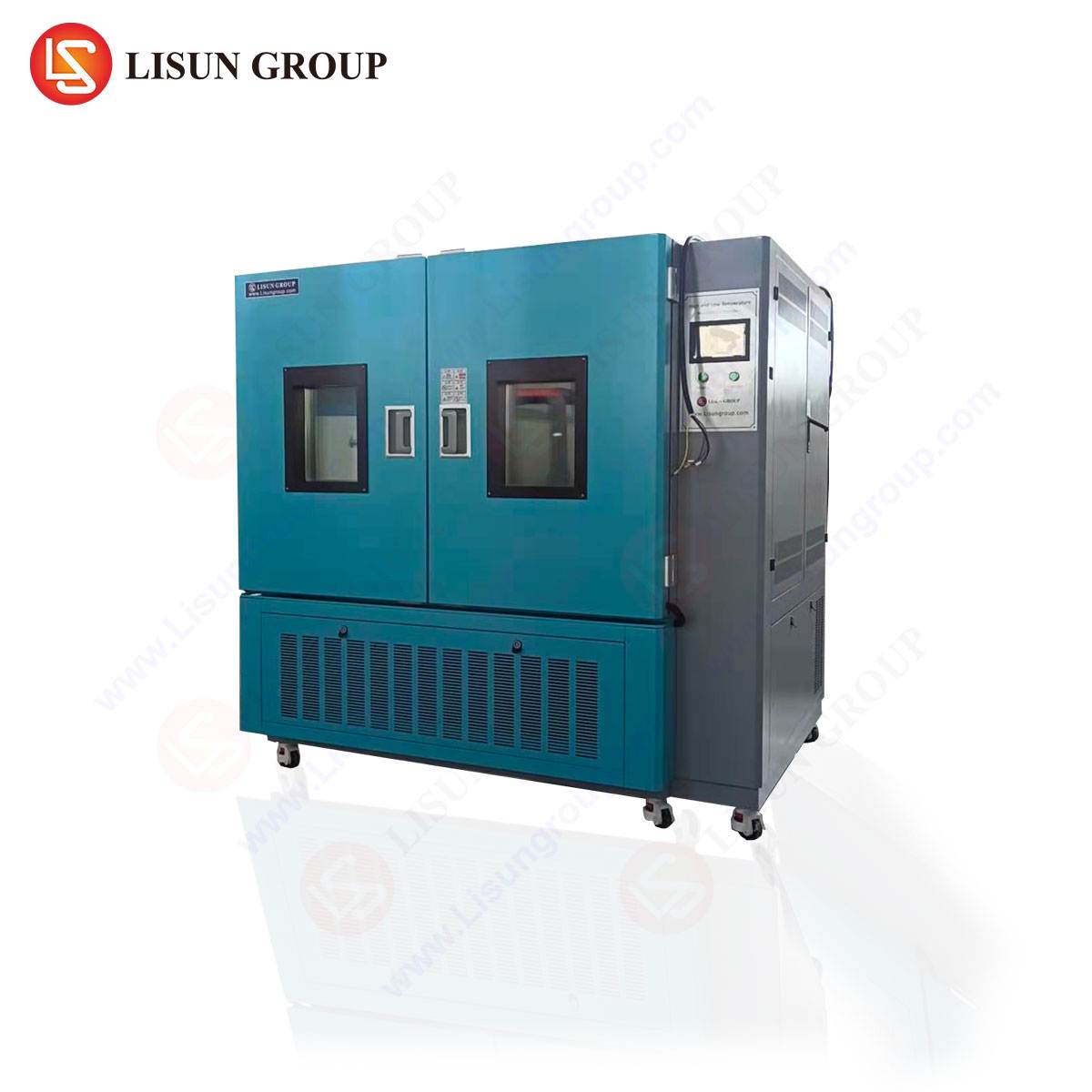
The LISUN JL-34 Waterproof Test Chamber is engineered specifically to meet the exacting requirements of IEC 60529 (IPX3 and IPX4) and related standards like UL 1598. Its design automates and standardizes the critical parameters of the rain test.
Technical Specifications and Testing Principle of the JL-34 Chamber:
- Test Capacity: A chamber interior of W1000 x D1000 x H1000mm accommodates a wide range of luminaire sizes and form factors.
- Water Spray System: It incorporates a precision-engineered oscillating spray arm with calibrated nozzles, ensuring uniform water distribution as per the standard’s spatial and temporal requirements.
- Flow Control: A rotameter and regulating valve allow for precise adjustment and monitoring of water flow rate to the mandated 0.6 gpm/ nozzle.
- Oscillation Control: The spray arm’s oscillation angle (adjustable) and speed are electronically controlled to comply with the 180-degree arc specification.
- Construction: The chamber is constructed from SUS304 stainless steel for corrosion resistance, with a transparent viewing window for observation. The test sample is placed on a motorized rotary table (optional), which slowly rotates the product to simulate exposure from all directions, providing a more comprehensive assessment than a static test.
Industry Applications and Competitive Advantages
The JL-34’s utility extends far beyond the lighting industry. Any electrical enclosure requiring validation against IPX3/IPX4 ratings is a candidate for testing within this chamber.
- Lighting Fixtures: Primary validation of outdoor luminaires, street lights, garden lights, and indoor damp-location fixtures.
- Automotive Electronics: Testing sensor housings, exterior lighting assemblies (headlamps, tail lights), and under-hood control modules for resistance to rain and road spray.
- Telecommunications Equipment: Validating the environmental seals of outdoor antennas, junction boxes, and broadband network units.
- Industrial Control Systems: Ensuring protection for PLC housings, motor drives, and operator interfaces installed in washdown or outdoor environments.
- Electrical Components: Testing the integrity of outdoor-rated switches, sockets, and connection boxes.
The competitive advantages of utilizing a dedicated system like the LISUN JL-34 are multifold:
- Reproducibility: Eliminates human error from manual spraying, guaranteeing consistent test conditions for every unit, which is critical for quality control and certification audits.
- Quantifiable Data: Provides controlled, measurable parameters (flow rate, pressure, time) that form an objective pass/fail record.
- Efficiency: Automates the 30-minute test cycle, freeing technician time and allowing for batch testing where applicable.
- Regulatory Confidence: Using equipment designed to the standard’s specifications gives manufacturers and certifiers high confidence that a passing result will be accepted by bodies like UL, Intertek (ETL), and TÜV.
Interpreting Results and the Path to Certification
A passing result on the UL 1598 rain test, conducted with appropriate equipment, is a major milestone. However, it is one component of a comprehensive safety evaluation. The test sample, typically a production-representative unit, will also undergo assessments for electrical spacing (creepage and clearance), temperature rise, mechanical strength, and fault condition testing. Data from all these evaluations are compiled into a technical report for review by the Nationally Recognized Testing Laboratory (NRTL). Successful review leads to the luminaire being listed or certified, authorizing the use of the NRTL’s mark (e.g., UL, ETL) on the product.
Conclusion
The UL 1598 rain test is a deceptively simple yet profoundly important evaluation. It serves as a critical gatekeeper, ensuring that luminaires and other electrical enclosures can withstand the ubiquitous challenge of water exposure without compromising user safety or operational lifespan. For manufacturers, moving from a manual, qualitative check to a controlled, quantitative test using instrumentation like the LISUN JL-34 chamber represents a commitment to product excellence, regulatory compliance, and ultimately, brand integrity. In an era where products are deployed in increasingly diverse and demanding environments, such rigorous validation is not merely a regulatory hurdle but a fundamental engineering imperative.
FAQ Section
Q1: Can the LISUN JL-34 chamber test for IPX5 or IPX6 ratings?
No, the JL-34 is specifically designed for the oscillating tube/spray test defined for IPX3 and IPX4. Testing for higher ratings like IPX5 (water jet) and IPX6 (powerful water jet) requires a different chamber, such as the LISUN JL-5K series, which utilizes higher-pressure pumps and standardized nozzles to generate the specified jet conditions.
Q2: How often should the nozzles and flow meters on a spray test chamber be calibrated?
Calibration intervals should follow a risk-based schedule, typically annually, or as dictated by your quality management system (e.g., ISO 17025). Nozzles can erode or clog over time, and flow meters can drift, both of which would invalidate test results. Regular calibration against a master gauge is essential for maintaining test integrity.
Q3: For a luminaire with multiple potential mounting angles, which orientation is considered “least favorable” for the test?
The least favorable orientation is generally the one most likely to trap water or direct flow towards a seal or joint. For example, a wall-mounted sconce might be tested with its backplate tilted slightly upward, allowing water to pool against the lens-to-body seal rather than drain away. The specific angle is often determined through engineering judgment or exploratory pre-testing.
Q4: Does passing the UL 1598 rain test guarantee the luminaire is suitable for coastal/marine environments?
Not necessarily. While the rain test evaluates resistance to fresh water, coastal environments expose fixtures to salt spray (fog), which is highly corrosive. A separate test, such as the salt fog test per ASTM B117, is required to evaluate corrosion resistance. A luminaire may have a perfect IPX4 seal but use internal materials that corrode rapidly in a saline atmosphere.
Q5: What is the typical preparation required for a luminaire before subjecting it to the rain test?
The unit should be assembled as it would be for final installation, including all specified gaskets, lenses, and conduit seals. Any factory-applied lubricants or protective films should be removed if they are not part of the final product. The luminaire is then mounted securely in the test chamber in its intended service position and connected to its rated power supply for energized testing.