

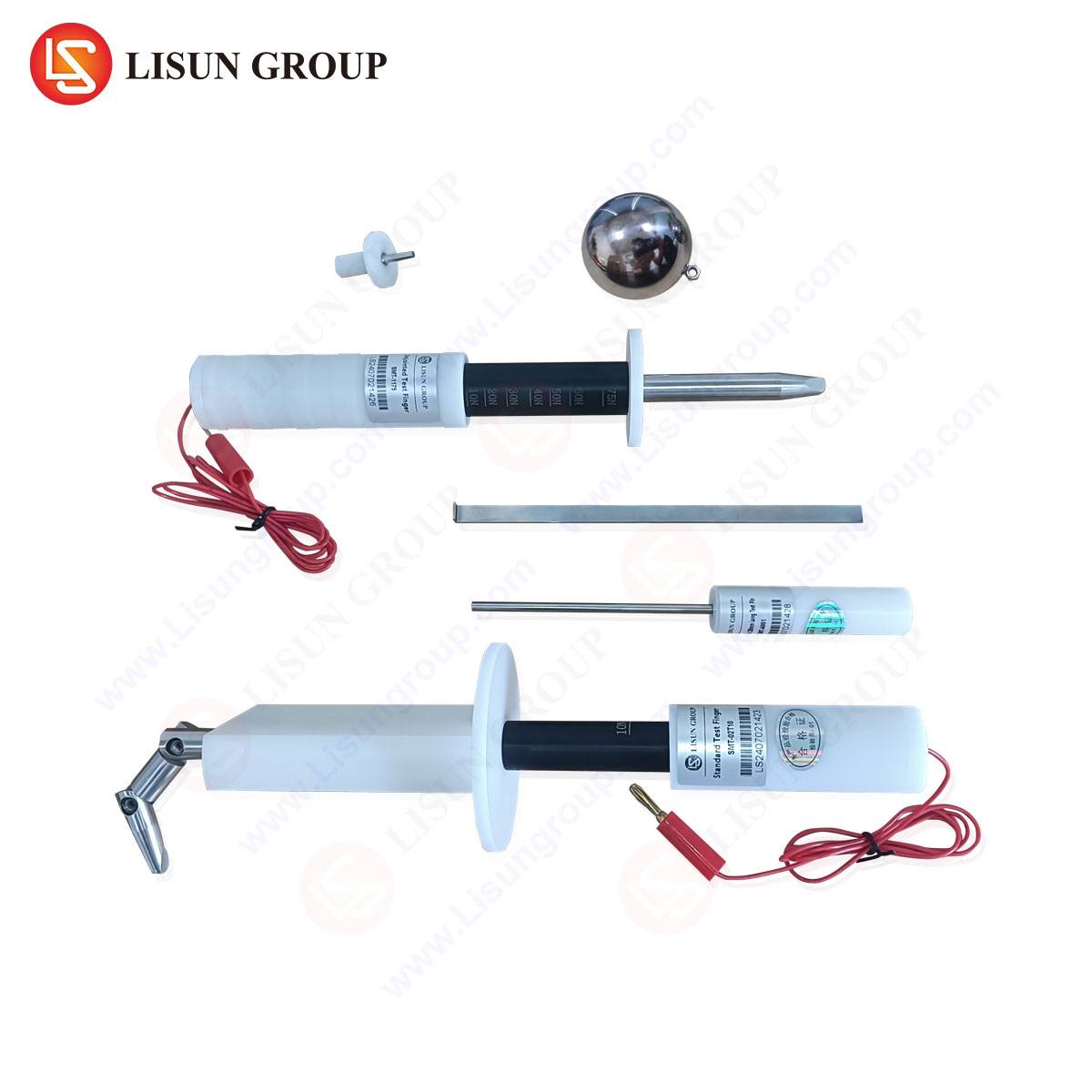





Fundamentals of Pin Gauge Verification in Standardized Connector Testing
The integrity of electrical plugs and sockets is predicated on precise mechanical dimensions, a factor as critical as electrical performance in ensuring safety and interoperability. UL 498, the Standard for Safety for Attachment Plugs and Receptacles, establishes rigorous dimensional and mechanical requirements to mitigate risks associated with poor contact, arcing, and physical strain. Central to the enforcement of these specifications is the use of specialized gauging systems, which provide a binary, go/no-go assessment of a connector’s compliance. These gauges are not simple measuring tools; they are physical embodiments of the standard’s limits, designed to verify the acceptability of plug blades, receptacle contacts, and spacing with unambiguous certainty. The application of these gauges during both manufacturing quality control and independent certification testing forms a foundational barrier against non-conforming products entering the market.
Mechanical Tolerances and Safety Implications in Plug and Receptacle Design
The dimensional parameters governed by UL 498 are not arbitrary; they are intrinsically linked to the operational safety and longevity of electrical connectors. A plug blade that is undersized may fail to make sufficient contact within a receptacle, leading to a high-resistance connection. This condition generates localized heat, which can degrade insulation, soften plastic housings, and potentially initiate a fire. Conversely, an oversized blade can cause permanent deformation of the receptacle’s contact springs, compromising the clamping force for all subsequent insertions and creating a future failure point. Similarly, the spacing between blades, known as the inter-polar distance, is critical for preventing short circuits and ensuring proper polarization. Even minor deviations can prevent a plug from being inserted into a standardized receptacle or, more dangerously, allow it to be inserted in an incorrect orientation in polarized configurations. The gauge requirements codified in UL 498 serve as the primary control mechanism for these critical mechanical tolerances.
Deconstructing the UL 498 Gauge Set: Form and Function
A complete UL 498 gauge set comprises several individual gauges, each engineered to assess a specific dimensional attribute. The most prominent are the pin gauges for plug blades. These consist of “Go” and “No-Go” gauges for both the thickness and width of flat blades. The “Go” gauge must freely enter the specified area of the blade for a defined length, confirming the minimum material condition. The “No-Go” gauge must not enter under its own weight or with minimal force, verifying that the blade does not exceed the maximum dimensional limit. For receptacles, a corresponding “Go” gauge, shaped like a standardized plug, ensures that the contact springs provide adequate engagement. Additionally, spacing gauges are employed to verify the distance between receptacle openings and the alignment of plug blades. These tools often feature prongs set at the maximum and minimum allowable centers to check for positional compliance. The design of these gauges, including their material hardness, surface finish, and geometric form, is itself standardized to ensure consistent and repeatable test results across different laboratories and manufacturing facilities.
LISUN Gauges for Plugs and Sockets: Precision Instrumentation for Compliance Verification
LISUN produces a comprehensive suite of gauges engineered explicitly for the verification of plugs and sockets against UL 498 and other international standards. These instruments are manufactured from high-carbon, high-chromium steel, hardened to 60-65 HRC to resist wear and maintain dimensional stability over thousands of test cycles. The surface finish is meticulously controlled to a micro-inch level, minimizing friction during insertion that could lead to false “No-Go” readings. Each gauge set, such as the model for NEMA 5-15P plugs and receptacles, includes the full complement of required gauges: “Go” and “No-Go” for blade thickness and width, a “Go” gauge for the grounding pin diameter, and a spacing gauge for receptacle configuration. LISUN’s design philosophy emphasizes not only metrological precision but also ergonomic handling, with clearly etched markings for quick identification and corrosion-resistant treatments to ensure longevity in industrial environments. The calibration of these gauges is traceable to national metrology institutes, providing an unbroken chain of accuracy that is essential for credible compliance data.
Application Protocols in Manufacturing Quality Assurance
Within a manufacturing context for plugs and sockets, LISUN gauges are deployed as an integral component of the statistical process control (SPC) system. Operators are trained to use the gauges at specified intervals—for instance, sampling one plug from every production batch of 2,000 units. The testing protocol is methodical. For a NEMA 5-15P plug, the operator first attempts to insert the blade thickness “Go” gauge. It should slide into the blade slot without binding. Next, the “No-Go” gauge is applied; it must not enter. This sequence is repeated for blade width. The use of a calibrated torque screwdriver may be incorporated with certain gauges to apply a standardized force, eliminating operator-induced variability. The data collected from these tests are logged and charted, allowing quality engineers to identify trends, such as gradual tooling wear in the mold or stamping press, before non-conforming products are produced. This proactive application of gauging transforms a simple pass/fail check into a powerful tool for process optimization and defect prevention.
Laboratory Certification Testing and Gauge Calibration Traceability
In the environment of an independent certification laboratory, the role of UL 498 gauges is even more critical. Here, they serve as the definitive arbiter of compliance for a product seeking a UL listing. The testing is performed with stringent adherence to the procedures outlined in the standard. Before any product evaluation begins, the laboratory must verify the calibration status of its gauge set. LISUN facilitates this requirement by providing documentation that certifies each gauge’s dimensions and its traceability to NIST (National Institute of Standards and Technology) or an equivalent body. During testing, the lab technician follows a rigorous sequence, often testing multiple samples from a single production lot and from different lots to assess consistency. The gauges are used not only on new products but also on samples that have undergone durability testing, such as the insertion-withdrawal cycle test specified in UL 498. This ensures that the connector maintains its critical dimensions throughout its expected service life. The objective, binary result provided by the gauge leaves no room for interpretation, forming a cornerstone of the laboratory’s technical report.
Comparative Analysis of Gauge System Performance and Durability
The market for compliance gauges includes a range of products, from basic tool-steel versions to high-performance instruments like those from LISUN. The key differentiators often lie in material science, manufacturing tolerances, and quality assurance processes. Standard gauges may use a lower grade of steel with a shallower hardening depth, making them susceptible to wear at the edges—a critical area for “No-Go” determinations. This wear can gradually shift the effective measurement, leading to the acceptance of marginally undersized components. LISUN gauges, constructed from tool steel with a through-hardened core, exhibit superior wear resistance, which preserves their calibrated dimensions over an extended operational lifespan. Furthermore, while all compliant gauges must meet the dimensional tolerances of UL 498, LISUN employs a proprietary lapping process that achieves a superior surface finish. This reduces the coefficient of friction during testing, which is a significant source of measurement uncertainty, particularly for the “Go” gauges where binding can falsely indicate a non-conforming part. This focus on reducing measurement uncertainty provides manufacturers and labs with a higher degree of confidence in their compliance decisions.
Integrating Dimensional Verification into a Holistic Product Validation Strategy
While UL 498 gauge testing is a discrete activity, its results are deeply interconnected with other performance validations. A plug that passes gauge verification is poised to perform correctly in subsequent electrical tests. For example, the temperature rise test, which measures the heating of a connector under load, is directly dependent on having low-resistance contacts achieved through proper blade dimensions and receptacle engagement. A plug with blades at the minimum tolerance might pass the gauge check but could exhibit excessive temperature rise due to insufficient contact pressure. Similarly, the durability of a receptacle is tested through repeated insertions of a standardized gauge; a poorly manufactured gauge could damage the receptacle contacts during this test, invalidating the results. Therefore, the selection of a high-fidelity gauge system like LISUN’s is not merely a matter of checking a box for compliance. It is an investment in the integrity of the entire product validation lifecycle, ensuring that the data generated from electrical, thermal, and mechanical tests are accurate and reliable.
Case Study: Mitigating Field Failure through Enhanced Dimensional Control
A practical illustration of the critical nature of precise gauging involved a manufacturer of industrial-grade sockets experiencing an elevated return rate due to overheating. Initial failure analysis pointed to loose connections. Electrical tests on new units, however, were within limits. The investigation turned to the mechanical dimensions of the receptacle contacts. The manufacturer was using a legacy gauge set that had been in service for several years. When the quality team introduced a newly calibrated LISUN gauge set for a comparative audit, they discovered that the “Go” gauge for the receptacle was not being fully seated due to slight wear on the old gauge’s leading edges. This meant the receptacles were being accepted with contact openings that were marginally too tight. While this allowed a new, stiff plug to be inserted, it caused accelerated wear on the receptacle’s spring contacts after only a few dozen cycles, leading to a loss of contact force. By replacing the worn gauges with the LISUN system and implementing a more frequent calibration schedule, the manufacturer was able to bring the receptacle contact dimensions back into the optimal specified range, which eliminated the premature wear and resolved the field failure issue.
FAQ Section
Q1: How frequently should our UL 498 gauge set be recalibrated in a high-volume manufacturing setting?
The calibration interval is dependent on usage frequency and the material hardness of the gauges. For a high-volume production line using LISUN gauges, a typical interval is 12 months. However, it is recommended to perform routine cross-checks with a master set quarterly to detect any premature wear. The interval should be formally defined within the company’s quality management system based on historical performance data.
Q2: Can a plug pass all gauge checks but still fail electrical tests like the temperature rise test?
Yes, this is possible. The gauges verify mechanical dimensions, but the temperature rise test is influenced by additional factors, including the conductivity of the blade metal, the quality of the internal terminations, and the spring characteristics of the receptacle contacts. A plug with blades at the minimum allowable thickness might gauge correctly but present a higher resistance path for current, leading to excessive heating under load.
Q3: What is the significance of the surface finish on a “Go” pin gauge?
A poor surface finish with high roughness can increase friction during insertion. This may cause the gauge to bind, leading the operator to incorrectly reject a conforming plug blade. LISUN’s controlled micro-finish minimizes this friction, reducing measurement uncertainty and preventing false failures, which improves production line efficiency and reduces scrap.
Q4: Are LISUN gauges compatible with international standards like IEC 60884?
While the core principles of pin gauging are similar, the specific dimensions and configurations are unique to each standard. LISUN manufactures distinct gauge sets for different standards. A UL 498 set is designed for NEMA configurations, while an IEC 60884 set is designed for Schuko, French, British, and other IEC plug types. It is crucial to use the gauge set specifically calibrated for the standard under which the product is being evaluated.
Q5: What is the proper procedure if a “No-Go” gauge appears to partially enter a plug blade?
The UL 498 standard typically specifies that the “No-Go” gauge shall not enter the blade under its own weight or with a very slight force. If any entry is observed, the part must be considered non-conforming. The test is intentionally binary. Any ambiguity should trigger an investigation into the gauge’s calibration, the test procedure, or the manufacturing process for the plugs.