




Ensuring User Safety: A Technical Examination of UL 60950-1 Compliance and the Role of Standardized Test Apparatus
The global proliferation of information technology equipment (ITE) and related electrical apparatus necessitates a rigorous, harmonized approach to safety. Among the most critical benchmarks for such equipment is compliance with the UL 60950-1 standard, formally titled “Safety of Information Technology Equipment.” This standard, harmonized with IEC 60950-1, establishes essential safety requirements to protect users from a spectrum of hazards including electric shock, energy-related injuries, fire, mechanical and thermal dangers, and radiation. Achieving compliance is not merely a regulatory hurdle; it is a fundamental engineering discipline that integrates safety into the product lifecycle from initial design through final production. This article provides a detailed technical analysis of the UL 60950-1 framework, with particular emphasis on the critical role of standardized test equipment—such as the LISUN Test Finger, Test Probe, and Test Pin—in validating protective measures against accessible hazardous parts.
Foundational Principles and Hazard-Based Design Philosophy
UL 60950-1 is predicated on a hazard-based safety engineering philosophy. It does not prescribe specific design solutions but instead defines safety objectives and performance criteria that equipment must meet. The standard’s primary protective concept is the prevention of access to hazardous live parts under both normal operating conditions and single-fault conditions. A “hazardous live part” is defined as a part that can deliver a shock current exceeding specified limits under prescribed test conditions. The standard meticulously categorizes circuits as SELV (Safety Extra-Low Voltage), Limited Current Circuits, or TNV (Telecommunication Network Voltage), each with distinct isolation and accessibility requirements.
Compliance verification is a multi-stage process involving constructional review, theoretical analysis, and empirical testing. It requires a thorough evaluation of materials, spacings (creepage and clearance), insulation systems, protective earthing, and enclosure integrity. The efficacy of these protective measures must be objectively demonstrated, not merely assumed. This is where standardized test apparatus becomes indispensable, providing reproducible, quantifiable means to simulate human interaction and environmental stress.
Simulating Human Interaction: The Imperative of Standardized Test Probes
A core tenet of product safety is anticipating foreseeable use and misuse. Users may intentionally or accidentally insert objects into openings in an equipment enclosure, potentially bridging insulation or contacting live parts. To evaluate this risk, UL 60950-1 specifies a series of standardized test probes designed to simulate various parts of the human body or common objects. These probes are not arbitrary; their dimensions, materials, and applied forces are precisely defined to ensure consistent, globally recognized test results.
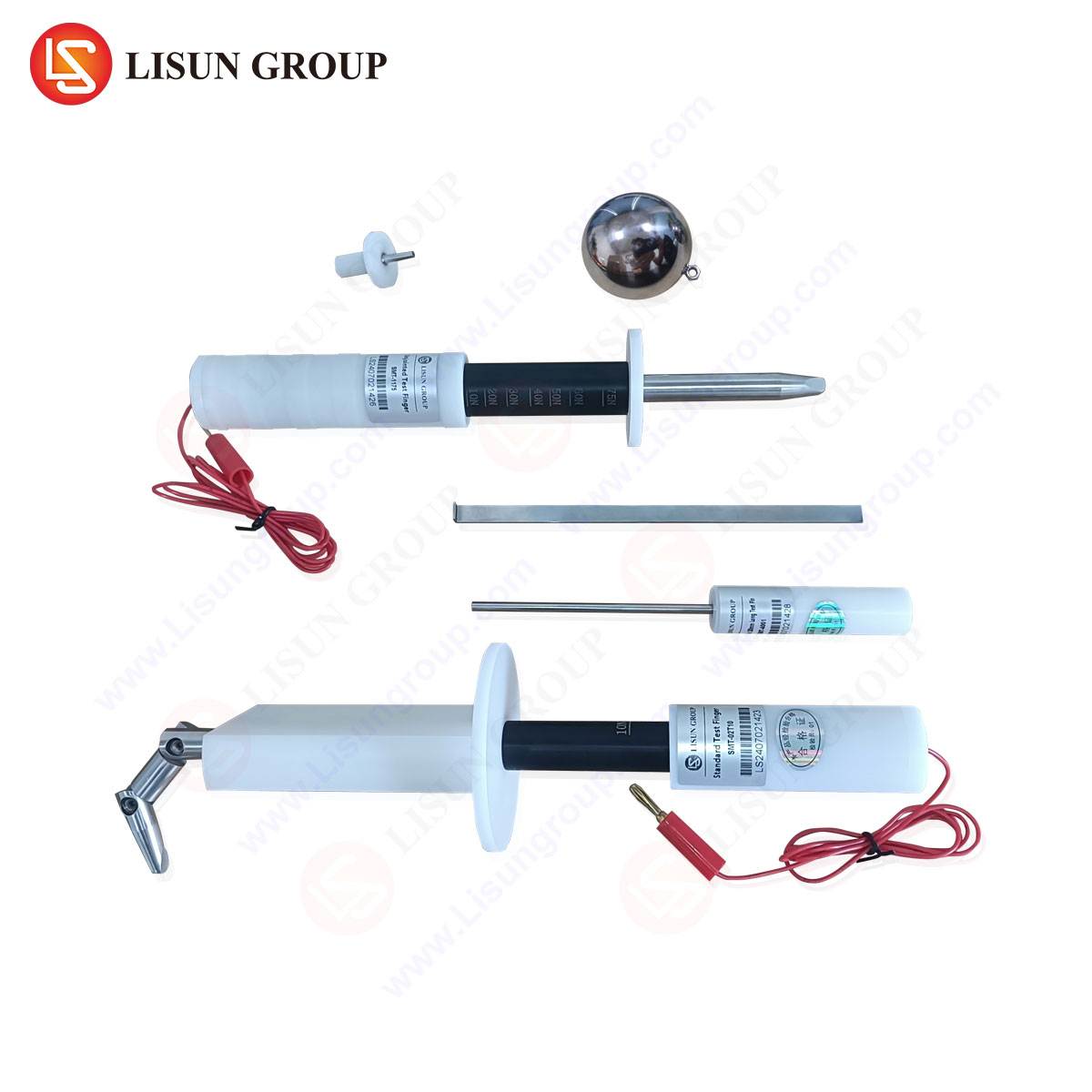
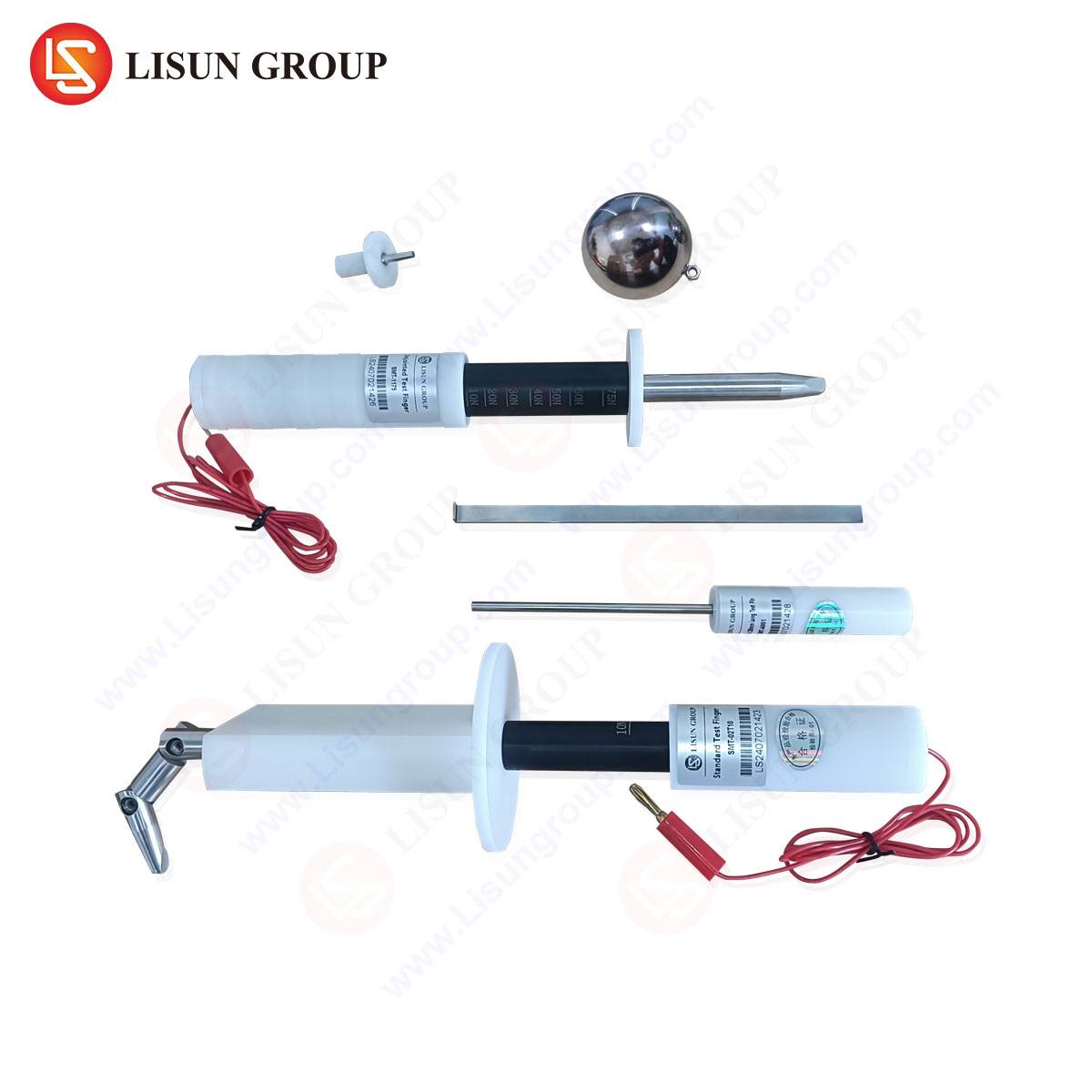
The LISUN Test Finger (Jointed Test Finger) is a canonical example, modeled after a child’s finger. As per standard specifications (e.g., IEC 61032, Fig. 2), it is a articulated metal simulation with specific joint diameters and a 75mm length. During testing, it is applied with a 10N force to every opening in an enclosure. Its purpose is to verify that hazardous live parts are not accessible. If the probe can contact such parts, the design fails. This test is paramount across industries: for consumer electronics like gaming consoles, household appliances such as blenders or air purifiers, and office equipment including printers and power adapters, where curious fingers may explore ventilation slots or seams.
The LISUN Test Probe (Test Pin) represents a more severe challenge. This straight, rigid steel pin, typically 3mm in diameter with a hemispherical end, is applied with a 1N force. It simulates small, rigid objects like paperclips, keys, or tools that might be poked into equipment. The test probe is crucial for verifying the robustness of openings intended to prevent access to hazardous parts. In industrial control systems, where control panels may have small gaps around buttons or indicators, or in telecommunications equipment like network switches installed in accessible locations, the test probe ensures that even deliberate probing does not compromise safety.
For evaluating openings intended to prevent contact with live parts, the LISUN Test Pin (Test Probe 16) is often specified. This probe has specific dimensions (often a 1.0mm diameter) and is used to test the effectiveness of barriers or grilles. If the pin can pass through an opening and contact a hazardous part, the opening is deemed non-compliant. This is particularly relevant for lighting fixtures with protective covers or electrical components like socket outlets and switches, where metallic objects might be inserted.
Technical Specifications and Validation Protocol for Test Apparatus
The validity of compliance testing hinges entirely on the geometric and mechanical precision of the test equipment. Substandard or out-of-specification probes yield non-reproducible and legally indefensible results.
LISUN Test Finger Specifications:
- Material: High-strength, conductive metal (e.g., anodized aluminum or steel).
- Dimensions: Precisely machined to replicate the standard diagram, with joint diameters (e.g., 12mm for the larger joint, 8mm for the smaller) and an overall length of 75mm ± 0.5mm.
- Application Force: Calibrated to apply 10N ± 0.5N.
- Validation: Must be used in conjunction with an indicator circuit (a “visible signal device” as per the standard) comprising a 40-50V supply and a high-sensitivity voltmeter or LED. Contact with a live part is indicated by illumination or voltage detection.
LISUN Test Probe Specifications:
- Material: Hardened steel.
- Dimensions: Diameter of 3.0mm ± 0.05mm, with a hemispherical tip.
- Application Force: 1N ± 0.1N.
- Validation: Physically applied to all relevant openings; electrical contact is assessed directly.
LISUN Test Pin (Probe 16) Specifications:
- Material: Steel.
- Dimensions: Diameter typically 1.0mm, length as specified in the relevant clause.
- Application Force: Generally 1N, but subject to the specific requirement of the test.
The competitive advantage of precision-manufactured apparatus like the LISUN series lies in its traceable calibration, material consistency, and strict adherence to normative blueprints. Laboratories and manufacturers relying on such equipment mitigate the risk of non-conformities during third-party certification audits, as the test tools themselves are beyond reproach.
Cross-Industry Application and Hazard Mitigation
The application of these test probes spans the entire spectrum of electrical and electronic industries, each with unique use cases.
- Automotive Electronics: In-vehicle infotainment systems, charging ports, and control modules must be evaluated. A test finger ensures that a child cannot access hazardous voltages within a dashboard USB charger, while a test probe verifies that diagnostic ports are safe from accidental short-circuiting by a metal tool.
- Medical Devices: Patient-connected equipment, such as monitors or diagnostic tools, has stringent accessibility requirements. Test probes validate that enclosure openings do not allow access to mains-voltage parts, ensuring safety even in clinical environments where conductive fluids may be present.
- Aerospace and Aviation Components: In-flight entertainment systems and control panel electronics must withstand rigorous environmental and operational stress. Standardized probe testing ensures that vibration and pressure changes do not create accessible hazardous parts through panel gaps.
- Toy and Children’s Products Industry: This sector has perhaps the most acute need for rigorous testing. Battery-operated toys with charging ports or light-up features must be immune to probing by a child’s fingers (Test Finger) or small toys (Test Probe), mandating robust mechanical design.
- Cable and Wiring Systems: Connectors and terminations are assessed to ensure that live pins are recessed or shielded sufficiently to prevent probe contact, reducing the risk of shock during handling or mating.
Integration into a Holistic Compliance Testing Regime
Probe testing is one element of a comprehensive safety evaluation. It interacts directly with other tests:
- Dielectric Strength Test (Hi-Pot): Verifies the integrity of insulation. If a probe can bypass insulation, the hi-pot test becomes irrelevant.
- Creepage and Clearance Measurement: Ensures adequate distances for pollution degrees and overvoltage categories. Probe access can effectively reduce these distances to zero.
- Fault Condition Testing: Equipment is tested under single-fault conditions (e.g., shorted insulation, failed component). Probe tests are often repeated under these conditions to ensure safety is maintained.
A failure in the probe test typically necessitates a design revision: adding internal barriers, reducing opening sizes, or improving the mechanical layout to increase “protection by obstacles” or “protection by barriers” as defined by the standard.
Conclusion: The Non-Negotiable Role of Precision in Safety Validation
UL 60950-1 compliance represents a critical commitment to end-user safety. Its empirical verification relies on objective, repeatable test methods. The use of precisely engineered test apparatus—the test finger, probe, and pin—is not an ancillary activity but a central pillar of the certification process. For manufacturers across the electrical, electronic, and ITE domains, investing in and utilizing certified, high-fidelity test equipment like the LISUN series is a direct investment in product integrity, regulatory acceptance, and market trust. It transforms subjective safety assessments into quantifiable, defensible engineering data, ultimately forming the bedrock upon which safe products are brought to a global market.
FAQ: Standardized Test Probes and Compliance Testing
Q1: Why are there multiple different test probes (finger, pin, probe)? Can’t one test cover all risks?
A: Different probes simulate distinct real-world threats. The jointed test finger simulates a child’s exploratory touch. The rigid test probe simulates a small, pointed object like a tool or key being inserted. The test pin evaluates the effectiveness of mesh or barrier openings. Each represents a different mode of potential access, and a compliant design must defend against all foreseeable types.
Q2: How often should our laboratory calibrate or verify our set of test probes?
A: While formal calibration intervals may be dictated by internal quality procedures or accreditation body requirements (often annually), a visual and dimensional inspection should be performed before each critical test series. Probes are physical tools subject to wear, especially on their contact surfaces. Any damage, deformation, or corrosion can invalidate test results.
Q3: During a test finger evaluation, what constitutes a “pass” versus a “fail”?
A: A “pass” is achieved if the test finger, applied with the specified 10N force, cannot make electrical contact with any hazardous live part. Contact is determined using the standard-specified indicator circuit (40-50V with a visible signal). If the indicator activates, signifying electrical contact, the test is a failure. Merely touching an insulated or grounded part is not a failure.
Q4: Are these test probes only used for final product validation?
A: No. Their most effective use is during the design and prototyping phases (Design Verification Testing). Identifying accessibility issues early allows for cost-effective design modifications. Using them only at the pre-certification stage risks discovering major non-conformities that require expensive and time-consuming redesigns.
Q5: Our product is battery-operated and has no mains voltage inside. Do we still need to perform these accessibility tests?
A: Possibly. The requirement depends on the voltage and energy levels present. SELV (Safety Extra-Low Voltage) circuits below certain thresholds (e.g., 60V DC) may not be considered hazardous. However, you must first classify all circuits in your product according to the standard. Furthermore, if the battery is user-replaceable, the compartment must be tested to ensure probes cannot contact battery terminals in an unsafe manner, which could cause a high-current short circuit.