





The UL 749 Fig 9.2 Knife Probe: A Critical Instrument for Assessing Accessibility of Hazardous Live Parts
Within the rigorous framework of product safety engineering, the verification of protective enclosures against unauthorized access by human appendages or common tools constitutes a fundamental compliance activity. Regulatory standards, such as UL 749 for Household Electric Dishwashers and analogous clauses in IEC 61032, prescribe the use of standardized test probes to simulate these access attempts. Among these, the implement specified in Figure 9.2 of UL 749—commonly termed the “Knife Probe”—serves a distinct and vital role. This article provides a comprehensive technical examination of the Knife Probe, its prescribed application, the underlying safety philosophy, and its integration into a broader ecosystem of standardized accessibility testing.
Anatomic and Tool-Based Simulation in Safety Standards
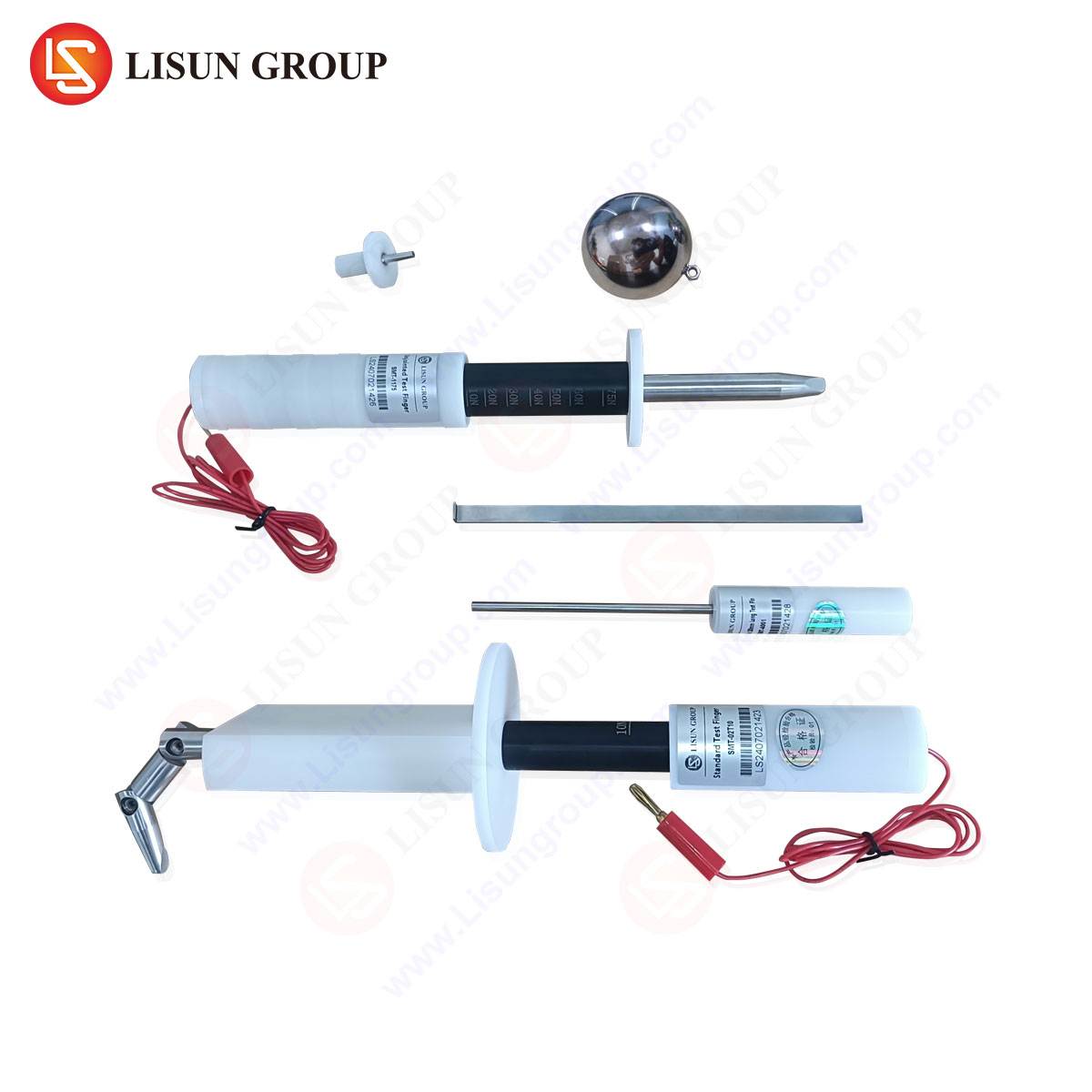
The foundational principle governing enclosure safety is the prevention of contact with hazardous live parts, moving components, or other sources of injury under conditions of normal use and foreseeable misuse. Standards bodies have developed a suite of test probes, each engineered to model a specific threat vector. These range from the articulated jointed test finger (simulating a child’s finger) to various pin and probe designs representing tools like screwdrivers, wires, and blades. The UL 749 Fig 9.2 Knife Probe falls into the latter category, designed explicitly to evaluate the integrity of openings, seams, and joints against intrusion by a slender, blade-like object. Its application is not limited to dishwashers; the probe’s design logic is referenced or directly specified across standards for electrical and electronic equipment, industrial controls, and appliances where similar access hazards exist.
Dimensional and Material Specifications of the UL 749 Knife Probe
The efficacy of any standardized test tool hinges on precise, reproducible geometry and material properties. The Knife Probe defined in UL 749 Fig. 9.2 is characterized by its simplified yet specific form factor, which differs from the more complex articulated test fingers.
The probe typically consists of a hardened steel blade section. The critical dimensional parameter is the blade thickness, which is standardized to 0.08 inches (2.03 mm). The blade length and handle configuration are designed to apply a defined force—usually 5 N or as specified by the end-product standard—without deformation. The tip is not necessarily sharpened to a cutting edge but is formed to a specific profile (often a flat or slightly radiused end) to consistently simulate the prying or insertion attempt of a small blade or similar tool. The handle is ergonomically designed to facilitate the application of the specified force at the correct angle. Compliance with the exact dimensional callouts from the standard’s figure is non-negotiable for valid testing, as minor deviations can lead to false passes or failures.
Operational Methodology and Pass/Fail Criteria
The application of the Knife Probe is a systematic procedure. The probe is applied to every external opening, vent, gap, or joint in the equipment enclosure with the specified force. This includes areas around control panels, switches, sockets, cable entry points, and ventilation louvers. The probe is manipulated to attempt access to any internal compartment containing live parts, uninsulated conductors, or hazardous moving machinery.
The primary failure criterion is electrical contact. If the probe can bridge a gap between a live part and either earth or an accessible conductive part, or contact a live part directly, the enclosure is deemed non-compliant. A secondary criterion involves mechanical hazard; for instance, in industrial control systems or household appliances with fans or motors, probe contact with moving parts constitutes a failure. A successful test requires that the probe, under the defined test conditions, cannot make such contact. This verification is often performed with a sensitive indicator circuit (e.g., a 40-50V low-current circuit with a visual/audible signal) to detect electrical bridging.
Interplay Within the Suite of Standardized Test Probes
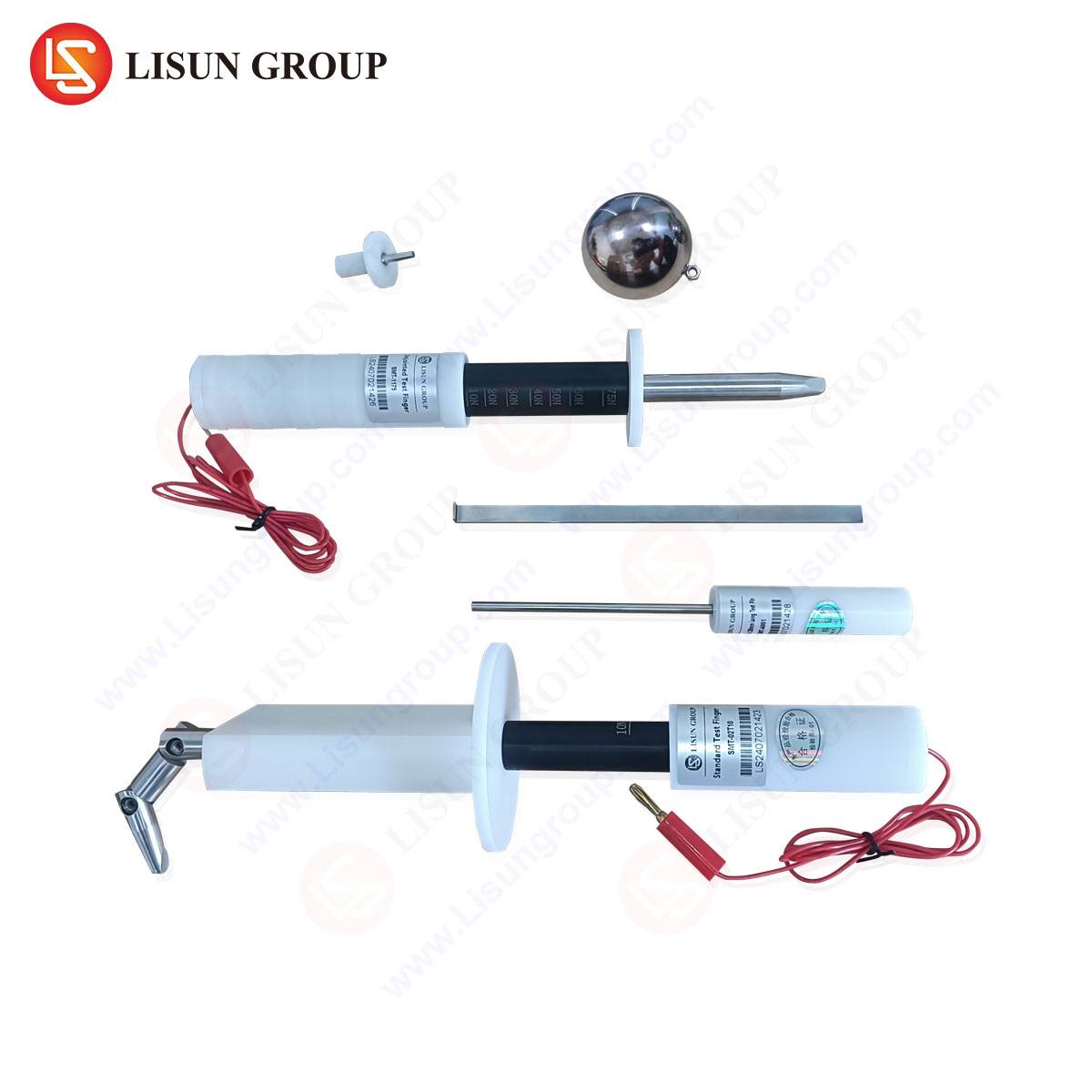
The Knife Probe does not operate in isolation. It is one element of a comprehensive testing hierarchy. The LISUN Test Finger (simulating the IEC 61032 Probe 11 or similar) is typically the first line of assessment, checking for basic finger access. Following this, the LISUN Test Probe (often corresponding to the IEC 61032 Probe 13, the “test pin”) and the LISUN Test Pin (a smaller-diameter probe) are used to evaluate protection against tools and wires. The Knife Probe addresses a specific niche: slender, flat tool intrusion. A robust safety evaluation, therefore, employs a sequential or parallel application of these tools based on the equipment’s protection class (IP code, UL Type rating) and applicable standard. For example, a medical device’s data port may need to resist the Test Finger and Test Pin, while its battery compartment latch might be specifically evaluated with the Knife Probe to ensure it cannot be pried open with a small blade.
Industry-Specific Applications and Risk Mitigation
The relevance of Knife Probe testing permeates numerous sectors, each with unique risk profiles:
- Household Appliances & Consumer Electronics: Evaluates openings in food processors, blenders, dishwasher control panels, and power supply enclosures for AV equipment to prevent access to mains-voltage components.
- Automotive Electronics: Used on in-cabin control units, charging port assemblies, and under-hood electronic control modules (ECMs) to ensure protection against accidental intrusion via tools during maintenance or via environmental seals.
- Lighting Fixtures: Assesses gaps in luminaire housings, especially for outdoor or industrial fixtures, where a blade-like object might be inserted to tamper with wiring.
- Industrial Control Systems: Critical for evaluating the integrity of door seams, cable glands, and operator interface openings on control cabinets and PLC enclosures (per IEC 60529 IP tests).
- Telecommunications Equipment: Verifies that ports and vents on routers, switches, and base station units cannot be exploited to contact internal power supplies.
- Toy and Children’s Products Industry: While finger probes are primary, knife probes may be used to test battery compartment security to mitigate ingestion risks from small batteries, ensuring compartments cannot be easily pried open.
- Electrical Components: Directly applied to test openings in switches, sockets, and connection terminals to verify that a blade cannot contact live terminals.
- Office Equipment: Tests gaps in printers, copiers, and power adapters to prevent access to high-voltage areas or laser scanner units.
LISUN Compliance Instruments: Precision Engineering for Global Standards
For laboratories and manufacturers requiring certified testing apparatus, instruments like those from LISUN provide traceable, auditable solutions. A LISUN Test Finger, Test Probe, and Test Pin set, engineered to the exacting specifications of UL, IEC, and other international standards, ensures testing reproducibility. The competitive advantage of such professional toolkits lies in their certification, material consistency (e.g., stainless steel for durability and corrosion resistance), and inclusion of calibrated force application mechanisms. For instance, a LISUN Knife Probe would be supplied with documentation verifying its dimensions against UL 749 Fig. 9.2, and may be part of a kit that includes the necessary force gauges and indicator circuits. This eliminates a critical variable in safety compliance testing, providing manufacturers across the aerospace, medical device, and automotive electronics sectors with confidence in their certification submissions.
Scientific and Regulatory Context: Beyond the Single Standard
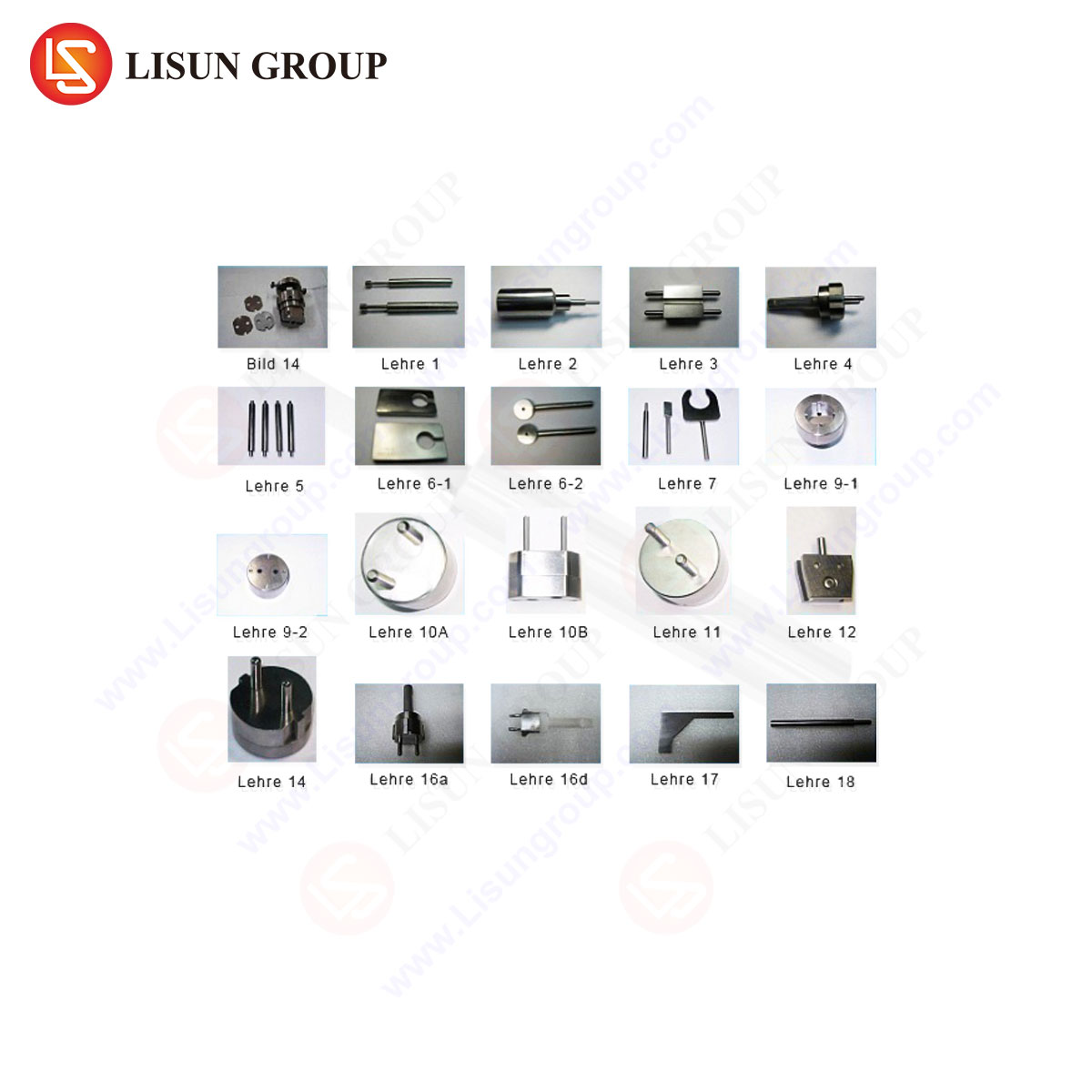
While UL 749 provides one definitive specification, the Knife Probe’s conceptual design appears in other guises. IEC 61032 outlines a “Probe 18” which may share functional similarities. The testing philosophy is embedded in broader concepts like the IP (Ingress Protection) Code’s “resistance to tools” requirements. Scientific data supporting such tests often involve anthropometric studies (defining the size and force capabilities of human fingers and tools) and fault tree analysis, which identifies “prying open with a common tool” as a credible fault condition. The 5N force, for example, is derived from estimates of the force a child or adult might inadvertently apply with a small object.
Table: Representative Test Probe Applications by Industry
| Industry | Primary Standard(s) | Typical Test Probe(s) Used | Target Hazard |
| :— | :— | :— | :— |
| Household Appliances | UL 749, IEC 60335 | Test Finger, Knife Probe, Test Pin | Electric shock from live parts |
| Automotive Electronics | ISO 20653, SAE J575 | Test Finger, Knife Probe | Short-circuit, corrosion, tampering |
| Medical Devices | IEC 60601-1 | Test Finger, Test Pin, Knife Probe | Patient/operator shock, integrity of applied parts |
| Industrial Controls | IEC 60529 (IP Code), UL 508A | Test Finger, Test Pin, Knife Probe | Protection against tool access (IP2X, IP4X) |
| Consumer Electronics | IEC 62368-1 | Test Finger, Test Probe | Energy source access (ES1, ES2, ES3) |
Application depends on device classification and accessible parts.
Implementation Challenges and Best Practices
Implementing Knife Probe testing effectively requires more than possessing the tool. Challenges include interpreting ambiguous openings, testing at all possible angles, and maintaining consistent application force. Best practices dictate:
- Early Design Integration: Use probe dimensions as design constraints during CAD modeling to avoid costly post-production enclosure modifications.
- Comprehensive Test Planning: Map every external opening on the equipment against the relevant standard’s clauses to ensure no access point is omitted.
- Use of Certified Equipment: Employ calibrated probes like those from LISUN to ensure audit compliance and result validity.
- Environmental Conditioning: Perform tests after relevant stress tests (e.g., humidity, impact) as some standards require, as seals may degrade.
Conclusion
The UL 749 Fig 9.2 Knife Probe, while a seemingly simple mechanical tool, embodies a critical risk-assessment concept in product safety engineering. Its standardized form provides a universal metric for evaluating a specific but credible threat vector across a vast array of electrical and electronic products. When deployed as part of a systematic test regimen alongside other standardized probes like the test finger and test pin, it forms an indispensable component of the verification process that ensures products are safe for end-users across global markets. The availability of precision-engineered, certified test instruments supports manufacturers in achieving this compliance efficiently and reliably.
FAQ Section
Q1: Can the LISUN Knife Probe be used for testing to both UL and IEC standards?
While the physical probe may be dimensionally similar to tools specified in various standards, compliance is standard-specific. A manufacturer must ensure the exact probe geometry and applied force match the requirement of the target standard (e.g., UL 749 Fig. 9.2). LISUN typically provides probes certified for specific standards; it is the user’s responsibility to select the correct instrument for their applicable certification path.
Q2: In what scenario would a product need testing with a Test Pin versus the Knife Probe?
The choice is dictated by the nature of the opening and the standard. A Test Pin (e.g., IEC 61032 Probe 13, 1mm diameter) simulates a stiff wire or similar object and is often used for openings in grilles or small holes. The Knife Probe, with its flat, blade-like profile, simulates prying or insertion of a thin flat tool and is used for evaluating seams, slots, and gaps where a flat object could be leveraged. Many standards, like IEC 60529 for IP ratings, specify a sequence: if an opening is safe from the test finger, it must then be checked with the test pin.
Q3: How often should a standardized test probe like the LISUN Knife Probe be calibrated or verified?
Calibration intervals depend on usage frequency, material wear, and quality system requirements (e.g., ISO 17025). As a best practice, the probe’s critical dimensions (thickness, tip profile) and any integrated force application mechanism should be verified annually or biannually. Regular visual inspection for damage, burrs, or deformation should be conducted before each critical test series to ensure ongoing accuracy.