







The UL 921 Figure 2 Probe: A Critical Instrument for Evaluating Accessibility Hazards in Enclosed Equipment
Introduction to Accessibility Probe Testing in Product Safety Evaluation
The evaluation of product safety encompasses a multifaceted array of tests designed to simulate real-world interactions between users, maintenance personnel, and electrical equipment. Among these, the assessment of protection against access to hazardous live parts and moving components is paramount. This evaluation is not predicated on assumed user behavior but on a standardized, replicable physical test that simulates probing and contact. The UL 921 Figure 2 Probe, often colloquially termed the “test finger” or “jointed test probe,” serves as this critical simulation tool. Its design and application are codified within safety standards such as UL 921 for commercial dishwashers, but its principles are universally referenced across numerous international standards, including IEC 61032. The probe’s primary function is to verify that enclosures provide adequate protection against accidental contact with hazardous parts through openings intended for ventilation, control access, or assembly. This article provides a technical examination of the probe’s design, its testing methodology, and its indispensable role across diverse industries, with particular attention to the implementation offered by precision instruments such as the LISUN Test Finger, Test Probe, Test Pin system.
Anthropomorphic Design and Dimensional Tolerances of the Standardized Probe
The UL 921 Figure 2 Probe is an engineered artifact designed to replicate the dimensions and articulation of a human finger. Its anthropomorphic design is not arbitrary; it is the result of extensive research into human anthropometry to create a worst-case scenario for probing. The probe typically consists of three jointed segments, mimicking the distal, medial, and proximal phalanges of an adult finger. These joints allow for a range of motion that can simulate the curling and poking actions a finger might employ.
The dimensional specifications are exacting. The probe simulates a finger with a diameter of 12 mm, a length of 80 mm, and a knuckle diameter of 20 mm. The radius of the fingertip is precisely 3 mm. These dimensions are non-negotiable within defined tolerances, often within ±0.1 mm, to ensure test consistency globally. A critical component is the “metal foil feeler” or detection strip attached to the front surface of the probe. This strip, typically 0.05 mm thick and 20 mm wide, is designed to detect electrical contact. During testing, this feeler is connected to a sensitive electrical circuit. If the feeler contacts a live part, the circuit closes, indicating a failure of the enclosure’s protective design. The LISUN Test Finger, for instance, adheres rigorously to these specifications, employing aerospace-grade aluminum or stainless steel for the probe body to prevent deformation and ensure long-term calibration integrity, while the integrated detection strip provides reliable and sensitive contact indication.
Electromechanical Testing Principles and Failure Mode Analysis
The fundamental testing principle is one of simulated access under defined force and articulation. The probe is applied to every external opening of an equipment enclosure with a standardized force, typically 30 N for the Figure 2 probe, though this can vary slightly by standard. The test is conducted in multiple orientations—straight, 90-degree bent, and sometimes at other angles—to explore all possible paths of entry.
The procedure is methodical. The probe is inserted and manipulated, and the detection circuit is monitored. A successful test, indicating adequate protection, is one where the probe cannot contact hazardous live parts or dangerous moving parts (like fan blades or gears) as evidenced by no closure of the detection circuit and no mechanical interference. A failure occurs under two primary conditions: electrical contact, where the feeler strip bridges a live part to earth, or mechanical access, where the probe can reach and potentially interfere with hazardous moving components.
This test evaluates several design aspects simultaneously: the size and shape of openings (e.g., grilles, slots, gaps between panels), the depth of recesses behind openings, the effectiveness of baffles, and the rigidity of insulating barriers. For example, a poorly designed ventilation slot may allow the probe to bypass a barrier and contact a terminal block. Similarly, a flexible internal wiring harness might be pushed aside by the probe, revealing a previously inaccessible live solder joint. The LISUN Test Probe system often incorporates a calibrated force gauge and articulated handle to ensure the exact application of the specified force and angle, removing operator variability from the test results.
Cross-Industry Application for Hazard Mitigation
The universality of the finger probe test stems from the universal nature of the hazard it addresses. Its application spans virtually every sector that manufactures enclosed electrical or mechanical apparatus.
- Electrical and Electronic Equipment & Industrial Control Systems: Here, the probe validates cabinet integrity for programmable logic controller (PLC) enclosures, motor drives, and power supplies. It ensures that cooling vents on variable frequency drives (VFDs) do not permit access to bus bars and that hinged doors on control panels maintain safety even when slightly ajar.
- Household Appliances and Consumer Electronics: From dishwashers (directly under UL 921) to microwave ovens, air purifiers, and gaming consoles, the probe tests openings for control panels, speaker grilles, and ventilation ports. It verifies that a child cannot insert a finger through a food waste disposer opening to contact mechanical components.
- Automotive Electronics and Aerospace Components: In the harsh environments of vehicles and aircraft, connectors, electronic control units (ECUs), and in-flight entertainment system housings must be secure. The probe tests for ingress through connector seals and cooling ports in high-voltage battery management systems for electric vehicles.
- Lighting Fixtures and Electrical Components: For LED drivers, socket housings, and switchgear, the probe ensures that even during lamp installation or switch actuation, live parts remain inaccessible. It tests the openings in downlight housings and the gaps in waterproof switch covers.
- Medical Devices and Telecommunications Equipment: Patient safety is critical. The probe tests ports on dialysis machines, imaging devices, and bedside monitors. In telecom, it validates the safety of base station units and network switches located in accessible public or commercial spaces.
- Cable and Wiring Systems, Office Equipment: For cable trunking and conduit systems, the probe checks access points. In printers and photocopiers, it ensures safety around paper paths and internal high-voltage power supplies.
- Toy and Children’s Products Industry: Perhaps most critically, stringent standards mandate that toys with battery compartments or electrical functions must completely deny access to any hazardous part with a probe, often using even more restrictive “small parts” probes in conjunction with the standard test finger.
Specifications and Calibration of a Modern Test Probe System
A professional test probe system, such as the LISUN series, is more than a simple metal finger. It is a calibrated measurement instrument. Key specifications include:
- Material Composition: The probe body is constructed from hardened, non-corrosive metal to maintain dimensional stability. The joints must move freely without play or slop, which could yield false negatives.
- Detection Circuit: A high-sensitivity, low-voltage (typically 40-50V) circuit is used to detect contact without posing a risk or causing arcing. The system includes clear visual and audible indicators (LEDs, buzzers) for contact.
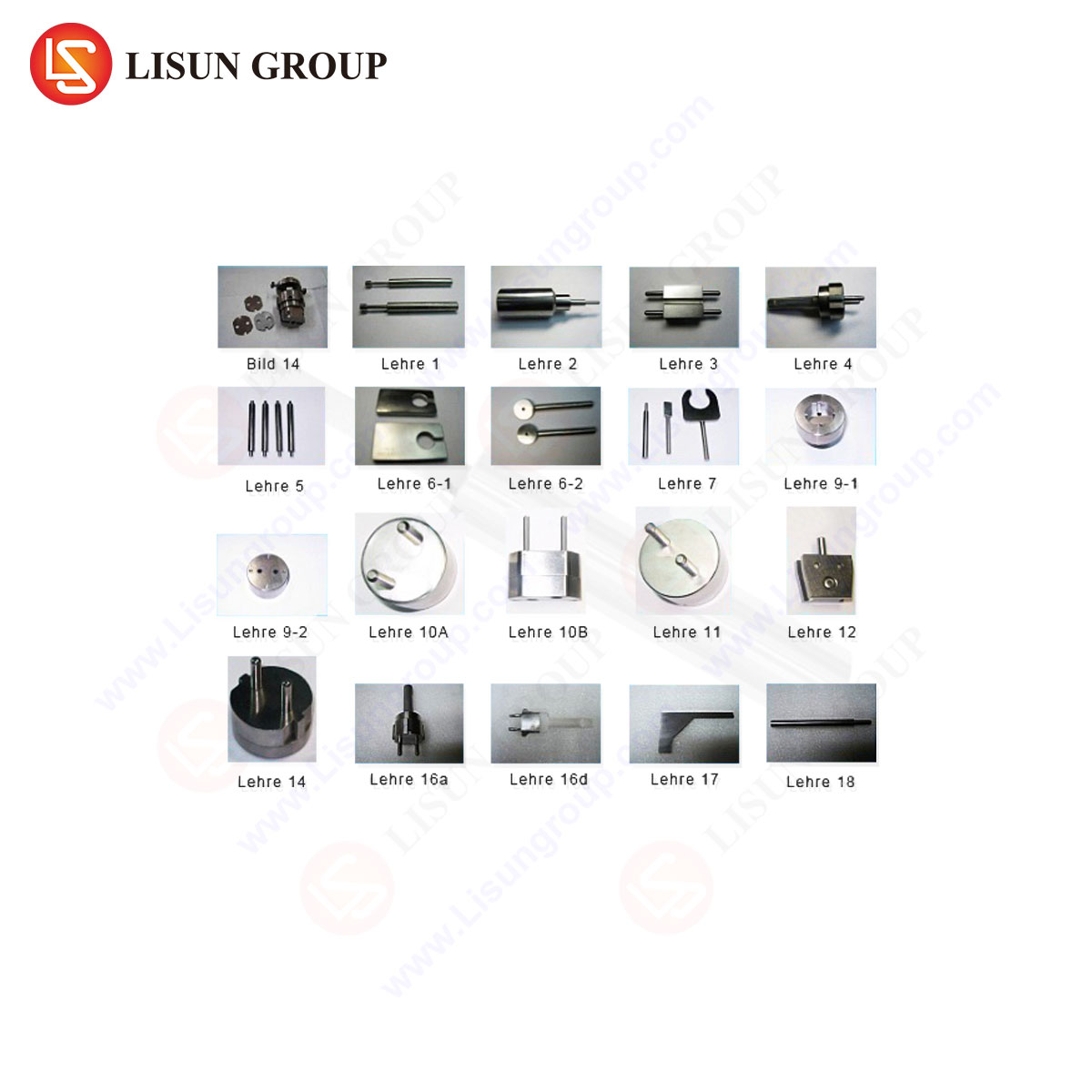
- Force Application: A calibrated spring mechanism or digital force gauge ensures the 30 N (± 2 N) force is applied consistently. Some advanced systems, like certain LISUN models, offer interchangeable probes (Figure 2, Figure 13, etc.) and digital force readouts for multi-standard compliance.
- Calibration and Traceability: Like any measurement tool, the probe must be regularly calibrated. This involves verifying its dimensions with precision micrometers and coordinate measuring machines (CMM), and checking the electrical continuity and sensitivity of the detection circuit. Calibration certificates should be traceable to national metrology institutes.
Table 1: Key Comparative Specifications of Probe Types
| Feature | UL 921 / IEC 61032 Figure 2 (Standard Test Finger) | IEC 61032 Figure 18 (Wire Probe) | IEC 61032 Figure 19 (Long Probe) |
| :— | :— | :— | :— |
| Primary Simulation | Adult finger | Stiff wire, tools, pins | Extended reach, slender objects |
| Typical Application | Access to hazardous parts | Contact with live parts through small openings | Exploration of deep recesses |
| Key Dimension | Ø12mm x 80mm length | Ø1.0mm / Ø1.2mm wire | Ø2.5mm x 100mm length |
| Industry Example | Appliance vent guards | Socket shutter mechanism test | Deep-set connectors in industrial controls |
Competitive Advantages of Integrated Precision Testing Solutions
In a landscape of generic compliance tools, integrated systems offer distinct advantages. A solution like the LISUN Test Finger, Test Probe, Test Pin suite provides comprehensive coverage across multiple standards (IEC/UL/GB) with a single, interoperable kit. The competitive edge lies in several areas:
- Metrological Rigor: Precision-machined components guarantee dimensional compliance, reducing the risk of non-conformities during third-party certification audits.
- Operational Efficiency: Ergonomic handles, clear status indicators, and robust construction reduce testing time and operator fatigue in quality control labs.
- Reduced Risk of False Results: High-quality joints and sensitive, reliable detection circuits prevent both false positives (which unnecessarily fail good designs) and false negatives (which erroneously pass hazardous ones), protecting both manufacturers and end-users.
- Long-Term Cost-Effectiveness: Durability and calibration stability minimize long-term costs associated with tool replacement, re-testing, and potential product recalls due to inadequate safety testing.
Conclusion: The Probe as a Foundational Pillar of Product Safety
The UL 921 Figure 2 Probe embodies a fundamental principle of product safety engineering: the need to objectively evaluate protective measures against foreseeable human interaction. Its standardized form provides a universal language for designers, engineers, and certifying bodies. By rigorously applying this probe, manufacturers across the electrical, electronic, appliance, automotive, and medical sectors can identify and mitigate design flaws that could lead to electric shock or injury. As products become more compact and integrated, the role of precise, reliable accessibility testing becomes ever more critical. Investing in calibrated, professional-grade testing apparatus is not merely a compliance exercise; it is a direct investment in product integrity, brand reputation, and ultimate user safety.
FAQ Section
Q1: Can the standard test finger probe be used to test for IP (Ingress Protection) code compliance?
No, the UL 921 Figure 2 / IEC 61032 test finger is specifically designed for protection against access to hazardous parts (addressed in standards like IEC 60529 Annex A). IP code testing for protection against solid objects uses different, rigid probes (like the IP1X 50mm sphere probe or the IP2X 12.5mm jointed test finger). They test for different hazards: one for safety, the other for environmental ingress. A complete testing lab requires separate, dedicated tools for each standard.
Q2: How often should a test finger probe be calibrated, and what does calibration involve?
It is recommended that test probes be calibrated annually, or more frequently if used heavily. Calibration is a two-part process. First, dimensional calibration: using precision instruments to verify the diameter, length, joint radii, and tip radius against the standard’s specified tolerances. Second, electrical calibration: verifying the continuity, resistance, and proper function of the detection circuit and its indicator. The probe should be withdrawn from service if any dimension is out of tolerance or if the joints become stiff or loose.
Q3: Our product has a very small opening (less than 1mm). Is the Figure 2 probe still required?
While a sub-1mm opening may physically prevent entry of the 12mm diameter probe, the test sequence often requires the use of additional probes specified in the applicable standard. Following the Figure 2 test, a smaller probe, such as the IEC 61032 Figure 18 “wire probe” (1.0mm diameter), would be applied to that specific opening to test for contact with live parts. The Figure 2 probe is typically the first, but not always the only, probe used in a comprehensive accessibility hazard assessment.
Q4: What is the consequence of applying incorrect force during the test?
Applying excessive force can deform an otherwise compliant enclosure or flex an internal barrier, leading to a false failure. Conversely, applying insufficient force may allow a probe to bypass a safeguard that would be engaged under realistic probing pressure, resulting in a false pass. Both scenarios undermine the validity of the safety assessment. Using a probe system with a built-in, calibrated force mechanism, such as a spring-loaded handle or digital gauge, is essential for reproducible and standards-compliant results.
Q5: For battery-operated toys, is the test finger probe applicable given the low voltage?
Yes, absolutely. The hazard assessed is not solely electric shock. The probe also tests for access to dangerous moving parts (like gears or motors), sharp edges or points that may be exposed, and the security of battery compartments to prevent ingestion of small batteries. Even with low-voltage circuits, preventing physical access to internal components is a core safety requirement under standards like IEC 62115 or ASTM F963.