

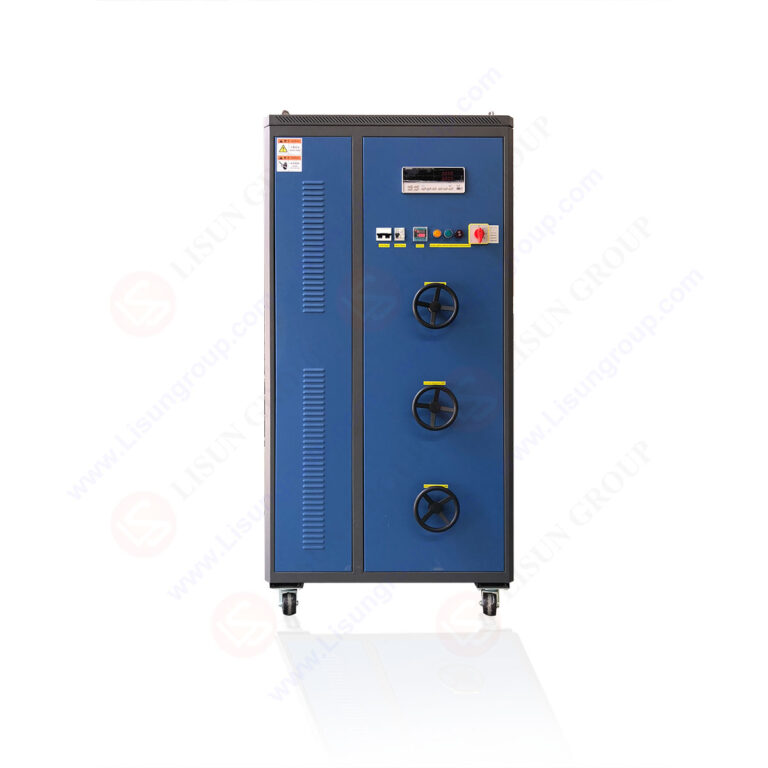



Evaluating Material Flammability: A Technical Examination of UL 94 Testing and the Role of Specialized Apparatus
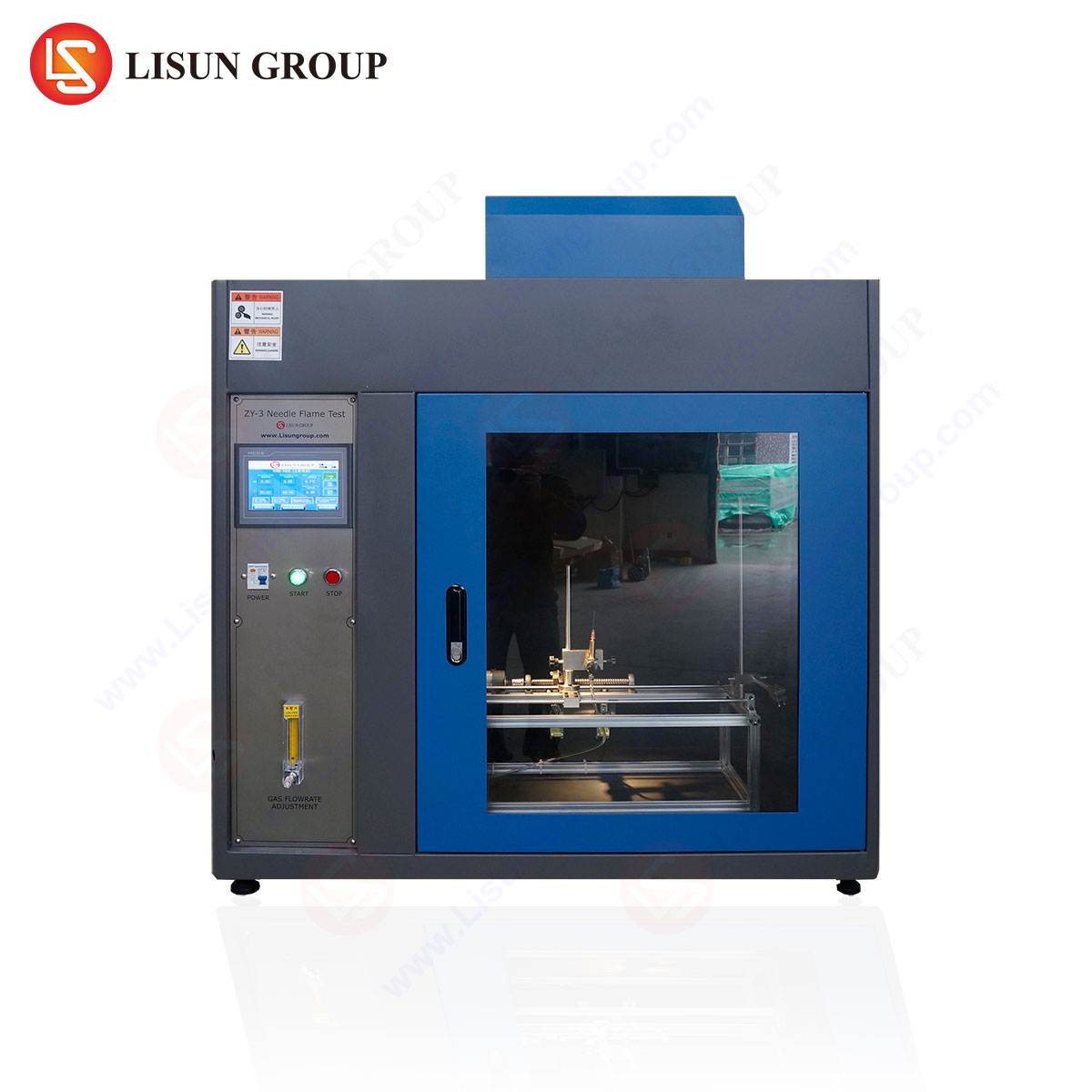
The selection of polymeric materials for components within modern engineered systems extends far beyond mechanical and electrical specifications. A paramount consideration, particularly in sectors where failure can precipitate catastrophic outcomes, is the material’s behavior when exposed to fire. The propensity of a material to ignite, propagate flame, and generate dripping incendiary particles directly influences product safety, regulatory compliance, and liability. Consequently, standardized flammability testing provides an indispensable framework for comparative material evaluation and qualification. Among these standards, UL 94, “Tests for Flammability of Plastic Materials for Parts in Devices and Appliances,” stands as a globally recognized benchmark. This article provides a technical dissection of the UL 94 protocol, with particular emphasis on its needle flame test component, and examines the critical role of precision instrumentation, such as the LISUN ZY-3 Needle Flame Test Apparatus, in ensuring test validity and reproducibility.
The Foundational Framework of UL 94 Flammability Classification
UL 94 establishes a hierarchical classification system for plastics based on their performance under controlled flame exposure. The primary classifications—HB, V, and 5V—are further subdivided to denote increasing levels of flame retardancy. The Horizontal Burning (HB) test represents the least stringent classification, intended for materials with a slow burn rate in a horizontal orientation. The more rigorous Vertical Burning (V) tests, which include V-0, V-1, and V-2 ratings, assess a material’s ability to self-extinguish after ignition and its tendency to produce flaming drips when mounted vertically. The 5VA and 5VB classifications represent the highest tier, involving a more severe flame application in both vertical and horizontal orientations. Each classification is defined by strict pass/fail criteria pertaining to afterflame time, afterglow time, whether flaming drips ignite a cotton indicator, and the extent of specimen consumption.
The selection of an appropriate UL 94 rating is dictated by the end-use application’s risk profile. For instance, a non-critical internal structural component in office equipment may only require an HB rating, whereas a connector housing within an automotive engine control unit (ECU) or a circuit board substrate in industrial control systems will mandate a V-0 or 5VA rating to prevent fire propagation in the event of an electrical fault. This stratified system allows engineers to make informed, risk-based material selections aligned with both functional requirements and safety mandates.
The Needle Flame Test: Simulating Fault-Induced Ignition Sources
While the standard V and 5V tests employ a Bunsen burner-type flame, the UL 94 standard also incorporates the needle flame test (detailed in clauses 8.2.2 and 8.3 of the standard). This test is specifically engineered to simulate small, localized ignition sources that may arise from technical faults, such as overheated or arcing components, poor electrical connections, or the failure of resistive elements. The ignition source is a small, intense flame produced by a butane-fed needle burner, with dimensions strictly defined by the standard (e.g., a nominal flame height of 12mm ± 1mm). This scenario is highly relevant across numerous industries:
- Household Appliances & Consumer Electronics: Simulating a fault in a motor winding, a failing capacitor, or an overloaded PCB trace.
- Automotive Electronics: Representing a short circuit in wiring harnesses, connectors, or electronic control modules.
- Lighting Fixtures: Mimicking a fault in LED drivers, ballasts, or socket connections.
- Telecommunications Equipment: Assessing the risk from overheating power-over-Ethernet (PoE) components or power supplies.
- Medical Devices: Evaluating critical enclosures and components for resilience against internal electrical faults.
The test procedure involves applying the needle flame to the test specimen, or to a substrate material placed beneath it to assess the effect of dripping particles, for a predetermined period (typically 30 seconds). The observations recorded include afterflame and afterglow times, whether the specimen ignites, and whether it produces burning droplets that ignite a surgical cotton indicator. The pass/fail criteria are stringent, often requiring no ignition or very limited flame persistence.
Instrumentation Imperatives: The LISUN ZY-3 Needle Flame Test Apparatus
The accuracy and repeatability of the needle flame test are wholly contingent upon the precision and consistency of the test apparatus. Minor deviations in flame geometry, temperature, application angle, or duration can yield non-conclusive or invalid results, leading to material misclassification. The LISUN ZY-3 Needle Flame Test Apparatus is engineered to meet the exacting requirements of UL 94, IEC 60695-11-5, and related international standards.
Core Specifications and Testing Principles:
The ZY-3 apparatus is characterized by several critical design and control features. It utilizes a precision needle burner with a defined orifice diameter to generate a consistent, standardized test flame. A high-precision flow meter and pressure regulator ensure a stable and repeatable supply of 99% purity butane, which is fundamental to maintaining the flame’s prescribed height (12mm ± 1mm) and thermal output (calibrated via a 100W/mm² nominal heat flux). The apparatus incorporates a sophisticated electronic ignition and timing system. This system automates the flame application sequence—typically a 30-second exposure period—with an accuracy of ±0.1 seconds, eliminating operator-induced timing errors. The specimen holder is fully adjustable, allowing for precise positioning of the test sample at the specified 45-degree angle relative to the burner, and the correct distance (e.g., the flame tip contacting the specimen) as mandated by the standard.
Industry Use Cases and Application:
The utility of the ZY-3 spans the entire spectrum of industries governed by flammability compliance. In the development of aerospace and aviation components, it is used to qualify interior paneling, wire insulation, and connector materials for resistance to faults. Manufacturers of electrical components, such as switches, sockets, and circuit breakers, employ it to validate that housing materials will not propagate flame from an internal arc. For cable and wiring systems, the test can be applied to insulation and jacketing materials to assess fire risk from localized overheating. In the medical device sector, it is crucial for testing enclosures of life-support equipment where internal electrical fault containment is non-negotiable.
Competitive Advantages in Laboratory Settings:
The LISUN ZY-3 offers distinct operational advantages that translate to enhanced laboratory efficiency and data integrity. Its fully automated test sequence reduces procedural variability and operator dependency. The integration of a high-stability gas control system ensures calibration longevity and reduces the frequency of recalibration checks. Constructed from durable, heat-resistant materials, the apparatus maintains dimensional stability under repeated testing. Furthermore, its design often includes safety interlocks and exhaust provisions to safely remove combustion products, aligning with modern laboratory safety protocols. This combination of precision automation, robust construction, and safety features minimizes test uncertainty and maximizes throughput for quality assurance and R&D laboratories conducting high-volume material screening.
Correlation Between Material Composition and Test Performance
The performance of a material in the UL 94 needle flame test is intrinsically linked to its chemical formulation. Unmodified thermoplastics like polypropylene (PP) or polyethylene (PE) typically perform poorly, exhibiting sustained burning and prolific dripping. Engineering thermoplastics such as polycarbonate (PC), polyamide (PA/nylon), and polybutylene terephthalate (PBT) offer better inherent resistance but often require modification to achieve high ratings like V-0 or 5VA.
Flame retardant (FR) additives function through various mechanisms: halogenated compounds (e.g., brominated or chlorinated) interfere with the radical chain reactions in the flame gas phase; mineral fillers like aluminum trihydroxide (ATH) or magnesium hydroxide (MDH) act as heat sinks and release water vapor; intumescent systems swell to form an insulating char layer. The needle flame test is particularly effective at revealing the efficacy of these systems under localized, high-intensity impingement. A material may pass a standard vertical test but fail the needle flame test if its FR system is not robust enough to contain a highly concentrated thermal insult, a critical insight for applications in industrial control systems or telecommunications equipment where fault energy can be focused.
Interpreting Results and Navigating Regulatory Landscapes
A material’s assigned UL 94 rating, including its performance in supplementary tests like the needle flame, is not a generic property but is specific to color and thickness. A black V-0 rated polyamide may only achieve a V-2 rating in a lighter color due to pigment interactions, and a 3mm thick sample may achieve 5VA while a 1.5mm sample of the same material may only achieve 5VB. This thickness dependency is crucial for designers of thin-walled components in consumer electronics or lighting fixtures.
From a regulatory perspective, UL 94 ratings are often cited as a minimum requirement in end-product safety standards. For example, IEC 62368-1 for audio/video and ICT equipment, IEC 60335 for household appliances, and various ISO standards for automotive electronics (e.g., ISO 6722 for cables) reference UL 94 or equivalent flammability tests. Compliance is therefore not merely a material selection exercise but a fundamental step in achieving broader product certification, mitigating liability risk, and ensuring market access across global jurisdictions including North America (UL/CSA), Europe (CE marking), and Asia (CCC, KC, PSE).
Methodological Considerations and Testing Limitations
While UL 94 provides a vital comparative tool, practitioners must acknowledge its scope and limitations. It is a small-scale laboratory test intended for material screening and quality control, not a predictor of real-fire behavior in fully assembled products with complex geometries, multiple materials, and larger ignition sources. The needle flame test specifically addresses a type of hazard (small, technical fault) but does not account for all possible fire scenarios. Environmental conditioning of specimens prior to testing—such as 48 hours at 23°C/50% RH and 7 days at 70°C—is mandated to standardize moisture content, which can significantly affect the flammability of hygroscopic materials like certain nylons. Failure to adhere precisely to these conditioning protocols, or to maintain calibration of the apparatus (e.g., verifying flame temperature with a calibrated thermocouple), invalidates the test results and any subsequent claims of compliance.
Frequently Asked Questions (FAQ)
Q1: Can the LISUN ZY-3 apparatus be used for standards other than UL 94?
A1: Yes. While designed to meet the precise requirements of UL 94 (Clause 8), the ZY-3 is also constructed in full compliance with IEC 60695-11-5, GB/T 5169.5, and other national standards that are technically aligned with these methods. Its adjustable parameters allow it to be configured for various needle flame test specifications.
Q2: How often does the needle flame burner and gas delivery system require calibration?
A2: The frequency of formal calibration should follow the laboratory’s quality procedure, typically annually. However, a daily or pre-test verification of the flame height (12mm ± 1mm) using the built-in gauge is mandatory. The stability of the gas flow and pressure should be monitored periodically, as fluctuations will alter the flame’s thermal characteristics and invalidate tests.
Q3: For the needle flame test, is testing performed on the end-product or on material plaques?
A3: The fundamental test is performed on standardized material plaques of specified thickness (e.g., 3.0mm or 1.5mm) to generate a baseline material rating. However, the standard also permits testing of “end-product” or “pre-production” parts in some clauses to assess specific configurations. The ZY-3’s adjustable specimen holder can accommodate various sample shapes and orientations required for such assessments.
Q4: What is the significance of the surgical cotton indicator placed beneath the specimen?
A4: The cotton indicator is used to detect the presence of flaming droplets or particles that fall from the test specimen. If the cotton is ignited by these droplets, it constitutes a test failure for certain classifications (notably influencing the distinction between V-1 and V-2). This criterion is vital for assessing secondary fire hazard in applications where components are mounted above other flammable materials or wiring.
Q5: If a material passes the standard UL 94 V-0 test, is it automatically considered to pass the needle flame test?
A5: No. The tests evaluate different ignition scenarios. A material’s flame retardant system may be effective against a larger, diffused flame (Bunsen burner) but may be penetrated or bypassed by the concentrated, high-temperature needle flame. The needle flame test is a separate, often more severe, requirement that must be explicitly evaluated and passed according to its own criteria. Compliance with one does not imply compliance with the other.