




A Technical Analysis of UL Rain Test Standards and Their Implementation in Modern Product Validation
Introduction: The Imperative of Water Ingress Protection
The long-term reliability and operational safety of electrical and electronic equipment are intrinsically linked to their ability to withstand environmental adversities, with liquid ingress representing a primary failure mode. Uncontrolled exposure to water, whether from precipitation, condensation, or incidental splashing, can precipitate catastrophic outcomes including short circuits, corrosion, insulation breakdown, and functional degradation. To mitigate these risks, standardized testing protocols have been established to quantify and validate a product’s defensive capabilities. Among these, the Underwriters Laboratories (UL) Rain Test Standards provide a critical, reproducible framework for simulating rainfall exposure under controlled laboratory conditions. These standards are not merely compliance checkboxes but essential engineering tools that inform design choices, material selection, and sealing methodologies across a vast spectrum of industries. This article provides a detailed examination of UL rain test methodologies, their technical parameters, and their practical application in product development cycles, with a specific focus on the instrumentation required for precise, standards-compliant execution.
Defining the UL Rain Test Parameters and Methodologies
UL rain test standards, most notably encapsulated within UL 50E (Enclosures for Electrical Equipment, Environmental Considerations) and referenced in numerous other product-specific UL standards, specify a controlled simulation of natural rainfall. The objective is to verify that an enclosure provides a designated degree of protection against the ingress of falling water. The test is not a high-pressure hose down or a submersion event; rather, it replicates the conditions of vertically falling rain. The core parameters are meticulously defined to ensure consistency and repeatability across testing facilities globally.
The primary apparatus is a calibrated spray nozzle or a bank of nozzles designed to produce a uniform water distribution over a specified test area. The key controlled variables include water pressure, typically regulated to 20-40 psi (138-276 kPa), flow rate, nozzle orifice size, and the distance from the nozzle to the specimen under test (SUT). The water must be clean, with a conductivity not exceeding 1.6 mS/m to prevent undue mineral deposition or conductive leakage paths that could skew electrical safety evaluations. The SUT is mounted on a turntable or platform that rotates at approximately 1-3 rpm, ensuring all exposed surfaces receive equivalent exposure. The standard test duration is 30 minutes, though this can be extended for more severe classifications or specific product standards. The angle of spray is typically vertical (0° from perpendicular), but tests for equipment intended for wall-mounting or other orientations may specify a spray angle of 15° or 30° from vertical to simulate wind-driven rain.
Interpreting IP Ratings and UL Test Correlations
While UL standards define the test procedure, the outcome is often correlated with the International Electrotechnical Commission (IEC) Ingress Protection (IP) code, specifically the first numeral denoting protection against solid objects and the second numeral against liquids. The UL rain test is directly analogous to testing for the second-digit ratings of IPX3 (spraying water at an angle up to 60° from vertical) and IPX4 (splashing water from all directions). It is crucial to understand that while the methodologies align closely, a direct UL test does not automatically confer an official IP rating, as IP certification involves assessment by an accredited body against the full suite of IEC 60529 requirements. However, manufacturers routinely use UL-compliant rain test equipment to verify designs to IPX3/IPX4 levels as part of their internal qualification and prototyping processes before seeking formal certification. This practice is prevalent in industries such as Automotive Electronics for external sensors and control units, Lighting Fixtures for outdoor luminaires, and Telecommunications Equipment for exterior cabinets and antennas.
The Critical Role of Precision Testing Equipment: The LISUN JL-XC Series
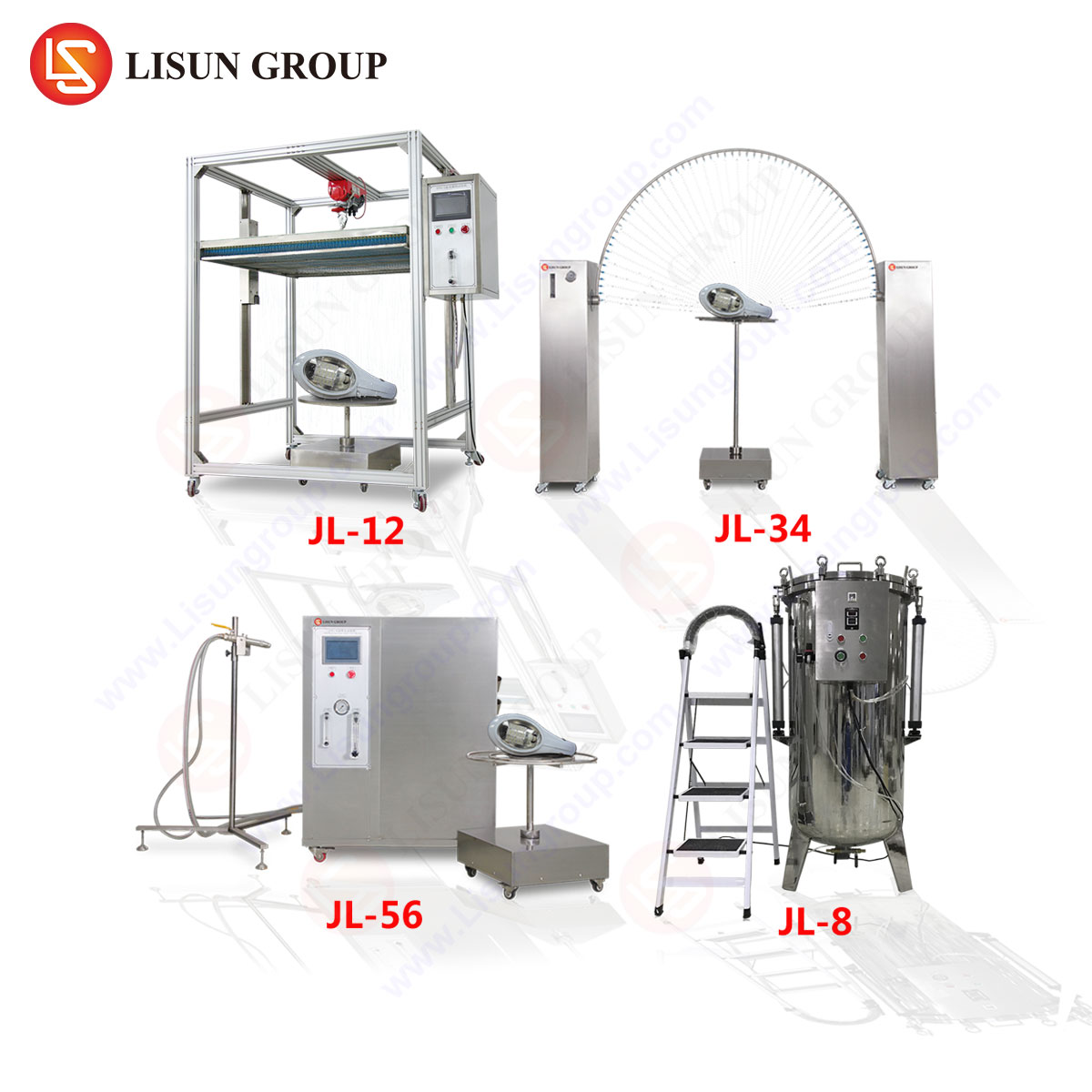
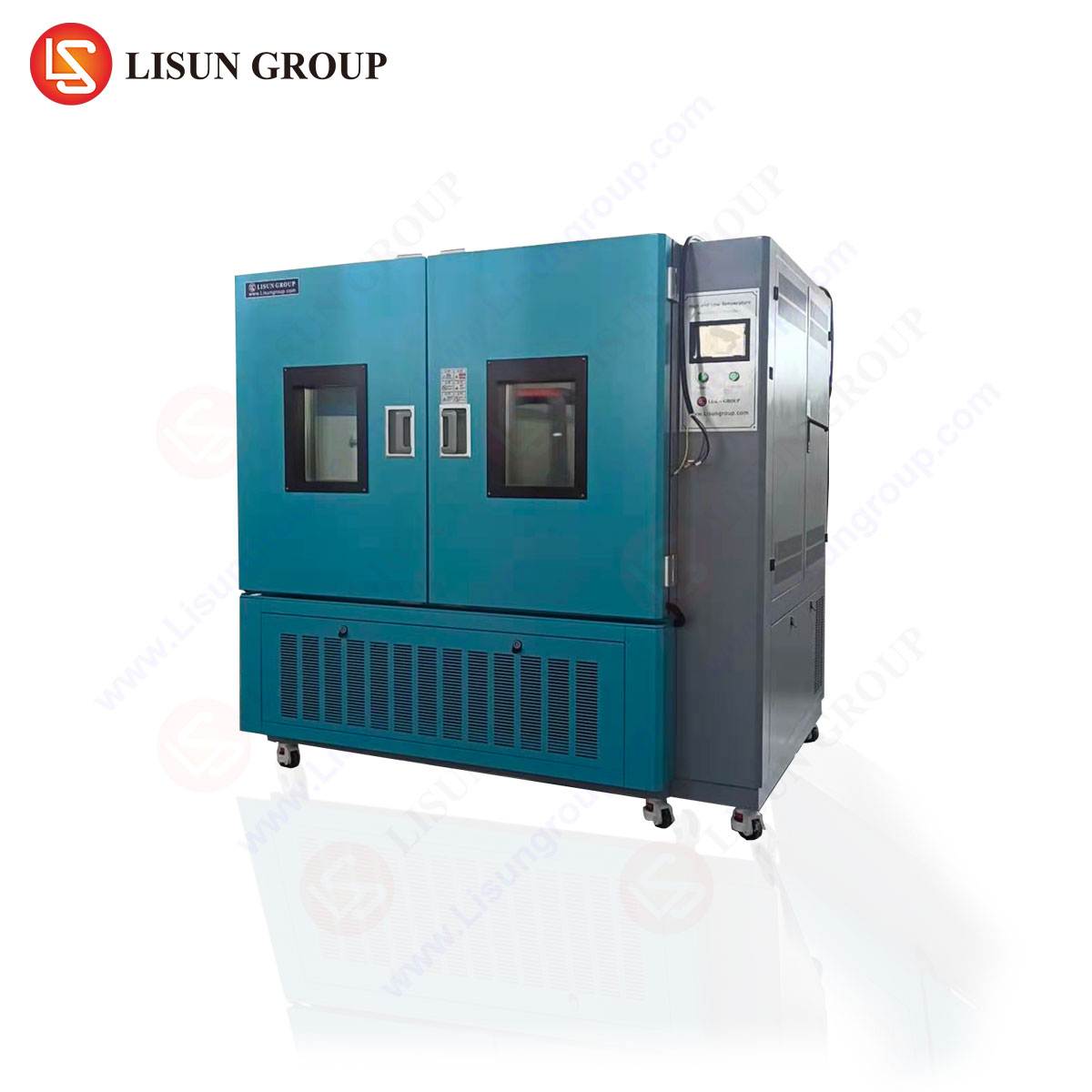
Accurate and reproducible rain testing demands instrumentation that exceeds mere functionality; it requires engineering precision, robust control systems, and adherence to the geometric and fluid dynamic specifications outlined in the standards. The LISUN JL-XC Series Waterproof Test Equipment exemplifies this class of professional validation apparatus. Engineered to meet UL 50E, IEC 60529, and other related standards (e.g., GB 4208), the JL-XC Series provides a fully integrated solution for conducting IPX3 and IPX4 tests, which form the technical basis for the UL rain test.
The system’s core is its precision-machined spray nozzle assembly. The nozzle design is critical, as it must generate a spray pattern that uniformly distributes water droplets of a specified size across the entire test plane. The JL-XC Series utilizes calibrated nozzles with strict orifice tolerances, connected to a closed-loop water circulation and filtration system. This system maintains a constant water pressure and temperature, key factors in ensuring test consistency. A high-capacity water tank, coupled with a temperature control unit (optional), allows for testing with water at specified temperatures, which is a requirement for some Medical Device and Aerospace and Aviation Components validation protocols where thermal shock is a concern.
The test chamber is constructed from stainless steel and high-grade acrylic, providing corrosion resistance and clear visibility of the specimen during testing. The SUT is placed on a motorized turntable, whose rotation speed is digitally programmable from 1 to 5 rpm via a Programmable Logic Controller (PLC) and human-machine interface (HMI). This programmability allows engineers to tailor the test cycle precisely, not only for standard 30-minute UL tests but also for extended-duration drip tests (IPX1/IPX2) or oscillating spray tests, making the JL-XC a versatile platform for a full range of low-pressure water ingress tests.
Specifications and Competitive Advantages of the JL-XC Series:
- Comprehensive Standard Compliance: Validated for UL 50E, IEC 60529 IPX3/IPX4, and other major national standards.
- Precision Fluid Dynamics: Closed-loop pressure regulation (±2% stability) and filtered water supply ensure spray consistency and nozzle longevity.
- Advanced Control System: PLC-based control with a color touchscreen HMI allows for storage of multiple test programs (pressure, time, rotation speed, spray oscillation angle), repeatable test execution, and real-time monitoring of all parameters.
- Robust Construction: 304 stainless steel main structure and imported acrylic viewing panels ensure durability and resistance to constant water exposure.
- Enhanced Safety Features: Electrical safety isolation, leak detection sensors, and emergency stop functions protect both the operator and valuable prototypes.
- Data Logging Capability: Optional software enables recording of test parameters and environmental conditions for audit trails and test report generation, a critical feature for quality management systems in Industrial Control Systems and Electrical Components manufacturing.
Industry-Specific Applications and Validation Scenarios
The application of UL rain test standards via equipment like the JL-XC Series spans the entire landscape of modern technology manufacturing.
- Electrical and Electronic Equipment & Industrial Control Systems: Outdoor-rated control panels, motor drives, and switchgear must endure decades of environmental exposure. Rain testing validates gasket integrity, cabinet seam welding, and conduit entry points. A failure here could lead to downtime in critical infrastructure.
- Automotive Electronics: From ADAS (Advanced Driver-Assistance Systems) sensors (LiDAR, radar) mounted behind bumpers to electronic control units (ECUs) in wheel wells, components are subjected to road spray and driving rain. Prototypes are tested to ensure seals around connectors and housings prevent ingress that could cause erratic sensor data or ECU failure.
- Lighting Fixtures: Landscape lighting, streetlights, and architectural floodlights are directly exposed. Testing verifies that lens gaskets, housing seams, and heat sink designs can shed water without pooling, which could lead to lens fogging, corrosion, or electrical failure.
- Telecommunications Equipment: 5G small cells, outdoor routers, and base station cabinets are deployed in all climates. Rain testing is a fundamental step in qualifying these products, ensuring signal integrity is not compromised by water-induced corrosion on antennas or circuit boards.
- Medical Devices: While not exposed to weather, certain medical devices, such as surgical tools or portable monitors used in field hospitals, may require cleaning via splashing or spraying. Rain test protocols can be adapted to validate their ability to withstand cleaning procedures without internal contamination.
- Aerospace and Aviation Components: Equipment installed in non-pressurized bays or on aircraft exterfaces must withstand in-flight condensation and precipitation during ground operations. Testing here is often combined with extreme temperature and vibration profiles.
Integrating Rain Testing into the Product Development Lifecycle
Effective waterproofing is a design philosophy, not an afterthought. Integrating rain testing early and often in the development cycle is cost-effective and risk-averse. The process typically follows this pattern:
- Conceptual Design: Material selection for housings, gaskets, and seals is made with known IP targets in mind.
- Prototype Validation (DVT): First-generation prototypes are subjected to rain testing using equipment like the JL-XC Series. Failures are analyzed—often using tracer dyes or internal moisture sensors—to identify leak paths at seams, button interfaces, or cable glands.
- Design Iteration: The design is modified based on test findings. This may involve changing gasket geometry, adding drainage channels, or specifying different potting compounds for Cable and Wiring Systems entries.
- Pre-compliance and Production Validation (PVT): Final design prototypes undergo rigorous, standards-compliant testing to generate data for certification submissions and to qualify the manufacturing process. Consistent results across multiple units validate production tooling and assembly procedures.
- Quality Assurance Sampling: Periodic testing of production samples ensures ongoing compliance, catching potential issues from material batch variations or assembly line drift.
Conclusion: Ensuring Reliability Through Standardized Validation
The UL Rain Test Standards provide an indispensable, physics-based simulation of a ubiquitous environmental stressor. Their rigorous application moves product validation from subjective assessment to objective, data-driven engineering. For manufacturers, investing in precise, reliable, and standards-compliant testing equipment is not an overhead cost but a strategic necessity. It directly contributes to reduced field failure rates, enhanced brand reputation for durability, and accelerated time-to-market by identifying design flaws in the laboratory rather than in the field. As products across all sectors—from Consumer Electronics like smart speakers to critical Electrical Components in the power grid—continue to be deployed in increasingly diverse and demanding environments, the role of precise water ingress testing, as enabled by advanced systems like the LISUN JL-XC Series, will only grow in its fundamental importance to engineering integrity and product safety.
FAQ: UL Rain Testing and the JL-XC Series
Q1: Can the JL-XC Series be used for formal IP code certification testing?
A1: The JL-XC Series is engineered to meet the test methods specified in IEC 60529 for IPX3 and IPX4. While it provides the precise and repeatable conditions required for such tests, formal IP certification is granted by an accredited third-party laboratory (e.g., UL, TÜV, Intertek) which will use similar or equivalent equipment during their audit. The JL-XC is ideal for all internal design verification, pre-compliance testing, and production sampling, providing high-confidence data before engaging a certification body.
Q2: How does testing for “wind-driven rain” differ from the standard UL test, and can the JL-XC simulate it?
A2: Standard UL/IPX3/IPX4 tests use vertically falling or oscillating spray. Wind-driven rain simulations, sometimes required for more severe applications, involve water spray directed at an angle (e.g., 30° or 45°) often combined with positive or negative air pressure on the enclosure to simulate wind loading on seals. The basic JL-XC configuration performs angled spray tests (IPX3). For full wind-driven rain with pressure differential, specialized accessory kits or more advanced chamber models would be required.
Q3: Our product has both indoor and outdoor variants. Do we need different test equipment?
A3: Not necessarily. A versatile system like the JL-XC Series is designed for multiple test grades. The outdoor variant would undergo the full IPX3/IPX4 (UL rain) test. The indoor variant might only require an IPX2 (drip) test, which can also be performed on the same equipment by adjusting the nozzle type, water flow, and test platform configuration. The programmable nature of the JL-XC allows for storing distinct test profiles for different product lines.
Q4: What is the most common point of failure identified during rain testing, and how can it be addressed?
A4: The most frequent failure points are at dynamic interfaces—where moving parts or user interfaces breach the sealed envelope. This includes button membranes, rotary switches, hinged doors, and cable/connector entry points. Testing often reveals insufficient compression of gaskets, gaps in sealant application, or capillary paths along threaded connections. Addressing these failures typically involves redesigning gasket profiles, specifying higher-durometer seal materials, adding secondary sealing (e.g., potting) at cable entries, or incorporating drainage channels to divert water away from critical seams.
Q5: How important is water quality and temperature control in these tests?
A5: It is critically important for both repeatability and real-world simulation. Impure water can clog precision nozzles or leave conductive residues that provide misleading electrical leakage readings. The JL-XC’s filtration system mitigates this. Temperature control is vital when testing products that may experience thermal contraction/expansion in real use. A cold housing sprayed with warm water (or vice versa) can create temporary vacuum or pressure differentials that suck water past seals—a failure mode that room-temperature testing might miss. The optional chiller/heater unit for the JL-XC allows for this essential environmental variable to be controlled.