

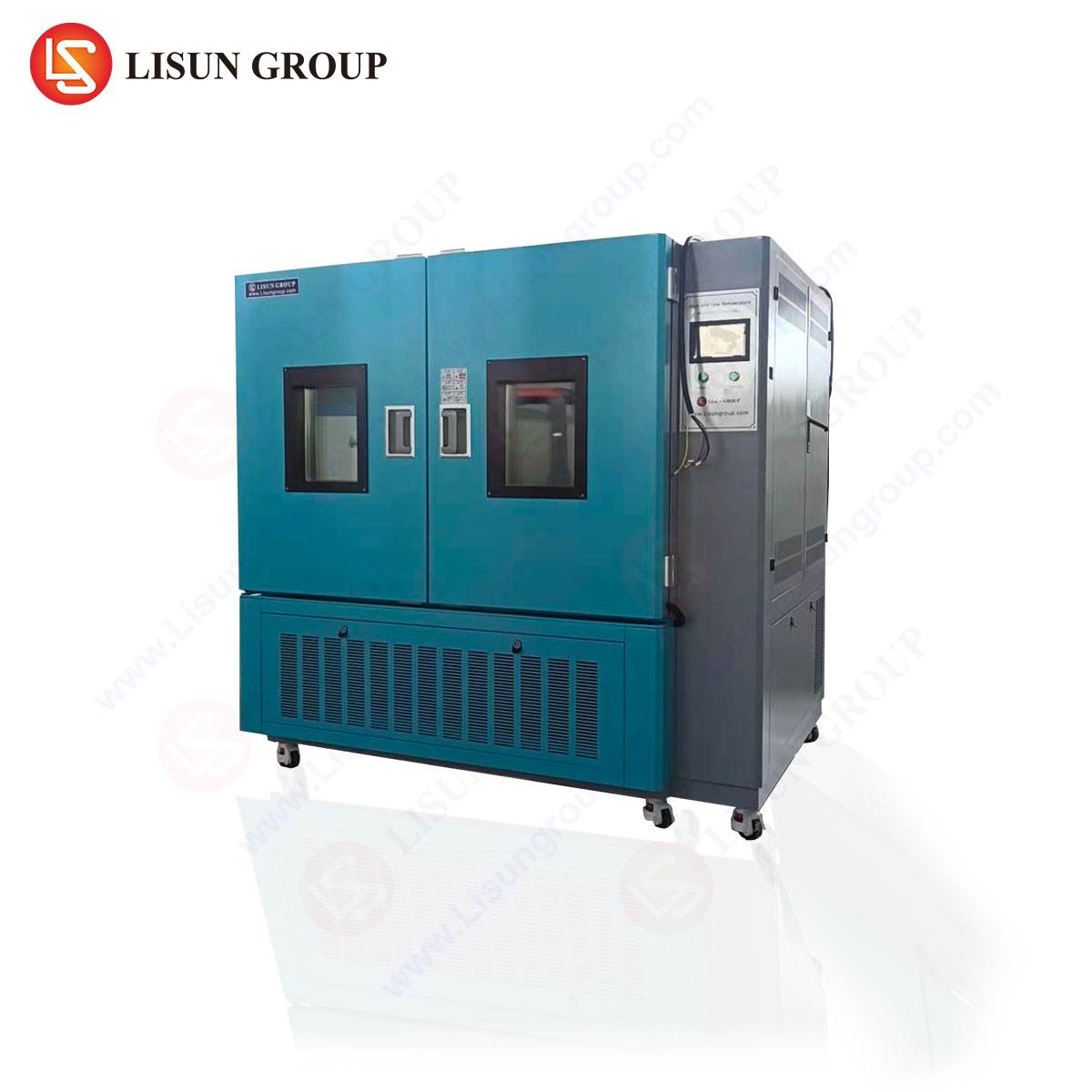



Technical Evaluation of UL Water Spray Head Piping Test Equipment for Comprehensive Enclosure Protection Validation
Introduction to Enclosure Protection Testing and the UL 50E Standard
The proliferation of electrical and electronic equipment across diverse environments—from the controlled confines of medical facilities to the exposed conditions of automotive underbodies—necessitates rigorous validation of enclosure integrity. Ingress Protection (IP) testing, governed by standards such as IEC 60529, provides a codified system for classifying the degree of protection offered by enclosures against foreign bodies and moisture. However, for many North American markets and specific high-reliability applications, compliance with Underwriters Laboratories (UL) standards, particularly UL 50E “Enclosures for Electrical Equipment, Environmental Considerations,” is a critical requirement. This standard details precise methodologies for evaluating the ability of an enclosure to resist the ingress of water under simulated rainfall or spray conditions. Central to this evaluation is specialized apparatus: the UL Water Spray Head Piping Test Equipment. This technical article examines the design, operational principles, application methodologies, and integration of advanced test systems, with a specific focus on the implementation of the LISUN JL-XC Series Waterproof Test Chamber as a turnkey solution for compliant and repeatable testing.
Design and Configuration of Standard-Compliant Spray Head Apparatus
The UL 50E standard stipulates exacting specifications for the spray apparatus to ensure uniform and reproducible test conditions. The core component is the spray head, which is not a simple nozzle but a calibrated system designed to generate a standardized water curtain. The typical configuration involves a horizontal pipe manifold, often of specified diameter (e.g., 1/2 inch nominal), with a series of equally spaced spray nozzles. The number and spacing of these nozzles are calculated to produce a consistent spray pattern across the entire frontal area of the test specimen. The nozzles themselves are standardized, frequently employing a specific type such as the No. 22 drill size orifice, which controls flow rate and droplet size distribution.
The piping system must deliver water at a controlled pressure and flow rate. UL 50E defines specific test severities; for instance, the “Rainfall” test (Rated Type 3R, 3, 3S, 4, 4X, 6, 6P) requires a water delivery rate of 5.0 inches per hour (approximately 0.208 gal/min/ft²) across the projected vertical surface of the enclosure. The apparatus must maintain this rate within a tight tolerance (±10%) for the duration of the test, which can range from 10 minutes to several hours depending on the Type rating sought. The physical structure supporting the spray head must allow for precise positioning and angling relative to the test specimen, as some tests (e.g., Type 4X – hose-directed spray) require the enclosure to be subjected to water spray from multiple directions.
Operational Principles and Calibration of the Water Spray System
The fundamental principle of the test is to simulate exposure to falling or wind-driven rain. The calibrated spray head generates a grid of water jets that merge to form a continuous sheet of water droplets. The kinetic energy and size distribution of these droplets are critical parameters that the apparatus is designed to standardize. Prior to any product testing, the equipment itself must be calibrated. This involves verifying the flow rate through each nozzle and across the entire array using collection gauges. The water pressure at the manifold inlet is adjusted to achieve the specified precipitation rate over a measured collection area.
Furthermore, the water used must meet specific conductivity requirements (typically < 1400 µS/cm) to prevent mineral buildup in the nozzles and to ensure the subsequent electrical safety tests (often performed post-exposure) are not invalidated by conductive residue. Temperature of the test water is also sometimes controlled, as per certain test specifications, to prevent thermal shock to the specimen. The test duration begins only after the spray pattern has stabilized, ensuring the enclosure is subjected to the full, specified severity for the complete test period.
Integration with Advanced Test Chambers: The LISUN JL-XC Series
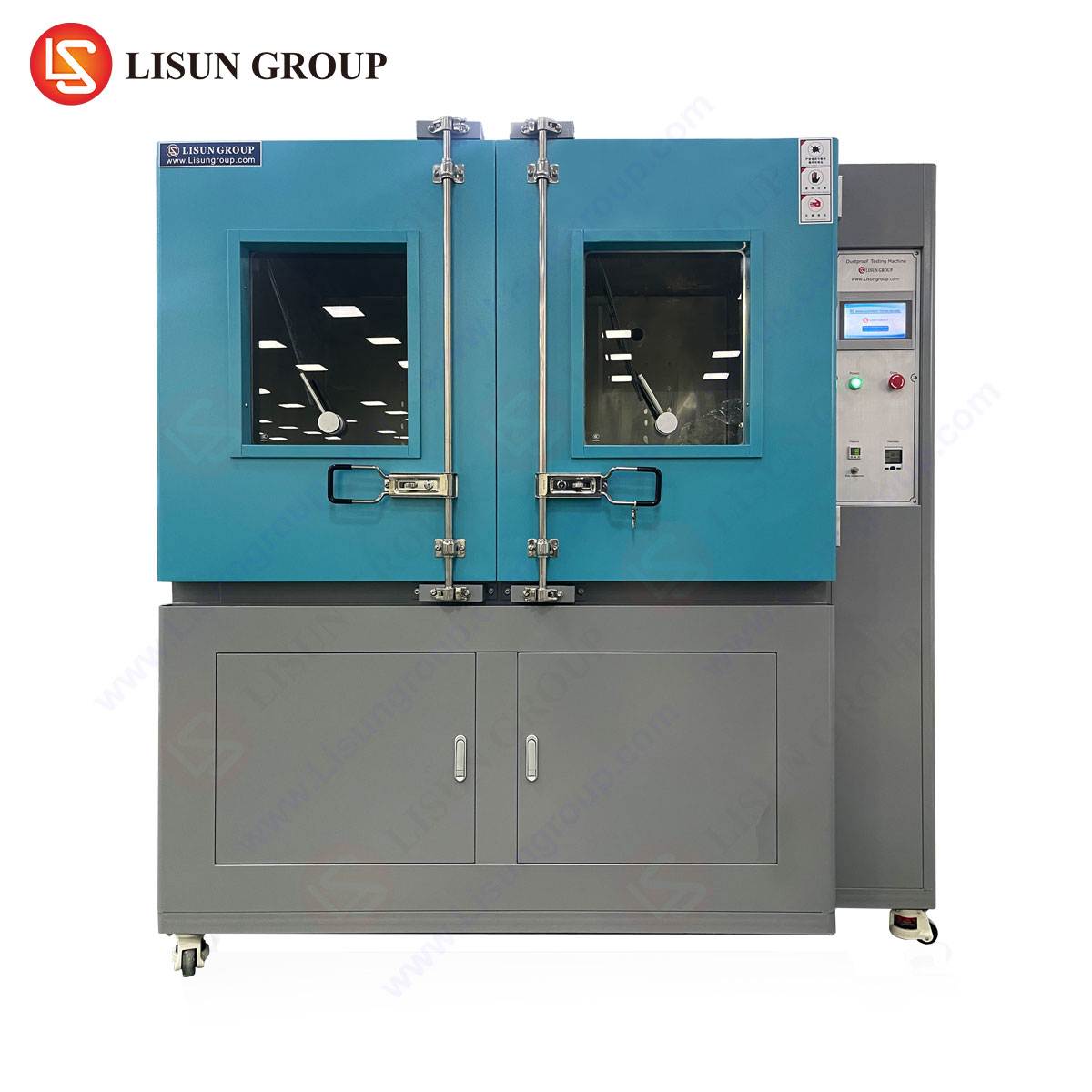
While a basic spray head apparatus can be constructed in-house, achieving consistent, audit-ready, and efficient testing requires an integrated environmental test chamber. The LISUN JL-XC Series Waterproof Test Chamber exemplifies a engineered solution that incorporates UL-compliant spray head piping within a controlled test environment. This integration addresses numerous practical challenges associated with open spray testing, such as water containment, specimen mounting, and environmental control.
The JL-XC chamber typically features a stainless-steel test room with a transparent observation window. Inside, a precisely engineered spray head piping system, conforming to UL 50E and IEC 60529 IPX3/IPX4 specifications, is mounted on a motorized or manual rotating arm. This allows for automated oscillatory motion (for IPX3/IPX4 simulated rain) or fixed-position testing (for more severe spray conditions). The specimen is mounted on a motorized turntable, which can be programmed to rotate at a specified speed (e.g., 1-3 rpm) to ensure all surfaces are uniformly exposed, a requirement for many test standards.
Key Specifications of the LISUN JL-XC Series Relevant to UL Testing:
- Spray System: Equipped with UL-specified nozzle types (e.g., No. 22 drill) on a calibrated pipe manifold. Flow rate and pressure are digitally monitored and controlled via a precision pump and regulator system.
- Water Conditioning: Integrated water tank with filtration, temperature control (ambient to +25°C typical), and conductivity control to maintain fluid specifications.
- Motion Control: Programmable oscillating spray arm (e.g., 0-180° range) and specimen turntable with adjustable speed.
- Test Chamber Dimensions: Available in multiple volumes (e.g., 0.5m³, 1m³) to accommodate products from small electrical components to large industrial control cabinets.
- Control System: Digital microcontroller or touch-screen PLC interface allowing for pre-programmed test profiles (spray angle, oscillation, rotation, duration, dwell times).
- Compliance: Engineered to meet UL 50E, IEC 60529 IPX3-IPX6, and related standards like MIL-STD-810G Method 506.6.
Industry-Specific Application Protocols and Use Cases
The application of UL water spray testing varies significantly across sectors, each with unique failure modes and reliability requirements.
- Automotive Electronics: Control units (ECUs), sensors, and lighting fixtures (headlamps, tail lights) mounted in wheel wells or underbody locations are tested to Type 4X or 6P levels. The JL-XC’s turntable and multi-directional spray capability simulate driving through heavy rain or road spray. Testing verifies that connectors, seals, and PCBAs remain dry to prevent short circuits and corrosion.
- Industrial Control Systems: Enclosures for PLCs, motor drives, and human-machine interfaces (HMIs) installed in outdoor or washdown environments (e.g., food processing, chemical plants) require Type 4 or 4X ratings. The test validates gasket integrity, door seal compression, and the effectiveness of cable gland entries.
- Lighting Fixtures: Outdoor luminaires, street lights, and industrial high-bay lights are subjected to prolonged rainfall (Type 3R) or hose-down (Type 4X) tests. The equipment checks for water ingress into the optical chamber, which can cause lens fogging, reflector corrosion, or electrical failure. The controlled water temperature in the JL-XC is crucial here to prevent thermal stress cracking of polycarbonate lenses.
- Telecommunications Equipment: Outdoor cabinets housing 5G radios, fiber optic terminals, and power supplies must withstand decades of environmental exposure. Spray testing is part of a broader environmental sequence, often followed by temperature cycling and humidity exposure within a combined environment chamber.
- Medical Devices: Equipment intended for hospital wards, ambulances, or surgical suites (e.g., patient monitors, infusion pumps) may require testing against cleaning and disinfection procedures involving splashing or directed sprays. While not always a UL rating, the IPX4 (splash proof) test performed on the same apparatus is critical for patient safety and device longevity.
- Aerospace and Aviation Components: Avionics bay components, external sensors, and ground support equipment are tested to rigorous standards like DO-160 or MIL-STD-810. These tests often involve a sequence of spray from multiple angles while the component is powered and monitored for performance degradation.
Scientific Data and Validation of Test Repeatability
The value of standardized test equipment lies in its ability to produce repeatable and comparable data. A key metric in spray testing is the water deposition uniformity across the test plane. Studies using an array of collection beakers in front of a calibrated JL-XC spray system demonstrate a coefficient of variation (CV) of less than 8% across a 1m x 1m area, well within the tolerances allowed by UL 50E. This uniformity is paramount when comparing results between different test labs or production batches.
Another critical data point is the droplet size distribution, typically measured using laser diffraction or high-speed imaging. The standardized nozzle produces a distribution where the Volume Median Diameter (VMD) falls within a specified range (e.g., 100-500 microns for rainfall simulation), ensuring the test replicates real-world conditions. The integrated pump and pressure regulation system of the JL-XC maintains this distribution consistently throughout the test duration.
Table 1: Example Test Profile for a Type 4X Enclosure Using Integrated Chamber
| Parameter | Specification per UL 50E | JL-XC Chamber Setting |
| :— | :— | :— |
| Nozzle Type | No. 22 drill orifice | Pre-installed, calibrated array |
| Water Pressure | 30-50 psi (207-345 kPa) | 40 psi setpoint, digitally regulated |
| Flow Rate | As calibrated to cover area | 12.5 L/min (chamber-specific) |
| Spray Distance | 2.5 to 3 meters | Fixed per chamber design |
| Test Duration | Minimum 10 minutes per orientation | Programmed: 10 min per side (4 sides) |
| Water Temperature | Not always specified; ambient common | Controlled at 15°C ±3°C |
| Specimen Motion | To expose all surfaces | Turntable rotation at 2 rpm |
Competitive Advantages of an Integrated Test System
Utilizing a purpose-built chamber like the LISUN JL-XC Series offers distinct advantages over ad hoc test setups:
- Standard Compliance by Design: The apparatus is engineered from the ground up to meet dimensional, flow rate, and pressure specifications, reducing validation time and risk of non-conformance during third-party audits.
- Contained and Safe Testing: All spray is contained within a stainless-steel chamber with proper drainage, improving laboratory safety, preventing water damage, and facilitating water recirculation and filtration.
- Automation and Repeatability: Programmable controls eliminate operator variance in test execution. The same profile can be run identically on different days, ensuring result reliability for quality control and R&D comparison.
- Enhanced Monitoring: Integrated systems allow for in-situ monitoring of the specimen (e.g., via electrical leakage detection circuits) during the test, providing real-time failure data rather than just a post-mortem inspection.
- Operational Efficiency: Water filtration and recirculation reduce consumption. The ability to quickly mount, test, and drain specimens increases laboratory throughput significantly.
Conclusion
The UL Water Spray Head Piping Test Equipment represents a critical nexus between performance specification and empirical validation for enclosure protection. Its precise design and calibration are non-negotiable for generating trustworthy data that informs design decisions, verifies manufacturing quality, and achieves regulatory compliance. The evolution from standalone spray racks to integrated, automated test chambers, as exemplified by the LISUN JL-XC Series, marks a significant advancement in testing technology. These systems provide the necessary control, repeatability, and efficiency to meet the escalating demands of industries where electronic reliability under environmental stress is paramount. By ensuring a rigorous and standardized simulation of water ingress, this equipment plays a fundamental role in safeguarding the functionality and safety of the electrical and electronic infrastructure that permeates modern society.
Frequently Asked Questions (FAQ)
Q1: Can the JL-XC Series chamber test for both UL 50E Type ratings and IEC 60529 IP codes?
Yes, the JL-XC Series is designed as a multi-standard apparatus. By changing the spray head nozzle array and adjusting the water pressure, flow rate, and oscillation patterns via its control system, it can be configured to perform tests for UL 50E (Types 3R, 4, 4X, 6, 6P) as well as IEC 60529 IPX3 (oscillating tube) and IPX4 (oscillating splash) tests. The turntable is used for IPX4 and higher tests.
Q2: How is water quality maintained during recirculation in a long-duration test?
The chamber includes a filtration system, typically with sediment filters, and often options for de-ionizing cartridges or UV sterilization to control biological growth. Conductivity is monitored, and make-up water or periodic full tank replacement is used to maintain the required low-conductivity specifications, preventing nozzle clogging and ensuring valid test conditions.
Q3: What is the maximum specimen size that can be accommodated for a full Type 4X hose-down test?
Capacity depends on the specific chamber model. For a true Type 4X test where the specimen must be sprayed from all directions, the specimen must fit on the turntable with sufficient clearance (usually >150mm) from the spray heads to ensure proper spray pattern impingement. Manufacturers provide clear test volume dimensions (e.g., Ø800mm x H800mm) for each model to guide selection.
Q4: Is it necessary to perform electrical tests after the spray exposure?
UL 50E and related standards typically require a dielectric withstand (hipot) test or an insulation resistance measurement after the water exposure test. This verifies that no moisture has penetrated to live parts in a way that compromises electrical safety. The test specimen is often briefly dried (e.g., wiped down) before this electrical verification, as specified in the standard.
Q5: How often does the spray head piping system require recalibration?
Calibration frequency should follow a lab’s quality procedure, typically annually or biannually. However, it is recommended to perform a basic verification of flow rate and spray uniformity using collection gauges before any critical series of tests. Signs like uneven spray patterns or nozzle dribbling indicate an immediate need for maintenance or cleaning of the nozzles and filter system.