




Understanding Dust Test Chambers: Key Features and Selection Criteria
Introduction to Particulate Ingress Testing
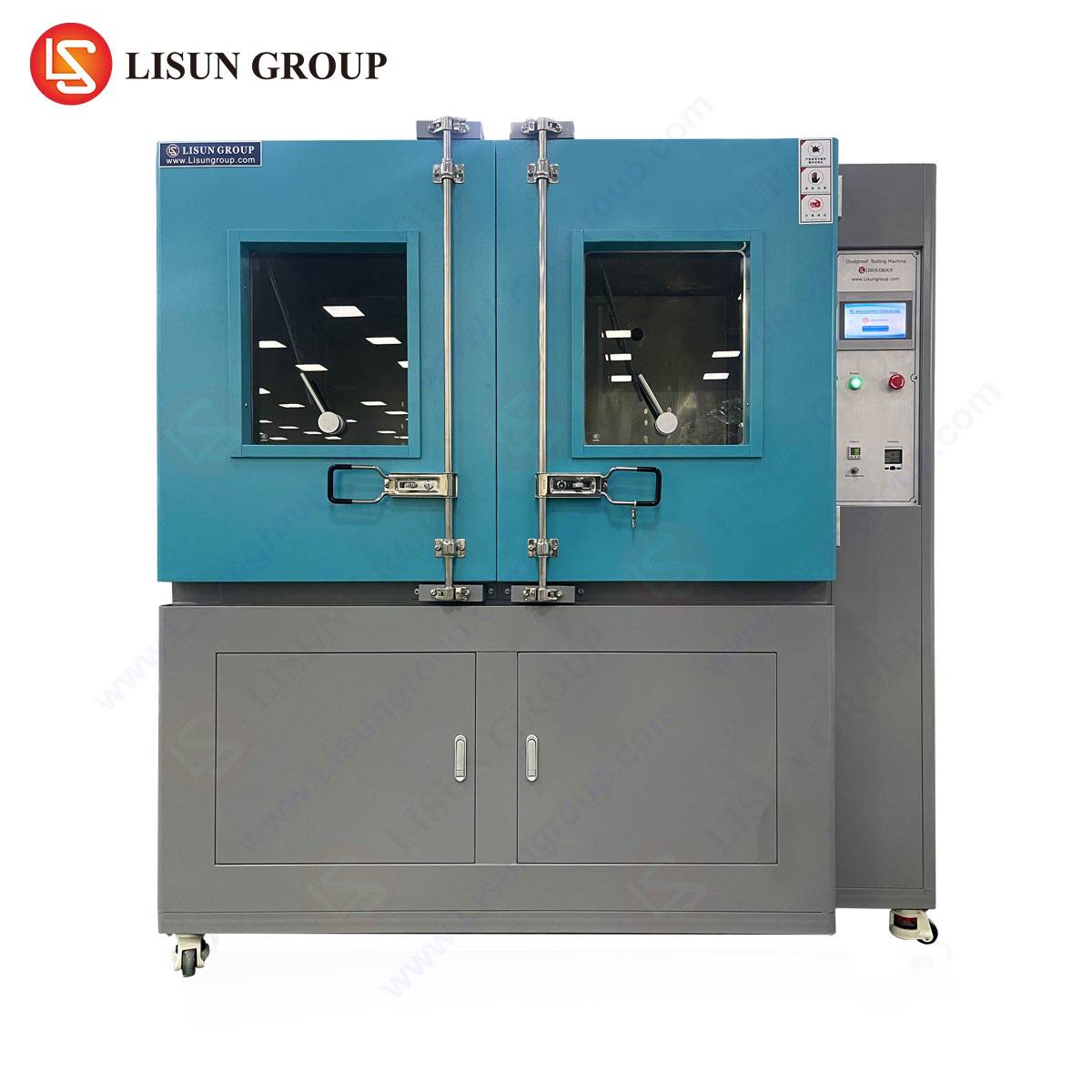
The operational longevity and functional reliability of components and finished products across numerous industries are critically dependent on their resilience against environmental stressors. Among these, the ingress of solid particulate matter—dust, sand, and other fine abrasives—represents a pervasive and insidious threat. Particulate contamination can lead to mechanical binding, electrical short circuits, optical obscuration, accelerated wear, and thermal insulation, resulting in performance degradation or catastrophic failure. To quantify and validate a product’s resistance to such conditions, dust test chambers are employed as essential instruments within environmental simulation laboratories. These chambers provide a controlled, reproducible environment to subject test specimens to specified concentrations and types of particulate under defined conditions, in accordance with international standards. This article delineates the fundamental operating principles, key technical features, and critical selection criteria for dust test chambers, with a specific examination of the LISUN SC-015 Dust Sand Test Chamber as a representative advanced system.
Fundamental Operating Principles of Dust Ingress Simulation
Dust test chambers operate on the principle of creating a suspended, homogeneous cloud of standardized test dust within an enclosed volume. The primary mechanism involves a controlled circulation system where dust is fluidized and injected into the test zone. A common method utilizes a bottom-mounted plenum with a porous diffusion plate. Compressed air is forced through this plate, fluidizing the dust bed above it and carrying particles upward into the main test chamber. Alternatively, ejector or cyclone systems may be used to introduce dust via high-velocity air streams. The chamber’s internal airflow dynamics are carefully engineered to ensure uniform dust distribution, preventing dead zones where the specimen would not be exposed to the specified concentration. The test specimen, mounted according to standard protocols, is exposed to this cloud for a predetermined duration. Some tests incorporate negative pressure differentials inside the specimen (per IP5X and IP6X of IEC 60529) to simulate conditions where internal cooling fans or other factors might draw particulates inward, providing a more severe assessment of sealing efficacy.
Deciphering Key Specifications and Chamber Capabilities
Selecting an appropriate dust test chamber necessitates a thorough analysis of its specifications against testing requirements. Key parameters include chamber volume, which must accommodate the specimen while allowing for unobstructed dust circulation. Dust concentration, typically measured in grams per cubic meter (g/m³), must be precisely controllable and monitorable to adhere to standards like IEC 60529, ISO 20653, or MIL-STD-810. Particle size distribution of the test dust is another critical factor; standardized Arizona Road Dust (e.g., A1 Fine, A2 Coarse) or other specified talc powders are commonly used, with their profiles defined by standards.
Temperature and humidity control, while not always required for basic dust tests, are vital for composite testing that simulates real-world environments where temperature cycling or humidity may affect sealing materials or electrostatic attraction of particles. The chamber’s construction materials, such as stainless steel for corrosion resistance and ease of decontamination, and the robustness of viewing windows with wipers to maintain visibility are practical considerations. Furthermore, the dust recovery and filtration system is paramount for operator safety, environmental compliance, and dust reuse, featuring high-efficiency particulate air (HEPA) filters to prevent laboratory contamination.
The LISUN SC-015 Dust Sand Test Chamber: A Technical Analysis
The LISUN SC-015 exemplifies a modern, fully integrated dust test chamber designed for rigorous compliance testing. Its design focuses on precise control, user safety, and adherence to major international standards, including IEC 60529, ISO 20653, and GB/T 4208.
Specifications and Testing Principles: The SC-015 features a chamber constructed from 304 stainless steel, with a standard working volume suitable for a wide range of components and products. It utilizes a bottom-plenum fluidization system with a precision airflow regulator to generate and maintain a consistent dust cloud. The chamber is equipped with a dedicated vacuum system to create the required negative pressure differential for IP5X and IP6X testing, with the pressure level and flow rate adjustable and displayed on integrated gauges. A programmable logic controller (PLC) and human-machine interface (HMI) touchscreen allow for the setting and automation of test parameters: exposure duration, dust agitation cycles, and negative pressure periods.
Industry Use Cases and Applications: The SC-015 is deployed across industries where particulate ingress protection is a non-negotiable aspect of product qualification.
- Electrical and Electronic Equipment & Industrial Control Systems: Testing the integrity of enclosures for programmable logic controllers (PLCs), servo drives, and power supplies to ensure reliable operation in manufacturing plants or outdoor installations.
- Automotive Electronics: Validating components like electronic control units (ECUs), sensors, and lighting assemblies against road dust and sand, as per ISO 20653, which defines protection levels for road vehicles.
- Lighting Fixtures and Electrical Components: Assessing the sealing of outdoor luminaires, switches, sockets, and junction boxes to prevent internal accumulation that could cause overheating or electrical failure.
- Telecommunications Equipment: Ensuring that base station electronics, fiber optic terminal enclosures, and outdoor routers can withstand dusty environments without degradation in signal or cooling performance.
- Aerospace and Aviation Components: Testing avionics bay components, external sensors, and in-flight entertainment systems for operation in arid, sandy regions or under conditions of airborne particulate.
- Medical Devices and Office Equipment: Verifying that diagnostic equipment, ventilators, printers, and copiers used in clinical or general office environments are protected against internal contamination from paper dust or environmental particulates.
Competitive Advantages: The SC-015 distinguishes itself through several engineered features. Its closed-loop dust circulation and recovery system minimizes dust consumption and maximizes laboratory cleanliness. The integrated negative pressure test system eliminates the need for external vacuum sources, streamlining setup. Enhanced safety features, including an interlocked door that shuts off the dust circulation upon opening and a comprehensive exhaust filtration system, protect the operator. The use of a PLC with data logging capabilities provides traceability for audit trails, a critical requirement in regulated industries like automotive and medical devices.
Critical Selection Criteria for Procurement
Procuring a dust test chamber is a strategic investment. The selection process must be guided by a clear alignment between chamber capabilities and organizational needs.
- Compliance with Relevant Standards: The chamber must demonstrably meet the specific standards required by the target industry and market (e.g., IEC, ISO, MIL, JIS, GB). Verification should include design features that facilitate testing procedures outlined in these documents.
- Technical Parameter Alignment: Chamber volume, dust concentration range, particle feed control accuracy, and the capability for negative pressure testing must match the size and test requirements of the largest anticipated specimens.
- System Automation and Usability: The degree of automation in test sequencing, parameter logging, and safety controls directly impacts testing throughput, reproducibility, and operator training requirements. An intuitive interface reduces human error.
- Safety and Containment: Robust containment systems, including HEPA-filtered exhaust and safe dust handling mechanisms, are essential for protecting personnel and preventing cross-contamination in multi-purpose labs.
- Construction Quality and Serviceability: The durability of materials, especially in contact with abrasive dust, affects long-term chamber integrity. Ease of access for cleaning, maintenance, and component replacement dictates total cost of ownership.
- Manufacturer Support and Calibration: The availability of technical support, calibration services, and a supply of consumables (like standardized test dust) ensures continuous operational readiness.
Interpreting Test Results and Correlation to Real-World Performance
The outcome of a dust ingress test is typically a pass/fail determination based on visual inspection for dust penetration (IP5X) or a quantitative assessment of allowable dust ingress (IP6X). However, sophisticated users correlate these results with subsequent functional tests. For instance, a telecommunications equipment manufacturer may subject a router that has passed an IP6X test to subsequent radio frequency (RF) performance and thermal cycling tests to ensure that any minute ingress does not affect dielectric properties or cooling efficiency. This holistic approach bridges the gap between standardized laboratory testing and field reliability, informing design improvements in gaskets, seals, and ventilation filters.
Conclusion
Dust test chambers are indispensable tools for validating product robustness in a world where particulate contamination is a universal challenge. A methodical approach to selection, prioritizing standards compliance, technical precision, operational safety, and long-term reliability, is crucial for establishing a credible testing regimen. Systems like the LISUN SC-015 Dust Sand Test Chamber, with their integrated features and adherence to global standards, provide the controlled, repeatable, and documentable environment necessary for manufacturers across the electrical, automotive, aerospace, and medical sectors to prove product durability, reduce warranty claims, and enhance brand reputation for quality.
Frequently Asked Questions (FAQ)
Q1: What is the difference between IP5X and IP6X testing, and can the LISUN SC-015 perform both?
A1: IP5X (Dust Protected) tests for the ingress of dust with no harmful deposit. A vacuum may be applied to the specimen. IP6X (Dust Tight) is a more severe test requiring that no dust enters the enclosure, also typically under vacuum. The LISUN SC-015 is equipped with an integrated vacuum system and controls specifically designed to conduct both IP5X and IP6X tests in accordance with IEC 60529, allowing users to select the appropriate test condition.
Q2: How is dust concentration calibrated and verified within the chamber?
A2: Concentration is primarily controlled by the calibrated feed rate of the dust injection system and the chamber’s airflow dynamics. Verification can be performed using gravimetric analysis: placing pre-weighed filter collection devices at specified points within the empty test chamber during a run, then re-weighing them to calculate the mass of dust per unit volume. Regular calibration of the airflow and feed mechanisms is essential to maintain accuracy.
Q3: What types of standard test dust are compatible with the SC-015, and what are their applications?
A3: The chamber is compatible with commonly standardized dusts. Arizona Road Dust (A1 Fine, A2 Coarse) is widely used for automotive and general equipment testing. Talcum powder is often specified in IEC standards for electrical equipment testing. The choice depends on the relevant product standard; for example, ISO 20653 for automotive components specifies specific dust types and particle size distributions.
Q4: For testing automotive components, is the SC-015 suitable for the sand and dust tests outlined in MIL-STD-810?
A4: Yes, the SC-015 is designed to meet the requirements of Method 510.7 of MIL-STD-810, which covers blowing dust and sand. Its ability to control dust concentration, airflow velocity, and temperature allows it to simulate the specific exposure profiles (like cycling conditions) defined in this military standard, which is also frequently referenced in automotive durability testing.
Q5: How critical is temperature control in dust testing, and does the SC-015 offer this feature?
A5: While basic IP Code dust testing does not require temperature control, many real-world test profiles do. Composite tests, such as those combining dust with thermal cycling, or standards like MIL-STD-810, often specify elevated temperatures. Temperature can affect seal pliability and electrostatic properties. The SC-015 can be configured with an optional heating system to elevate chamber temperature, typically up to 60-80°C, to fulfill these more comprehensive test requirements.