

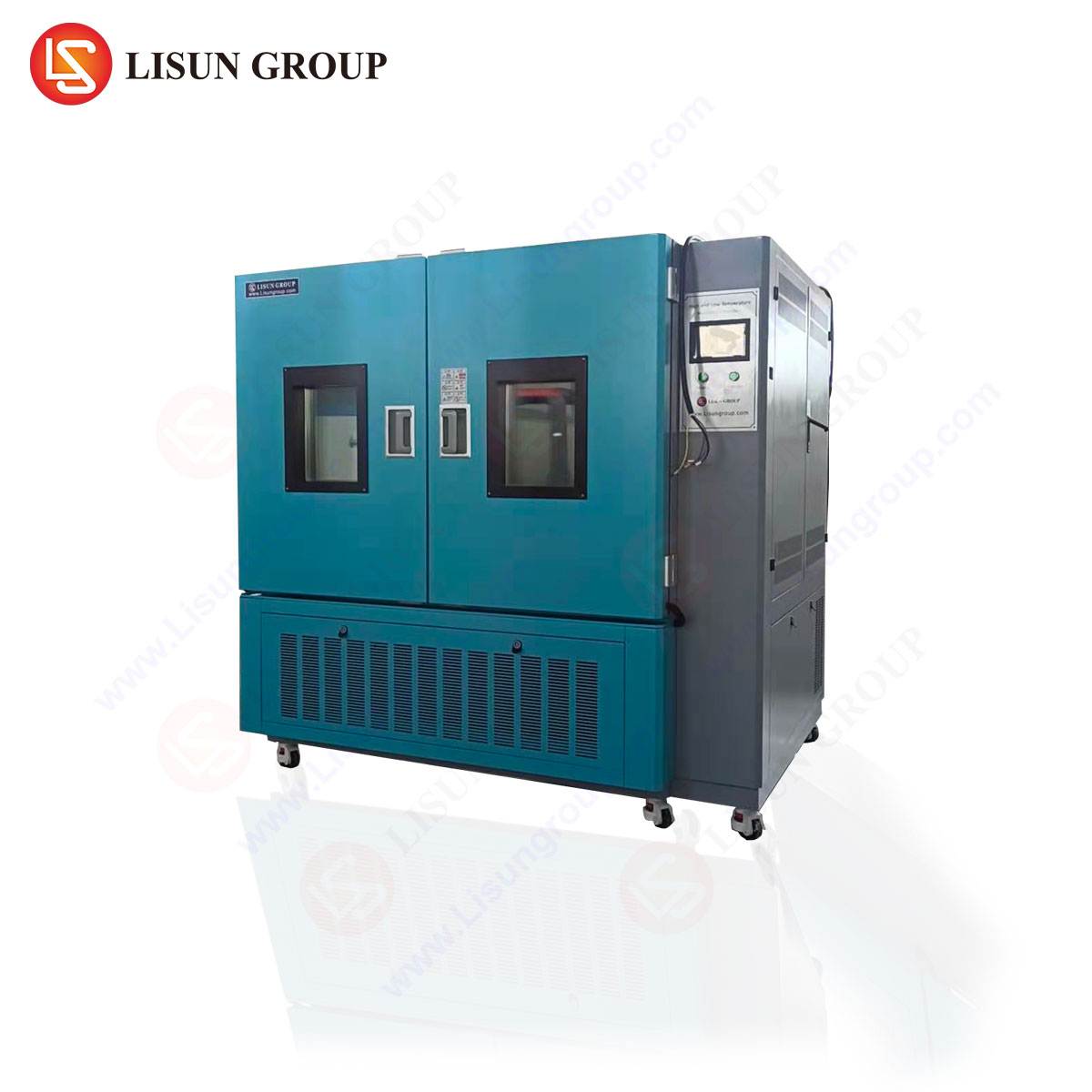



Understanding Environmental Test Chambers: Principles, Applications, and Technological Implementation
Environmental test chambers are indispensable instruments in the validation and qualification of materials, components, and finished products across a vast spectrum of industries. These sophisticated systems artificially replicate and accelerate the effects of environmental stressors—such as temperature, humidity, thermal shock, vibration, and corrosion—that a product may encounter throughout its lifecycle. The primary objective is not merely to observe failure, but to proactively identify design weaknesses, verify compliance with international standards, and predict long-term reliability under defined conditions. This rigorous process mitigates field failure risks, reduces warranty costs, and substantiates claims of durability and safety, which are critical in sectors where performance is non-negotiable.
Fundamental Classifications and Operational Principles
Environmental chambers are categorized by the stressors they simulate and their operational methodologies. The two most prevalent types are steady-state chambers and dynamic stress chambers, each serving distinct but complementary roles in the testing regimen.
Temperature and Humidity Chambers, such as the LISUN GDJS-015B, provide a controlled environment for steady-state or cyclic conditioning. The core principle involves the precise decoupling and independent control of temperature and relative humidity (RH). Temperature control is typically achieved via a refrigeration system (often employing a cascade compressor design for extended ranges) and electrical heaters. Humidity generation commonly utilizes a steam injection method, where deionized water is vaporized and introduced into the airstream. Humidity removal is accomplished by cooling the chamber air below its dew point via the refrigeration evaporator, condensing out moisture, and then reheating the air to the target dry-bulb temperature. This process allows for precise RH control across a broad spectrum, often from 20% to 98% RH, with temperature ranges spanning from sub-ambient (e.g., -70°C) to elevated levels (e.g., +150°C). The chamber’s air circulation system, usually a forced convection system with strategically placed baffles, ensures uniform spatial distribution of temperature and humidity, a parameter quantified as temperature and humidity uniformity, often required to be within ±0.5°C and ±2.5% RH respectively per standards like IEC 60068-2-78.
Thermal Shock Chambers, exemplified by the LISUN HLST-500D, employ a fundamentally different principle to induce rapid, high-rate temperature transitions. Instead of gradually ramping the temperature of a single workspace, these systems utilize a two- or three-zone approach. In a classic two-zone vertical configuration, a mobile basket houses the test specimens. This basket mechanically transfers the samples between a high-temperature zone (e.g., +150°C to +200°C) and a low-temperature zone (e.g., -65°C to -10°C) in a matter of seconds. The transition time, a critical performance metric, refers to the duration from the moment the specimen leaves one zone until it reaches the specified temperature tolerance band in the other zone, often aiming for less than 5 seconds. This rapid transition induces severe mechanical stresses due to the differential coefficients of thermal expansion (CTE) between dissimilar materials within an assembly, effectively accelerating failure mechanisms like solder joint cracking, die attach delamination, or PCB via fracturing.
The Critical Role of Standards in Test Chamber Utilization
The application of environmental chambers is not arbitrary but is rigorously guided by a framework of international and industry-specific standards. These standards prescribe precise test profiles—defining stress levels, durations, cycles, and pass/fail criteria—ensuring consistency, repeatability, and comparability of results across laboratories and geographies.
Key standards bodies include the International Electrotechnical Commission (IEC), particularly its 60068 series (“Environmental testing”), and organizations like MIL-STD (Military Standard), ISO (International Organization for Standardization), and AEC (Automotive Electronics Council). For instance, IEC 60068-2-1 (Cold tests) and IEC 60068-2-2 (Dry heat tests) govern basic temperature endurance. IEC 60068-2-30 (Damp heat, cyclic) is pivotal for evaluating the resistance of devices to humid conditions, often applied to Consumer Electronics and Telecommunications Equipment. The AEC-Q100 standard for automotive integrated circuits mandates rigorous temperature cycling and humidity testing, directly informing the use of chambers like the GDJS-015B and HLST-500D in Automotive Electronics validation.
Compliance with these standards is a de facto requirement for market access. A medical device manufacturer must demonstrate testing per ISO 14708-1 for active implantable devices, which includes specific environmental clauses. Similarly, Aerospace and Aviation Components are validated against DO-160G, “Environmental Conditions and Test Procedures for Airborne Equipment,” which details test procedures for temperature, altitude, and humidity.
In-Depth Analysis: The LISUN GDJS-015B Temperature Humidity Test Chamber
The LISUN GDJS-015B represents a specific implementation of a benchtop temperature and humidity test chamber, engineered for precision and reliability in R&D and quality assurance laboratories.
Specifications and Design Philosophy:
- Temperature Range: -70°C to +150°C.
- Humidity Range: 20% to 98% RH.
- Interior Volume: 150 liters.
- Temperature Fluctuation: ≤±0.5°C.
- Temperature Uniformity: ≤±2.0°C.
- Humidity Deviation: ±2.5% RH (above 50% RH).
- Heating/Cooling Rate: Approximately 1.0°C to 3.0°C per minute (dependent on setpoint).
- Refrigeration System: Cascade compressor system utilizing eco-friendly refrigerants, essential for achieving and maintaining stable low temperatures.
- Control System: Digital PID (Proportional-Integral-Derivative) controller with touchscreen interface, enabling programmable multi-segment profiles, real-time graphing, and data logging.
Testing Principles and Industry Use Cases:
The GDJS-015B operates on the principles of convective heat transfer and psychrometric control. Its primary function is to subject products to prolonged or cyclic exposure to specific temperature-humidity combinations. In Electrical and Electronic Equipment, this chamber is used for “damp heat, steady state” testing (IEC 60068-2-78) to assess the long-term effects of humid environments on insulation resistance, metal corrosion, and fungal growth. For Lighting Fixtures, particularly outdoor LED drivers, it performs temperature-humidity bias testing to evaluate the ingress of moisture and its impact on optical performance and electrical safety.
A critical application is “Highly Accelerated Stress Testing (HAST)” or “Pressure Cooker Test (PCT),” a derivative test where temperature is elevated to 110-130°C with 85-100% RH, often at elevated pressure (though not in standard chambers). While the GDJS-015B typically operates at atmospheric pressure, it can run aggressive damp heat cycles to screen for failure modes in semiconductor packages and Electrical Components like connectors and Switches, Sockets, such as contact oxidation and plasticizer loss in insulating materials.
Competitive Advantages:
The chamber’s cascade refrigeration system provides a distinct advantage in achieving a wide temperature range with stable recovery times after door openings. The precision of its humidity control, with minimal deviation, ensures test integrity, particularly when testing hygroscopic materials found in Cable and Wiring Systems insulation. Its programmable controller allows for the creation of complex diurnal cycles, simulating day-night temperature and humidity variations relevant to Telecommunications Equipment deployed in outdoor cabinets. The 150L volume offers a practical compromise between workspace capacity and laboratory footprint, suitable for testing batches of smaller components or several larger Office Equipment sub-assemblies like printer circuit boards.
Simulating Extreme Transients: The LISUN HLST-500D Thermal Shock Test Chamber
Where the GDJS-015B applies steady-state stresses, the LISUN HLST-500D is engineered to deliver controlled, repetitive thermal trauma, uncovering latent defects induced by rapid material expansion and contraction.
Specifications and Design Philosophy:
- Test Chamber Structure: Three-zone (high temperature, low temperature, ambient recovery) hanging basket type.
- Temperature Range: High Temperature Chamber: +60°C to +200°C; Low Temperature Chamber: -10°C to -65°C.
- Recovery Time: High Temperature: ≤5 min from +150°C to +200°C; Low Temperature: ≤5 min from 0°C to -65°C.
- Transition Time: <10 seconds (mechanical transfer between zones).
- Basket Capacity: Customized to application, designed for efficient air flow around samples.
- Air Circulation: Forced air circulation in each zone to ensure temperature uniformity.
- Control System: Programmable logic controller (PLC) with color touchscreen, separate for each zone, with automatic basket movement based on time or specimen temperature.
Testing Principles and Industry Use Cases:
The HLST-500D executes tests per standards like IEC 60068-2-14 (Change of temperature) and JESD22-A104 (Temperature Cycling). The three-zone design includes an ambient zone that allows samples to stabilize at room temperature between extreme exposures, which can be critical for certain test protocols. The rapid transfer induces shear stresses at material interfaces.
In Automotive Electronics, an engine control unit (ECU) is subjected to thousands of these cycles to validate solder joint integrity under the hood’s extreme temperature swings. For Aerospace and Aviation Components, this test simulates the rapid temperature changes from ground operation to high-altitude flight. Medical Devices, such as implantable sensor electronics, undergo thermal shock testing to ensure hermeticity and functional stability after sterilization processes (e.g., autoclaving) and subsequent implantation. The chamber is equally vital for Industrial Control Systems destined for unheated factories, where power cycling generates internal heat against a cold ambient backdrop.
Competitive Advantages:
The three-zone configuration of the HLST-500D offers enhanced testing flexibility compared to two-zone models, allowing for more complex profiles that include ambient stabilization phases. The fast recovery times of its individual zones ensure that the setpoint temperatures are maintained with high fidelity throughout a test sequence involving hundreds of cycles, guaranteeing consistent stress application. The robust mechanical transfer mechanism is engineered for high reliability over millions of cycles, a necessity for unattended long-duration testing. Its independent zone controls allow for pre-stabilization of the next environment before transfer, contributing to the critically short transition time that is essential for inducing the desired failure mechanisms.
Selecting and Deploying the Appropriate Test Chamber
The selection between a humidity chamber and a thermal shock chamber, or the decision to deploy both, is dictated by the failure mechanisms under investigation and the relevant compliance standards.
A Temperature Humidity Chamber is selected for tests involving:
- Material degradation due to moisture absorption.
- Corrosion of metallic parts.
- Evaluation of sealing effectiveness and gasket life.
- Long-term reliability assessment under storage or operational environments.
- Testing sensitive to slower temperature ramps.
A Thermal Shock Chamber is indispensable for:
- Accelerated life testing of solder interconnects.
- Testing the integrity of bonded or encapsulated assemblies.
- Qualifying components for applications with rapid power cycling.
- Identifying workmanship defects in electronic assemblies.
- Validating performance after extreme thermal transients.
In practice, a comprehensive reliability program for a product like an automotive LED headlight (Lighting Fixtures and Automotive Electronics) would utilize both. The GDJS-015B would be used for damp heat cycling to test the lens seal and driver board against humidity, while the HLST-500D would be employed for thermal shock testing to validate the solder joints connecting the LED array to its substrate against vibration-induced failure exacerbated by CTE mismatch.
Conclusion
Environmental test chambers are the cornerstone of modern product validation, transforming subjective claims of robustness into objective, data-driven evidence. The technological differentiation between steady-state conditioning chambers like the LISUN GDJS-015B and dynamic stress chambers like the LISUN HLST-500D addresses the full spectrum of environmental failure modes. Their operation, grounded in the principles of thermodynamics, fluid dynamics, and control theory, and their application, guided by a complex web of international standards, are critical for ensuring the reliability, safety, and marketability of products across the electrical, electronic, automotive, aerospace, and medical industries. As product complexity increases and operational environments become more demanding, the role of precise, reliable environmental simulation will only grow in significance.
Frequently Asked Questions (FAQ)
Q1: What is the key difference between “temperature cycling” and “thermal shock” testing, and which chamber performs which?
A1: The primary difference lies in the rate of temperature change. Temperature cycling typically involves slower transition rates (e.g., 1°C to 10°C per minute) and is often performed in a single chamber like the GDJS-015B, where the chamber’s internal temperature is ramped up and down. Thermal shock testing involves extreme transition rates (often >20°C per minute, achieved in seconds), forcing the specimen to experience nearly instantaneous change. This is exclusively performed in dedicated thermal shock chambers like the HLST-500D, which transfers the sample between pre-heated and pre-cooled zones.
Q2: Why is humidity uniformity so challenging to control in a test chamber, and why is it critical?
A2: Humidity uniformity is difficult because it is dependent on both absolute moisture content and temperature. Any minor temperature gradient within the workspace directly causes a relative humidity gradient, as RH is temperature-dependent. Precise control requires exceptional temperature uniformity, efficient vapor distribution, and careful management of cold spots where condensation can occur. It is critical because a non-uniform humidity field means different test specimens within the same chamber are experiencing different stress levels, invalidating comparative reliability data.
Q3: For testing automotive electronics to AEC-Q100, would the GDJS-015B, the HLST-500D, or both be required?
A3: Both chambers would typically be required. AEC-Q100 mandates several key tests: Temperature Cycling (Test Condition G, e.g., -55°C to +125°C) which is best performed with rapid transitions in a thermal shock chamber like the HLST-500D. It also requires Highly Accelerated Stress Test (HAST) or Temperature Humidity Bias (THB) testing, which involves elevated temperature and high humidity (e.g., 110°C, 85% RH), performed in a precision temperature humidity chamber like the GDJS-015B.
Q4: What is meant by “recovery time” in a thermal shock chamber specification, and why does it matter?
A4: Recovery time refers to the duration required for a chamber zone (high or low temperature) to return to its setpoint temperature after the test basket, loaded with samples at a different temperature, has been inserted into it. A short recovery time (e.g., ≤5 minutes for the HLST-500D) indicates a powerful refrigeration/heating system and efficient airflow design. This matters because it ensures the dwell time at the extreme temperature is consistent and as programmed for every cycle, maintaining the test’s severity and repeatability throughout a long test run.
Q5: Can a standard temperature humidity chamber simulate sunlight or radiation exposure?
A5: No. Standard chambers like the GDJS-015B control temperature and humidity only. Simulation of solar radiation, ultraviolet (UV) degradation, or other photonic effects requires a specialized chamber equipped with a xenon-arc or UV lamp system, often referred to as a weathering or lightfastness test chamber. These are distinct instruments designed for different failure mechanisms, primarily affecting polymers, coatings, and dyes.