

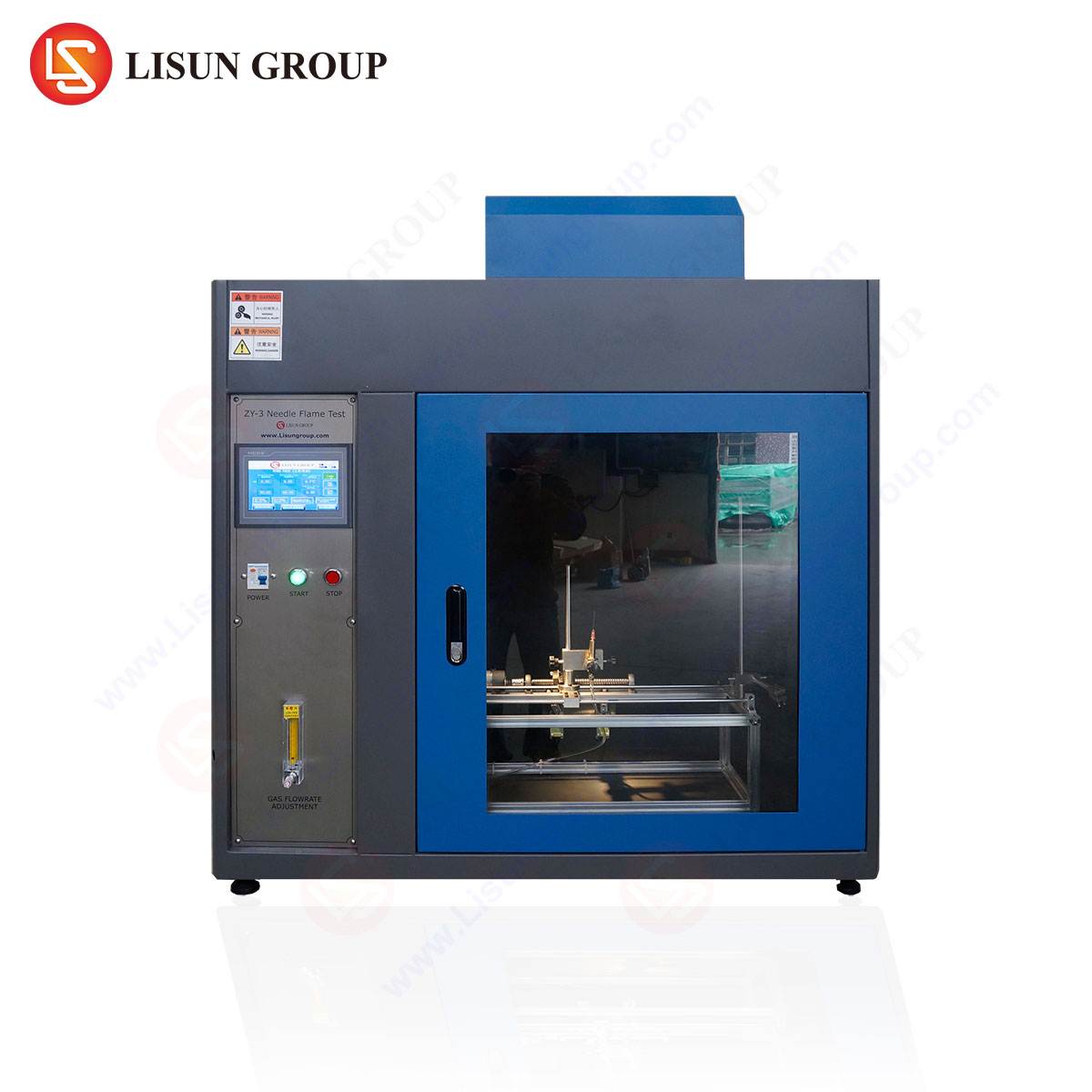



A Comprehensive Analysis of Flammability Tester Acquisition and Operational Economics
The imperative to evaluate and certify the fire safety of materials and components is a non-negotiable tenet across modern manufacturing sectors. Flammability testers, as the principal apparatus for this critical verification, represent a significant capital investment for quality assurance laboratories, certification bodies, and research facilities. A nuanced understanding of the total cost of ownership for such equipment extends far beyond the initial purchase price, encompassing a complex matrix of technical specifications, regulatory compliance, operational overhead, and long-term reliability. This analysis delineates the multifaceted economic considerations involved in procuring and maintaining flammability testing instrumentation, with particular attention to the application-specific demands of high-stakes industries.
Deconstructing the Initial Capital Outlay: Beyond the Sticker Price
The procurement cost of a flammability tester is the most visible, yet often the most misunderstood, component of the investment. This figure is intrinsically tied to the apparatus’s design sophistication, measurement precision, and breadth of compliance. A basic tester capable of performing a singular, simplified flame application test will command a fundamentally different price point than a fully automated system designed to execute complex test sequences aligned with stringent international standards. Key hardware factors influencing the initial capital outlay include the combustion chamber’s construction material (stainless steel for corrosion resistance versus coated alternatives), the precision and reproducibility of the flame ignition and timing system, the integration of calibrated thermal sensors (e.g., thermocouples for temperature verification), and the quality of ancillary components such as specimen holders, airflow regulators, and exhaust management systems.
Furthermore, the degree of automation substantially impacts cost. Manual testers require constant operator intervention for flame application, timing, and observation, whereas semi-automatic and fully automatic models incorporate programmable logic controllers (PLCs), servo-driven positioning mechanisms, and digital data acquisition interfaces. This automation reduces human error, enhances repeatability, and increases testing throughput, justifying a higher initial investment through operational efficiency gains. The initial purchase must also account for essential calibration equipment, standard reference materials for validation, and installation services, which are often quoted as separate line items but are indispensable for achieving accredited testing capabilities.
The Critical Role of Standards Compliance in Cost Justification
A flammability tester is not an island; it is a tool for demonstrating compliance with a specific, legally or contractually mandated set of performance criteria. The cost of the instrument is directly proportional to its ability to meet these criteria accurately and reproducibly. Different industries are governed by distinct standards, each with unique apparatus requirements. For instance, the IEC 60695-11-5 standard for the needle-flame test prescribes precise flame dimensions, application force, and observational criteria, necessitating a dedicated tester like the LISUN ZY-3 Needle Flame Test Apparatus.
The LISUN ZY-3 is engineered explicitly to satisfy the stringent parameters of IEC 60695-11-5, UL 746A, and related standards. Its design incorporates a butane-fed needle burner producing a standardized 12±2 mm high flame with a nominal thermal power of 1W. The apparatus features a precise specimen positioning stage and a controlled application duration timer (0-999.9 seconds, adjustable in 0.1-second increments). The cost of such a specialized instrument reflects the engineering required to achieve this level of standardized repeatability. Failure to invest in a compliant tester can lead to non-conforming test results, rejected product certifications, and potential liability, costs which far outweigh the price premium of a fully accredited apparatus. Compliance is not a feature; it is the foundational requirement that dictates the tester’s design and, consequently, its valuation.
Operational Expenditures and Lifetime Cost Considerations
The total cost of ownership (TCO) for a flammability tester accrues significantly over its operational lifespan. Recurring costs include consumables, calibration, maintenance, and operator training. High-purity test gases (e.g., butane of a specified grade for the needle-flame test) are a continual expense, with consumption rates varying based on testing volume. Regular calibration by accredited laboratories, typically on an annual basis, is mandatory to maintain the traceability and validity of test data. This service represents a fixed, recurring cost that must be budgeted.
Maintenance costs are heavily influenced by the instrument’s build quality and design accessibility. Robust construction with durable components minimizes downtime and repair frequency. The LISUN ZY-3, for example, utilizes a stainless steel main body and precision-machined components to withstand the rigors of daily laboratory use, thereby reducing long-term maintenance liabilities. Furthermore, the complexity of repair—requiring a specialized service engineer versus in-house technician intervention—adds layers to potential downtime costs. Operator training, while sometimes overlooked, is a critical expenditure; improper use can damage the tester, invalidate tests, and create safety hazards. The availability of comprehensive documentation and training materials from the manufacturer mitigates this risk and associated costs.
Industry-Specific Application Drivers and Technical Requirements
The economic justification for a specific flammability tester is inextricably linked to its intended applications. The technical requirements diverge markedly across sectors:
- Electrical and Electronic Equipment & Components: For switches, sockets, connectors, and printed circuit board (PCB) assemblies, the risk involves small, localized ignition sources from fault conditions. The needle-flame test, simulating an over-glow from a faulty element, is paramount. A tester like the ZY-3 is essential for evaluating the ability of these components to resist ignition and limit flame spread.
- Household Appliances and Consumer Electronics: Products such as power supplies, control panels, and internal wiring harnesses must be assessed for fire risk. Testing often follows IEC 60335-1 series standards, which frequently invoke needle-flame or glow-wire methodologies to verify that enclosures and internal parts do not propagate flame.
- Automotive Electronics and Aerospace Components: The operational environment here includes vibration, thermal cycling, and confined spaces. Flammability testing for control units, wiring systems, and in-cabin electronics must account for these stresses. The apparatus must not only perform the test but do so reliably in a quality control environment that may demand high throughput.
- Lighting Fixtures and Industrial Control Systems: LED drivers, ballasts, and relay housings generate heat and contain electrical energy. Testers must evaluate the flammability of enclosures and internal insulating materials to ensure a fault does not lead to a sustained fire within the fixture or control cabinet.
- Medical Devices and Telecommunications Equipment: Reliability and safety are paramount. Testing battery compartments, device housings, and internal polymer components for resistance to small flames ensures patient and network safety, aligning with standards like IEC 60601-1 and TL 9000 quality benchmarks.
In each case, the cost of the tester is weighed against the consequence of failure—product recall, brand damage, regulatory non-compliance, or loss of life. The specificity of the LISUN ZY-3 to the needle-flame test makes it a targeted, justifiable investment for any manufacturer or test house serving these industries.
Quantifying Performance: Specifications as Economic Indicators
Technical specifications are the quantitative language of value in flammability testing equipment. They translate directly into testing accuracy, repeatability, and operational cost. Key specifications to analyze include:
| Specification | Economic & Performance Implication |
|---|---|
| Flame Height Stability | Deviations affect test severity. A system that maintains a consistent 12±0.5 mm flame reduces retest rates and material waste, enhancing lab efficiency. |
| Timer Precision & Range | A programmable timer with 0.1-second resolution (e.g., 0-999.9s) allows exact adherence to standard-mandated application times (e.g., 30s ±1s), ensuring compliant and comparable results. |
| Construction Materials | Stainless steel construction, as used in the ZY-3, resists corrosion from combustion byproducts, ensuring long-term dimensional stability of critical parts like the burner nozzle and specimen stage, protecting the initial investment. |
| Calibration Traceability | Integrated design that facilitates easy connection to standard calibration rigs (e.g., for flame temperature verification) reduces calibration time and cost. |
| Safety Integrations | Features like gas leak detection, automatic shut-off, and robust exhaust extraction protect the laboratory from incident, avoiding potential catastrophic loss. |
The LISUN ZY-3 exemplifies this specification-driven value proposition. Its design focuses on the precise control variables mandated by IEC 60695-11-5: a calibrated needle burner, a repeatable specimen positioning system, and an accurate digital timer. This focused compliance avoids the cost overhead of unnecessary features while delivering the exact performance required for the standard, making it an economically optimized solution for its designated testing scope.
Strategic Procurement: Balancing Capability with Fiscal Responsibility
The final procurement decision is a strategic exercise in aligning technical capability with budgetary reality. A comprehensive cost-benefit analysis should project the TCO over a 5-10 year period, factoring in the initial purchase, anticipated consumable use, calibration cycles, and estimated maintenance. For laboratories with a high volume of needle-flame testing, the efficiency gains and reduced retest probability of a precise, reliable instrument like the ZY-3 can quickly offset a marginally higher upfront cost compared to a less robust alternative.
The decision matrix must also consider future-proofing. Will the tester need to adapt to evolving versions of the standard? Does the manufacturer offer support and updates? Is the apparatus designed for ease of maintenance with readily available spare parts? The LISUN ZY-3 is supported by detailed technical documentation, spare part inventories, and alignment with enduring international standards, mitigating the risk of premature obsolescence. Ultimately, the goal is to procure an instrument that minimizes total lifecycle cost while maximizing testing integrity, regulatory acceptance, and laboratory productivity. In the realm of flammability testing, where data integrity is synonymous with product safety, the most significant cost is often that of uncertainty, a risk effectively mitigated by investing in precise, compliant, and reliable testing technology.
FAQ: Needle Flame Testing and the LISUN ZY-3 Apparatus
Q1: What is the primary purpose of the needle-flame test, and which industries require it?
A1: The needle-flame test, standardized under IEC 60695-11-5, is designed to assess the fire hazard presented by small, isolated electrical components or parts within equipment. It simulates a small flame that may arise from a fault condition, such as an over-glow or a short circuit, to evaluate whether the test specimen ignites and, if so, how far flames spread and whether burning droplets occur. Industries with a critical reliance on this test include those manufacturing Electrical and Electronic Components (connectors, PCBs), Household Appliances, Automotive Electronics, Lighting Fixtures, and Medical Devices, where verifying resistance to small ignition sources is a key safety requirement.
Q2: How does the LISUN ZY-3 ensure compliance with international standards like IEC 60695-11-5?
A2: The ZY-3 is engineered as a dedicated apparatus for the needle-flame test. It incorporates a precision needle burner that generates the specified 1W (12±2 mm high) flame. The specimen stage allows for accurate positioning as per the standard’s geometrical requirements. Its digital timer provides the exact application durations mandated by test protocols. Furthermore, its construction from materials like stainless steel ensures dimensional stability and repeatability over time, which are essential for maintaining compliance through successive calibration cycles.
Q3: What are the key operational variables that must be controlled during a needle-flame test?
A3: The critical controlled variables are: 1) Flame Characteristics: Thermal power (nominally 1W) and height (12±2 mm), verified by calibration. 2) Application Time: The duration the flame is applied to the specimen (e.g., 30s ±1s), controlled by a precise timer. 3) Flame Application Force & Angle: The burner is positioned to apply the flame with a defined force at a specified 45-degree angle to the horizontal specimen. 4) Environmental Conditions: Tests are typically conducted under draft-protected conditions, and the apparatus often includes an enclosure to minimize air disturbance. 5) Observation Criteria: Standardized assessment of ignition, flame spread, and dripping behavior.
Q4: What maintenance is required for the LISUN ZY-3 to ensure ongoing accuracy?
A4: Regular maintenance includes: periodic cleaning of the burner nozzle to prevent clogging; verification of gas line integrity to prevent leaks; and routine calibration of the flame height/temperature and timer by a qualified technician using traceable reference equipment. The stainless steel construction minimizes corrosion-related maintenance. Detailed maintenance schedules and procedures are provided in the instrument’s operational manual.
Q5: Can the ZY-3 be used for testing other than the standard needle-flame test?
A5: The LISUN ZY-3 is a specialized apparatus optimized specifically for the test methods defined in IEC 60695-11-5 and equivalent standards (e.g., UL 746A). Its design parameters—burner tip dimension, gas flow system, flame power—are fixed to produce the standardized needle flame. It is not designed or calibrated for other flame tests, such as the horizontal/vertical burn (UL 94) or glow-wire tests, which require fundamentally different apparatus designs and thermal profiles.