




Understanding Fog Test Results: A Technical Analysis of Corrosion Resistance Evaluation
Introduction to Corrosion Simulation and Accelerated Testing
The long-term reliability and functional integrity of manufactured components across a vast spectrum of industries are inexorably linked to their ability to withstand environmental degradation. Among the most pervasive and insidious threats is atmospheric corrosion, a complex electrochemical process accelerated by the presence of moisture, oxygen, and atmospheric pollutants such as chlorides. To predict product lifespan and validate material and coating performance under such conditions, the industry relies on standardized accelerated corrosion tests. Salt spray (fog) testing, governed by standards such as ASTM B117, ISO 9227, and JIS Z 2371, represents a cornerstone methodology. This article provides a detailed technical examination of fog test procedures, the interpretation of resultant data, and the critical role of precise instrumentation, with a specific focus on the LISUN YWX/Q-010X salt spray test chamber.
Fundamental Principles of Salt Spray (Fog) Testing
Salt spray testing operates on the principle of creating a controlled, corrosive environment to accelerate the corrosion mechanisms that would occur naturally over extended periods. A prepared saline solution—typically a 5% sodium chloride (NaCl) solution with a pH adjusted to a neutral range—is atomized into a fine fog within a sealed test chamber. This fog settles uniformly onto the specimens under test, forming a continuous, conductive electrolyte film. The test does not precisely replicate real-world conditions but provides a severely corrosive, standardized, and reproducible environment for comparative evaluation. The primary mechanisms induced include uniform corrosion, galvanic corrosion at dissimilar metal junctions, and the initiation and propagation of coating defects such as blistering, cracking, and undercutting at scribed lines. The test’s acceleration factor is derived from constant wetness, elevated temperature (typically maintained at 35°C ± 2°C), and the continuous replenishment of corrosive agents.
Deciphering Test Parameters and Their Impact on Results
The validity and reproducibility of fog test results are wholly dependent on the stringent control of test parameters. Deviation from specified tolerances can lead to non-comparable data, rendering the test ineffective for quality assurance or compliance.
Solution Composition and Purity: The use of reagent-grade sodium chloride and deionized water is mandated to prevent contamination from impurities like copper or nickel ions, which can act as corrosion catalysts and skew results. The solution concentration and pH must be monitored and logged consistently.
Chamber Temperature and Saturation Tower Conditions: Precise temperature control of the chamber interior and the saturation tower (bubbler) is non-negotiable. The saturation tower heats the compressed air used for atomization to a temperature slightly above the chamber temperature. This prevents a drop in chamber temperature due to the introduction of cooler air and ensures the atomized fog has the correct relative humidity (close to 100%). Inaccurate temperatures can alter condensation rates and corrosion kinetics.
Fog Collection Rate: Standards specify a required rate of salt fog settlement, commonly 1.0 to 2.0 ml per 80 cm² per hour. This is measured using a standardized collection funnel. A rate outside this range indicates improper atomization, air pressure, or solution level, directly impacting the severity of the test.
Specimen Placement and Orientation: Specimens must be positioned to avoid droplet drip from one onto another and oriented per the relevant product standard (often 15° to 30° from vertical) to ensure uniform fog settlement. Non-compliance here creates sheltered areas and variable exposure, leading to inconsistent results across a test batch.
Systematic Evaluation and Interpretation of Test Specimens
Post-test evaluation is a qualitative and quantitative process that must be conducted according to predefined acceptance criteria, often detailed in product-specific specifications (e.g., automotive standards like GM 9540P, electronics standards like IEC 60068-2-11).
Visual Inspection: This is the primary assessment method. Inspectors look for:
- White Rust/Corrosion Products: Indicative of zinc or aluminum coating degradation.
- Red Rust: Formation of iron oxide on ferrous substrates, a clear failure of the protective system.
- Blistering: Assessed by size and density (e.g., ASTM D714), indicating loss of adhesion or permeability failure in organic coatings.
- Scribe Creepage: For painted specimens, a standardized scribe is made to the substrate. After testing, the undercutting or creepage of corrosion from the scribe line is measured in millimeters. Minimal creepage indicates excellent coating adhesion and barrier properties.
Performance Metrics: Results are often expressed as:
- Time to First Failure: The number of hours until a specific failure criterion (e.g., 5% red rust coverage) is observed.
- Corrosion Rate Classification: Based on the appearance and area covered after a fixed duration (e.g., 96, 240, 500, 1000 hours).
Data Correlation: It is crucial to understand that accelerated test hours do not equate linearly to years of service life. Correlation requires field validation and is highly dependent on the specific real-world environment (marine, industrial, rural). The test is most powerful for comparative analysis: comparing a new coating formulation to a known standard, or batch-to-batch quality control.
The LISUN YWX/Q-010X: Engineered Precision for Reliable Data Generation
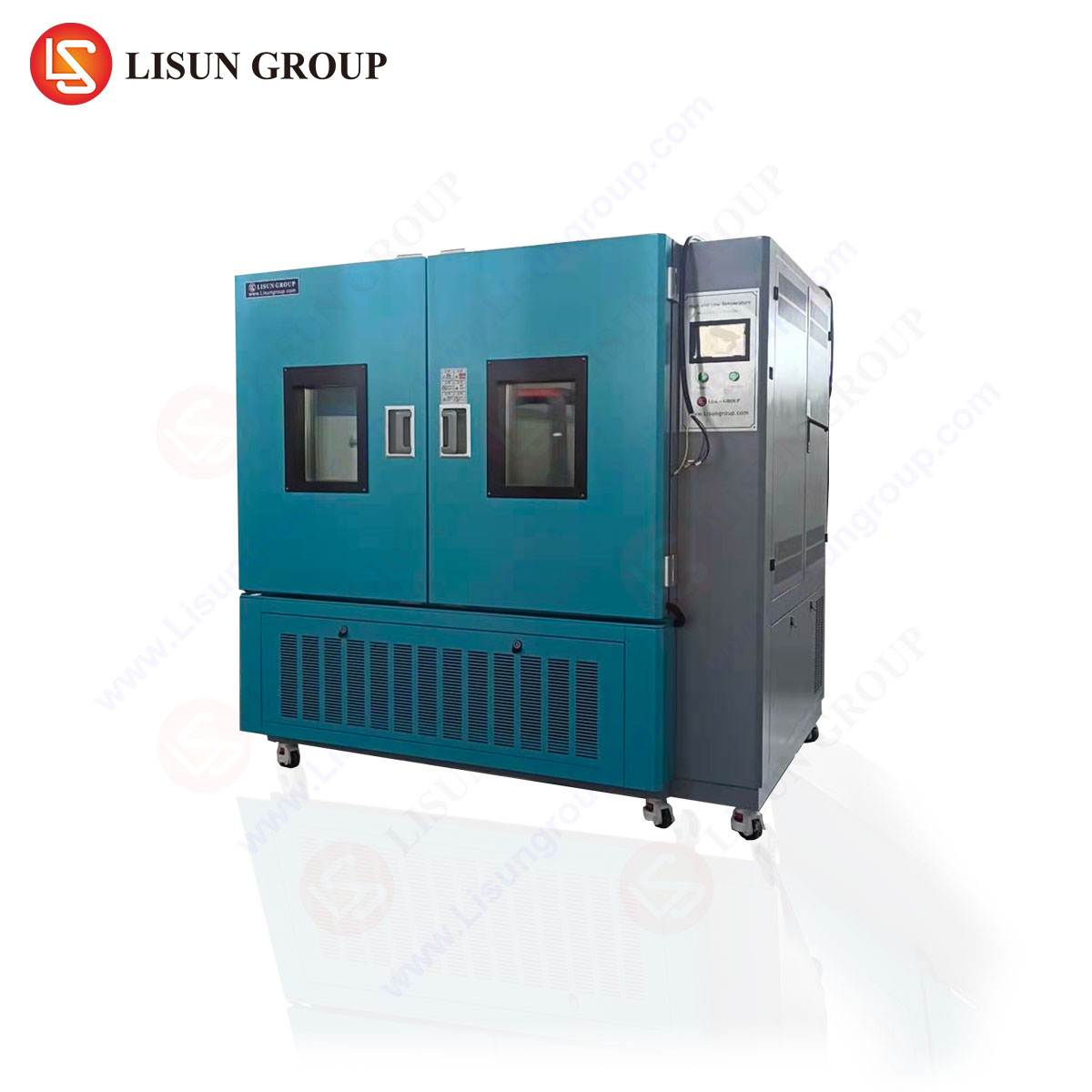
The integrity of the test process is fundamentally reliant on the precision and reliability of the test chamber. The LISUN YWX/Q-010X Salt Spray Test Chamber is engineered to meet and exceed the rigorous demands of modern quality laboratories across diverse industries.
Technical Specifications and Design Philosophy:
The YWX/Q-010X features a chamber constructed from advanced corrosion-resistant polymers, ensuring long-term stability and eliminating a potential source of contamination. Its key specifications include precise digital PID temperature control for both the chamber and saturation tower, maintaining the critical ±0.1°C stability required by stringent standards. The atomization system utilizes a high-precision nozzle and regulated, filtered compressed air to generate a consistent and uniform salt fog, validated by integrated fog collection cylinders. A large-capacity solution reservoir with automated level control ensures uninterrupted testing over extended durations, which is essential for testing high-performance components in aerospace or medical devices.
Industry-Specific Application Contexts:
- Automotive Electronics & Electrical Components: Validating the corrosion resistance of engine control unit (ECU) housings, connector terminals, sensor bodies, and switch assemblies to ensure functionality in underbody and engine bay environments.
- Telecommunications & Lighting Fixtures: Testing the protective coatings on outdoor antenna housings, streetlight luminaires, and traffic signal enclosures against chloride-induced degradation.
- Medical Devices & Aerospace Components: Assessing the durability of surgical instrument coatings, implant device packaging, and aircraft electrical connector shells, where failure is not an option.
- Consumer Electronics & Office Equipment: Evaluating the surface finishes on external chassis, ports, and internal brackets of laptops, printers, and home appliances to guarantee aesthetic and functional longevity in varied climates.
Competitive Advantages in Data Fidelity:
The YWX/Q-010X distinguishes itself through features directly aimed at enhancing result accuracy and operational efficiency. Its advanced cyclic corrosion testing capability (CCT mode), while often an optional or upgraded feature, allows for more realistic simulation of wet/dry cycles, which is increasingly referenced in automotive and military standards. The integration of a high-resolution, menu-driven touchscreen controller not only simplifies parameter setting but also provides comprehensive data logging of temperature, test duration, and operational status. This creates an auditable trail for ISO/IEC 17025 accredited laboratories. Furthermore, its energy-efficient heating system and low-consumption atomizer design reduce operational costs without compromising the consistent environmental conditions necessary for reproducible fog testing.
Navigating Common Pitfalls in Test Execution and Data Analysis
Even with sophisticated equipment, several operational pitfalls can compromise data.
Inadequate Specimen Preparation: Residual oils, fingerprints, or improper cleaning can create initiation sites for corrosion, leading to premature and non-representative failure. Standardized cleaning per ASTM D609 or equivalent is essential.
Chamber Overloading: Placing too many specimens or obstructing airflow disrupts fog circulation and settlement uniformity, creating micro-environments within the chamber and invalidating the test.
Misinterpretation of Results: Distinguishing between cosmetic surface staining and active, substrate-threatening corrosion is a skill requiring trained personnel. The use of standardized evaluation charts and magnification tools is critical.
Neglecting Calibration and Maintenance: Regular calibration of temperature sensors, verification of fog collection rates, and cleaning of nozzles and chambers are mandatory preventative maintenance actions. Data generated from an uncalibrated chamber is technically indefensible.
Integrating Fog Testing into a Comprehensive Reliability Strategy
Salt spray testing should not exist in a vacuum. It is most effective as part of a suite of environmental stress tests. For a comprehensive reliability assessment, fog test results should be correlated with data from:
- Humidity Testing (e.g., 85°C/85% RH): To evaluate moisture resistance without chlorides.
- Thermal Cycling: To assess the mechanical integrity of coatings and seals under expansion/contraction stress.
- Cyclic Corrosion Testing (CCT): A more advanced, multi-step test incorporating wet, dry, and salt spray phases for better real-world correlation.
This multi-faceted approach provides a robust picture of a product’s resilience, informing design improvements, material selection, and supply chain quality decisions.
Frequently Asked Questions (FAQ)
Q1: What is the critical difference between the ASTM B117 neutral salt spray test and other cyclic corrosion tests?
A1: ASTM B117 is a continuous, steady-state exposure to a salt fog at a constant temperature. It is a relatively simple, severe, and reproducible test excellent for comparative ranking and quality control. Cyclic Corrosion Tests (CCT), such as those in SAE J2334 or GM 9540P, incorporate repeating phases of salt spray, humidity, air dry, and sometimes freeze steps. These cycles better simulate the wet/dry transitions and concentration effects seen in real-world environments, often providing improved correlation to field performance for automotive and coated products, albeit with increased test complexity and duration.
Q2: For a new electronic control module housing, how do we determine the appropriate test duration and pass/fail criteria?
A2: The test parameters are never arbitrary. They must be derived from the product’s end-use specification. This typically involves consulting the relevant industry standard (e.g., an automotive OEM specification, IEC 60529 for ingress protection, or a company’s internal reliability requirement). The criteria are often defined as “no red rust on critical surfaces after 96 hours” or “scribe creepage less than 2.0 mm after 500 hours.” The duration is selected based on the required severity level and is often validated through correlation with previous product generations or competitor benchmarking.
Q3: Can the LISUN YWX/Q-010X chamber test materials other than metals, such as plastics or composite materials?
A3: Yes, while traditionally used for metallic coatings and substrates, salt spray testing is applicable to any material or finish where corrosion or environmental degradation is a concern. For plastics and composites, the evaluation focus shifts. Inspectors would look for signs of polymer degradation, such as blistering, cracking, loss of gloss, color change, or leaching of plasticizers, rather than metallic corrosion. The test is commonly used to evaluate the stability of paints, powder coatings, and anodized layers on non-metallic substrates.
Q4: Why is control of the pH of the salt solution so important, and how is it maintained in the YWX/Q-010X system?
A4: The pH of the collected fog is a controlled variable in standards like ASTM B117 because acidity directly influences corrosion mechanisms. An acidic solution will dramatically accelerate corrosion, while an alkaline solution may inhibit it, both providing non-standard conditions. The pH tends to drop (become acidic) due to absorption of atmospheric CO₂. The YWX/Q-010X is designed for use with a prepared, pH-neutral solution (6.5 to 7.2). During operation, the pH of the collected solution is monitored periodically. If adjustment is needed, the solution reservoir is carefully adjusted using diluted analytical-grade sodium hydroxide (NaOH) or hydrochloric acid (HCl) as prescribed in the standard protocol.