




Understanding Humidity Chamber Performance: Principles, Metrics, and Industrial Validation
The Critical Role of Climatic Stress Testing in Product Reliability
In the development and qualification of modern industrial and consumer products, the ability to predict and ensure performance under diverse environmental conditions is non-negotiable. Among these conditions, the combined effects of temperature and humidity constitute one of the most pervasive and insidious threats to long-term reliability. Humidity chambers, or temperature humidity test chambers, are therefore indispensable instruments for simulating these climatic stresses in a controlled, accelerated manner. Their performance directly correlates to the accuracy of reliability predictions, the validity of compliance certifications, and ultimately, the prevention of field failures. This technical analysis examines the core principles governing humidity chamber performance, the key metrics for evaluation, and their application across critical industries, with specific reference to advanced implementation in the LISUN GDJS-015B temperature humidity test chamber.
Fundamental Principles of Humidity Generation and Control
The core function of a humidity chamber extends beyond mere vapor introduction; it requires precise generation, control, and uniformity of relative humidity (RH) across a defined temperature range. RH, expressed as a percentage, represents the ratio of the partial pressure of water vapor present to the saturation vapor pressure at a given temperature. Chamber performance hinges on the method of humidification and dehumidification.
Most modern precision chambers, including the LISUN GDJS-015B, employ a steam generator for humidification, injecting clean, atomized water vapor directly into the air stream. This method offers rapid response and avoids mineral deposition associated with older boiling methods. Dehumidification is typically achieved through a mechanical refrigeration system. When required, the chamber’s evaporator coil is cooled to a temperature below the dew point of the chamber air, causing moisture to condense on the coil and be removed from the environment. A sophisticated control algorithm modulates the interplay between the heater, refrigeration compressor, humidifier, and dehumidification coil to achieve setpoint stability.
The challenge intensifies at temperature extremes. At low temperatures, the air’s capacity to hold moisture is minimal, making precise low-humidity control difficult. At high temperatures, the energy required for vaporization increases, and the risk of overshoot grows. High-performance chambers manage these transitions through predictive control logic and properly scaled components.
Quantifying Performance: Key Metrics and Benchmarks
Chamber performance is quantified against standardized metrics, primarily defined in standards such as IEC 60068-2-78, IEC 60068-2-30, and MIL-STD-810. Understanding these metrics is essential for specifying appropriate equipment.
Temperature and Humidity Uniformity: This refers to the spatial variation of conditions within the working volume during steady-state operation. It is measured at multiple geometrically distributed points when the chamber has stabilized at setpoint. For example, a specification of ±0.5°C and ±2.5% RH uniformity indicates that all points within the workspace will fall within this band relative to the setpoint. Poor uniformity can lead to under-testing or over-testing of specimens depending on their location.
Temperature and Humidity Fluctuation (Stability): Often confused with uniformity, fluctuation is the temporal variation at a single point over time, typically after stabilization. It reflects the control system’s ability to maintain a constant condition. Tight fluctuation limits (e.g., ±0.2°C, ±1.5% RH) are critical for tests sensitive to minor cyclic stresses.
Ramp Rates: The speed at which the chamber can transition between temperature and humidity setpoints is vital for accelerated testing and simulating real-world transitions. Rates are expressed in °C/min and %RH/min. It is important to distinguish between empty chamber rates and loaded rates, as the thermal mass of the test specimens will significantly attenuate performance.
Dew Point Range and Low Humidity Performance: The achievable dew point temperature defines the lowest possible humidity level at a given dry-bulb temperature. Chambers designed for dry environments, such as those needed for testing certain aerospace components or storage conditions, require specialized desiccant or cascade refrigeration systems to reach very low dew points (e.g., -40°C dew point or lower).
The LISUN GDJS-015B: A Case Study in Engineered Performance
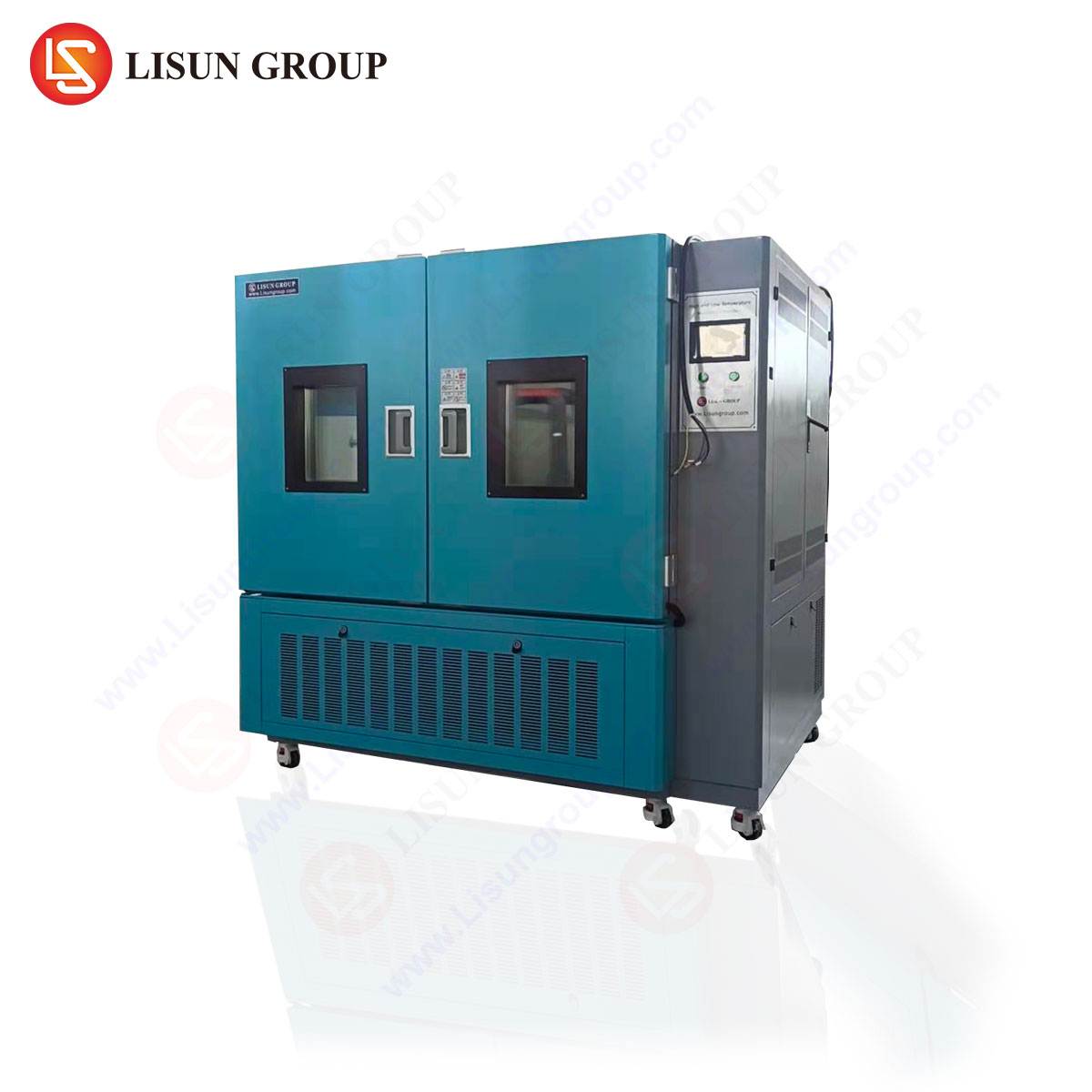
The LISUN GDJS-015B temperature humidity test chamber embodies the application of these principles to meet rigorous industrial demands. Its design specifications target the needs of high-stakes validation testing across multiple sectors.
Specifications and Design Philosophy:
- Temperature Range: -70°C to +150°C
- Humidity Range: 10% to 98% RH
- Uniformity: ≤±0.5°C / ≤±2.5% RH
- Fluctuation: ≤±0.2°C / ≤±1.5% RH
- Ramp Rate: 1.0 to 3.0°C/min (variable, dependent on setpoint transition)
The chamber utilizes a cascade refrigeration system to achieve its extended -70°C low-temperature limit, which simultaneously enhances its ability to dehumidify effectively at low temperatures. The air circulation system employs a balanced, ducted airflow design to minimize dead zones and ensure the defined uniformity across the full 150-liter workspace. The control interface typically integrates a programmable touchscreen controller capable of storing complex multi-segment test profiles that simulate diurnal cycles, geographical climates, or accelerated life test conditions.
Industry-Specific Applications and Test Regimens
The performance parameters of a chamber like the GDJS-015B are directly leveraged to satisfy industry-specific standards and failure mode analyses.
Electrical and Electronic Equipment & Automotive Electronics: These sectors frequently employ Temperature-Humidity-Bias (THB) testing. A printed circuit board assembly (PCBA) for an engine control unit (ECU) or telecommunications switch is powered and electrically biased while subjected to cyclic humidity (e.g., 85°C/85% RH per IEC 60068-2-67). The chamber’s stability is critical to prevent condensation at unintended times, which could cause electrochemical migration or conductive anodic filament (CAF) growth, leading to short circuits. Rapid ramp rates are used to simulate the thermal shock of a device powering on in a cold, humid environment.
Medical Devices and Aerospace Components: Testing here emphasizes extreme boundary verification and long-term stability. An implantable device’s housing or an aviation sensor might undergo a steady-state damp heat test (e.g., 40°C, 93% RH for 56 days per IEC 60601-1). The chamber’s ability to maintain tight uniformity and fluctuation limits over thousands of hours is paramount to ensuring no single component experiences conditions outside the validation margin. Low humidity performance is equally critical for testing components destined for dry, high-altitude conditions in aircraft avionics bays.
Lighting Fixtures, Household Appliances, and Consumer Electronics: Products like LED streetlights, washing machine control panels, or smartphones are tested for cyclic condensation resistance. Standards like IEC 60068-2-30 specify cycles where temperature is varied while humidity is held high, forcing condensation to form on the product. The chamber’s precision in controlling the dew point relative to the product temperature dictates the rate and severity of condensation, directly impacting the test’s repeatability and correlation to real-world failure modes such as corrosion of metal contacts or delamination of optical lenses.
Cable and Wiring Systems, Electrical Components: Materials testing for insulation integrity and contact corrosion is common. A connector or socket may be subjected to a high-temperature, high-humidity endurance test to assess the degradation of plasticizers in insulating materials or the effectiveness of contact platings. The chamber’s uniformity ensures all test specimens, whether placed in the front or rear of the workspace, undergo identical stress, yielding statistically valid comparative data.
Competitive Advantages in Precision Engineering
The operational advantages of a chamber designed to the specifications of the GDJS-015B stem from several engineered features. The cascade refrigeration system not only enables a wider temperature range but also provides more efficient and stable dehumidification at low temperatures compared to single-stage systems. A well-calibrated and responsive humidity sensor, typically a capacitive polymer or chilled-mirror dew point sensor, coupled with a proportional-integral-derivative (PID) control algorithm with adaptive tuning, allows for the minimization of overshoot during setpoint changes. This is crucial when testing sensitive industrial control systems or office equipment where thermal shock from control instability could induce non-representative failures.
Furthermore, the construction quality—including the use of stainless-steel interiors, sealed penetrations, and high-density insulation—minimizes temperature gradients and ensures that the specified performance is sustainable over the long term, reducing calibration drift and maintenance interventions.
Correlating Chamber Data to Field Reliability
The ultimate goal of humidity chamber testing is to establish a quantifiable correlation between accelerated test hours and expected field life. This requires not only a chamber with precise and repeatable performance but also a scientifically sound test profile. The Arrhenius model, and its more complex derivatives incorporating humidity factors (like the Peck model for moisture-induced failures), are used to model acceleration factors. For instance, testing a telecommunications equipment module at 75°C/75% RH may accelerate moisture ingress and corrosion by a factor of 10x or more compared to a 25°C/40% RH field environment. The validity of this extrapolation rests entirely on the chamber’s ability to faithfully and consistently apply the 75°C/75% RH stress without introducing uncontrolled variables.
Conclusion: Performance as a Foundation for Trust
In summary, the performance of a temperature humidity test chamber is a multifaceted attribute defined by its uniformity, stability, range, and transition capabilities. These technical specifications are not mere marketing data but are foundational to generating reliable, standards-compliant, and actionable test results. As exemplified by the engineering behind chambers like the LISUN GDJS-015B, achieving this performance requires an integrated systems approach encompassing refrigeration, airflow, control logic, and robust construction. For industries ranging from medical devices to automotive electronics, investing in a chamber with verifiable and documentable performance is synonymous with investing in product reliability, safety, and market confidence. The chamber becomes not just a test box, but a calibrated instrument for risk mitigation and quality assurance.
Frequently Asked Questions (FAQ)
Q1: What is the significance of the humidity range specification, particularly the lower limit of 10% RH?
The lower humidity limit is technically challenging to achieve and control, especially at lower temperatures. A specification of 10% RH at a high temperature represents a moderately dry condition, but achieving 10% RH at -10°C is far more demanding, as it corresponds to an extremely low dew point. This capability is essential for testing products destined for arid climates or for performing preconditioning tests (e.g., baking out moisture) prior to hermetic sealing, as required for many aerospace components and high-reliability electronic assemblies.
Q2: How does the thermal mass of the test load affect the chamber’s rated performance metrics like ramp rate?
All published performance metrics, especially ramp rates, are typically derived under “empty chamber” or “lightly loaded” conditions. The thermal mass (weight x specific heat capacity) of the product under test acts as a heat sink. A densely loaded chamber filled with metal fixtures and electronic assemblies will experience significantly slower temperature transition rates. For critical applications, it is advisable to conduct a characterization test with a representative load or consult the manufacturer for derating curves. High-performance chambers use control algorithms that account for load to minimize deviation.
Q3: In a THB test for automotive electronics, why is chamber uniformity more critical than in a simple storage test?
In a Temperature-Humidity-Bias test, devices are electrically active, generating their own heat. If chamber uniformity is poor, a device located in a warmer zone of the workspace will self-heat to a higher absolute temperature than an identical device in a cooler zone. Since failure mechanisms like corrosion are exponentially temperature-dependent (per Arrhenius), the two devices undergo fundamentally different stress levels, compromising the test’s comparability and accuracy. Uniformity ensures all devices experience the same environmental baseline stress.
Q4: What maintenance is critical to sustaining the humidity performance of a chamber like the GDJS-015B over time?
Regular maintenance is paramount. Key tasks include: periodic calibration of temperature and humidity sensors using NIST-traceable standards; cleaning or refilling the humidification water reservoir with distilled or deionized water to prevent mineral scaling; inspecting and cleaning the dehumidification evaporator coil of dust; and checking door seals for integrity. Neglect, particularly using hard water, can lead to sensor drift, clogged humidifier nozzles, and reduced dehumidification efficiency, causing performance to fall outside specified tolerances.
Q5: Can these chambers simulate conditions like rain or splash exposure?
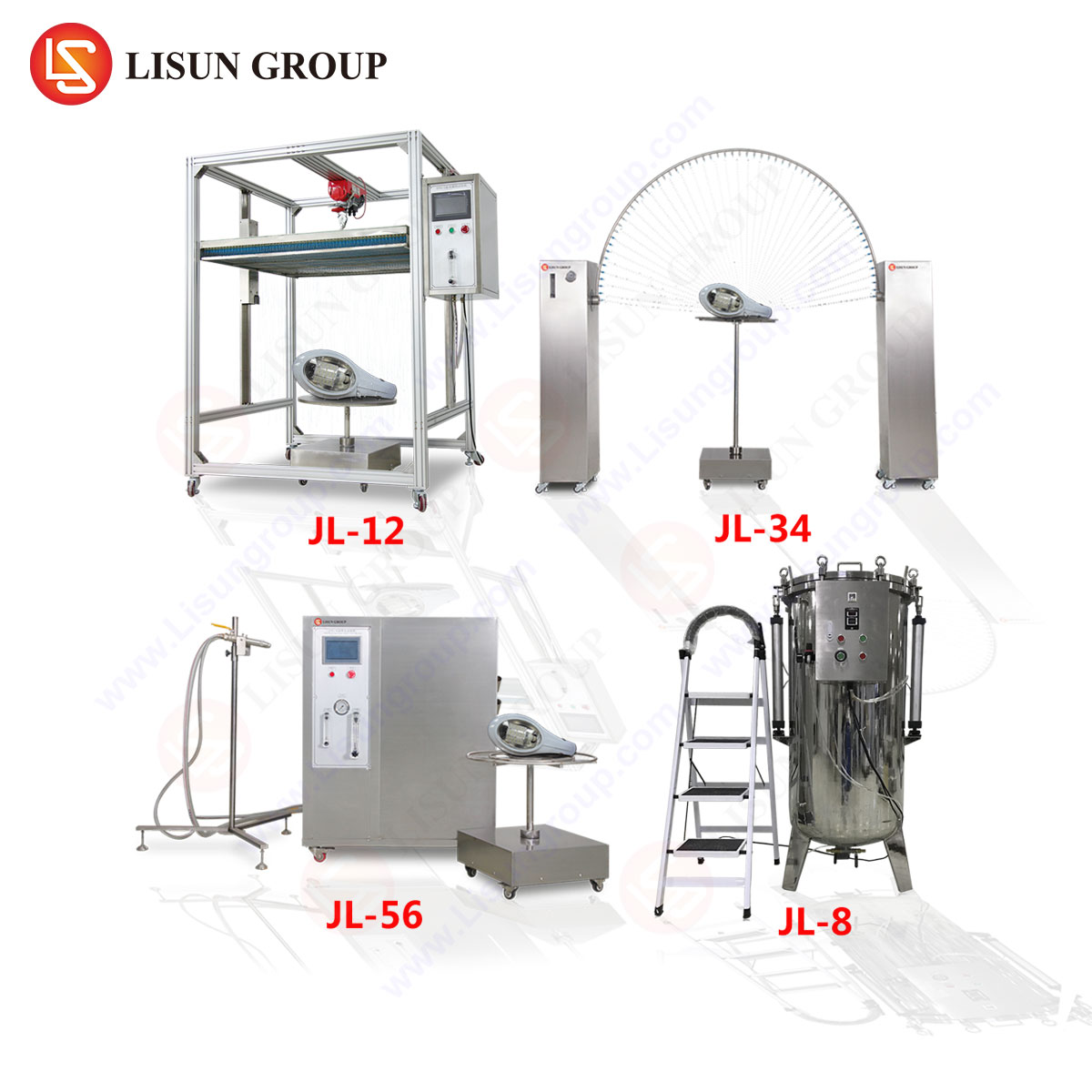
No. Standard temperature humidity test chambers are designed for controlling the climate—the temperature and humidity of the surrounding air. They cannot produce directed water jets, sprays, or water immersion. Tests for water resistance, such as IP (Ingress Protection) code validation (e.g., IPX5, IPX7), require specialized equipment like drip boxes, spray nozzles, or immersion tanks, which are governed by separate standards like IEC 60529.