




Understanding IP65 Water and Dust Testing: A Technical Analysis of Ingress Protection Standards and Validation Methodologies
Introduction to Ingress Protection (IP) Codification
The International Electrotechnical Commission (IEC) standard 60529, formally titled “Degrees of protection provided by enclosures (IP Code),” establishes a globally recognized classification system for quantifying the effectiveness of electrical enclosures against the intrusion of solid foreign objects and liquids. This codification, commonly referred to as the IP Code or Ingress Protection rating, provides a critical, standardized lexicon for manufacturers, specifiers, and testing laboratories. It facilitates unambiguous communication regarding the environmental resilience of products across diverse sectors, from consumer electronics to heavy industrial machinery. The IP Code is structured as “IP” followed by two characteristic numerals, each denoting a specific type and level of protection. The first numeral, ranging from 0 to 6, defines protection against solid particle ingress. The second numeral, ranging from 0 to 9, defines protection against harmful effects due to water ingress. It is imperative to note that these numerals are independent; a high rating for water protection does not imply an equivalent rating for dust protection, and vice versa. The designation “IP65” thus represents two discrete but concurrently satisfied criteria: complete protection against dust ingress and protection against low-pressure water jets from any direction.
Deconstructing the IP65 Specification: Solid Particle and Liquid Ingress
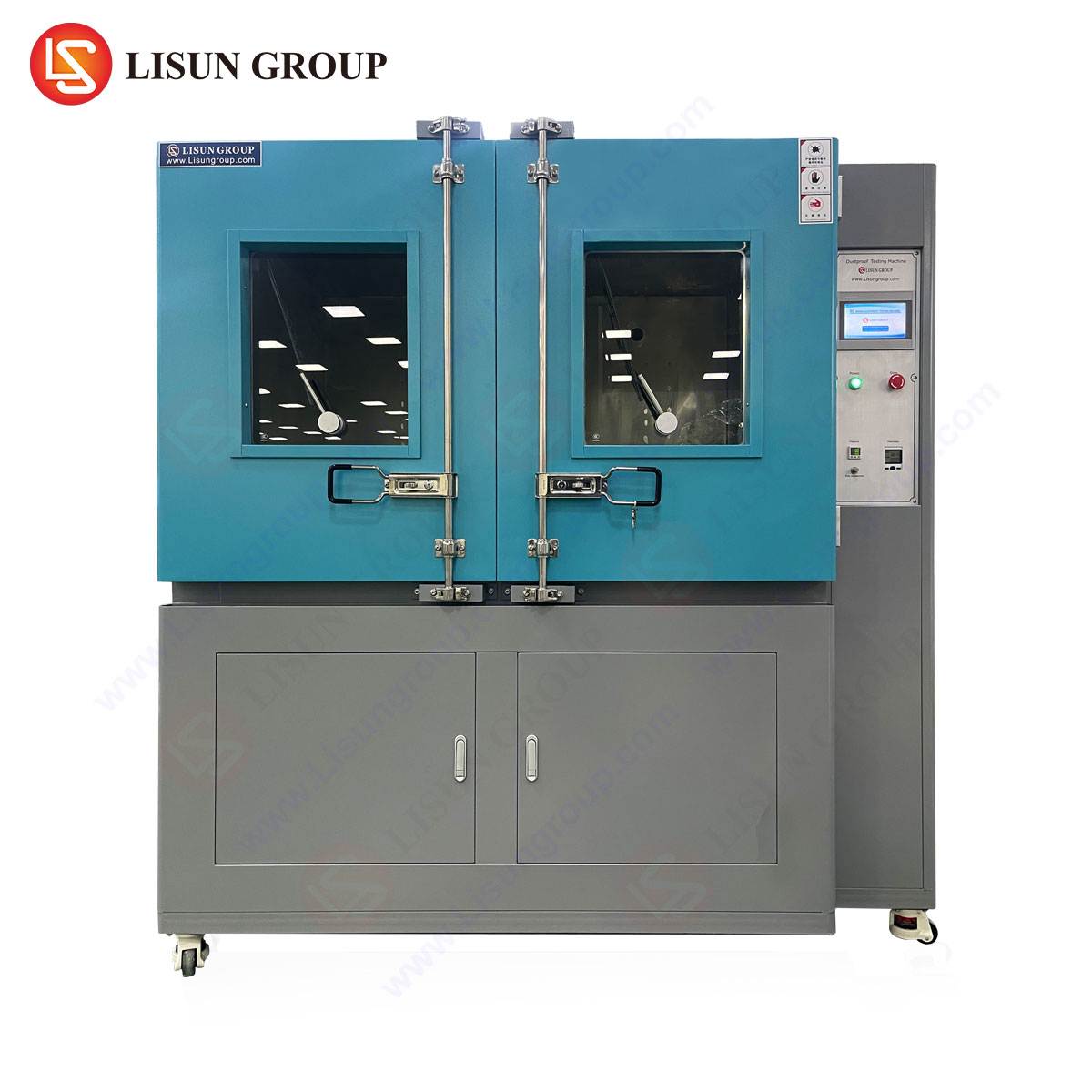
The “6” in IP65 signifies the highest level of protection against solid particles as defined under IEC 60529. An enclosure rated at this level is deemed “dust-tight.” The validation test involves subjecting the enclosure to a talcum powder dust chamber for a duration of 8 hours under a partial vacuum. The test dust has a prescribed particle size of 75 μm or less. Following the exposure period, no dust ingress is permitted in a quantity that would interfere with satisfactory operation of the equipment or impair safety. This is a critical requirement for components deployed in environments with conductive or abrasive particulate matter, such as industrial control panels, automotive under-hood electronics, or telecommunications equipment in arid, dusty regions.
The “5” in IP65 denotes protection against “water jets.” The test specification calls for water to be projected against the enclosure from all practicable directions via a 6.3 mm nozzle, at a flow rate of 12.5 litres per minute ±5%, and at a distance of 2.5 to 3 meters. The test duration is a minimum of 3 minutes per square meter of the enclosure’s surface area, with a minimum total time of 15 minutes. The water pressure at the nozzle is regulated to approximately 30 kPa. The test is considered a pass if no harmful water ingress occurs. It is crucial to distinguish this from higher ratings; IP66 (powerful water jets) and IP67/IP68 (immersion) involve significantly more severe water pressures or conditions. IP65 is therefore suitable for applications where equipment may be exposed to weather, wash-down procedures, or incidental splashing, but not prolonged submersion or high-pressure cleaning typical of IP69K.
The Imperative of Standardized Testing Apparatus
Reliable and repeatable IP testing is contingent upon the use of calibrated, specification-compliant apparatus. Variations in nozzle diameter, flow rate, pressure, distance, or test duration can yield non-conforming results, leading to product failures in the field, warranty claims, and potential safety hazards. Specialized test equipment, such as the LISUN JL-XC Series Waterproof Test Chamber, is engineered to deliver the precise environmental conditions mandated by IEC 60529 and related standards like ISO 20653 (road vehicles) and GB 4208 (China). The JL-XC Series represents a sophisticated integration of mechanical, hydraulic, and control systems designed to automate and rigorously control the testing parameters for IPX5 and IPX6 (jet tests) as well as IPX1 through IPX4 (drip and splash tests).
The operational principle of the JL-XC Series involves a high-pressure pump system that draws water from a reservoir, pressurizes it to the exact level required by the standard, and delivers it to a standardized test nozzle mounted on a programmable oscillating mechanism. This mechanism ensures the water jet traverses across the test sample at a controlled speed, guaranteeing uniform coverage from all angles as per the standard’s directive. The test chamber is constructed from stainless steel to resist corrosion, and features a transparent viewing window for observation. Integrated flow meters and pressure gauges provide real-time feedback, while a programmable logic controller (PLC) automates the test cycle, managing duration, oscillation, and system interlocks. This level of automation minimizes operator error and ensures every test is a precise replication of the last, which is fundamental for quality assurance in high-volume manufacturing.
Technical Specifications and Application of the LISUN JL-XC Series
The LISUN JL-XC Series is configurable to meet specific testing needs. A representative model, the JL-XC-1000, is designed for testing medium-sized enclosures and finished products. Its specifications are engineered for compliance and operational flexibility:
- Test Standards: IEC 60529, ISO 20653, GB 4208.
- IP Ratings Supported: IPX5 and IPX6 as primary functions, with optional configurations for IPX1-IPX4.
- Nozzle Diameter: 6.3 mm for IPX5, 12.5 mm for IPX6, conforming to IEC 60529 dimensional requirements.
- Flow Rate Control: 12.5 ±0.625 L/min for IPX5; 100 ±5 L/min for IPX6, regulated via precision flow meters and adjustable valves.
- Water Pressure: 30 kPa (≈4.3 psi) at the IPX5 nozzle; 100 kPa (≈14.5 psi) at the IPX6 nozzle.
- Test Distance: Adjustable slide rail system to maintain the mandated 2.5-3 meter distance between nozzle and specimen.
- Oscillation: Programmable swing tube with adjustable angular range and speed to ensure all-directional testing.
- Control System: Touch-screen PLC interface for setting test duration, water pressure, flow rate, and oscillation parameters. Data logging capabilities are included for traceability.
- Construction: 304 stainless steel chamber body, tempered glass observation window, and corrosion-resistant piping.
In practical application, a product such as an outdoor LED lighting fixture, an automotive sensor housing, or an industrial Ethernet switch would be secured in the test chamber. The operator selects the pre-programmed IPX5 test profile. The system initiates, driving the nozzle to the correct distance, activating the pump to achieve stable pressure and flow, and beginning the oscillating spray for the set duration—typically 15 minutes minimum. Post-test, the specimen is inspected internally for any signs of water ingress. The JL-XC Series’ precise control ensures that a “pass” result is a robust indicator of real-world IP65 resilience.
Industry-Specific Applications and Failure Mode Implications
The validation of an IP65 rating is not a mere bureaucratic exercise; it is a direct correlate to product reliability, longevity, and safety in demanding environments.
- Electrical and Electronic Equipment & Industrial Control Systems: Panel-mounted devices, PLCs, and human-machine interfaces (HMIs) in food processing or pharmaceutical plants require regular high-temperature wash-downs. An IP65 enclosure prevents water and cleaning agents from causing short circuits, corrosion, or ground faults.
- Automotive Electronics: Components like electronic control units (ECUs), camera modules, or door control units mounted in wheel wells or underbody locations are exposed to road spray and debris. Dust ingress can foul connectors, while water ingress can lead to catastrophic failure of safety-critical systems.
- Lighting Fixtures: Outdoor area lighting, architectural façade lighting, and industrial high-bay lights must withstand rain, snow, and wind-driven dust. IP65 ensures the integrity of the LED drivers and electrical connections, preventing premature lumen depreciation and hazardous electrical conditions.
- Telecommunications Equipment: Outdoor radio units, base station enclosures, and junction boxes are subject to all weather conditions. Dust accumulation can insulate heat sinks, leading to thermal runaway, while water ingress can cause signal degradation and corrosion of RF connectors.
- Medical Devices: Equipment used in surgical or laboratory environments, such as handheld diagnostics or monitoring devices, may need to withstand disinfection via spraying or splashing. IP65 protection safeguards internal electronics from fluids, ensuring device sterility and operational reliability.
Failure modes resulting from inadequate ingress protection are varied and severe. They include electrochemical migration on printed circuit boards (PCBs) leading to short circuits, corrosion of metallic contacts increasing electrical resistance, insulation breakdown posing shock hazards, and particulate accumulation causing mechanical binding or overheating. The economic cost encompasses not only product returns but also system downtime, reputational damage, and, in regulated industries like medical or aerospace, significant compliance and liability issues.
Comparative Advantages of Automated Testing Solutions
The transition from manual, ad-hoc water spray testing to automated systems like the JL-XC Series represents a significant advancement in testing quality and laboratory efficiency. Manual testing is inherently variable, subject to inconsistencies in nozzle distance, hand movement, water pressure, and test timing. This variability introduces unacceptable uncertainty into the validation process. An automated chamber provides three core competitive advantages:
- Uncompromising Repeatability and Reproducibility: By codifying test parameters into a controlled program, the system guarantees that every unit tested is subjected to the exact same environmental stress. This is the cornerstone of objective quality control and is essential for achieving ISO 17025 accreditation for testing laboratories.
- Enhanced Laboratory Throughput and Operational Safety: Once a sample is loaded and the test initiated, the system operates autonomously. This frees technical personnel for other tasks, increasing overall lab productivity. Furthermore, it contains high-pressure water sprays within a secure enclosure, mitigating slip hazards and protecting other laboratory equipment.
- Comprehensive Data Integrity and Audit Trail: Integrated data logging records all critical test parameters—pressure, flow, duration, date/time—for each test run. This creates an immutable audit trail for quality documentation, essential for customer certifications, regulatory submissions, and internal failure analysis investigations.
Conclusion
The IP65 rating is a concise yet powerful specification that communicates a well-defined level of environmental robustness. Its proper validation, however, demands a rigorous, standards-compliant approach. As electronic systems proliferate into increasingly harsh and critical applications, the role of precise ingress protection testing becomes more vital. Utilizing advanced, automated test equipment such as the LISUN JL-XC Series is not merely an operational choice but a strategic imperative for manufacturers committed to product integrity, safety, and market credibility. It transforms the abstract definitions of IEC 60529 into a reliable, empirical guarantee of performance, ensuring that products labeled as IP65 will indeed perform as expected when exposed to the dust and water jets of the real world.
Frequently Asked Questions (FAQ)
Q1: Can the LISUN JL-XC Series test for both IP65 and IP66 ratings?
Yes, the JL-XC Series is specifically designed to test for both IPX5 and IPX6 ratings. It is equipped with interchangeable nozzles (6.3mm for IPX5, 12.5mm for IPX6) and a pump system capable of delivering the distinct flow rates and pressures required by each standard: 12.5 L/min at 30 kPa for IPX5, and 100 L/min at 100 kPa for IPX6.
Q2: How is the test sample prepared for an IP65 test, particularly regarding open ports or cable glands?
IEC 60529 specifies that the equipment under test is to be assessed in its “as-used” state. If the product is designed to have cables connected via glands or ports sealed with plugs during operation, it must be tested in that configuration. The standard often calls for testing with “openings open” and “openings closed” as part of the type test to verify the effectiveness of the sealing method. The JL-XC Series chamber provides the space and mounting fixtures to accommodate samples with these operational attachments.
Q3: What is the difference between IP65 and IP67 testing, and can the same chamber perform both?
IP65 (water jets) and IP67 (temporary immersion) are fundamentally different tests. IP65 uses directed jets of water, while IP67 requires immersing the enclosure in 1 meter of water for 30 minutes. The JL-XC Series is engineered for spray testing (IPX5/IPX6). Immersion testing (IPX7/IPX8) requires a separate, dedicated immersion tank apparatus, which LISUN offers as a distinct product line.
Q4: For how long must data from IP65 validation tests be retained?
Data retention periods are typically dictated by industry regulations, customer contractual requirements, or internal quality management systems (e.g., ISO 9001). In highly regulated industries like automotive (IATF 16949) or medical devices (ISO 13485), test records forming part of the design history file or production part approval process (PPAP) must be retained for the lifetime of the product plus a statutory period, often 10-15 years or more. The data logging feature of the JL-XC Series facilitates this long-term retention.
Q5: Is water with added detergent permitted for IP65 testing to simulate wash-down conditions?
No. IEC 60529 explicitly states that the test water for IPX1 through IPX6 ratings must be clean fresh water. The addition of detergents or other chemicals is not permitted under the basic standard, as it introduces uncontrolled variables. Some specific industry standards (e.g., for automotive or appliances) may define separate chemical resistance tests. For pure IP Code validation, only fresh water is used.