




Understanding IPX3 and IPX4 Testing Standards for Ingress Protection Against Water Spray
Introduction to Ingress Protection (IP) Ratings and Liquid Ingress
The International Electrotechnical Commission (IEC) standard 60529, commonly referenced as the IP Code, provides a systematic classification for the degrees of protection offered by enclosures of electrical equipment against intrusion of solid foreign objects and water. Within this framework, the designations IPX3 and IPX4 specifically define an apparatus’s resilience against water sprays and splashes. The ‘X’ placeholder indicates that protection against solid particles is not specified, focusing the assessment solely on liquid ingress. For manufacturers across diverse sectors—from automotive electronics to medical devices—validating compliance with these ratings is not merely a regulatory formality but a critical determinant of product reliability, safety, and operational lifespan in real-world environments where exposure to rain, spray, or incidental splashing is a foreseeable condition.
Defining the Scope and Limits of IPX3 and IPX4 Classifications
The IPX3 and IPX4 ratings address protection against water projected from a nozzle. Their definitions are precise and bounded, distinguishing them from higher ratings like IPX5 (water jets) or IPX7 (immersion).
IPX3: Protection Against Spraying Water. An enclosure achieving an IPX3 rating must withstand water sprayed at an angle up to 60° from the vertical. Testing is conducted using a oscillating tube or a handheld spray nozzle with a specific aperture and flow rate, as defined in IEC 60529. The equipment under test (EUT) is subjected to water spray for a minimum duration of 5 minutes per square meter of surface area, with a minimum total test time of 5 minutes. The critical performance criterion is that water sprayed under these conditions must not enter the enclosure in a quantity that would interfere with the satisfactory operation of the equipment or impair safety. This simulates conditions such as rain falling at an angle, commonly encountered by outdoor lighting fixtures, telecommunications cabinet vents, or vehicle-mounted sensors.
IPX4: Protection Against Splashing Water. The IPX4 rating represents a more stringent requirement. An IPX4-rated enclosure must offer protection against water splashed from all directions. The test apparatus, typically a pendulum-driven oscillating spray fixture or a rotating table with a spray nozzle, ensures a uniform, omnidirectional spray. The test duration mirrors that of IPX3 (5 minutes per square meter, minimum 5 minutes total). The pass/fail assessment is identical: no harmful ingress. This rating is applicable to products exposed to more aggressive wet conditions, such as kitchen appliances near sinks, industrial control panels in damp environments, or handheld consumer electronics used outdoors.
A crucial distinction lies in the pressure and impact energy of the water. Both IPX3 and IPX4 tests utilize low-pressure spray, differing significantly from the high-pressure jets of IPX5/6. The focus is on coverage and angle, not mechanical force.
Methodological Framework for IPX3 and IPX4 Compliance Verification
Verification of IPX3 and IPX4 compliance is a laboratory-based, standardized procedure. The integrity of the test results is fundamentally dependent on the precision and calibration of the testing equipment, which must rigorously adhere to the dimensional and operational parameters stipulated in IEC 60529.
The test environment requires a controlled water source, maintaining temperature typically between 15°C and 35°C to avoid thermal shock confounding results. For IPX3 testing, the oscillating tube apparatus must have water jets spaced at 50mm intervals, with the holes of a specified diameter to deliver a flow rate of 0.07 liters per minute per hole at 80-100 kPa. The tube oscillates through 60° arcs on either side of vertical. Alternatively, a handheld spray nozzle with a 0.4mm aperture can be used, maintained 300-500mm from the EUT, traversing the necessary arcs.
For IPX4, the methodology ensures all-directional exposure. This is often achieved by mounting the EUT on a rotating turntable (5-17 rpm) while subjecting it to spray from a semicircular pendulum fixture (180° arc) or from spray nozzles positioned at multiple angles. The water flow rate is increased to approximately 10 liters per minute per square meter of test surface.
Post-test evaluation is meticulous. The EUT is inspected externally for water ingress. Following this, it is often disassembled to inspect internal compartments for traces of water. The standard specifies that water which enters shall not accumulate in quantities that could bridge insulation creepage distances, contact live parts, or collect in areas that would lead to corrosion or degraded function. Functional testing of the apparatus is typically performed both during and after the exposure to verify operational integrity.
Instrumentation for Validated Testing: The LISUN JL-XC Series Waterproof Test Chamber
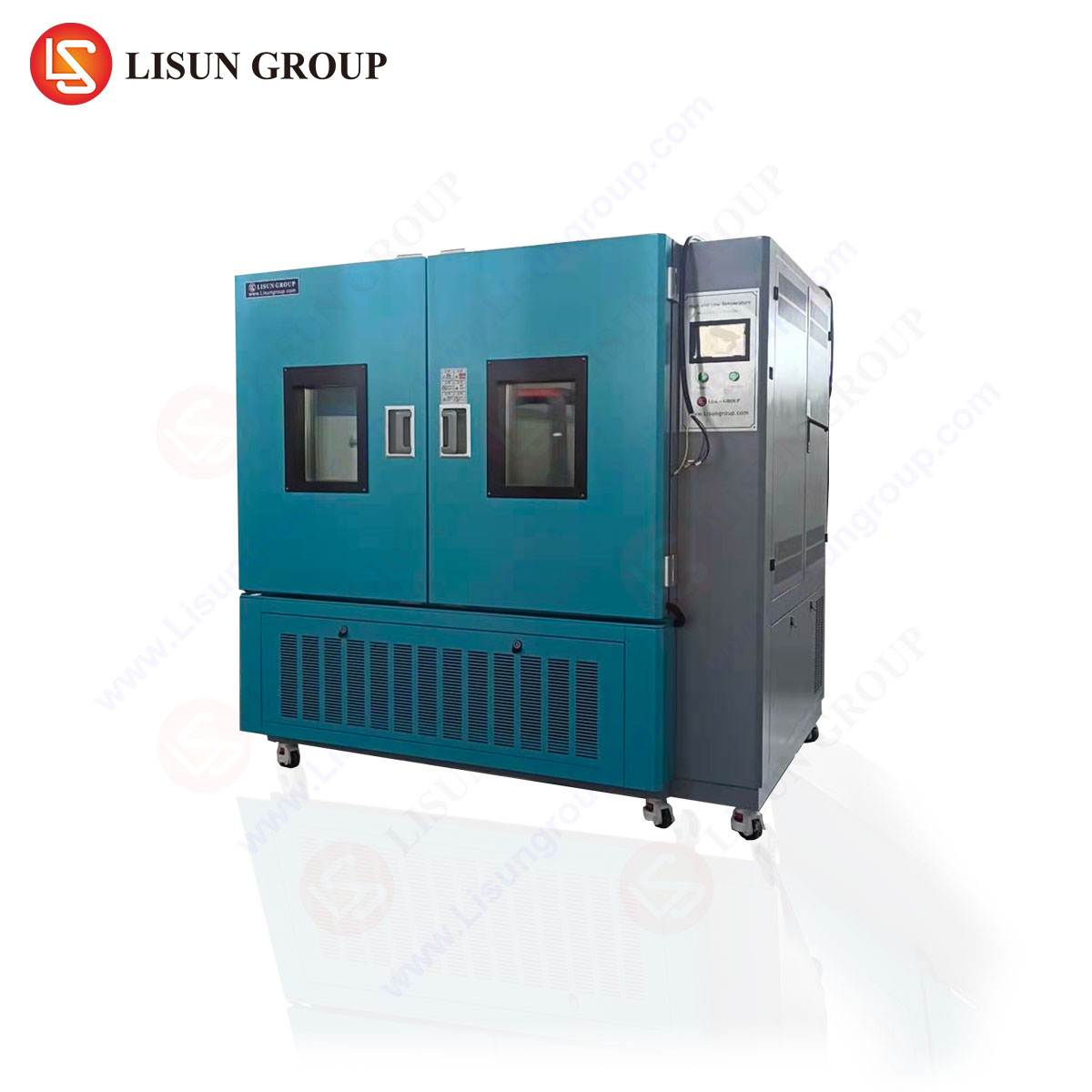
Achieving reproducible, standards-compliant results necessitates specialized instrumentation. The LISUN JL-XC Series Waterproof Test Chamber is engineered specifically to fulfill the exacting requirements of IPX3 and IPX4 testing, among other IP codes. Its design integrates the mechanical, hydraulic, and control systems needed to automate and standardize the testing process, thereby eliminating operator variance and ensuring audit-ready compliance data.
Specifications and Testing Principles: The JL-XC Series typically features a stainless-steel test chamber, an integrated water circulation and filtration system, and a programmable logic controller (PLC). For IPX3 and IPX4 testing, it is equipped with the standardized oscillating tube assemblies and/or spray nozzles. The PLC allows for precise programming of test parameters: swing angle (0-180° adjustable for IPX3 calibration), rotation speed of the sample table, test duration, and water pressure. The system automatically maintains the required water flow rate and pressure, critical for test validity. Internal water recovery and filtration allow for efficient and clean operation, which is particularly important for testing sensitive devices like medical equipment or aerospace components where water purity may be a concern.
Industry Use Cases: The versatility of the JL-XC Series makes it applicable across the spectrum of industries requiring IPX3/X4 validation.
- Automotive Electronics: Testing sensor housings (e.g., parking sensors, cameras), exterior control units, and charging port covers for resistance to road spray and rain.
- Lighting Fixtures: Validating outdoor luminaires, garden lights, and industrial work lights for their ability to withstand angled rain and splashing.
- Consumer Electronics & Telecommunications: Verifying the resilience of smartwatch casings, outdoor WiFi access points, and handheld radio enclosures against sweat and incidental splashes.
- Medical Devices: Ensuring splash resistance for handheld diagnostic tools or monitoring equipment used in clinical environments.
- Electrical Components: Testing the seals of outdoor-rated switches, sockets, and junction boxes.
Competitive Advantages: The JL-XC system offers several distinct benefits in a quality assurance laboratory. Its automated operation reduces labor intensity and improves throughput. The precision of its spray and motion control guarantees adherence to the geometric and temporal stipulations of IEC 60529, reducing test uncertainty. Robust construction and reliable components minimize downtime, while comprehensive data logging features provide traceable records for certification audits. Furthermore, its modular design often allows for upgrade paths to conduct higher IP rating tests (e.g., IPX5/6), offering laboratories a scalable solution.
Sector-Specific Implications and Design Considerations
The practical implications of IPX3 and IPX4 ratings manifest differently across industries, influencing design, material selection, and sealing strategies.
In Automotive Electronics, an IPX4 rating for an interior control module may protect against beverage spills, while an IPX3 rating for an under-hood component might be specified for protection against driven rain. Household Appliances, such as a blender or smart kitchen display, often target IPX4 to withstand cleaning splashes and steam. For Lighting Fixtures, IPX3 is a common minimum for wall-mounted outdoor sconces, whereas landscape lighting in sprinkler zones may require IPX4.
Industrial Control Systems and Telecommunications Equipment deployed in factories or outdoor cabinets use these ratings to ensure reliability in humid, damp, or condensing environments where direct hosing is not used but persistent spray may be present. Aerospace and Aviation Components, particularly those in non-pressurized bays, may require validation against spray ingress from de-icing fluids or runway water.
Design engineers must consider gasket geometry, sealant application, drainage paths, and material hydrophobicity. A common challenge is balancing ingress protection with the need for thermal management vents or acoustic ports, often requiring the use of breathable membranes that block liquid water but allow vapor transmission.
Interpreting Test Results and Certification Logistics
A successful IPX3 or IPX4 test results in no observed ingress that compromises the product. It is vital to understand that the test is a type approval, conducted on representative samples under controlled, repeatable conditions. It does not guarantee performance over the entire product lifecycle or in all possible field conditions, but it provides a statistically validated benchmark.
Certification is typically performed by an internal quality laboratory or an accredited third-party test house. The test report must document all critical parameters: equipment used (e.g., “LISUN JL-XC Series, Serial No. XXX”), calibration dates, water temperature, pressure, flow rate, test duration, EUT orientation, and the detailed results of the visual and functional inspections. This report forms the technical evidence for claiming the IP rating on product datasheets and for submission to regulatory bodies.
Manufacturers should note that while IEC 60529 is the global reference, derivative standards exist (e.g., ISO 20653 for road vehicles, MIL-STD for military). Specific industry certifications may have additional requirements layered atop the basic IP test.
Frequently Asked Questions (FAQ)
Q1: Can a product be rated both IPX3 and IPX4?
Yes. The IP code can denote dual ratings. If an enclosure is tested and passes both criteria, it is typically labeled as “IPX4,” as IPX4 is the more severe of the two and implies protection against the conditions defined for IPX3. A formal dual rating like “IPX3/IPX4” is less common; the highest verified rating is used.
Q2: How does the JL-XC Series tester ensure consistent water pressure for IPX3 testing?
The JL-XC system incorporates a precision pressure regulator and flow meter within its closed-loop water circulation system. The programmable controller continuously monitors and adjusts the pump output to maintain the required pressure range (e.g., 80-100 kPa for the oscillating tube), as per IEC 60529, regardless of minor system variations.
Q3: Is testing required for every unit manufactured, or is sample-based testing acceptable?
IEC 60529 describes a type test, generally performed on pre-production or qualification samples. It is not intended for 100% production line testing. However, manufacturers may implement periodic audit testing or sample testing from production batches as part of a continuous quality assurance program to ensure manufacturing process consistency.
Q4: What is the consequence of water ingress that does not immediately cause failure?
The standard is concerned with harmful ingress. Even small amounts of water that do not cause immediate electrical failure can lead to long-term reliability issues such as corrosion, mold growth, or degradation of insulating materials. A thorough post-test inspection inside the enclosure is therefore critical to identify any ingress, which typically results in a test failure.
Q5: For a device with multiple compartments, does the IP rating apply to the entire device or individual enclosures?
The IP rating declared applies to the enclosure as it is supplied. If an end-user can access separate internal compartments (e.g., a main housing and a battery compartment), each may require its own sealing and rating. The overall product rating is determined by the weakest protected interface accessible under normal use. Testing should be performed on the fully assembled product in its intended configuration.