




Understanding IPX3 and IPX4 Testing Standards: A Technical Analysis of Water Ingress Protection for Electronic Enclosures
Defining the IP Code and Its Relevance to Liquid Ingress
The International Protection (IP) Code, as defined by the International Electrotechnical Commission standard IEC 60529, provides a systematic classification for the degrees of protection offered by enclosures for electrical equipment against the intrusion of solid foreign objects and water. This classification is critical for engineers, designers, and quality assurance professionals across numerous industries, as it establishes a common, verifiable language for environmental resilience. The code is expressed as “IP” followed by two characteristic numerals. The first digit (0-6) denotes protection against solid particles, while the second digit (0-9K) specifically addresses protection against harmful effects of water ingress. It is within this second-digit classification that the IPX3 and IPX4 ratings reside, representing defined but distinct levels of protection against spraying water. The “X” placeholder is used when the protection against solids is not specified or irrelevant to the discussion.
Specific Criteria for IPX3 Certification: Oscillating Tube and Spray Nozzle Tests
An enclosure achieving an IPX3 rating demonstrates protection against water sprayed at an angle. The standard defines two permissible test methods, with the choice often dependent on the size and configuration of the equipment under test (EUT).
Method A: The Oscillating Tube Test. This method is typically employed for larger enclosures. A semicircular tube with spray nozzles spaced at 50mm intervals is positioned over the EUT. The tube oscillates through an angle of 60° on each side of the vertical (a total arc of 120°) at a rate of approximately one complete oscillation per 4 seconds. The test duration is a minimum of 5 minutes per square meter of the calculated surface area of the EUT, with a minimum of 5 minutes always applied. The water flow rate is calibrated to 0.07 liters per minute per nozzle, at a water pressure of 80–100 kPa.
Method B: The Handheld Spray Nozzle Test. Suitable for smaller or localized testing, this method utilizes a spray nozzle with a 0.4mm diameter orifice. The nozzle is held 300–500mm from the EUT and manually moved across the surface at a speed designed to ensure even coverage. The test is conducted for 1 minute per square meter, with a 5-minute minimum. The water flow rate is adjusted to 0.07 l/min ± 5%, with the same pressure range as Method A.
For both methods, the EUT is mounted on a turntable rotating at 1–3 rpm to ensure all relevant surfaces are exposed. The water used is clean, and its temperature is maintained within a range not more than 5K below the temperature of the EUT prior to testing to prevent internal condensation. Post-test evaluation involves a thorough inspection for water ingress. The standard permits the entry of water, but only in quantities that do not interfere with the normal operation of the equipment or impair safety. No water is allowed to accumulate in live parts, windings, or cable entries.
The Enhanced Protection of IPX4: Splashing Water from All Directions
The IPX4 rating represents a significant escalation in protection compared to IPX3. It certifies that an enclosure is protected against water splashed from any direction. The test apparatus and conditions are more rigorous, simulating environments where equipment may be subjected to omnidirectional water exposure, such as in a kitchen, on a construction site, or in an automotive wheel well.
The primary test for IPX4 utilizes the same handheld spray nozzle as the IPX3 Method B test. However, the methodology differs fundamentally. The nozzle is positioned 300–500mm from the EUT and is used to spray the enclosure from all practically possible directions. This is typically achieved by mounting the EUT on a turntable and methodically directing the spray stream at every vulnerable joint, seam, and surface. The test duration is extended to 10 minutes per square meter of surface area, with a mandatory minimum of 5 minutes. The water flow and pressure parameters remain identical to the IPX3 test (0.07 l/min at 80–100 kPa).
The acceptance criteria for IPX4 are stricter in practical interpretation. While the standard text regarding permissible water ingress is similar to IPX3, the expectation for products marketed as “splash-proof” is that ingress is minimal to nonexistent under these conditions. The test validates the integrity of seals, gaskets, and the overall enclosure design against a more aggressive and comprehensive water challenge.
Comparative Analysis: Application Scenarios for IPX3 vs. IPX4
The selection between an IPX3 and IPX4 rating is a direct function of the intended operating environment and the associated risk profile.
IPX3 Applications are suited for equipment exposed to occasional, directional spraying. Examples include:
- Outdoor Lighting Fixtures: Wall-mounted sconces or angled downlights that may experience wind-driven rain from a prevailing direction.
- Telecommunications Equipment: Shelter-mounted antennas or junction boxes on poles that require protection from rain falling at an angle.
- Industrial Control Systems: Control panels installed under an eave or partial cover where direct vertical rainfall is avoided but angled spray is possible.
IPX4 Applications are mandated for equipment that must withstand splashing water in any orientation. This is a common requirement for portable, handheld, or installed devices in wet environments. Examples include:
- Household Appliances: Blenders, food processors, and electric kettles used near sinks.
- Consumer Electronics: Smartphones, wearable devices, and portable speakers designed for use outdoors or in humid conditions.
- Automotive Electronics: Sensors, control units, and infotainment systems located in the passenger cabin or engine bay where they may encounter fluid splashes.
- Medical Devices: Handheld diagnostic tools or monitoring equipment used in clinical settings where disinfection via splashing or spraying is routine.
- Electrical Components: Switches and sockets installed in bathrooms, kitchens, or outdoor areas.
Instrumentation for Compliance: The Role of the LISUN JL-XC Series Waterproof Test Chamber
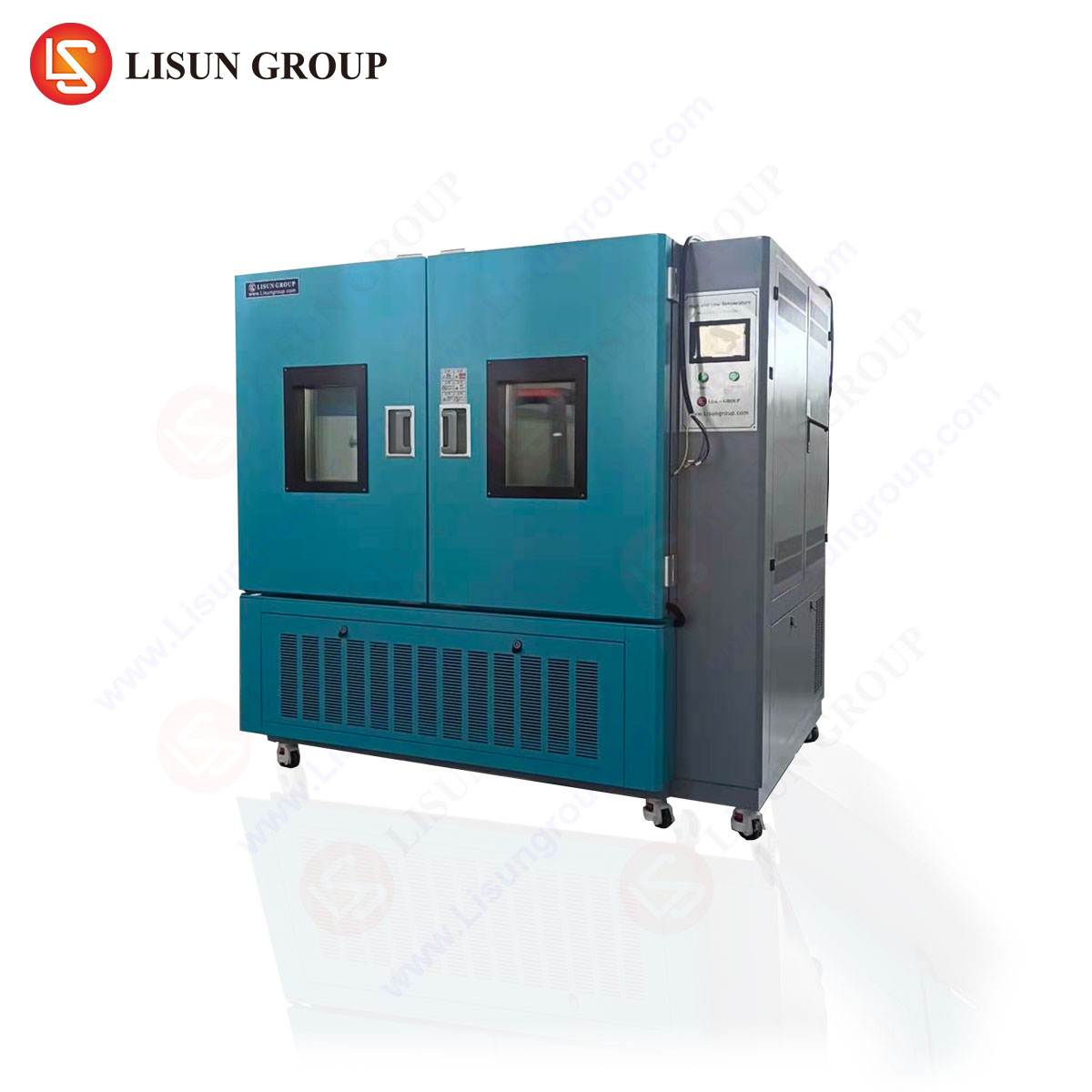
Achieving reliable and certifiable IPX3 and IPX4 ratings necessitates precise, repeatable, and standards-compliant test instrumentation. The LISUN JL-XC Series Waterproof Test Chambers are engineered specifically to meet the rigorous demands of IEC 60529, as well as equivalent standards such as GB 4208. These chambers provide an integrated, controlled environment for conducting both oscillating tube and spray nozzle tests with a high degree of accuracy and reproducibility.
The JL-XC Series incorporates a stainless-steel test chamber, a precision rotary table with adjustable speed (1–3 rpm as standard), and a dedicated test water circulation system with filtration and temperature control. The system’s core components are its interchangeable test fixtures: a calibrated oscillating tube assembly for IPX3 Method A testing and a robotic or manually guided spray nozzle assembly for IPX3 Method B and IPX4 testing. The water pressure and flow rate are digitally monitored and controlled to remain within the strict tolerances mandated by the standard.
Technical Specifications and Testing Principle:
The operational principle of the JL-XC chamber is based on the faithful replication of the standard’s physical test conditions. For an IPX4 test, the EUT is secured on the rotary table. The spray nozzle, connected to a pump and precision flow meter, is manipulated to ensure all enclosure surfaces are subjected to the 0.07 l/min spray for the calculated duration. The chamber’s water system maintains consistent temperature and purity, while the enclosed structure contains overspray. Data logging functions record test parameters—duration, flow rate, pressure, and table rotation—providing an auditable trail for compliance documentation.
Industry Use Cases and Competitive Advantages:
The JL-XC Series is deployed across the spectrum of industries requiring ingress protection validation. An automotive supplier may use it to validate the IPX4 rating of a new electronic stability control module. A manufacturer of aerospace and aviation components might test connector housings to IPX3 for resistance to angled rain on the tarmac. A producer of industrial control systems would verify the integrity of a programmable logic controller enclosure destined for a food processing plant.
The competitive advantages of the JL-XC Series lie in its calibration traceability, modular design, and control system fidelity. Its construction from corrosion-resistant materials ensures long-term reliability despite constant exposure to water. The integrated design reduces laboratory setup time and variability compared to ad-hoc test setups. Furthermore, its precise control over all test variables minimizes false passes or failures, giving design engineers confidence in their sealing solutions and quality managers assurance in their production line sampling. This reduces the risk of field failures, warranty claims, and safety incidents related to water ingress.
The Testing Protocol: From Pre-Test Preparation to Final Assessment
A formal IP rating test is a procedural exercise. It begins with the EUT in its “as-used” state, with all covers, caps, and seals properly fitted. For battery-operated devices, they are typically tested with dummy batteries. The EUT is mounted in its normal operating position on the chamber’s turntable. Pre-test conditions, such as a “drip-dry” period for wet samples or a thermal stabilization period, are observed as required.
The appropriate test method is then executed for the prescribed duration. Following the test, the EUT undergoes a careful visual inspection. This is often followed by a functional check. For electrical equipment, this involves verifying operational status, checking for short circuits, and measuring insulation resistance. The inspection for water ingress is meticulous; technicians look for droplets on live parts, signs of moisture tracking across insulating surfaces, or accumulation in areas that could lead to corrosion or electrical failure. The final assessment is a binary pass/fail against the criteria of IEC 60529, documented in a detailed test report.
Implications for Product Design and Manufacturing Quality Control
The pursuit of an IPX3 or IPX4 rating profoundly influences product design. Engineers must consider gasket geometry, seal material compatibility (considering factors like compression set and chemical resistance), venting strategies using hydrophobic membranes, and the placement and design of cable glands. Manufacturing quality control (QC) is equally critical. A perfect design can be compromised by inconsistent screw torque, contaminated sealing surfaces, or poorly installed gaskets on the production line.
Consequently, IP rating tests are not merely a final validation step but are integrated throughout the product lifecycle. Prototypes undergo testing to validate design choices. Production samples are subjected to periodic audit testing as part of QC to ensure manufacturing consistency. This end-to-end approach ensures that the environmental resilience promised by the IP code is consistently delivered to the end-user across the entire product run.
Frequently Asked Questions (FAQ)
Q1: Can a product be certified as both IPX3 and IPX4?
A: The IP code denotes a single, specific level of protection. A product is tested and rated for one second-digit numeral. Since the IPX4 test is more severe (omnidirectional spraying for a longer duration), a product passing IPX4 inherently exceeds the requirements for IPX3. It would typically be marketed with its highest achieved rating, in this case, IPX4.
Q2: How often should production-line IP testing be performed?
A: The frequency is determined by a risk-based quality plan. For high-reliability products like medical devices or automotive electronics, 100% testing or automated leak testing may be implemented. For most consumer goods, statistical sampling based on production lot size (e.g., using AQL tables) is standard. Any change in material, supplier, or assembly process should trigger additional verification testing.
Q3: Does the JL-XC Series chamber require special facility preparation?
A: Basic requirements include a stable electrical supply, a drain connection for water discharge, and a source of clean water for the reservoir. The chamber is a self-contained system, but adequate floor space and clearance for loading equipment are necessary. LISUN typically provides detailed site preparation guidelines to ensure optimal installation.
Q4: What is the difference between water ingress and condensation during testing?
A: The standard is explicit on this point. Ingress refers to liquid water penetrating the enclosure as a direct result of the spray test. Condensation, which may form on internal surfaces if the EUT is cooler than the test water, is not considered a failure. The test protocol aims to minimize this by controlling the water temperature relative to the EUT.
Q5: Are IP ratings recognized globally?
A: The IEC 60529 standard is an international benchmark. While some regions or countries may have national equivalents (e.g., GB 4208 in China, JIS C 0920 in Japan), they are largely technically aligned with IEC 60529. An IP rating tested according to IEC 60529 is widely accepted in global markets, though specific product categories may require testing by an accredited laboratory for formal certification.