


Understanding IPX4 Waterproof Ratings: A Technical Analysis of Splash Protection Standards and Validation Methodologies
Introduction to Ingress Protection (IP) Codification
The Ingress Protection (IP) rating system, as delineated in the International Electrotechnical Commission standard IEC 60529, provides a systematic and internationally recognized classification for the degree of protection offered by enclosures for electrical equipment against the intrusion of solid foreign objects and water. This codification is critical for manufacturers, engineers, and specifiers across diverse industries, as it delivers a concise, standardized language to define environmental resilience. The IP code comprises two characteristic numerals: the first denotes protection against solids (e.g., dust), while the second, central to this discussion, defines protection against liquids. The ‘X’ placeholder is used when a characteristic is not specified or tested. Thus, an IPX4 rating explicitly defines a product’s water resistance without reference to its particulate ingress protection level. This article provides a comprehensive technical examination of the IPX4 rating, its testing parameters, industrial applications, and the instrumental methodologies required for its validation, with a specific focus on advanced testing apparatus such as the LISUN JL-XC Series waterproof test equipment.
Deciphering the IPX4 Specification: Definition and Testing Parameters
An enclosure rated IPX4 is certified to protect against water splashes from any direction. The formal definition within IEC 60529 specifies that the equipment must withstand water sprayed from a nozzle at a defined flow rate and pressure for a minimum duration, without the ingress of water causing harmful effects. The key testing parameters for IPX4 are precise and non-negotiable. The test utilizes a spray nozzle that produces a spray pattern with a specific aperture and distribution. The water flow rate is calibrated to 0.07 liters per minute per square millimeter of the nozzle opening, with a test duration of 10 minutes per square meter of the enclosure surface, with a minimum of 5 minutes. The apparatus is subjected to spraying from all practicable angles, typically achieved by mounting the test sample on a rotating table that tilts to simulate various orientations. The critical pass/fail criterion is functional: after the test, the enclosure must exhibit no ingress of water that would impair normal operation or compromise safety. Internal inspection is often required to verify that no water has penetrated to live parts, insulated components, or areas where accumulation could lead to corrosion or electrical leakage.
The Physics of Splash Protection: Droplet Dynamics and Enclosure Design
Achieving an IPX4 rating is not merely a matter of sealing; it involves an understanding of fluid dynamics and enclosure engineering. The splash test simulates real-world conditions such as rain, spillage, or wash-down splashes. The droplet size, velocity, and impact energy are designed to challenge seams, gaskets, button interfaces, and ventilation ports. Effective design for IPX4 often employs labyrinth seals, hydrophobic membranes for vents, and over-molded or ultrasonically welded joints. The angle of attack is a crucial variable; protection must be omnidirectional. This necessitates a holistic design approach where potential water ingress paths are identified and mitigated through both geometry (e.g., shrouds, drip lips) and material selection (e.g., elastomeric gaskets with appropriate compression set properties). The rating assumes the enclosure is in its normal operational configuration, meaning any covers, caps, or doors must be closed as intended during the test.
Industrial Applications and Imperatives for IPX4 Compliance
The requirement for IPX4 protection permeates numerous sectors where equipment is exposed to incidental moisture but not immersion or high-pressure jets. In Consumer Electronics, such as Bluetooth speakers, smartwatches, and outdoor GPS units, IPX4 ensures resilience against sweat and rain during active use. Household Appliances like food processors, handheld blenders, and some robotic vacuum cleaners may carry this rating to withstand cleaning splashes. For Automotive Electronics, components within the passenger cabin—infotainment systems, control modules, and interior sensors—often require IPX4-level protection against spilled liquids. In Lighting Fixtures, both indoor (e.g., bathroom vanity lights) and outdoor (pathway lights) may specify IPX4 for splash resistance. Telecommunications Equipment, including outdoor Wi-Fi access points and certain router components, rely on this rating for environmental hardening. Medical Devices for home or clinical use, such as portable monitors or handheld diagnostic tools, may necessitate IPX4 for infection control cleaning protocols. Even Office Equipment like projectors or conferencing systems in environments where liquids are present can benefit from this certification. It serves as a fundamental benchmark for market access and user safety across these fields.
Validation Through Testing: Principles of IPX4 Compliance Verification
Empirical validation is the cornerstone of IPX4 certification. Compliance cannot be assumed through design alone; it must be proven through standardized testing, often conducted in-house during R&D or by independent certified laboratories. The testing principle revolves around replicating the standard’s defined conditions with high fidelity and repeatability. This requires specialized equipment capable of precise control over water pressure, flow rate, nozzle distance, and sample manipulation. The test environment must be controlled, and the water used is typically purified to prevent mineral deposition that could affect results. Pre- and post-test functional checks are mandatory. The process is not destructive per se but is designed to be rigorous enough to reveal design flaws. Data logging of test parameters is essential for audit trails and certification documentation.
The LISUN JL-XC Series: Engineered Precision for IP Code Validation
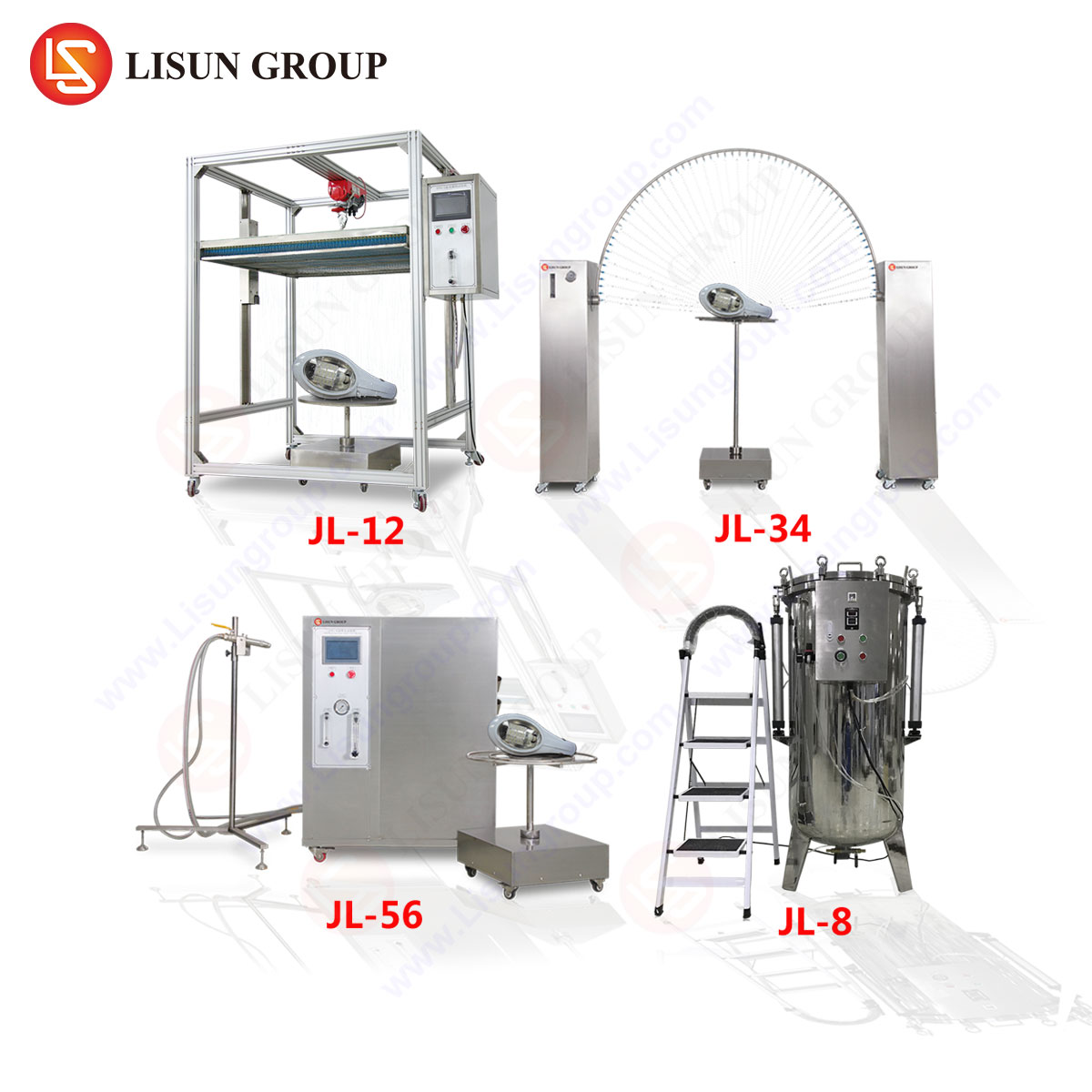
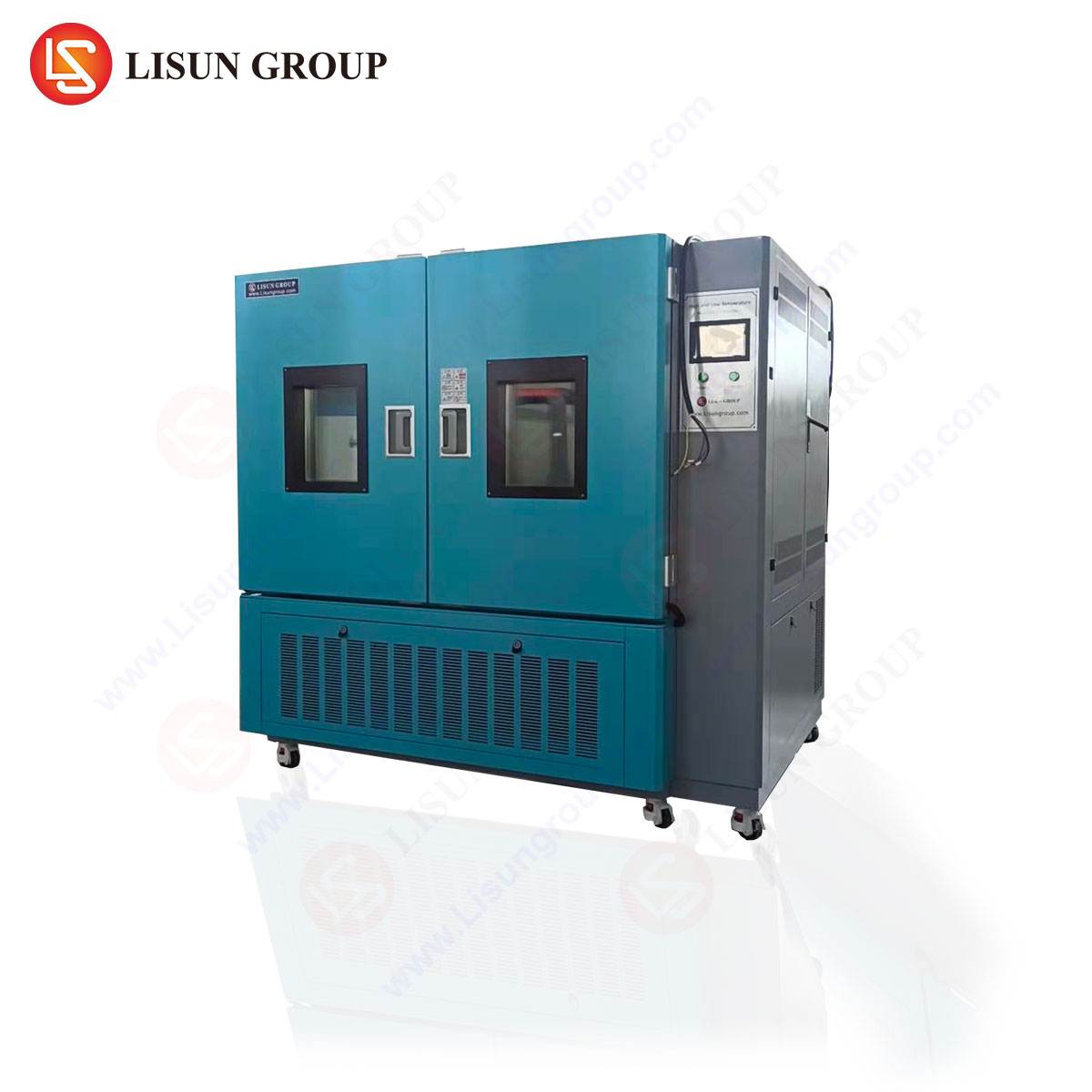
For manufacturers and testing laboratories requiring reliable, accurate, and efficient validation of IP ratings including IPX4, the LISUN JL-XC Series waterproof test equipment represents a sophisticated solution. This series is engineered to conduct a comprehensive range of IP tests from IPX1 to IPX9K, offering modular flexibility to meet diverse testing needs.
Specifications and Operational Architecture: The JL-XC Series typically features a high-grade stainless-steel test chamber, a precision rotary table with adjustable tilt (critical for the multi-directional spray requirement of IPX4), and a closed-loop water circulation and filtration system. Its control system is centralized in a programmable logic controller (PLC) with a human-machine interface (HMI) touchscreen. Key specifications include precise control of water flow (calibrated per IEC 60529 for each IPX level), table rotation speed (3-5 RPM is standard for IPX4), and test duration. The nozzle assemblies are manufactured to the exact dimensional tolerances specified in the standard.
Testing Principles Embodied: The system automates the IPX4 test protocol. The unit under test (UUT) is secured on the rotary table. The operator selects the IPX4 program, which automatically sets the correct nozzle, water pressure, flow rate, and test time. The table rotates and tilts, ensuring the UUT is exposed to splashes from all directions. The integrated water system maintains consistent temperature and purity, removing variables that could affect test reproducibility. This automation minimizes human error and ensures strict adherence to the standard’s parameters.
Industry Use Cases and Competitive Advantages: The JL-XC Series is deployed in R&D and quality assurance labs across all previously mentioned industries. An Electrical Components manufacturer uses it to validate the seals on IPX4-rated switches and sockets. An Aerospace and Aviation Components supplier may utilize it for testing cockpit device enclosures. A Lighting Fixture producer relies on it for batch acceptance testing.
Its competitive advantages are multifold:
- Compliance Fidelity: Guarantees testing strictly to IEC 60529, CB Scheme, and other derivative standards (e.g., ISO 20653 for automotive).
- Modularity and Scalability: The series can be configured for specific IP ratings, allowing labs to invest in needed capabilities and expand later.
- Data Integrity and Traceability: Automated operation and data logging create immutable records for certification and quality audits.
- Operational Efficiency: Reduces test cycle times and labor compared to manual setup, accelerating product development and release.
- Durability and Low Maintenance: The corrosion-resistant construction and filtered water system ensure long-term reliability and consistent performance.
Beyond IPX4: Contextualizing the Rating Within the IP Hierarchy
It is imperative to contextualize IPX4 within the broader IP rating spectrum. It offers a lower degree of protection than IPX5 (water jets), IPX6 (powerful water jets), or IPX7/8 (immersion). However, it provides a higher assurance than IPX3 (spraying water at up to 60° from vertical). Crucially, ratings are not cumulative; an IPX7-rated device is not necessarily IPX5 or IPX4 rated, as the test methods differ fundamentally (pressure vs. immersion). A product may be rated IP54, combining dust protection with splash resistance. Understanding these distinctions prevents misapplication and ensures correct product specification for the intended environment.
Challenges and Common Misconceptions in IPX4 Certification
A prevalent misconception is equating IPX4 with “waterproof,” a term which is commercially ambiguous and technically inaccurate; “splash-resistant” is the correct descriptor. Another challenge is the assumption that a single successful test guarantees lifetime performance. Environmental stress, gasket aging, UV degradation, and mechanical wear can compromise integrity over time. Furthermore, testing must be performed on production-representative units, as minor manufacturing variances in seal placement or torque on fasteners can lead to failure. The test also does not account for water with contaminants like detergents or salts, which may affect surface tension and sealing material compatibility.
Conclusion
The IPX4 rating is a vital, precisely defined benchmark for splash protection in electrical and electronic enclosures. Its importance spans from consumer product differentiation to industrial and medical safety. Achieving and maintaining this certification requires a synergy of robust mechanical design, appropriate material science, and—critically—rigorous, standardized testing. Instrumentation such as the LISUN JL-XC Series provides the technological foundation for this validation, ensuring that products meet their specified environmental resilience through automated, repeatable, and auditable test processes. As product ecosystems continue to expand into more dynamic and demanding environments, the role of precise ingress protection testing will only grow in significance for ensuring reliability, safety, and regulatory compliance.
FAQ Section
Q1: Can the LISUN JL-XC Series test for IP ratings other than IPX4?
A1: Yes, the JL-XC Series is designed as a comprehensive platform. It can be configured to perform a wide range of IP water resistance tests, from IPX1 and IPX2 (dripping water) through IPX3 and IPX4 (spraying water) to IPX5 and IPX6 (powerful jet water), and even up to IPX9K (high-pressure, high-temperature spray). The specific configuration depends on the modules and nozzles installed.
Q2: How is the test duration for IPX4 calculated on automated equipment like the JL-XC Series?
A2: The IEC 60529 standard specifies a test duration of 10 minutes per square meter of the enclosure surface area, with a minimum of 5 minutes. Advanced systems like the JL-XC Series allow the operator to input the test duration directly based on this calculation or use a standard default. The automated controller then precisely manages the test time, ensuring compliance.
Q3: What constitutes a “failure” in an IPX4 test, and how is it detected?
A3: A failure is defined as the ingress of water in a quantity or location that could impair normal operation, create a safety hazard, or damage internal components. Detection is twofold: first, a post-test functional operational check is performed. Second, the enclosure is often opened for visual inspection to identify any water traces on internal circuitry, conductors, or insulated parts. The test standard specifies the allowable limits for ingress.
Q4: Does the JL-XC Series accommodate testing for large or irregularly shaped products?
A4: The series typically offers customizable test chamber sizes and table load capacities. For large or irregularly shaped units under test (UUTs), such as certain automotive electronics modules or industrial control system housings, the rotary table and spray system can be scaled accordingly. It is essential to consult specifications to ensure the UUT can be properly positioned and exposed to spray from all necessary angles.
Q5: Is calibration required for the JL-XC Series, and against what standards?
A5: Yes, regular calibration is essential to maintain testing accuracy and certification integrity. The system’s critical parameters—water flow rate, pressure, nozzle dimensions, and table rotation speed—must be calibrated traceably to national or international standards, as per the requirements of IEC 60529 and quality management systems like ISO/IEC 17025 for testing laboratories.