




Understanding IPX7 Waterproof Ratings: A Technical Analysis of Standards, Testing, and Applications
Introduction to Ingress Protection (IP) Codification
The Ingress Protection (IP) rating system, as delineated in the International Electrotechnical Commission (IEC) standard 60529, provides a standardized methodology for classifying the degree of protection offered by an enclosure against the intrusion of solid foreign objects (including body parts like hands and fingers) and water. This codification is critical for engineers, designers, and procurement specialists across industries where environmental resilience dictates product reliability, safety, and lifespan. The IP code follows a specific structure: the letters “IP,” followed by two characteristic numerals. The first numeral (0-6) indicates protection against solids. The second numeral (0-9K) defines protection against liquids. It is imperative to note that an “X” in either position denotes that the enclosure is not rated or tested for that specific type of ingress. Consequently, an IPX7 rating explicitly communicates that the product’s protection against solid particles is unspecified or not rated, while its protection against the effects of temporary immersion in water has been formally validated under controlled laboratory conditions.
Deciphering the Specifics of the IPX7 Classification
The IPX7 rating is a precise, non-negotiable specification with defined test parameters. It signifies that an enclosure can withstand immersion in water under specified conditions of pressure and time without ingress of water in quantities causing harmful effects. According to IEC 60529, the formal test criteria for IPX7 are as follows: The device under test (DUT) is immersed in water to a depth of 1 meter, or the depth corresponding to the lowest point of the enclosure being 1 meter below the water surface and the highest point being at least 0.15 meters below the surface, for a duration of 30 minutes. The water temperature is maintained within a range not exceeding 5°C of the DUT’s temperature prior to immersion to mitigate thermal shock and condensation effects internally.
It is crucial to contextualize IPX7 within the broader IP liquid ingress scale. It is not a cumulative rating. A device rated IPX7 is not necessarily protected against water jets (IPX5/IPX6) or lower-pressure sprays (IPX3/IPX4). The test is one of static immersion. Conversely, a device rated for high-pressure jets (IPX6) may not survive immersion (IPX7), as the sealing mechanisms and failure modes differ significantly—one tests for dynamic pressure resistance, the other for static pressure and seal integrity over time. This distinction is a frequent source of misinterpretation in product marketing and specification sheets.
The Critical Role of Laboratory Testing in Validating IPX7
Given the binary nature of compliance—either a device passes the immersion test without harmful ingress or it fails—the accuracy, repeatability, and traceability of the testing process are paramount. Testing cannot be performed ad hoc; it requires specialized equipment that can precisely control depth, duration, and environmental conditions, and which is calibrated to national or international standards. The testing apparatus typically consists of a submersion tank with precise depth gauges, temperature control systems, and fixtures to hold the DUT in its intended operational orientation during immersion, as orientation can critically affect seal performance.
Post-immersion, the DUT undergoes a thorough examination. This includes visual inspection for water ingress, functional testing to ensure no degradation in performance, and often a dielectric strength test or insulation resistance measurement to verify that no moisture has compromised electrical safety. The definition of “harmful effects” is key: it may include not only immediate failure but also latent corrosion, electrical leakage, or fogging of optical components that could impair function over time.
LISUN JL-XC Series: A Technical Benchmark for Waterproof Testing
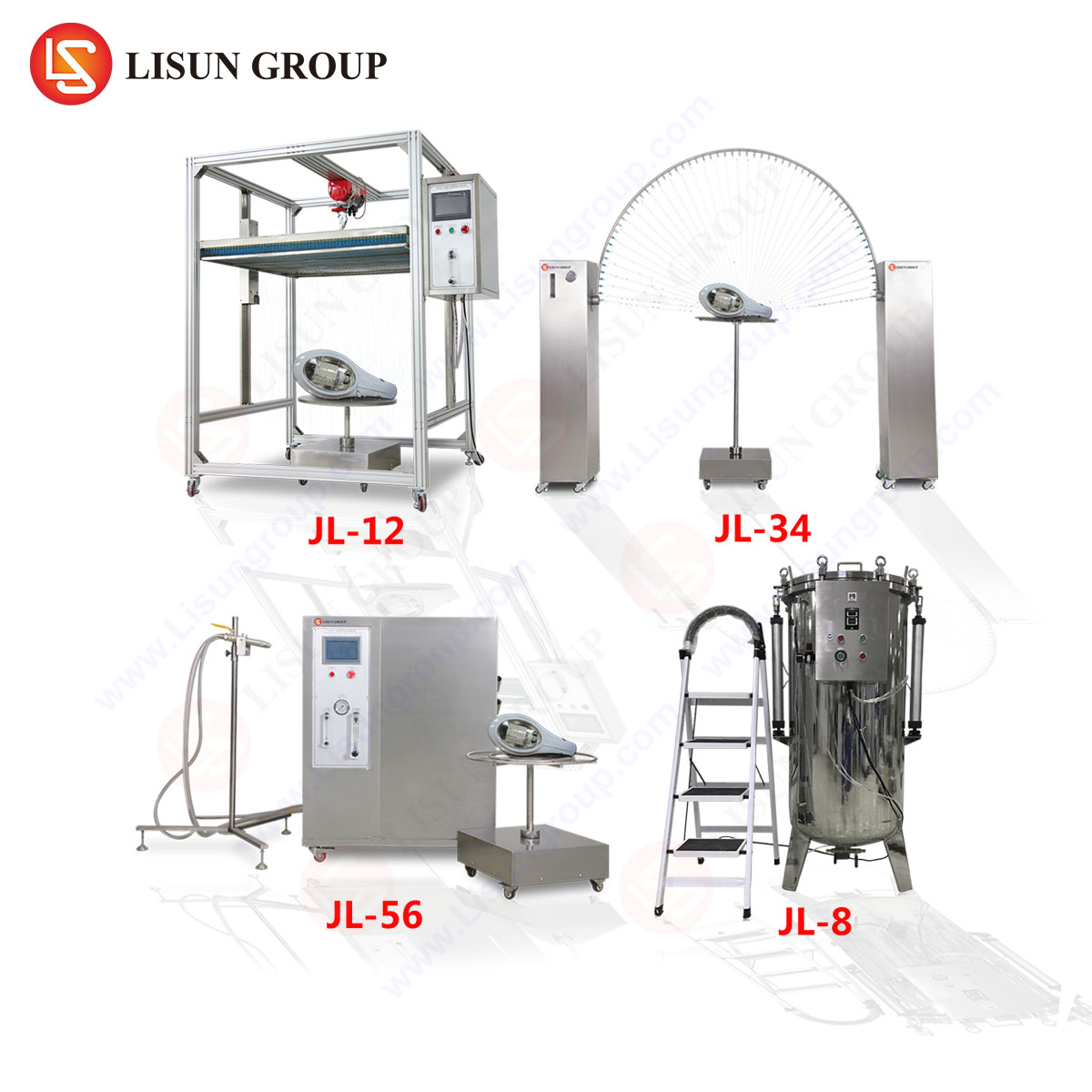
For manufacturers requiring rigorous, standards-compliant validation of IPX7 and other IP ratings, specialized test chambers are essential. The LISUN JL-XC Series of waterproof test equipment represents a sophisticated solution engineered to meet the exacting requirements of IEC 60529, as well as complementary standards such as ISO 20653 (road vehicles) and GB 4208. This series is designed to facilitate a comprehensive range of IPX1 through IPX9K tests, with specific configurations optimized for immersion testing.
The JL-XC Series immersion test apparatus is characterized by a robust stainless-steel tank construction, resistant to corrosion and facilitating clean test conditions. It incorporates a high-precision water level control system, often utilizing ultrasonic or pressure sensor technology, to maintain the mandated 1-meter depth with minimal deviation. Integrated temperature sensors and heating/cooling elements allow for strict adherence to the temperature differential requirement specified in the standard, a variable often overlooked in less sophisticated setups.
The testing principle is one of controlled, reproducible immersion. The DUT, which could range from a smartphone or smartwatch (Consumer Electronics) to an automotive sensor harness connector (Automotive Electronics), is mounted according to its typical use case. The chamber then executes the 30-minute immersion cycle, with all parameters logged for audit and certification purposes. For industries like Medical Devices or Aerospace and Aviation Components, this data logging is not merely beneficial but a regulatory necessity, providing objective evidence for quality management systems and certification bodies like the FDA or EASA.
Industry Applications and the Imperative for IPX7 Compliance
The IPX7 rating finds relevance in a multitude of sectors where accidental immersion is a plausible risk scenario, even if constant exposure to water is not expected.
- Consumer Electronics & Telecommunications Equipment: This is the most visible application. Wireless earbuds, Bluetooth speakers, smartphones, and smartwatches frequently carry IPX7 ratings, assuring users of survivability from accidental drops into sinks, puddles, or during exercise in heavy rain.
- Automotive Electronics: As vehicles incorporate more advanced driver-assistance systems (ADAS), the electronic control units (ECUs), LiDAR sensors, and camera modules mounted in lower bumper areas may require IPX7 validation to withstand temporary flooding during heavy rainfall or fording shallow water.
- Electrical Components and Lighting Fixtures: Outdoor-rated electrical sockets, switches, and LED lighting fixtures for gardens or pathways may be specified as IPX7 to ensure safety and functionality when pooled water is present.
- Medical Devices: Portable diagnostic tools, handheld monitors, and certain wearable health sensors may require IPX7 protection to allow for cleaning via immersion in disinfectant solutions or to guarantee operation in humid clinical environments.
- Industrial Control Systems & Electrical and Electronic Equipment: Handheld terminals, remote I/O modules, or communication gateways used in food processing, marine, or washdown environments might necessitate IPX7 protection against incidental splash and immersion during cleaning protocols.
Advantages of Automated, Standards-Compliant Test Systems
Utilizing a dedicated system like the LISUN JL-XC Series offers several competitive advantages for a quality assurance laboratory or R&D department. Firstly, it ensures regulatory compliance and certification readiness. The built-in controls and calibration traceability provide the documented evidence required for submitting products to notified bodies or large OEM customers. Secondly, it enhances testing repeatability and reduces human error. Automated depth and temperature control eliminate variables that could lead to false passes or failures. Thirdly, it improves laboratory efficiency. The system can be programmed for standardized test cycles, freeing technicians for other tasks and enabling unattended testing where safe to do so. Finally, it offers future-proofing and scalability. The modular design of many advanced test chambers allows for upgrades to perform other IP tests (e.g., spray, drip, high-pressure/high-temperature jet), protecting capital investment as product lines and testing requirements evolve.
Beyond the Rating: Considerations for Real-World Deployment
While achieving an IPX7 rating in a controlled lab is a critical milestone, several pragmatic factors influence real-world performance. Material degradation is a primary concern. Elastomeric seals can degrade due to UV exposure, ozone, temperature cycling, or contact with chemicals not present in the pure water used during testing. Mechanical wear from repeated mating/unmating of connectors, or physical impacts, can compromise sealing surfaces. Furthermore, the test assumes clean, still water. In practice, immersion may involve water with detergents, salts, or particulates that can affect surface tension and sealing capability. Therefore, the IPX7 rating should be viewed as a baseline verification of design intent under reference conditions, not an unconditional lifetime guarantee against all water exposure. Complementary testing, such as salt spray (IEC 60068-2-52) or thermal cycling, is often employed to simulate aging and combined environmental stresses.
Conclusion
The IPX7 waterproof rating is a precisely defined, laboratory-validated classification that provides essential information about a product’s resilience to temporary immersion. Its correct interpretation—understanding its scope and, importantly, its limitations—is vital for engineers designing products and for professionals selecting components for demanding environments. The integrity of this rating rests entirely upon the accuracy and reliability of the testing process. Advanced, automated test equipment, such as the LISUN JL-XC Series, provides the necessary control, repeatability, and documentation to transform a design specification into a verified, certifiable product attribute, thereby mitigating risk and enhancing product credibility across the highly competitive landscapes of electronics, automotive, medical, and industrial manufacturing.
Frequently Asked Questions (FAQ)
Q1: Can a product rated IPX7 also be considered safe for use in heavy rain or with pressurized water jets?
No. The IPX7 test involves static immersion at a depth of 1 meter. It does not evaluate resistance to directional, pressurized water jets as defined in IPX5 or IPX6 ratings. A product only rated IPX7 may fail if subjected to high-pressure spray from a hose or driven rain. For such exposure, a combined rating like IP65/IP66 or a specific test for jets is required.
Q2: How does the JL-XC Series test chamber ensure the critical temperature differential requirement of the IPX7 standard is met?
The JL-XC Series is equipped with integrated water temperature control systems (heaters and/or chillers) and high-accuracy temperature sensors. Prior to immersion, the temperature of the DUT is measured or stabilized. The chamber then adjusts the water temperature to be within 5°C of the DUT’s temperature, as mandated by IEC 60529, before initiating the immersion cycle. This data is typically logged by the chamber’s control software.
Q3: After passing an IPX7 test, is a product permanently sealed?
Not necessarily. The test validates the integrity of the seals at the time of testing. Seals can degrade over time due to environmental factors (heat, UV, chemicals), mechanical wear, or physical damage. The IP rating is generally considered a characteristic of the product as manufactured, not a permanent guarantee. Periodic re-testing or design for seal longevity is important for critical applications.
Q4: For a device with removable covers or ports, in which configuration should it be tested for IPX7?
The device must be tested in its “as-used” configuration as intended by the manufacturer. If the manufacturer states the device is IPX7 with all caps and covers securely fastened, then it is tested in that state. If a port is intended to be open during use, the rating does not apply to that port. The test standard requires the device to be in its most vulnerable orientation for sealing.
Q5: What is the typical lead time for conducting a full IPX7 certification test cycle on a batch of products using automated equipment?
The immersion test itself is 30 minutes per orientation (usually one orientation is tested). However, total lead time includes pre-test conditioning (temperature stabilization), setup and mounting of the DUT, the immersion cycle, post-immersion drainage and inspection, and final electrical/functional verification. For a batch of samples, this can range from several hours to a full day, depending on sample size and the complexity of the post-test analysis. Automated chambers like the JL-XC Series streamline the immersion and logging phases, but thorough inspection remains a manual, critical step.