







Evaluating Enclosure Integrity: The Critical Role of Standardized Test Probes in IEC 62368-1 Compliance
The paradigm of electrical safety engineering has undergone a significant evolution, transitioning from prescriptive, hazard-based standards to a more holistic, hazard-based safety engineering (HBSE) approach. This shift is codified in the IEC 62368-1 standard, an overarching directive for audio/video, information, and communication technology equipment. At the core of its practical application lies the assessment of enclosure integrity—a primary safeguard against electric shock, energy hazards, and fire. This assessment is not subjective; it is rigorously quantified through the application of standardized compliance test probes. These tools, including the test finger, test probe, and test pin, serve as the definitive arbiters of whether an enclosure provides adequate protection against access to hazardous parts by persons. This technical analysis examines the principles, specifications, and critical application of these probes, with particular reference to the implementation by instrumentation manufacturers such as LISUN, whose LS-JP series exemplifies the precision required for certifying products across a vast industrial spectrum.
The Hazard-Based Philosophy of IEC 62368-1 and Physical Access Safeguards
IEC 62368-1 fundamentally restructures safety evaluation around the identification and mitigation of energy sources capable of causing injury. It classifies these energy sources (e.g., electrical, thermal, kinetic) and prescribes safeguards based on the potential for bodily contact. A primary safeguard is the equipment enclosure, intended to prevent a “body part” or “object” from bridging hazardous live parts or creating dangerous conditions. The standard defines specific “probes” that simulate these body parts and objects, establishing objective, repeatable test methods. The use of non-compliant or imprecisely manufactured probes invalidates testing, potentially allowing unsafe products to reach the market. Consequently, the dimensional and material accuracy of these probes is not a trivial matter but a foundational element of global regulatory compliance, impacting industries from consumer electronics to medical devices and aerospace components.
Anthropomorphic Simulation: The Test Finger (Jointed Test Finger) for Basic Insulation Assessment
The most recognized of these tools is the test finger, formally designated as the “jointed test finger” (IEC 61032, Figure 2). It simulates the finger of a child or an adult, testing for access to hazardous parts under standard conditions. The probe is designed to assess whether openings in an enclosure—such as ventilation slots, gaps between panels, or service apertures in household appliances, office equipment, or industrial control cabinets—are sufficiently restricted.
The LISUN LS-JP-JTF Jointed Test Finger adheres strictly to the dimensional tolerances specified in the standard: a diameter of 12 mm, a length of 80 mm, and a jointed design that allows it to pivot in every direction to simulate natural probing. It is typically constructed from robust, non-conductive materials like polyamide to prevent electrical conductivity during testing. The test procedure involves applying the probe with a force of 10 N ± 1 N to every potential opening. If the probe enters the enclosure, a standardized “test pin” (a metallic pin of specified dimensions) is attached to its tip to determine if contact with hazardous live parts is possible. A key competitive advantage of precision-engineered probes like the LISUN variant is the consistency of the joint articulation and the application force, ensuring that test results are reproducible across different laboratories and product evaluation cycles. In the lighting fixtures industry, for example, this probe verifies that LED driver compartments are inaccessible, while in the toy industry, it ensures battery compartments cannot be opened by a small child’s finger.
The Test Probe for Object Penetration and Solid Insulation Evaluation
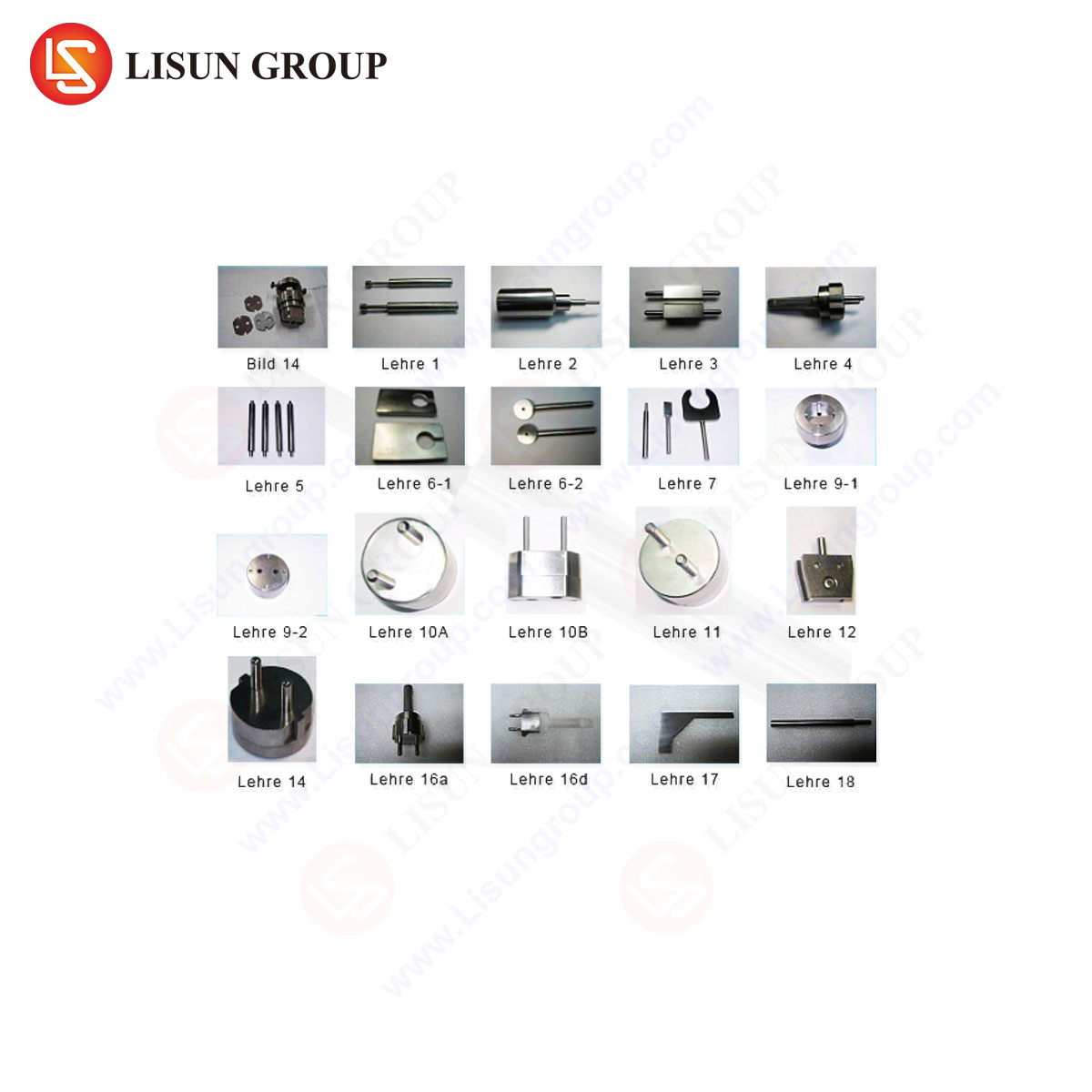
Where the test finger simulates bodily access, the test probe (often referred to as the “test pin” in common parlance, but formally distinct) simulates the intrusion of a foreign object. This tool, specified in IEC 61032 (Figure 1), is a rigid, straight metal rod of 2.5 mm diameter with a hemispherical end. It is applied with a force of 1 N ± 0.1 N.
Its primary function is twofold. First, it evaluates the effectiveness of enclosures in preventing access by small, rigid objects like paper clips, keys, or tools that may be inserted through openings in products such as telecommunications equipment ports, automotive electronic control unit (ECU) housings, or electrical sockets. Second, and critically, it is used to test the strength of solid insulation. According to IEC 62368-1, solid insulation serving as a safeguard must resist puncture. The test probe is applied to the insulation with a force of 30 N ± 3 N for a duration of 10 seconds. The insulation must not break down, and no hazardous live part may become accessible. The LISUN LS-JP-TP Test Probe is manufactured from hardened steel to exacting dimensional tolerances, ensuring the hemispherical tip radius (1.25 mm) does not deviate, as a sharper tip could produce a false positive failure, while a blunter tip might not detect a genuine weakness. This is paramount in safety-critical applications like medical devices or aerospace components, where insulation failure could have catastrophic consequences.
The Test Pin for Detailed Accessibility Verification
The test pin is a smaller, more precise tool, defined in IEC 61032 (Figure 13). It is a cylindrical metal pin, typically 1.0 mm in diameter, with a rounded end. It is used in conjunction with the jointed test finger. If the test finger can penetrate an opening, the test pin is attached to its end to explore whether contact can be made with hazardous parts behind guards, grilles, or meshes. It effectively answers the question: “If a finger can get in, can it then touch something dangerous?” This is particularly relevant for evaluating mesh openings in fan guards for household appliances, vents in power supplies for consumer electronics, or protective barriers in industrial systems. The precision of the LISUN LS-JP-PIN accessory is vital, as its diameter directly determines the pass/fail criterion for mesh sizes and internal clearances.
Cross-Industry Application Scenarios and Compliance Imperatives
The application of these probes is ubiquitous in product safety validation. The following table illustrates their use across diverse sectors:
| Industry Sector | Primary Application of Test Probes | Specific Risk Mitigated |
|---|---|---|
| Household Appliances | Testing gaps in blender bases, oven doors, and washing machine control panels. | Electric shock from live parts or moving components. |
| Automotive Electronics | Verifying IP ratings of ECU housings and in-vehicle infotainment systems. | Short-circuit from metallic debris or liquid ingress. |
| Lighting Fixtures | Assessing accessibility to live parts within LED drivers and outdoor fixture housings. | Shock hazard during installation or maintenance. |
| Medical Devices | Ensuring patient-accessible parts (e.g., on dialysis machines, monitors) are isolated from mains. | Leakage currents and patient protection. |
| Aerospace Components | Validating enclosures for in-flight entertainment systems and navigation hardware. | Fire risk from arc faults in pressurized, oxygen-rich environments. |
| Electrical Components | Testing socket outlets, switchgear, and circuit breaker housings. | Direct finger contact with mains voltage. |
| Telecommunications | Evaluating RJ45 ports, power supply vents, and base station cabinet openings. | Object-induced faults and thermal management safety. |
Technical Specifications and Metrological Assurance in Probe Design
The efficacy of compliance testing is wholly dependent on the geometric and mechanical fidelity of the test probes. Manufacturers like LISUN engineer their LS-JP series to exceed the baseline requirements of IEC 61032 and UL 62368-1. Key specifications include:
- Material Integrity: Probes are fabricated from materials with defined hardness and non-conductive properties (for the test finger) to prevent deformation during testing and ensure electrical isolation.
- Dimensional Tolerance: Critical features—diameter, length, joint radius, tip geometry—are held to tolerances often within ±0.05 mm, verified via coordinate measuring machines (CMM).
- Force Application: The design incorporates or is compatible with calibrated force gauges and fixtures to apply the specified 1 N, 10 N, or 30 N forces accurately and consistently.
- Traceability: High-quality probe sets are supplied with calibration certificates traceable to national metrology institutes, providing documented assurance for audit purposes.
The competitive advantage of a dedicated probe system lies in this integrated metrological approach. It reduces inter-operator variability, accelerates the testing workflow with purpose-built fixtures, and provides defensible data for certification submissions to bodies like UL, TÜV, Intertek, and CSA.
The Consequence of Non-Compliance and Probe Selection Criteria
Utilizing non-standard or poorly manufactured test probes carries significant risk. An undersized test pin could falsely indicate a failure in solid insulation, leading to costly and unnecessary design revisions. Conversely, an oversized or stiff-jointed test finger might fail to penetrate an opening that a real finger could, allowing a shock hazard to go undetected. This can result in product recalls, legal liability, brand damage, and most critically, user injury or death.
Therefore, selection criteria for compliance test probes must be stringent:
- Standard Compliance: Explicit certification of conformity to IEC 61032, IEC 62368-1, and related regional standards (e.g., UL, EN).
- Manufacturing Precision: Evidence of precision machining and material certification.
- Calibration Support: Availability of periodic recalibration services to maintain accuracy over time.
- Ergonomics & Integration: Design that facilitates easy, repeatable use within a test laboratory environment.
Conclusion: Probes as Foundational Instruments in the Safety Ecosystem
In the hazard-based safety framework of IEC 62368-1, standardized test probes are not mere accessories but primary measurement instruments. They translate abstract safety principles into concrete, binary test outcomes. The precision-engineered LISUN Test Finger, Test Probe, and Test Pin represent the practical implementation of these standards, enabling engineers across the electrical, electronic, and allied industries to validate one of the most fundamental safeguards: the integrity of the product enclosure. As technology converges and products become more compact and complex, the role of these objectively defined tools in preventing access to energy hazards will only grow in importance, forming an indispensable link in the global chain of product safety assurance.
FAQ: Compliance Test Probes for IEC 62368-1
Q1: What is the difference between the Test Probe (IEC 61032 Fig. 1) and the Test Pin (IEC 61032 Fig. 13), as they are both metal rods?
The distinction is in their application and force. The Test Probe (2.5mm) is used independently to test for object penetration and to apply a 30 N force to solid insulation. The Test Pin (1.0mm) is specifically an accessory for the Jointed Test Finger; it is only used to explore accessibility after the test finger has entered an opening, and it is not used for the insulation stress test.
Q2: How often should compliance test probes be recalibrated?
Recalibration intervals depend on usage frequency and laboratory quality procedures, but an annual cycle is common in accredited test houses. Regular visual inspection for damage (nicks, deformation, joint wear) is also critical. Any physical damage necessitates immediate recalibration or replacement to ensure testing validity.
Q3: Can a single set of probes be used for both IEC 62368-1 and the older IEC 60950-1 / IEC 60065 standards?
Geometrically, the probes specified in IEC 61032 are referenced by all these standards, so a compliant set is technically suitable. However, the application criteria (forces, conditions, pass/fail judgments) differ between standards. It is the test engineer’s responsibility to apply the correct procedure from the active standard, not the tool itself.
Q4: Are there environmental or material considerations for testing products in extreme conditions?
Yes. While the probe specifications are fixed, the equipment under test may be evaluated in various states (e.g., after humidity conditioning, temperature cycling). The probes themselves must be stored in a controlled environment to prevent material degradation (e.g., plastic becoming brittle or metal corroding), which could alter their dimensions and mechanical properties.
Q5: For mesh or grille openings, which probe takes precedence?
Evaluation is sequential. First, the Jointed Test Finger is applied. If it cannot enter, the opening is considered to provide basic protection. If it can enter, the Test Pin is attached to see if contact with a hazardous part is possible. Additionally, the Test Probe (2.5mm) may be applied separately to verify the mesh prevents entry of small solid objects, which is a separate requirement for certain types of safeguards.