






Understanding the IEC 62368-1 Figure 20 Test Hook for Hazard-Based Safety Engineering
Abstract
The transition from prescriptive safety standards to a hazard-based safety engineering (HBSE) framework, as embodied in IEC 62368-1, represents a paradigm shift in product safety evaluation. Central to this framework is the concept of energy source classification and the safeguarding measures required to protect persons from potential injury. This article provides a detailed technical examination of one critical compliance tool: the Figure 20 test hook, specified within IEC 62368-1. We will analyze its design rationale, application across diverse industries, and its role in verifying protection against accessible hazardous moving parts. Furthermore, this discourse will integrate an evaluation of specialized compliance instrumentation, such as the LISUN Test Finger, Test Probe, and Test Pin, detailing their specifications, operational principles, and significance in achieving rigorous, repeatable safety assessments.
The Philosophical Underpinnings of Hazard-Based Safety Engineering
IEC 62368-1, “Audio/video, information and communication technology equipment – Safety requirements,” abandons the traditional rule-based approach of its predecessors (e.g., IEC 60065, IEC 60950-1) in favor of a performance-based, hazard-oriented methodology. The core principle is the identification and classification of energy sources—electrical, thermal, kinetic, chemical, or radiative—that can cause pain, injury, or damage. These sources are categorized as Class 1 (non-hazardous), Class 2 (potentially hazardous but not causing severe injury), or Class 3 (capable of causing severe injury).
Once classified, the standard prescribes safeguards (physical barriers, insulation, safety interlocks) based on the energy source class and the skill level of the person (Ordinary, Instructed, or Skilled) likely to interact with the equipment. Compliance, therefore, is not merely about adhering to a list of dimensions but about demonstrating that safeguards effectively prevent access to hazardous energy under foreseeable use and misuse conditions. This is where standardized test tools become indispensable, providing objective, reproducible means to verify that enclosures, openings, and protective devices perform as intended.
Anatomizing the Figure 20 Test Hook: Design and Dimensional Rigor
The test hook detailed in Figure 20 of IEC 62368-1 is a precisely engineered simulation of a human finger, designed to probe for accessibility to hazardous moving parts, such as fans, gears, belts, or rollers. Its geometry is not arbitrary; it is derived from anthropometric data representing a small adult finger or a child’s finger, targeting the most vulnerable scenarios for accidental insertion.
The critical dimensions of the hook are meticulously defined:
- Diameter: The main body of the hook is a cylinder of specified diameter, typically 12 mm, simulating a finger’s thickness.
- Tip Radius: The hemispherical tip has a radius of 3 mm, preventing it from catching on sharp edges and ensuring it tests the true size of an opening.
- Hook Geometry: The 90-degree bend and its associated radii are crafted to simulate the natural curling motion of a finger attempting to reach into a guarded opening. The length of the straight section before the bend determines the probing depth.
- Joint Clearance: The design accounts for the simulated “knuckle” joint, ensuring the tool can articulate and probe at angles, mimicking real-world attempts to bypass a barrier.
The tool is applied with a defined force (typically 30 N ± 3 N) and, if necessary, in various orientations. The fundamental test is straightforward: if the test hook can contact a hazardous moving part, the safeguard is deemed insufficient. This assessment is crucial for preventing lacerations, crushing, entanglement, or other mechanical injuries.
Cross-Industry Application of Accessibility Testing
The universality of the HBSE approach means the Figure 20 test hook finds application in a vast array of product sectors, each with unique risk profiles.
- Electrical and Electronic Equipment & Telecommunications: For server racks, power supplies, and network switches, the hook verifies that cooling fan guards prevent finger entry to blades rotating at high kinetic energy levels.
- Household Appliances: In food processors, blenders, and washing machine drum openings, the tool ensures interlocked lids or fixed guards remain impassable, preventing access to blades or pinch points.
- Automotive Electronics: For in-cabin control modules, infotainment systems, or under-hood electronic control units (ECUs), the test confirms that ventilation slots or service openings do not allow entry to internal cooling fans or moving actuators.
- Lighting Fixtures: In high-bay industrial lighting or moving-head stage lights, it checks that gaps in housing do not permit contact with internal motorized components for focus or movement.
- Industrial Control Systems: For programmable logic controller (PLC) enclosures, motor drives, and human-machine interfaces (HMIs), the hook validates that door seals and ventilation grilles protect against internal moving parts like cooling fans or relay actuators.
- Medical Devices: Compliance is critical for patient-connected equipment like dialysis machines or imaging devices. The test ensures service panels and airflow pathways block access to internal pumps, compressors, or robotic arms, mitigating risk to both patients and service technicians.
- Aerospace and Aviation Components: In in-flight entertainment systems or cockpit control panels, the tool verifies robustness against probing in confined cabin spaces, ensuring no hazardous movement is accessible during turbulence or incidental contact.
- Electrical Components: For switches, sockets, and connectors, the test may be used to ensure that actuation mechanisms or terminals cannot be touched by a probing finger through intended or unintended openings.
- Office Equipment & Consumer Electronics: In printers, paper shredders, and gaming consoles, the hook tests the effectiveness of guards around paper paths, cutter mechanisms, and internal cooling assemblies.
- Toy and Children’s Products Industry: Here, the test is paramount. It rigorously assesses any opening in battery compartments, moving toy parts, or housings to ensure a child’s finger cannot access pinch points, gears, or other kinetic hazards.
Instrumentation for Compliance: The Role of Specialized Test Apparatus
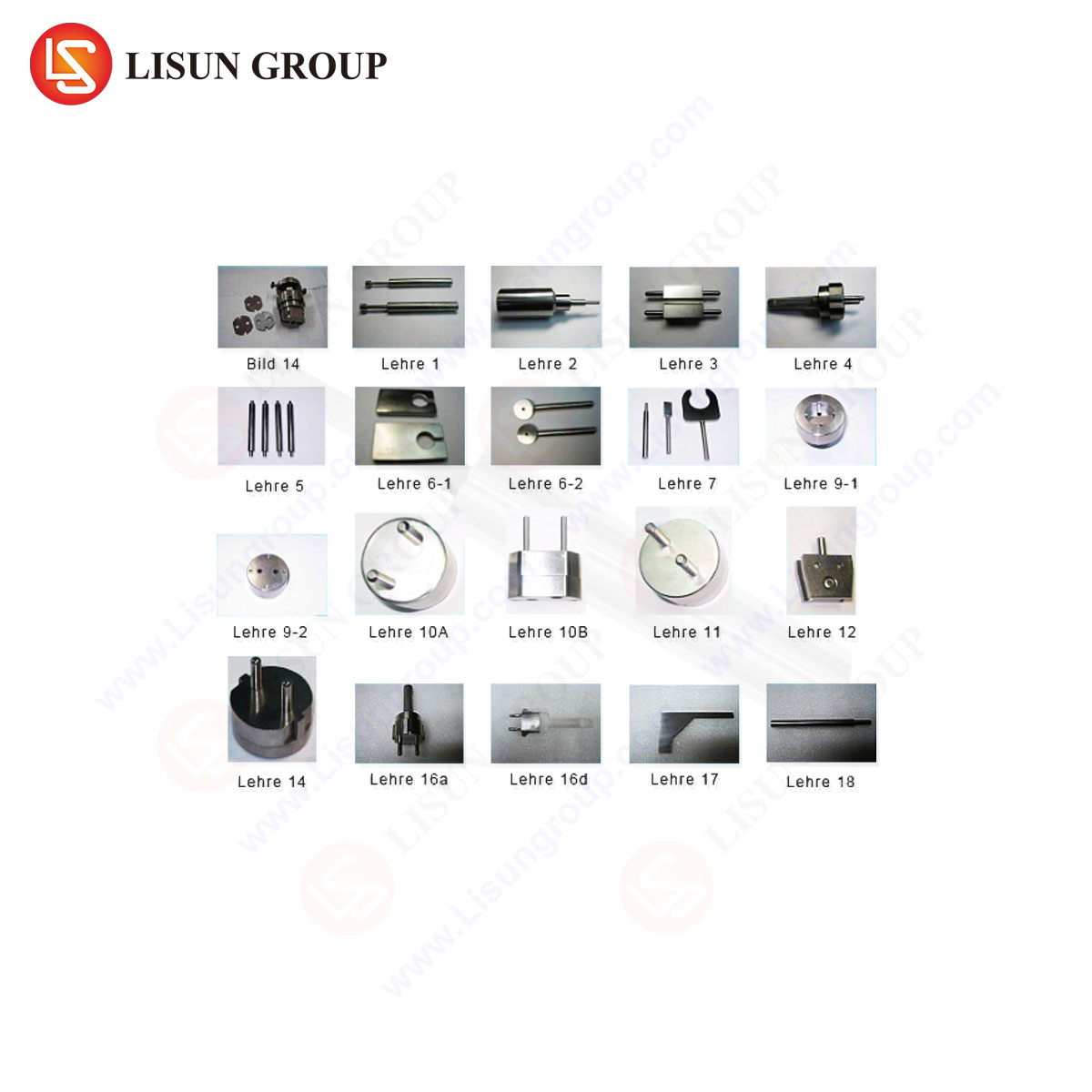
Accurate and reliable testing demands instrumentation that faithfully replicates the standard’s specifications. Generic or improvised tools introduce unacceptable variables. Dedicated test kits, such as those manufactured by LISUN, provide the calibrated precision necessary for certifying bodies and internal compliance labs.
LISUN Test Finger (IEC 62368-1 Figure 20): This tool is a direct physical embodiment of the standard’s drawing. Constructed from durable, non-conductive materials like polyamide, it ensures consistent application without deformation. Its handle is often ergonomically designed for precise application of the required 30 N force, sometimes incorporating a force gauge or being compatible with a push-pull gauge setup for auditable measurement records.
LISUN Test Probe (IEC 61032 Probe 13): While the Figure 20 hook simulates a finger, the Test Probe (often called the “articulated probe”) represents a more persistent attempt to access hazards. It features a hinged joint with specific stop angles, allowing it to simulate a finger that can bend and probe in multiple directions. It is frequently used in conjunction with the test hook for a more comprehensive accessibility assessment, particularly for openings that may be approached from an angle.
LISUN Test Pin (IEC 61032 Probe 18): This tool addresses a different hazard: access to live parts or very small openings. It is a slender, straight pin of defined diameter (e.g., 1.0 mm). Its application is to verify that openings in enclosures are sufficiently small to prevent the insertion of a wire or tool that could bridge creepage and clearance distances or contact hazardous live parts. It is a critical tool for evaluating insulation and enclosure integrity for electrical hazards.
Specifications and Competitive Advantages of Precision Test Tools
A high-quality test apparatus suite, like that from LISUN, is characterized by several key attributes:
- Dimensional Fidelity: Each tool is machined to exacting tolerances, often within ±0.05 mm, ensuring perfect conformance to the standard’s blueprint. Material certificates and calibration traceability to national standards are provided.
- Material Integrity: Tools are made from rigid, non-hygroscopic, and non-conductive materials. This prevents bending under force, ensures consistent performance regardless of ambient humidity, and eliminates the risk of the tool itself creating an electrical bridge during testing.
- Ergonomics and Repeatability: Designed for laboratory use, handles allow for firm, controlled application. Some designs integrate force application features or alignment guides, reducing operator-dependent variability and improving test repeatability.
- Comprehensive Kits: Professional kits include not only the Figure 20 hook but also the articulated probe, test pin, and other relevant probes (e.g., the sphere probe for testing openings), along with calibrated weights for force application. This provides a complete solution for IEC 62368-1, IEC 61032, and related standards.
- Documentation and Traceability: Supporting documentation, including calibration certificates and a statement of conformity to the relevant IEC figures, is essential for audit trails and demonstrating due diligence in the safety engineering process.
The competitive advantage of utilizing such specialized equipment lies in risk mitigation. Inaccurate tools can lead to false passes (accepting a non-compliant design) or false fails (rejecting a safe design), both of which carry significant cost and liability. Precision tools deliver certainty, streamline the certification process with notified bodies, and provide defensible evidence of compliance.
Integrating Test Hook Evaluation into the Product Development Lifecycle
Effective HBSE integrates safety verification from the initial design phase. The Figure 20 test hook evaluation should not be a final gatekeeping check but an iterative tool.
- Conceptual Design: Use the tool’s dimensions to inform mechanical CAD models, setting minimum gap sizes and guard mesh densities.
- Prototype Validation: Physically test early prototypes to identify unforeseen accessibility issues, allowing for cost-effective design modifications.
- Design for Manufacturing (DFM): Ensure that manufacturing tolerances, assembly gaps, and potential warping do not create openings that allow the test hook to pass in production units.
- Production Line Sampling: Implement periodic audit testing on finished goods to guard against process drift that could affect safety-critical dimensions.
- Competitive Analysis and Benchmarking: Use standardized tools to objectively evaluate the safety performance of competitor products, informing both design and marketing strategies.
Conclusion
The IEC 62368-1 Figure 20 test hook is far more than a simple gauge; it is a fundamental instrument of the hazard-based safety engineering philosophy. Its application bridges the gap between theoretical risk assessment and practical, verifiable product safety. By simulating a foreseeable human action with precise geometry and force, it provides an objective metric for evaluating safeguards against kinetic hazards. Employing calibrated, high-fidelity test apparatus, such as the LISUN suite of Test Fingers, Probes, and Pins, is a critical investment in engineering rigor. It ensures reliable compliance across the diverse landscape of modern electrical and electronic equipment, from household appliances to aerospace components, ultimately fulfilling the core mandate of HBSE: to prevent injury by designing effective safeguards based on the scientific principles of energy transfer.
FAQ Section
Q1: Can a 3D-printed model of the Figure 20 test hook be used for official compliance testing?
A1: No, for formal certification testing by a notified body or an accredited laboratory, 3D-printed models are generally not acceptable. Official compliance requires tools that are manufactured to precise dimensional tolerances from materials with defined mechanical properties (rigidity, durability, non-conductivity). Tools must be traceably calibrated to ensure they accurately represent the standard’s specification. 3D-printed parts may have dimensional inaccuracies, layer adhesion weaknesses, and material properties that vary with humidity and temperature, introducing unacceptable uncertainty into the test results.
Q2: How often should test hooks and probes like the LISUN set be recalibrated?
A2: The recalibration interval depends on usage frequency, handling conditions, and the quality management system requirements of the testing laboratory (e.g., ISO/IEC 17025). A typical industrial calibration cycle is 12 months. However, if the tools are used daily, subjected to impacts, or show any signs of wear or damage, they should be inspected and potentially recalibrated immediately. The tool’s manufacturer usually provides recommended intervals, but the end-user’s quality procedures are ultimately determinative.
Q3: In the context of IEC 62368-1, when should the Test Probe (articulated probe) be used instead of or in addition to the Figure 20 Test Hook?
A3: The Figure 20 hook is the primary tool for testing accessibility to hazardous moving parts. The articulated Test Probe (IEC 61032 Probe 13) is typically applied in a secondary, more stringent test. If an opening is found to be inaccessible to the Figure 20 hook, the articulated probe may then be used to determine if, by bending and probing from different angles, a hazard could be contacted. It simulates a more deliberate attempt to bypass a safeguard. Its use is often specified for certain types of openings or when assessing protection for “instructed persons” who might be more persistent in their interaction with equipment.
Q4: For a product with a meshed fan guard, is passing the test hook probe sufficient to demonstrate compliance for kinetic energy hazards?
A4: Passing the test hook probe is a necessary but not always sufficient condition. It demonstrates that a finger cannot contact the moving part. However, a comprehensive assessment also requires evaluating the guard’s strength and stability (it must not deform under stress to allow access), the classification of the fan’s kinetic energy (Class 1, 2, or 3), and the integrity of the guard’s attachment (e.g., screws that require a tool for removal). Furthermore, for very high-energy moving parts, additional considerations like the containment of ruptured fragments may apply.
Q5: Are the LISUN test tools applicable to other safety standards beyond IEC 62368-1?
A5: Yes, absolutely. The physical dimensions of these test tools are standardized in IEC 61032, “Protection of persons and equipment by enclosures – Probes for verification.” This standard is harmonized and referenced by a wide array of product safety standards globally, including IEC 60335-1 (household appliances), IEC 60598-1 (lighting), IEC 60601-1 (medical equipment), and UL/CSA versions of these standards. Therefore, a high-quality set like the LISUN kit is a versatile investment for any laboratory testing products to multiple international safety standards.