




Understanding the Neutral Salt Spray Test for Material Evaluation
Introduction to Accelerated Corrosion Testing
The relentless degradation of materials through corrosion represents a persistent and costly challenge across virtually every industrial sector. From the microscopic circuitry within a medical implant to the structural chassis of an automotive vehicle, the integrity of components is perpetually threatened by environmental factors, with saline atmospheres being among the most aggressive. To preemptively evaluate and guarantee material performance, the neutral salt spray (NSS) test, standardized as ASTM B117 and ISO 9227, has become a cornerstone methodology. This accelerated laboratory test simulates the corrosive effects of marine and coastal environments within a controlled chamber, providing a comparative, reproducible assessment of a material’s or coating’s relative corrosion resistance. Its primary utility lies not in predicting exact service life in years, but in furnishing rapid, qualitative data for quality control, comparative ranking, and the detection of formulation or processing flaws.
Fundamental Principles and Governing Standards
The operational principle of the neutral salt spray test is elegantly straightforward yet rigorously controlled. A prepared test specimen is exposed within a sealed chamber to a continuous, indirect fog of a 5% sodium chloride (NaCl) solution. This solution is atomized using compressed, purified air and maintained at a pH between 6.5 and 7.2 at 35°C, hence the designation “neutral.” The test chamber is held at a constant temperature of 35°C ± 2°C, creating a highly humid, saturated environment. The settling rate of the salt fog is meticulously calibrated to 1.0 to 2.0 ml per 80 cm² per hour, ensuring consistent and reproducible exposure conditions.
The corrosive mechanism is primarily electrochemical. The salt solution, upon settling on the specimen surface, forms an electrolyte film that facilitates the anodic dissolution of the base metal and cathodic reduction reactions, typically involving oxygen. For coated specimens, the test aggressively probes for defects such as pores, scratches, or thin areas. It accelerates the formation of corrosion products at these sites, which can then undercut and propagate beneath the coating. The test’s duration is not fixed; it varies significantly based on the material system and the relevant product specification, ranging from a mere 24 hours for a fast-check quality audit to 1000 hours or more for high-performance aerospace coatings.
Adherence to international standards is non-negotiable for test validity. ASTM B117, “Standard Practice for Operating Salt Spray (Fog) Apparatus,” and its international counterpart, ISO 9227, “Corrosion tests in artificial atmospheres – Salt spray tests,” define every critical parameter: solution chemistry, pH, chamber temperature, collection rate, and specimen placement. Compliance with these standards ensures that test results are comparable across different laboratories and over time, forming a reliable basis for material specification and supplier qualification.
Critical Apparatus and Modern Test Chamber Design
The reliability of NSS test data is intrinsically linked to the precision and consistency of the testing apparatus. A modern salt spray test chamber is an engineered system comprising several integrated subsystems. The chamber itself is constructed from chemically inert materials, such as high-grade polymers or coated steels, resistant to the corrosive environment. A reservoir holds the prepared salt solution, which is fed via corrosion-resistant pumps to an atomizing nozzle system. The atomization is driven by compressed air that must be filtered and humidified to prevent droplet drying and ensure a consistent fog.
Precise temperature control is achieved through a combination of heating elements and a controlled water jacket or direct air heating, with sensors providing feedback to a programmable logic controller (PLC). Perhaps most critically, the chamber design must ensure uniform fog distribution and prevent condensation from dripping directly onto specimens, which can cause unrealistic corrosion patterns. Modern chambers incorporate sophisticated mist towers and baffles to achieve this. Data logging capabilities for temperature, humidity, and test duration are now standard, providing an immutable audit trail for quality documentation.
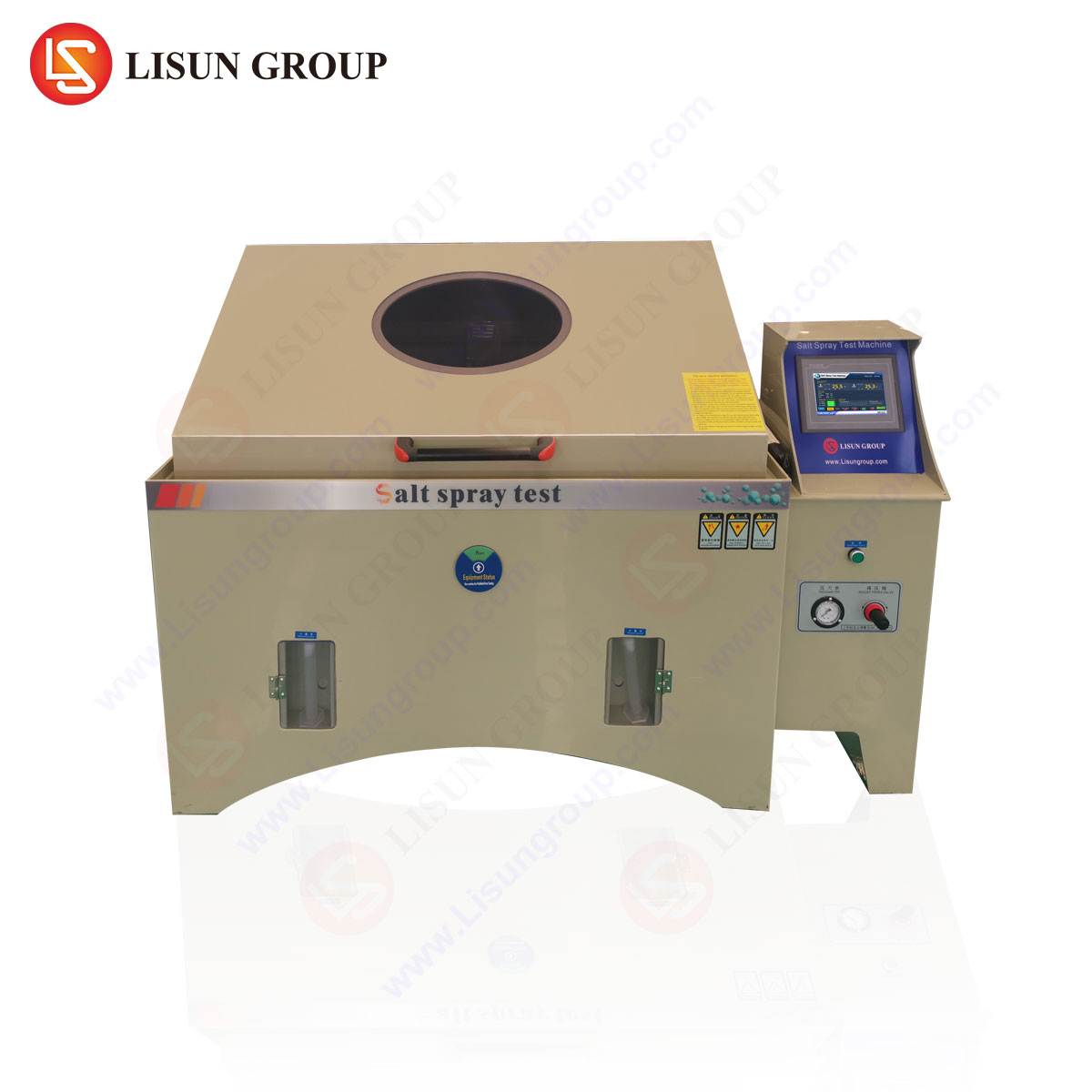
The LISUN YWX/Q-010 Salt Spray Test Chamber: A Technical Examination
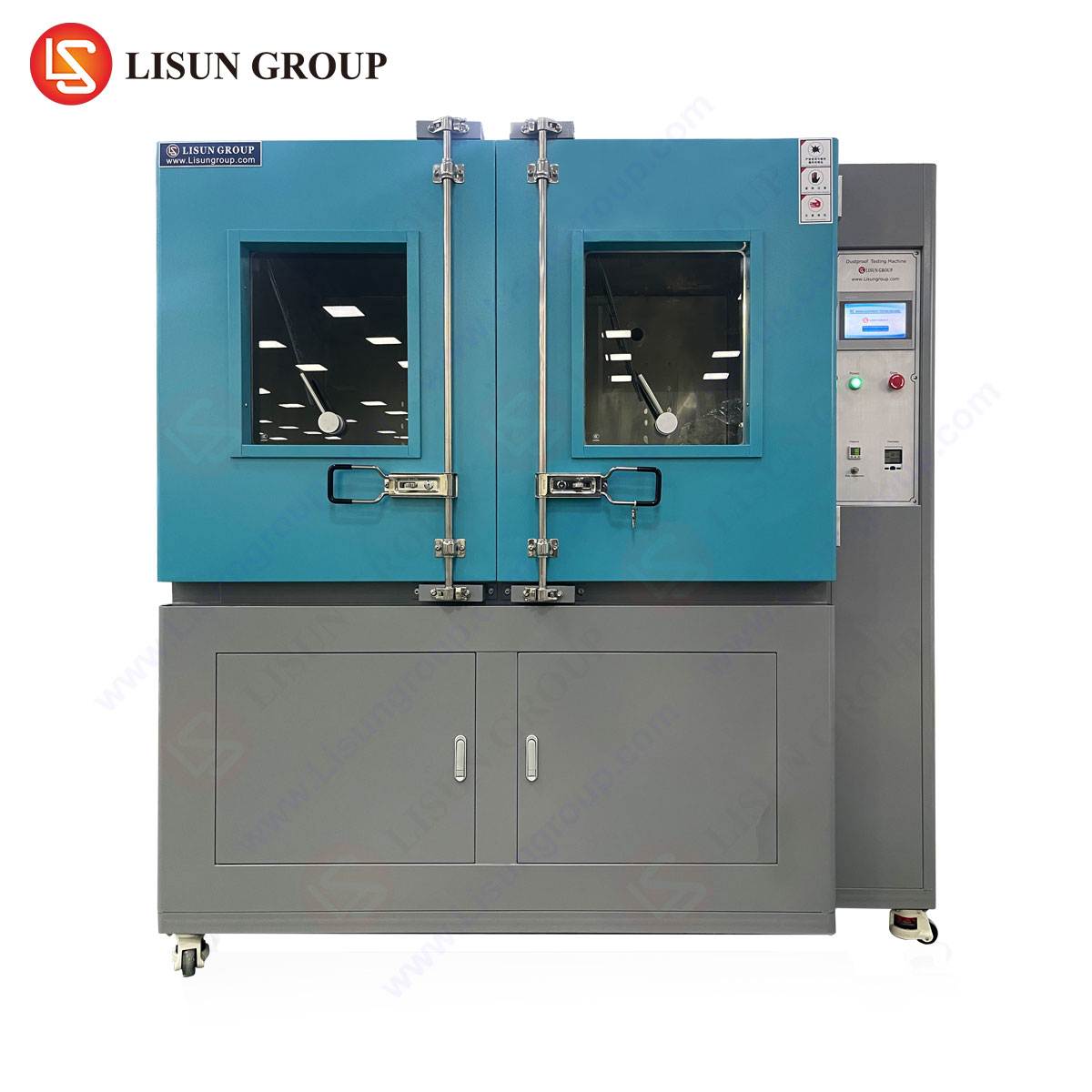
Within the landscape of standardized corrosion testing equipment, the LISUN YWX/Q-010 salt spray test chamber exemplifies the integration of robust design with precise control to meet stringent international standards. This chamber is engineered to deliver the consistent, repeatable exposure conditions mandated by ASTM B117, ISO 9227, and related standards such as JIS Z 2371.
Specifications and Testing Principles: The YWX/Q-010 operates on the proven principle of pressurized atomization. Its core specifications include a standard test volume, typically offered in variants such as 1080L, with an operating temperature range tightly controlled around the standard 35°C NSS test setting. The chamber is constructed from fiber-reinforced polypropylene (PP), a material selected for its excellent thermal stability and inherent resistance to the corrosive salt environment, eliminating a potential source of contamination. The atomization system utilizes a specialized nozzle and a saturated tower (the “Aaron Tower” design) to generate a dense, uniform salt fog with a settling rate that can be calibrated to the required 1-2 ml/80cm²/hr. Integrated, programmable PID temperature controllers manage both the chamber air and the saturated barrel temperatures independently, a critical feature for maintaining proper fog density and preventing droplet evaporation.
Industry Use Cases: The applicability of the YWX/Q-010 spans the breadth of industries where corrosion resistance is a key performance indicator. In Automotive Electronics, it is used to test the conformal coatings on engine control units (ECUs) and sensor connectors. Aerospace and Aviation Components suppliers employ it to qualify anodized layers on aluminum housings and the plating on electrical connectors. For Electrical Components like switches and sockets, the test validates the durability of nickel or chrome plating. Telecommunications Equipment manufacturers rely on it to assess the environmental sealing of outdoor 5G antenna housings. In the Medical Devices sector, it helps evaluate the corrosion resistance of stainless-steel surgical tool surfaces and external housing finishes. Lighting Fixtures, particularly those for outdoor or marine use, have their powder coatings and gasket seals validated against salt fog exposure. The chamber is equally vital for testing Cable and Wiring Systems’ jacketing materials and connector corrosion.
Competitive Advantages: The YWX/Q-010 distinguishes itself through several focused engineering solutions. Its polypropylene construction offers superior longevity and corrosion resistance compared to some PVC-based chambers. The precision of its dual-temperature PID control system ensures exceptional parameter stability over extended test durations, which is fundamental for test reproducibility. User-centric features, such as a large transparent viewing window with internal heating to prevent condensation-obscured observation, and a comprehensive automated water replenishment system for the saturation tower, reduce operational intervention and error. Furthermore, its design emphasizes operational safety and maintenance ease, with corrosion-resistant pneumatic door seals and accessible internal components, minimizing downtime and total cost of ownership.
Specimen Preparation, Exposure, and Evaluation Protocols
The value of an NSS test is wholly dependent on meticulous specimen preparation and a standardized evaluation protocol. Specimens must be clean and free of contaminants; any residual oils, fingerprints, or oxidation can invalidate results. Edges, cut sections, or identification marks that expose substrate material are often sealed with a chemically resistant wax or tape to focus the test on the intended surface, unless the edge performance is under evaluation.
During exposure, specimens are mounted on non-conductive, inert supports at an angle between 15 and 30 degrees from vertical, as specified by the standard, to allow condensate to run off without pooling. Critical to the test’s comparative nature is the inclusion of control specimens with known performance. These controls verify the chamber is operating correctly and provide a benchmark.
Evaluation is predominantly qualitative and visual. Upon completion of the designated test period, specimens are carefully removed, gently rinsed to remove salt deposits, and dried. The assessment focuses on the time to first appearance of white rust (for zinc coatings) or red rust (for steel substrates), the extent of corrosion creepage from a scribed line (for painted panels), the density and distribution of corrosion products, and any evidence of blistering or coating delamination. Quantitative measures, such as creepage distance in millimeters from a scribe, are often used in formal reporting. This evaluation must be conducted promptly after test completion to prevent further “flash” corrosion.
Interpretation, Limitations, and Complementary Test Methods
A paramount principle in utilizing NSS test data is understanding its inherent limitations. The test is an accelerated, cyclic (though constant in condition) laboratory simulation. It does not directly correlate to real-world service life in diverse environments that involve dry-wet cycles, UV exposure, pollution, or mechanical abrasion. A coating that performs well for 500 hours in NSS may fail rapidly in an industrial atmosphere with sulfur dioxide, or vice-versa. Therefore, the test is best used for:
- Comparative Ranking: Selecting between several material or coating options.
- Quality Control: Detecting process deviations, contamination, or inadequate coating thickness.
- Screening: Disqualifying obviously unsuitable materials.
For a more comprehensive corrosion assessment, the NSS test is often part of a larger suite. Cyclic corrosion tests (CCT), such as those defined in ASTM G85 or automotive standards like SAE J2334, which incorporate wet, dry, and humidity phases, often provide better correlation to real-world performance. Other complementary tests include humidity testing (e.g., ASTM D2247), QUV weathering for UV resistance, and Kesternich testing for resistance to sulfur dioxide.
Conclusion
The neutral salt spray test remains an indispensable, standardized tool in the material engineer’s arsenal. Its strength lies in its simplicity, reproducibility, and long history of providing a common language for specifying and verifying corrosion resistance. When deployed with a clear understanding of its principles, rigorous adherence to standards like ASTM B117, and a cognizance of its limitations, it provides invaluable data for driving material selection, improving manufacturing processes, and ensuring product reliability. The evolution of test equipment, as seen in chambers like the LISUN YWX/Q-010, which enhance control, reproducibility, and user safety, continues to support the test’s critical role in safeguarding product integrity across the demanding frontiers of modern industry.
Frequently Asked Questions (FAQ)
Q1: What is the key difference between the Neutral Salt Spray (NSS) test and a Cyclic Corrosion Test (CCT)?
A1: The NSS test exposes specimens to a continuous, static fog of neutral salt solution at a constant temperature. It is a constant-condition test. A CCT, in contrast, subjects specimens to a programmed cycle of different environmental phases, such as salt spray, dry-off, humidity, and sometimes freezing. CCTs are generally considered more representative of real-world service environments, which involve wet-dry cycles, while NSS is superior for fast, comparative quality control and detecting coating porosity.
Q2: Why is the pH of the salt solution so critically controlled in the NSS test, and how is it maintained?
A2: The test is designated “neutral” to standardize the corrosive agent and ensure reproducibility. An acidic or alkaline solution would introduce a different, more aggressive, and variable corrosion mechanism, making results incomparable across labs or over time. The pH is maintained between 6.5 and 7.2 by preparing the solution with pure sodium chloride and distilled/deionized water. It is checked and adjusted, if necessary, using dilute analytical-grade hydrochloric acid or sodium hydroxide.
Q3: For a product like the LISUN YWX/Q-010 chamber, what regular maintenance is required to ensure compliance with ASTM B117?
A3: Critical maintenance tasks include: daily checking and calibration of the salt solution collection rate; regular cleaning of the atomizing nozzles and saturation tower to prevent clogging from salt crystallization; periodic verification and calibration of temperature sensors and controllers; and ensuring the air saturator is filled with clean, distilled water to properly humidity the compressed air. The chamber interior should also be cleaned between tests to prevent cross-contamination.
Q4: Can the NSS test be used to provide a guaranteed service life prediction for a coating in years?
A4: No, it cannot. The NSS test is an accelerated laboratory corrosion test designed for qualitative comparison and quality control. The correlation between test hours and actual years of service is highly variable and depends on the specific real-world environment (marine, urban, industrial, etc.), exposure conditions, and material system. It is incorrect and misleading to claim a direct equivalence such as “500 hours NSS equals 10 years service.”
Q5: In industries like medical devices or aerospace, where testing volumes may be lower but traceability is paramount, what features of a modern test chamber are most important?
A5: For these high-reliability sectors, data integrity and traceability are crucial. Key features include a precise, digital PID temperature control system with stable performance, a built-in data logger that records chamber temperature and test duration for the entire test cycle, and robust construction with materials that prevent chamber-derived contamination. The ability to generate standardized, detailed test reports that can be included in a device’s quality management system (QMS) or regulatory submission is also a significant advantage.