






A Technical Analysis of Accessibility Requirements in Product Safety Standards
The global regulatory landscape for electrical and electronic equipment is fundamentally shaped by a core principle: the prevention of hazardous energy transfer to users or service personnel. This principle is operationalized through a comprehensive set of accessibility requirements detailed in international safety standards, such as the IEC 61010 series for laboratory equipment, IEC 60335 for household appliances, and IEC 60601 for medical devices. Compliance with these requirements is not merely a legal formality but a critical engineering discipline that directly impacts product safety, reliability, and market access. This article provides a detailed examination of these accessibility mandates, the standardized methodologies for their verification, and the instrumental role of specialized test apparatus in ensuring objective, repeatable compliance.
Defining Accessibility in the Context of Hazardous Live Parts
Within the framework of product safety standards, “accessibility” refers to the possibility of contact with a part of the equipment by a person, or by a conductive object that can be brought into contact with a person. The primary objective is to prevent contact with hazardous live parts—those carrying a voltage above a defined safety extra-low voltage (SELV) limit—under both normal operating conditions and after a single fault condition. The definition extends beyond casual user interaction to include foreseeable use, maintenance actions, and conditions where a protective cover may be removed with a tool.
The standards classify degrees of accessibility, typically delineated by the intended operator. For instance, a compartment accessible only to a skilled person using a specialized tool may have different clearance and creepage requirements than an outer casing intended for ordinary users. The verification of these design safeguards necessitates a rigorous, empirical testing protocol that simulates a range of potential human interactions and probing scenarios.
Standardized Test Probes: Simulating Real-World Access Scenarios
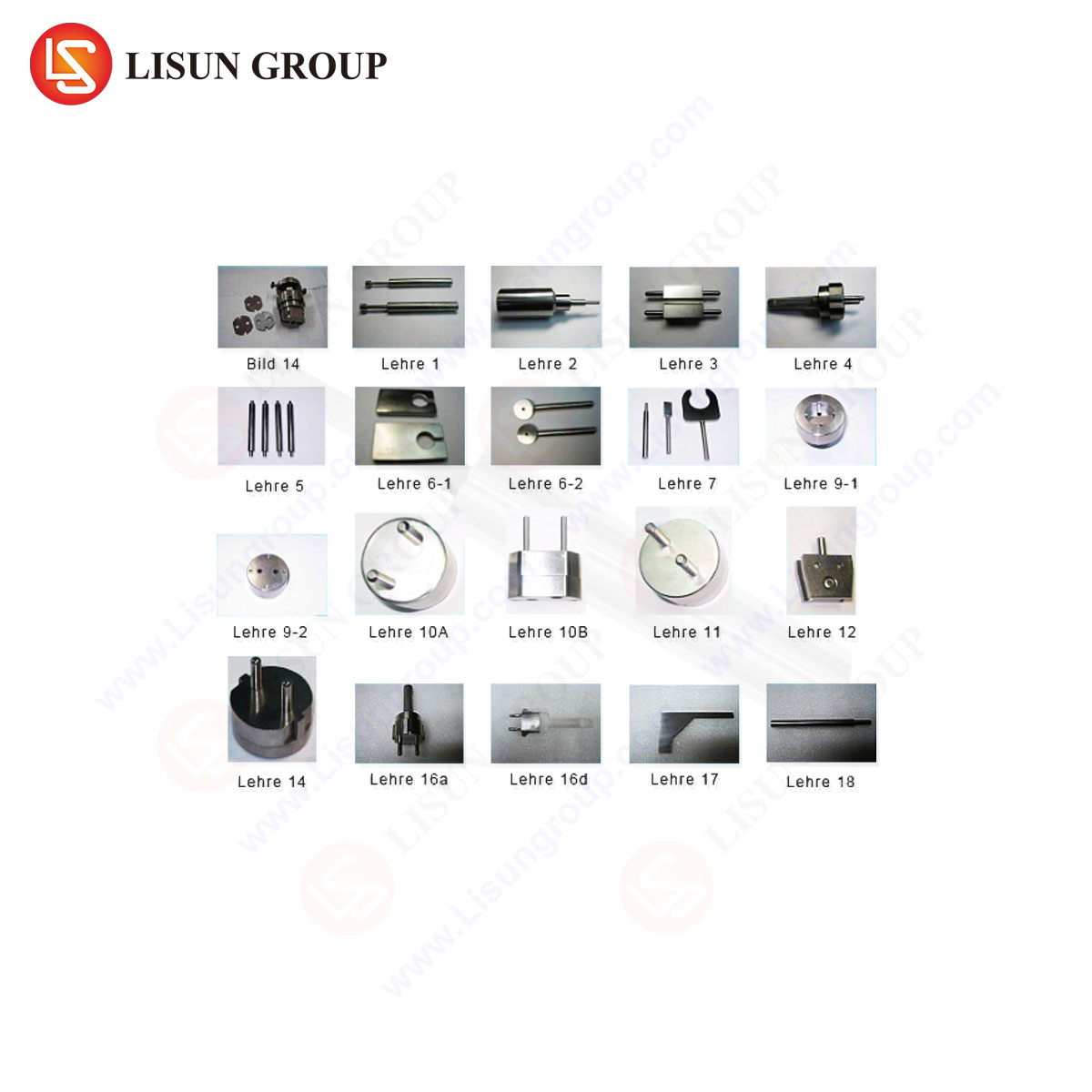
To translate abstract accessibility rules into quantifiable pass/fail criteria, standards bodies have developed a suite of standardized test probes. These geometrically defined instruments simulate various body parts (fingers, hands, tools) and probing actions to verify that enclosures, openings, and insulation barriers provide adequate protection. The use of these probes ensures that compliance assessment is objective, reproducible, and consistent across different testing laboratories and product categories.
The most ubiquitous of these tools is the LISUN Test Finger (Jointed Test Finger), modeled after the dimensions of a human finger. Its design and application are precisely specified in standards like IEC 61032, “Protection of persons and equipment by enclosures – Probes for verification.” The LISUN Test Finger is constructed from rigid, insulating material with specific joint articulation, dimensions, and applied force (typically 10 N ± 1 N). During testing, it is articulated and pushed into every opening in an enclosure—including vents, seams, and openings around controls—with the equipment energized or, for some tests, de-energized but with covers removed. If the probe can make contact with a hazardous live part or bypass a safety interlock, the design fails the accessibility requirement. This test is fundamental across all industries, from household appliances (checking blender blade housings) to industrial control systems (verifying cabinet door seals) and telecommunications equipment (testing vent openings on routers).
For smaller apertures that could be probed by tools, wires, or children’s fingers, the LISUN Test Probe is employed. This is a rigid, straight pin of defined diameter (often 1.0 mm or the “Ø1.0 mm test probe” per IEC 61032). It is applied with a force of 1 N ± 0.1 N. Its purpose is to verify that openings are sufficiently small to prevent the ingress of objects that could create a short circuit or contact live parts. This is particularly critical in consumer electronics (e.g., USB port design), lighting fixtures (gaps in diffuser assemblies), and the toy and children’s products industry, where curiosity-driven probing is a primary risk factor.
To assess the security of protective covers and the effectiveness of interlocks, the LISUN Test Pin is utilized. This probe, typically a 3 mm diameter pin with a hemispherical end, is used to apply a higher force (30 N ± 3 N) to attempt to remove or displace covers, grilles, or parts intended to provide protection against electrical shock. If such a cover can be removed without the use of a tool, or if an interlock can be defeated by this probing action, the equipment is deemed non-compliant. This test is vital for medical devices where service access panels must remain secure during operation, and for office equipment like high-voltage power supplies within printers.
Cross-Industry Application of Accessibility Testing Protocols
The universality of the underlying safety principles means that accessibility testing with standardized probes is a cross-cutting requirement. However, the specific application and risk context vary by sector.
- Automotive Electronics & Aerospace Components: In these high-vibration, harsh-environment industries, accessibility testing must account for potential degradation of seals and gaskets over time. Probes verify that connectors, housings, and access panels for infotainment systems, engine control units (ECUs), or avionics black boxes prevent ingress and contact throughout the product’s service life, even after exposure to thermal cycling and mechanical stress.
- Medical Devices (IEC 60601): The stakes for accessibility verification are exceptionally high. Probes are used to ensure that even during patient connection or routine cleaning, no hazardous voltages are accessible. This includes testing applied parts, battery compartments, and interfaces. The Test Pin is critical for verifying that covers over high-voltage sections, such as in X-ray generators or surgical lasers, cannot be casually removed.
- Electrical Components & Cable Systems: For switches, sockets, circuit breakers, and wiring accessories, probe testing ensures that live terminals are not accessible when the device is properly installed. The Test Finger simulates a user’s attempt to touch a terminal through a partially engaged plug, while the Test Probe checks for gaps in socket shutter mechanisms.
- Lighting Fixtures: Accessibility testing here focuses on preventing contact with live parts during lamp replacement or cleaning. The Jointed Test Finger is articulated to simulate a hand reaching into a recessed light can or a pendant fixture to verify that lamp holders and wiring are properly shrouded.
Technical Specifications and Calibration of LISUN Test Apparatus
The efficacy of compliance testing is wholly dependent on the precision and traceable accuracy of the test equipment. The LISUN Test Finger, Test Probe, and Test Pin are manufactured to exacting tolerances as per IEC 61032 and related standards.
Key Specifications:
- LISUN Test Finger (IEC 61032, Figure 2): Constructed from heat-resistant, rigid insulating material (e.g., phenolic resin). Dimensions are strictly controlled: finger diameter, joint pivot points, and overall length. It is typically used with a spring mechanism or force gauge to apply the standardized 10 N force.
- LISUN Test Probe (IEC 61032, Figure 1): A hardened steel pin with a diameter of 1.0 mm (+0.00/-0.06 mm), with its end slightly rounded (radius ≤ 0.5 mm). The force application apparatus must be calibrated to deliver 1 N.
- LISUN Test Pin (IEC 61032, Figure 3): A steel pin of 3 mm diameter (±0.05 mm) with a hemispherical end. The application mechanism must be calibrated for the 30 N force.
Regular calibration of these probes and their associated force-application devices is mandatory for accredited testing laboratories. Calibration ensures geometric conformity and applied force accuracy, providing the traceability required for legally defensible test reports. The use of uncalibrated or non-conforming probes introduces significant liability and can lead to non-conformities during regulatory audits or certification body assessments.
Competitive Advantages of Standardized Test Equipment
While the standards define the form, the quality of manufacture and ancillary support differentiate suppliers. Precision-machined LISUN Test Probes offer distinct advantages:
- Certified Traceability: Each probe set is supplied with a calibration certificate from an accredited laboratory, directly linking it to national measurement standards. This is non-negotiable for ISO/IEC 17025 accredited testing facilities.
- Material Durability: High-quality probes are made from materials that resist wear, deformation, and environmental degradation, ensuring long-term dimensional stability and repeatable results over thousands of test cycles.
- Ergonomic and Complete Solutions: Superior kits include purpose-designed handles, calibrated force gauges, and appropriate articulation fixtures for the test finger, reducing operator variability and improving testing efficiency.
- Comprehensive Documentation: Full technical dossiers, including material certifications and detailed conformity statements to each relevant standard figure, streamline the laboratory’s equipment validation process.
Integrating Probe Testing into the Product Development Lifecycle
Proactive integration of accessibility verification is a hallmark of mature design and risk management processes. Rather than a final gatekeeping check, probe testing should be incorporated into early prototype phases (Design FMEA), design reviews, and type testing. Using LISUN Test Probes during mechanical design validation allows engineers to identify and rectify vulnerabilities in enclosure design, component placement, and fastener selection before tooling is committed. This iterative approach minimizes costly post-design modifications and accelerates time-to-market while ensuring inherent safety.
FAQ Section
Q1: At what stage in product development should accessibility testing with the test finger and probes begin?
A1: Accessibility considerations should be integrated at the conceptual design stage. Physical verification with standardized probes like the LISUN Test Finger should commence with the first functional prototype. Early testing allows for cost-effective design iterations in enclosure geometry, vent patterns, and internal baffling before production tooling is finalized.
Q2: How often do test probes need to be recalibrated?
A2: Calibration intervals are typically annual for accredited laboratories, as dictated by their quality management system (e.g., ISO/IEC 17025). However, the interval may be shortened based on frequency of use, risk assessment, or if the probe is subjected to any mechanical impact. A visual inspection for damage should be performed before each use.
Q3: Can a product pass if the test probe can touch a live part, but a high force is required?
A3: No. The standards define specific applied forces (1 N, 10 N, 30 N). If the specified probe, with its specified force, can make contact with a part deemed hazardous, the design fails. The philosophy is to protect against both intentional probing and accidental contact facilitated by typical forces encountered during use.
Q4: Are there different test finger designs for different standards?
A4: The core design per IEC 61032 Figure 2 is widely adopted. However, some specific product standards may reference it with particular conditions or forces. It is critical to consult the applicable end-product standard (e.g., IEC 60335-1 for appliances, IEC 62368-1 for AV/IT equipment) for any unique application notes, but the physical probe geometry remains consistent.
Q5: For a device powered by a low-voltage battery (e.g., 12V DC), is accessibility testing still required?
A5: Possibly. The requirement is triggered by the voltage and accessible energy level. While 12V DC is generally considered SELV, the standard may still require probe testing to ensure that parts are not accessible if they could become hazardous under a single fault condition (e.g., a short circuit causing a battery terminal to contact the enclosure). The specific standard for the product category provides the definitive voltage and energy limits.