





Understanding UL 94 Flammability Ratings: A Foundational Framework for Material Safety Compliance
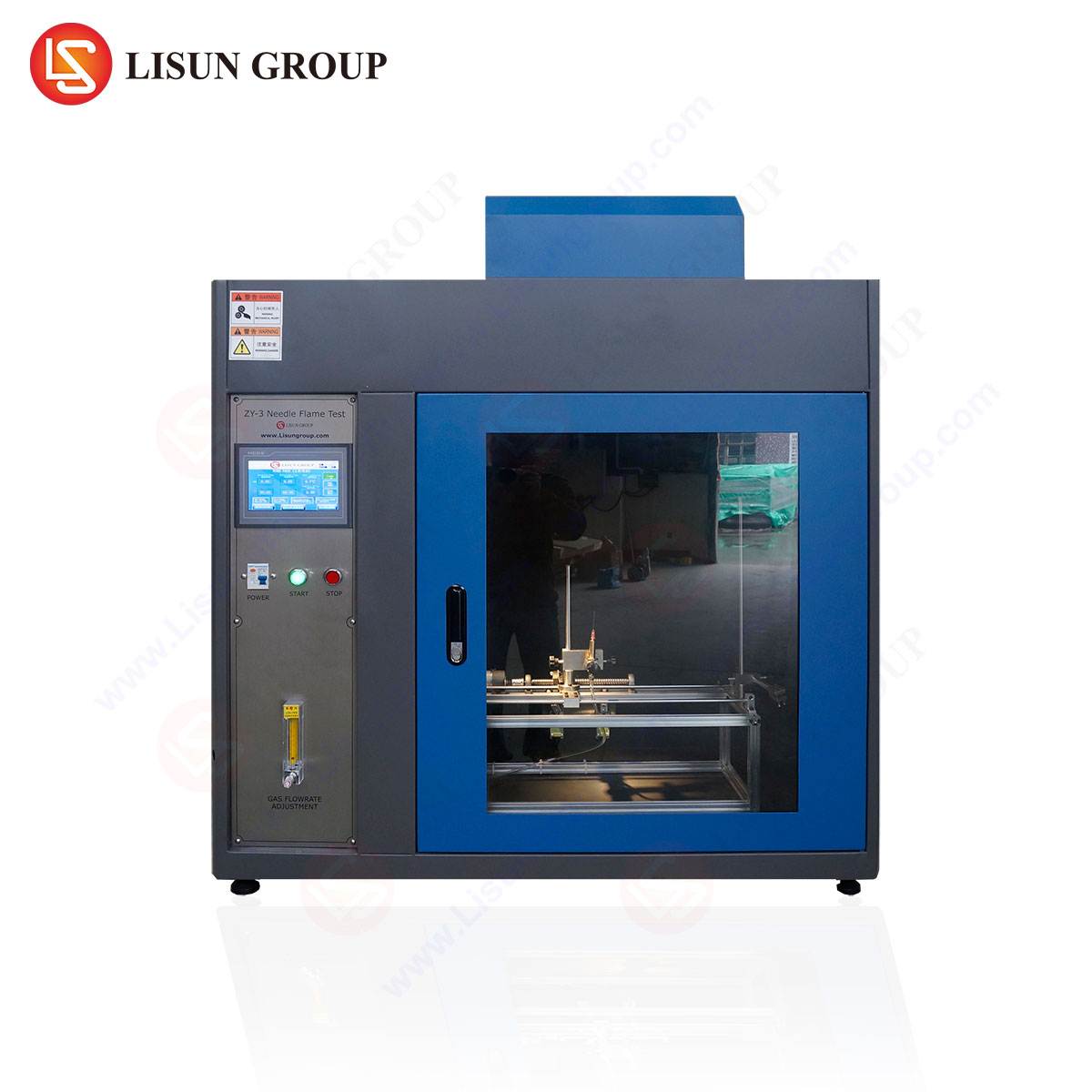
In the design and manufacture of products across a vast spectrum of industries, the selection of materials extends far beyond mechanical strength and cost considerations. The inherent flammability of polymeric materials—ubiquitous in enclosures, structural components, and insulating parts—poses a significant fire risk. To systematically evaluate and classify this risk, the UL 94 standard, “Tests for Flammability of Plastic Materials for Parts in Devices and Appliances,” has become the globally recognized benchmark. This technical article provides a comprehensive analysis of the UL 94 flammability rating system, its testing methodologies, and its critical application in ensuring product safety and regulatory compliance. Furthermore, it examines the instrumental role of specialized testing equipment, such as the LISUN ZY-3 Needle Flame Test apparatus, in executing these precise evaluations.
The Regulatory Imperative for Standardized Flammability Testing
The proliferation of electrical and electronic equipment in residential, commercial, and industrial environments has necessitated rigorous safety standards to mitigate fire hazards. A primary ignition source within such equipment can be an internal electrical fault—a short circuit, an overloaded connection, or a failing component—which may generate sufficient thermal energy to ignite adjacent polymeric materials. Once ignited, these materials can propagate flame, release toxic gases, and contribute to a catastrophic failure. Regulatory bodies, insurance underwriters, and original equipment manufacturers (OEMs) therefore mandate compliance with flammability standards as a non-negotiable aspect of product certification. UL 94, developed by Underwriters Laboratories, provides a reproducible, comparative method for assessing a material’s propensity to burn and self-extinguish when the primary ignition source is removed. Its ratings are routinely specified in the material requirements for components within Electrical and Electronic Equipment, Household Appliances, and Automotive Electronics, forming a foundational element of product safety engineering.
Deciphering the UL 94 Rating Hierarchy: From HB to V-0
The UL 94 standard comprises several distinct test procedures, each yielding a specific classification. These ratings are hierarchical, indicating progressively superior flame retardancy. It is crucial to understand that a UL 94 rating is assigned to a specific material formulation and color in a defined thickness, as performance is highly dependent on these parameters.
The most fundamental classification is the Horizontal Burning (HB) Test. In this procedure, a bar specimen is supported horizontally. A specified flame is applied to its free end for 30 seconds or until the flame front reaches a reference mark. The test measures the burn rate. A material achieves an HB rating if the burn rate does not exceed 40 mm per minute for thicknesses below 3 mm, or 75 mm per minute for thicknesses of 3 mm or greater. This rating indicates a slow-burning material under mild fire conditions and is often considered a minimum threshold for many applications.
For applications requiring a higher degree of safety, the Vertical Burning Tests are employed. These are more severe, as they assess a material’s ability to self-extinguish when oriented vertically, which favors flame propagation. The primary classifications derived from these tests are V-2, V-1, and V-0, with V-0 representing the highest performance level in this category.
- V-2: After two 10-second flame applications, burning ceases within 30 seconds. However, flaming drips are permitted, which may ignite a cotton indicator pad placed below the specimen.
- V-1: After two 10-second flame applications, burning ceases within 30 seconds. Flaming drips are allowed, but they must not ignite the cotton indicator pad.
- V-0: After two 10-second flame applications, burning ceases within 10 seconds. Flaming drips are permitted, provided they do not ignite the cotton pad.
Two additional, more stringent classifications exist:
- 5VA / 5VB: These are assessed via the 500-Watt (125 mm) Vertical Flame Test. A large, high-energy flame is applied to both a bar specimen and a plaque specimen. A 5VA rating (the highest in the UL 94 hierarchy) requires that the bar specimen stops burning within 60 seconds after five flame applications, with no drips, and that the plaque specimen does not develop a hole. The 5VB rating allows for hole formation in the plaque.
- VTM-0, VTM-1, VTM-2: These classifications are designed for thin, flexible plastic films (Thin Material classifications) using a modified vertical test setup.
The selection of a target UL 94 rating is a critical design decision, influenced by the component’s proximity to ignition sources, its function, and the overarching safety standards for the end product (e.g., IEC 62368-1 for audio/video and ICT equipment, or ISO 6722 for Automotive Electronics wiring).
Simulating Fault Conditions: The Role of the Needle Flame Test (IEC 60695-11-5)
While standard UL 94 vertical and horizontal tests simulate exposure to a small flame, certain fault conditions in equipment—such as a failing resistor, a poor connection, or an overloaded PCB trace—can produce a very small, localized, high-temperature heat source resembling a needle flame. To assess a material’s resistance to such specific ignition threats, the Needle Flame Test, standardized as IEC 60695-11-5, is utilized. This test is often referenced in product family standards for Household Appliances, Industrial Control Systems, and Telecommunications Equipment.
The test employs a burner producing a flame with a nominal thermal power of 1W, generated from butane gas. The needle-like flame is applied to the test specimen, typically at an angle, for a predetermined period (e.g., 30 seconds). The criteria for evaluation include:
- The duration of flaming and glowing combustion after flame removal.
- Whether flaming or glowing particles fall from the specimen.
- The extent of damage (burned length) to the specimen.
- Whether a tissue-paper indicator placed below the specimen ignites from falling debris.
Compliance with the needle flame test is a distinct requirement from UL 94 V ratings, though both aim to evaluate fire safety. It addresses a different, and in some cases more probable, real-world ignition scenario, particularly for Electrical Components like switches and sockets, and internal barriers within Office Equipment and Consumer Electronics.
Instrumentation for Precision: The LISUN ZY-3 Needle Flame Test Apparatus
Accurate and reproducible flammability testing demands equipment of exceptional precision, reliability, and adherence to strict dimensional and operational parameters outlined in the standards. The LISUN ZY-3 Needle Flame Test Apparatus is engineered specifically to meet the exacting requirements of IEC 60695-11-5, IEC 60695-2-2, and related standards.
The apparatus’s core function is to generate and apply a consistent 1W (±0.1W) needle flame. Its design incorporates critical features to ensure test integrity:
- A precision burner assembly with a nozzle of specified diameter (0.5mm ±0.1mm) to produce the correct flame geometry.
- A calibrated gas supply system (typically butane, >95% purity) with fine control valves to regulate flow rate, directly influencing the flame’s thermal output and height.
- A robust specimen holder and a moving trolley system that allows for precise, repeatable positioning of the flame relative to the test specimen, as per the standard’s specified application angle and distance.
- A built-in flame height gauge (typically 12mm ±1mm) for daily verification, a fundamental calibration step before any test sequence.
Industry Use Cases and Competitive Advantages
In practice, the LISUN ZY-3 is deployed in the quality assurance and R&D laboratories of material suppliers and OEMs across safety-critical sectors. A Medical Device manufacturer may use it to validate the housing material of a portable ventilator against internal electrical fault propagation. An Aerospace and Aviation Components supplier might test the insulation of wire harnesses to ensure they do not propagate a flame from a localized short circuit. In the Lighting Fixtures industry, the apparatus can assess the resistance of LED driver housing materials to ignition from a failing capacitor.
The competitive advantages of the LISUN ZY-3 lie in its construction and design philosophy. It is built with durable, heat-resistant materials to withstand repeated testing. Its user interface is designed for straightforward operation while allowing for precise control of test parameters. Furthermore, its design emphasizes reproducibility—a non-negotiable requirement for certification testing—by minimizing variables in flame application and specimen positioning. This reliability helps laboratories reduce test scatter, accelerate material qualification cycles, and generate data that is trusted by certification bodies globally.
Cross-Industry Application of Flammability Ratings
The specification of UL 94 ratings and compliance with tests like the needle flame test is pervasive. The following table illustrates typical requirements across industries:
| Industry | Component Example | Typical UL 94 Requirement | Rationale |
|---|---|---|---|
| Electrical Components | Circuit breaker housing, connector bodies | V-0 or 5VA | Must contain arc faults and prevent external fire propagation. |
| Automotive Electronics | Engine control unit (ECU) housing, battery module covers | V-0 | Mitigates fire risk from electrical faults in a high-vibration, fuel-present environment. |
| Telecommunications Equipment | Server rack components, fiber-optic splice trays | V-1 or V-0 | Protects critical infrastructure; limits fire spread in data centers. |
| Household Appliances | Internal wiring duct, motor end caps | HB or V-2 (Needle Flame may apply) | Prevents ignition from sustained overloads or component failures. |
| Lighting Fixtures | LED driver enclosure, diffuser lenses | V-2 or better | Addresses heat buildup and potential electrical faults in enclosed spaces. |
| Medical Devices | Housing for patient-connected monitors | V-1 / V-0, often with low smoke toxicity | Ensures safety in oxygen-enriched environments and during patient transport. |
The Material Qualification Process and Testing Nuances
Achieving a desired flammability rating is not a mere pass/fail exercise but a complex interaction between material science and testing protocol. Material formulators often incorporate flame-retardant additives—such as halogenated compounds, phosphorous-based systems, or mineral fillers like aluminum trihydroxide—to interrupt the combustion process. However, these additives can affect mechanical properties, color, and cost.
The testing process itself requires meticulous attention to detail. Specimens must be conditioned at standard temperature and humidity (e.g., 23°C ±2°C and 50% ±5% RH for 48 hours minimum) prior to testing, as moisture content can significantly alter burning characteristics. The calibration of the test flame, both for UL 94 and needle flame tests, is a daily necessity. For the UL 94 vertical test, a copper calorimeter is used to verify the flame’s heat output. For the needle flame test, the physical dimensions of the flame are verified. Furthermore, the afterglow time—a period of non-flaming combustion—is a critical measured parameter in V ratings that is sometimes overlooked.
Limitations and Complementary Standards
While UL 94 is indispensable, it is not a comprehensive fire hazard assessment. It is a small-scale material screening test. It does not evaluate factors such as heat release rate, smoke density, or toxicity of combustion gases—all critical in a full-scale fire. For Cable and Wiring Systems, different standards like IEC 60332 (flame propagation) are paramount. For building materials, ASTM E84 (Steiner Tunnel Test) assesses surface burning characteristics.
Therefore, a complete safety engineering approach uses UL 94 as a first-order filter for material selection, complemented by product-level tests that evaluate the integrated system’s response to fire, and often by additional material tests for smoke and toxicity, especially in Aerospace and Aviation and mass transit applications.
Frequently Asked Questions (FAQ)
Q1: Can a material have both a UL 94 V-0 rating and a needle flame test certification?
Yes, these are separate evaluations. A material may be formulated to pass both tests. A V-0 rating is achieved through the standard UL 94 vertical burning test, while needle flame test certification is granted upon successful compliance with IEC 60695-11-5. They are often specified concurrently in technical datasheets for high-reliability applications.
Q2: Why is specimen thickness so critical when reporting a UL 94 rating?
Flame retardancy is often a function of material mass and geometry. A thicker specimen has a greater cross-section, which can act as a heat sink, absorbing more thermal energy before reaching its pyrolysis temperature. Consequently, a material may achieve a V-0 rating at 3.0mm thickness but only a V-2 or HB rating at 1.5mm. All UL 94 ratings must be reported with the corresponding thickness.
Q3: How often should a LISUN ZY-3 Needle Flame Test Apparatus be calibrated, and what does calibration involve?
A formal metrological calibration should be performed annually or as per the laboratory’s quality procedure. However, operational verification is required before each testing session. This involves checking the gas flow rate, ensuring the burner nozzle is clean and unobstructed, and using the built-in gauge to verify that the flame height is precisely 12mm ±1mm when the burner is in the specified test position. Regular maintenance of the gas supply system and moving parts is also essential for long-term accuracy.
Q4: In the needle flame test, what is the significance of the tissue paper indicator?
The tissue paper, placed a specified distance below the test specimen, serves as an indicator for the hazard of burning or glowing droplets or particles. Ignition of the tissue simulates the potential for a small initial fault to ignite other, more readily flammable materials (like dust, wire insulation, or debris) that may be present below the component in an actual device, thereby escalating the fire.