




Understanding UL Water Spray Test Standards: A Technical Analysis of Ingress Protection Validation
The reliable operation of electrical and electronic equipment across diverse environments is fundamentally contingent upon its ability to resist the ingress of water. Premature failure, safety hazards, and compromised functionality are direct consequences of inadequate moisture protection. To standardize the evaluation of this critical characteristic, Underwriters Laboratories (UL) has established a rigorous suite of water spray test standards, primarily under the UL 50 and UL 50E series for enclosures, which harmonize with the broader International Electrotechnical Commission (IEC) 60529 classification system. These tests provide a quantifiable, repeatable methodology for assessing an enclosure’s degree of protection against water exposure, translating qualitative concerns into empirical, compliance-driven data. For manufacturers across sectors—from automotive electronics to medical devices—adherence to these standards is not merely a regulatory checkpoint but a core component of product integrity and market credibility.
The Framework of IEC 60529 and Its UL Adoption
The foundational lexicon for ingress protection is defined by IEC 60529, which establishes the International Protection (IP) code. This alphanumeric designation, expressed as IPXY, provides a concise summary of a product’s defensive capabilities. The first numeral (X) denotes protection against solid foreign objects, ranging from tools and wires to dust particles. The second numeral (Y), which is the focal point of water spray testing, specifies protection against harmful effects of water ingress. UL standards, particularly UL 50 (for non-hazardous location enclosures) and UL 50E (for electrical equipment enclosures), integrate these IEC principles while incorporating specific requirements for the North American market. The alignment ensures global relevance while satisfying regional safety certification prerequisites. Key water-related IP ratings validated through spray testing include IPX1 through IPX6 for directed water jets and IPX7 through IPX9K for more severe conditions like immersion and high-pressure, high-temperature jetting.
Deconstructing UL Water Spray Test Methodologies
UL water spray tests simulate a spectrum of real-world aqueous exposures through controlled laboratory conditions. Each IP rating corresponds to a distinct test procedure with precise parameters for nozzle type, water flow rate, pressure, duration, and specimen orientation.
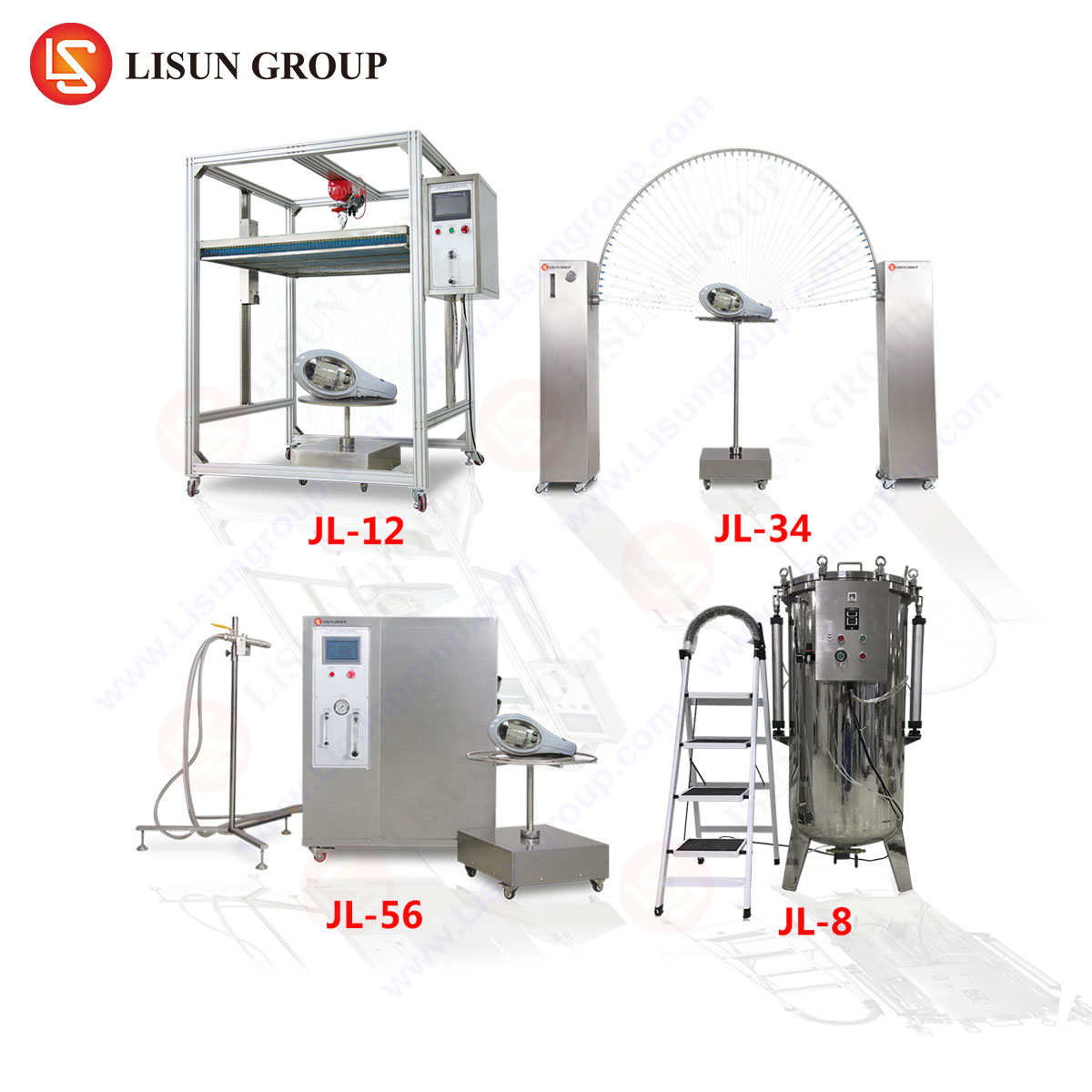
IPX3 and IPX4: Oscillating and Spray Nozzle Tests. IPX3 testing evaluates protection against water spray falling at an angle up to 60° from vertical. The equipment is subjected to oscillating tube or sprinkler nozzle-based spray for a minimum of 5 minutes per square meter (minimum 10 minutes total). IPX4 raises the bar, requiring protection against water splashed from all directions. This is typically performed using a spray nozzle with a 0.4mm orifice, a flow rate of 10 liters per minute, and a pressure of approximately 80-100 kN/m², with the test unit placed on a turntable for even exposure over 10 minutes. These tests are critical for household appliances (e.g., kitchen blenders), lighting fixtures intended for damp locations, and office equipment such as printers in open-plan environments.
IPX5 and IPX6: Jet and Powerful Jet Nozzle Tests. These tests employ direct, high-velocity water jets. IPX5 utilizes a 6.3mm nozzle diameter at a distance of 2.5-3 meters, delivering 12.5 liters per minute at 30 kN/m² for at least 3 minutes per square meter. IPX6 is more severe, using a 12.5mm nozzle at the same distance, delivering 100 liters per minute at 100 kN/m². These simulate conditions such as high-pressure wash-down in industrial settings or driving rain in maritime or automotive electronics applications (e.g., under-hood control units). Industrial control systems and enclosures for telecommunications equipment in exposed locations frequently require these ratings.
IPX7 and IPX8: Temporary and Continuous Immersion. While not spray tests per se, they represent the upper echelon of water protection. IPX7 specifies temporary immersion in 1 meter of water for 30 minutes. IPX8 involves continuous immersion under conditions specified by the manufacturer (e.g., greater depth or longer duration). These are paramount for medical devices intended for sterilization, wearable electronics, and submersible cable and wiring systems connectors.
IPX9K: High-Pressure, High-Temperature Spray. This stringent test, detailed in standards like IEC 60529 and often incorporated into automotive specifications (e.g., DIN 40050-9), subjects the enclosure to close-range, high-pressure (8,000-10,000 kPa), high-temperature (80°C) water jets from four angles. It is designed to replicate the extreme cleaning processes found in industrial food processing, military, and heavy-duty automotive and aerospace and aviation components manufacturing.
Instrumentation for Compliance: The Role of Specialized Test Chambers
Accurate, repeatable validation of these standards necessitates precision-engineered test equipment. Chambers must provide exacting control over flow rate, pressure, nozzle distance, sample movement, and, for IPX9K, water temperature. The integration of programmable logic controllers (PLCs), digital flow meters, and precision pressure regulators is essential to eliminate variables and ensure test integrity.
Case in Point: The LISUN JL-XC Series Multi-Function Waterproof Test Chamber
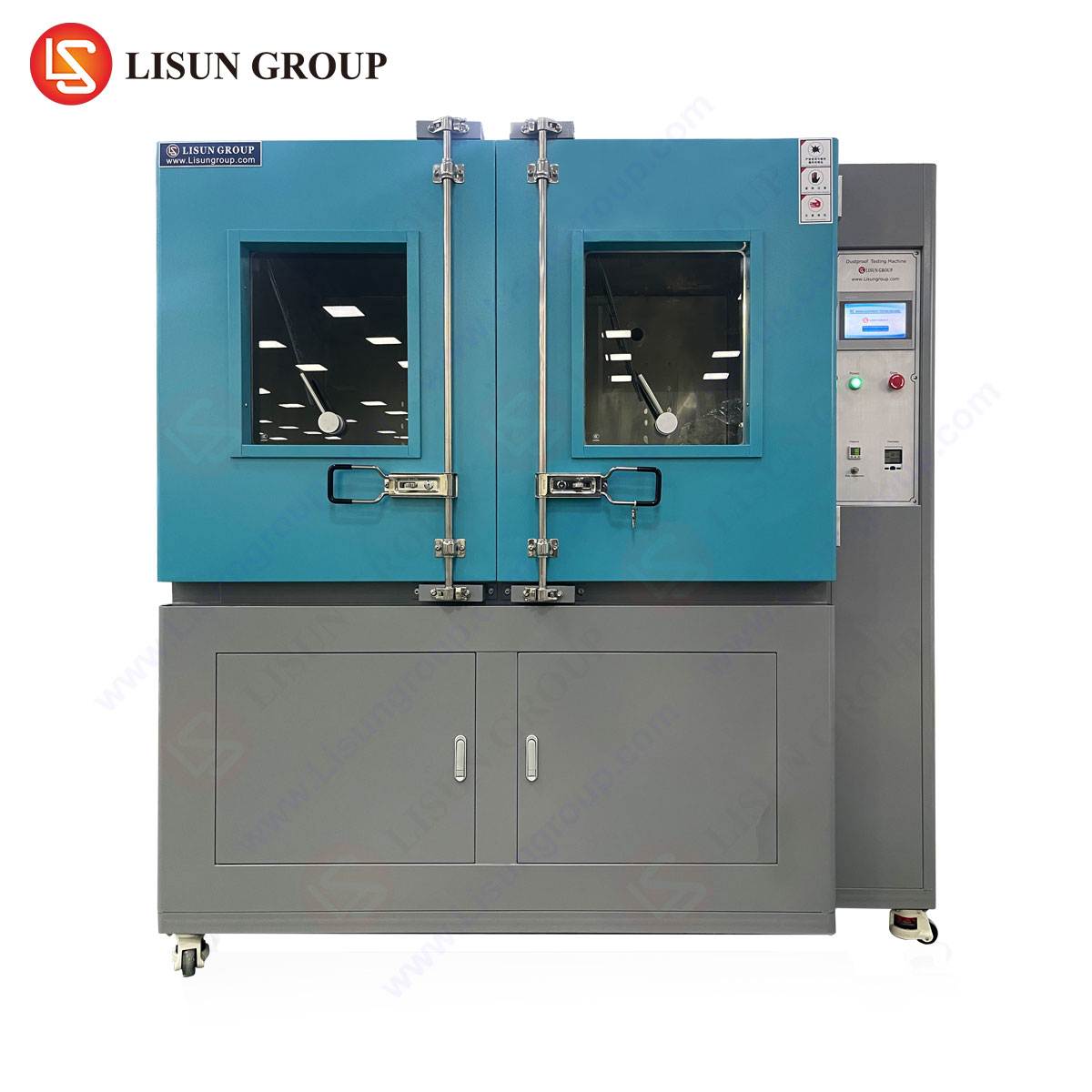
For laboratories and quality assurance departments requiring comprehensive testing capability across multiple IP ratings, integrated systems like the LISUN JL-XC Series offer a streamlined solution. This chamber is engineered to perform a wide range of tests, from IPX1 to IPX9K, within a single, unified platform, thereby optimizing floor space and operational efficiency.
Specifications and Testing Principles: The JL-XC Series typically features a stainless-steel test chamber with a reinforced glass observation window. It incorporates a modular nozzle system, allowing for quick changeover between test types. A high-precision rotary table, with adjustable speed, ensures uniform exposure for IPX4 and similar tests. For IPX5/IPX6, it integrates dedicated pump systems and pressure gauges to maintain the required jet consistency. The IPX9K module includes a separate high-pressure pump, water heating and temperature control system, and a robotic or manual arm to guide the 0-degree, 30-degree, 60-degree, and 90-degree nozzle spray patterns at a distance of 100-150mm from the test specimen. The core testing principle hinges on its closed-loop feedback systems, which constantly monitor and adjust water pressure and flow to remain within the strict tolerances mandated by UL and IEC standards.
Industry Use Cases: The versatility of the JL-XC Series makes it applicable across the listed industries. An electrical components manufacturer can use it to validate the IPX4 rating of a new line of outdoor-rated switches and sockets. A producer of automotive electronics can sequentially test a sensor housing to IPX6 (for underbody splash) and IPX7 (for accidental submersion in a puddle). Lighting fixture developers can verify IP65 ratings for outdoor luminaires. In medical device manufacturing, it can test the seals of a portable diagnostic device against splashing (IPX4) or even more rigorous cleaning protocols.
Competitive Advantages: The primary advantage of such an integrated system is testing comprehensiveness and efficiency. Eliminating the need for multiple, single-purpose test stations reduces capital expenditure, conserves laboratory space, and simplifies operator training. Furthermore, the centralized control system, often featuring a touch-screen HMI (Human-Machine Interface), enhances repeatability by storing precise test parameters for each standard. Robust data logging functions provide auditable trails for certification bodies like UL, Intertek, or TÜV. The chamber’s construction from corrosion-resistant materials ensures long-term reliability despite constant exposure to water and varying pressures.
Data Integrity and Standard References in Test Reporting
Credible testing generates quantifiable data. A comprehensive test report will reference the exact standard (e.g., UL 50E, Clause 7.3 for IPX5), detail the test parameters (nozzle diameter, pressure, flow rate, duration, sample orientation), and document environmental conditions. Pass/fail criteria are strictly defined: after testing, the enclosure is inspected internally for any trace of water ingress. For most IPX1-X6 tests, no water is permitted to enter in quantities that could interfere with normal operation or impair safety. For immersion tests, ingress is allowed but must not occur in harmful amounts.
Table 1: Summary of Key UL/IEC Water Spray Test Parameters
| IP Rating | Test Method | Nozzle/Setup | Water Flow/Pressure | Duration | Typical Application Focus |
| :— | :— | :— | :— | :— | :— |
| IPX3 | Oscillating Spray | Oscillating tube or sprinkler | 0.07 l/min per hole (tube) | 10 min min. | Outdoor consumer electronics, sheltered lighting |
| IPX4 | Splash from All Directions | Spray nozzle, turntable | 10 l/min @ ~80-100 kPa | 10 min | Household appliances, indoor telecom equipment |
| IPX5 | Water Jet | 6.3mm nozzle, 2.5-3m distance | 12.5 l/min @ 30 kPa | 3 min per m² | Industrial control panels, wash-down areas |
| IPX6 | Powerful Water Jet | 12.5mm nozzle, 2.5-3m distance | 100 l/min @ 100 kPa | 3 min per m² | Marine electronics, heavy-duty automotive |
| IPX9K | H/P, H/T Spray | 4-angled, 0.8mm nozzle, 0.1-0.15m distance | 14-16 l/min @ 8-10 MPa, 80°C | 30 sec per angle | Engine components, aerospace parts, industrial machinery |
Strategic Implications for Product Design and Certification
Integrating UL water spray test requirements into the design phase is a strategic imperative. Engineers must consider gasket design, sealant application, venting strategies (using hydrophobic membranes), and the structural integrity of joints and seams. Material selection is critical, as prolonged exposure to water can lead to corrosion, galvanic reactions, or degradation of plastics. For electrical and electronic equipment, proper creepage and clearance distances must be maintained even after potential ingress. The certification process itself, often involving witness testing by a UL field engineer, demands that the manufacturer’s test equipment—such as a JL-XC Series chamber—be precisely calibrated and its methodology thoroughly documented to ensure the results are recognized by the certification body.
Frequently Asked Questions (FAQ)
Q1: Can a product rated IPX7 also be assumed to meet the requirements for IPX5?
No. The IP code ratings are not cumulative. IPX7 (immersion) and IPX5 (water jet) test for fundamentally different types of water ingress. A product designed with seals that withstand static water pressure during immersion may fail when subjected to the high-velocity, focused jet of an IPX5 test, which can force water through microscopic gaps. A product requiring both protections must be independently tested and dual-rated (e.g., IP65/IP67).
Q2: What is the critical calibration requirement for a multi-function chamber like the JL-XC Series when switching between IPX5 and IPX9K tests?
The most critical calibrations involve the pressure and flow control systems. The IPX5 test operates at relatively low pressure (≈30 kPa) and moderate flow, while IPX9K requires extremely high pressure (8-10 MPa) and precise temperature control (80°C). The chamber’s systems must be calibrated to ensure accurate, stable delivery of these disparate conditions. Regular calibration of the pressure transducers, flow meters, and temperature sensors against traceable national standards is mandatory for maintaining test validity.
Q3: How is a “pass” determined for an IPX4 test on a complex device like a medical ventilator?
The test specimen is operated in its typical mounting orientation on the turntable inside the spray chamber. After the 10-minute test cycle, the unit is carefully inspected internally without disassembly that could introduce new water. The pass/fail criterion is functional and safety-oriented: no water ingress is allowed that would either cause a malfunction (e.g., short a circuit on the control board) or create a safety hazard (e.g., bridge isolation boundaries). A few droplets on an external, non-critical internal surface with no path to live parts may be acceptable per the standard’s interpretation, but any ingress into sealed electrical compartments constitutes a failure.
Q4: For automotive lighting (e.g., headlamps), which IP rating is typically required, and what does the test simulate?
Automotive forward lighting typically requires at least IP6X (dust-tight) and IPX7 or IPX9K. IPX7 protects against temporary immersion during flooding or heavy weather. IPX9K is increasingly specified to ensure the housing can withstand the high-pressure, hot-water jet washes found in modern automated car washes. The test simulates the direct, close-range impact of these cleaning jets on lens seals and housing joints.
Q5: What is the primary advantage of using an integrated test chamber over building multiple custom test setups?
Beyond space and cost savings, the paramount advantage is procedural consistency and data integrity. An integrated system like the JL-XC Series uses a unified control platform and sample mounting system. This reduces inter-test variability introduced by moving the specimen between different setups operated by different technicians. All test parameters and results are logged in a consistent format, creating a more robust and defensible data package for quality audits and certification submissions.