




Advancements in Water Quality Monitoring Through Spectroscopic Analysis: Principles, Applications, and Integrated Testing Solutions
Introduction to Spectroscopic Water Quality Assessment
The accurate determination of water quality parameters is a critical requirement across numerous industrial, municipal, and environmental sectors. Traditional analytical methods, while reliable, often involve time-consuming wet chemistry procedures, reagent use, and delayed results. Spectrometer technology has emerged as a transformative solution, enabling rapid, non-destructive, and often continuous monitoring of key water quality indicators. This technical article examines the underlying principles of spectroscopic water quality analysis, its deployment across diverse industries, and the integration of robust testing instrumentation, with a specific focus on the LISUN JL-XC Series waterproof test chambers. These chambers provide the essential environmental simulation required to validate the performance and reliability of spectroscopic sensors and associated electronic systems under extreme humidity and water exposure conditions.
Fundamental Principles of Absorption and Emission Spectroscopy in Aqueous Matrices
At its core, spectroscopic water quality monitoring exploits the interaction between electromagnetic radiation and the molecular or ionic constituents within a water sample. The primary modalities employed are ultraviolet-visible (UV-Vis) absorption spectroscopy and fluorescence spectroscopy.
In UV-Vis absorption, light is passed through a flow cell or sample cuvette. Specific analytes, such as nitrate (NO₃⁻), nitrite (NO₂⁻), organic compounds exhibiting chromophores, and certain metals, absorb light at characteristic wavelengths. The degree of absorption, quantified by the Beer-Lambert Law, is directly proportional to the concentration of the analyte. For instance, nitrate exhibits a strong absorption peak in the ultraviolet range around 220 nm, while dissolved organic matter (DOM) absorbs broadly across the UV spectrum.
Fluorescence spectroscopy, particularly for measuring biochemical oxygen demand (BOD) surrogates and organic pollutants, involves exciting molecules with a specific wavelength of light and measuring the emitted light at a longer wavelength. Certain organic compounds, like aromatic hydrocarbons and humic acids, exhibit natural fluorescence, providing a sensitive fingerprint for contamination events.
Modern spectrometer-based analyzers utilize high-resolution diffraction gratings or diode arrays to capture full spectra, allowing for the simultaneous quantification of multiple parameters from a single scan. Advanced algorithms, including multivariate calibration and chemometric modeling, deconvolve overlapping spectral features to deliver precise concentration data for complex water matrices.
Critical Water Quality Parameters Quantified via Spectroscopic Methods
Spectrometer systems are configured to target a suite of parameters vital for process control, regulatory compliance, and environmental protection.
- Total Organic Carbon (TOC) and Chemical Oxygen Demand (COD): While not directly measured by a single spectrum, UV absorption at 254 nm (UV₂₅₄) has been strongly correlated with TOC and COD in many water types, serving as a real-time surrogate. Specific spectral algorithms can be developed for different effluent streams to improve accuracy.
- Nitrate and Nitrite: Direct UV absorption provides real-time, reagent-free monitoring of these nutrients, crucial for wastewater treatment nutrient removal processes and protecting receiving waters from eutrophication.
- Turbidity and Suspended Solids: Although often measured by nephelometry, spectral scattering data across multiple wavelengths can provide enhanced information on particle size distribution and differentiate between organic and inorganic suspended matter.
- Specific Ions and Metals: Colored metal complexes (e.g., hexavalent chromium) or ions with direct UV absorption (e.g., bromine, ozone) can be monitored continuously. Some systems incorporate reagent addition to form measurable complexes for metals like iron or aluminum.
- Oil and Hydrocarbon Contamination: Fluorescence spectroscopy is exceptionally sensitive to trace levels of petroleum-based oils, enabling early leak detection in industrial cooling systems or runoff water.
Industry-Specific Applications and Use Cases
The implementation of spectrometer-based water monitoring is widespread, with distinct requirements per sector.
- Electrical & Electronic Equipment Manufacturing: Ultrapure water (UPW) is essential for semiconductor fabrication and printed circuit board (PCB) etching. Spectroscopic monitoring ensures the absence of organic contaminants and ions that could cause device failure. In-line UV monitors verify the efficacy of deionization and reverse osmosis systems.
- Household Appliances & Automotive Electronics: Testing the corrosion resistance of components and sealed assemblies involves exposure to controlled humidity and water spray. The performance of sensors, including potential future spectroscopic sensors embedded in appliances for water quality feedback, must be validated under such conditions.
- Lighting Fixtures & Telecommunications Equipment: Outdoor luminaires, junction boxes, and telecommunications enclosures require protection against ingress of water. Spectroscopic monitoring of test chamber water (e.g., for conductivity, pH) can standardize corrosion acceleration tests, while the chambers themselves test the enclosures’ IP (Ingress Protection) ratings.
- Industrial Control Systems & Aerospace Components: Cooling water for high-performance control systems and avionics must be free of scale-forming minerals and biocides. Real-time spectral analysis prevents fouling and microbiologically influenced corrosion (MIC). Components destined for aerospace applications undergo rigorous environmental stress screening (ESS) involving humidity cycling.
- Medical Devices & Pharmaceutical: Water for injection (WFI) and pure steam generation require continuous monitoring for organic and inorganic contaminants to meet pharmacopeial standards. UV spectroscopy is a recognized method for this purpose.
- Cable & Wiring Systems: Water penetration into insulation can drastically alter dielectric properties. IPX7 and IPX8 immersion tests, standardized using precise water conditions, are critical for cables used in submerged or high-humidity environments.
Environmental Simulation: The Role of Waterproof and Humidity Testing Chambers
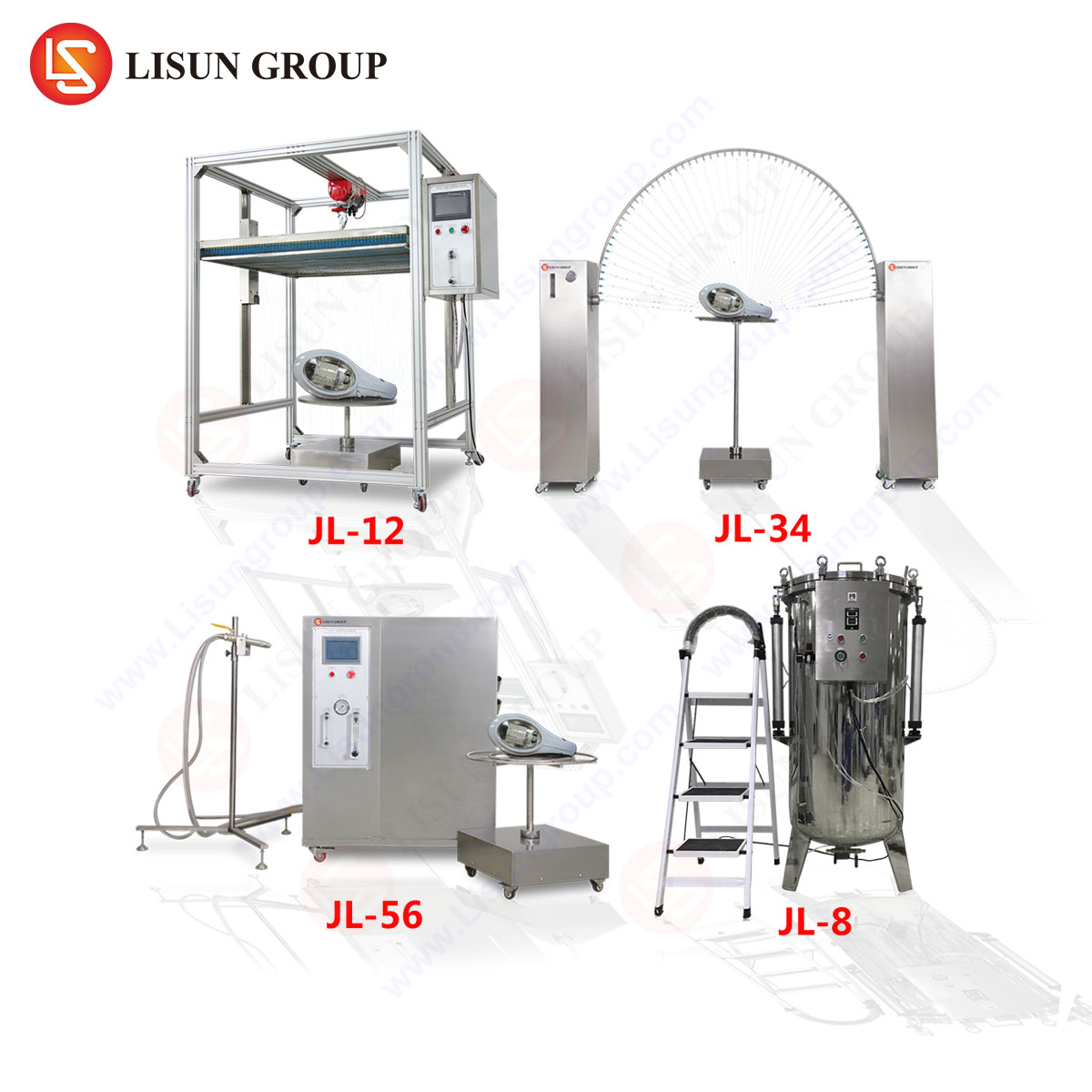
The reliability of any spectrometer deployed for field or harsh industrial monitoring, as well as the electronic systems it controls, is paramount. These devices must perform accurately despite exposure to rain, condensation, washdown procedures, or high-humidity atmospheres. This necessitates rigorous pre-deployment validation through environmental stress testing. The LISUN JL-XC Series waterproof test chambers are engineered specifically for this purpose, providing controlled and reproducible conditions to verify the ingress protection (IP code) and humidity resilience of products.
Product Focus: LISUN JL-XC Series Waterproof Test Chambers
The JL-XC Series represents a comprehensive solution for testing the ability of enclosures, components, and assemblies to withstand water exposure as defined by IEC 60529:2013 (IP code), and other relevant standards like IEC 60068-2-18, IEC 60068-2-30, and ISO 20653 for automotive components.
Testing Principles and Chamber Specifications: The chambers simulate a range of water exposure conditions. Key test methods include:
- IPX1 to IPX6 (Drip, Spray, Powerful Jet Water): Utilizing oscillating tubes or spray nozzles with specified orifice sizes and water flow rates (e.g., 12.5 L/min for IPX5, 100 L/min for IPX6) at controlled distances and pressures.
- IPX7 & IPX8 (Temporary and Continuous Immersion): For immersion tests, the chamber functions as a water tank, with depth and duration programmable per standard requirements (e.g., 1 meter for 30 minutes for IPX7).
- Damp Heat Cycling (IEC 60068-2-30): This critical test subjects products to cyclic temperature and humidity conditions (e.g., 25°C to 55°C with 95% RH) to evaluate the effects of condensation and material degradation.
A typical JL-XC chamber, such as the JL-XC1000 model, might feature an internal test volume of 1000 liters, constructed from stainless steel for corrosion resistance. It incorporates a precision temperature control system (ambient to +50°C), a water filtration and recirculation system to maintain water quality consistency during long tests, and programmable logic controller (PLC) with a touchscreen HMI for creating complex test profiles. Safety features include water level sensors, leakage detection, and over-temperature protection.
Industry Use Cases for the JL-XC Series:
- Consumer Electronics & Office Equipment: Validating the IP rating of smartphones, tablets, outdoor printers, and teleconferencing equipment against splashing and accidental immersion.
- Automotive Electronics: Testing electronic control units (ECUs), lighting assemblies, sensors, and connectors for resistance to high-pressure jet washing (IPX6/9K) and humidity cycling.
- Electrical Components: Verifying that switches, sockets, and circuit breakers can operate safely in damp environments or during water ingress.
- Medical Devices: Ensuring the integrity of portable diagnostic devices or surgical tool housings during sterilization washdown cycles.
- Lighting Fixtures: Confirming that indoor and outdoor luminaires can withstand prolonged rain exposure (IPX3/IPX4) or direct hose-down for cleaning.
Competitive Advantages in System Validation: The integration of a JL-XC chamber into a product development or quality assurance lab provides several key advantages. It offers standardized compliance testing, ensuring products meet international IP ratings for market access. It enables failure mode analysis by identifying specific weak points in seals, gaskets, or housing designs under repeatable conditions. Furthermore, it supports accelerated life testing, condensing years of environmental exposure into a defined test cycle, thereby reducing time-to-market and potential field failure rates. For manufacturers of spectroscopic monitors, using such a chamber to test their own sensor housings guarantees data integrity for end-users operating in challenging conditions.
Integration of Spectroscopic Monitoring within Test Chambers
An advanced application involves the direct integration of spectroscopic probes into the test chamber environment. This allows for real-time monitoring of the test water’s chemical parameters during long-duration immersion or humidity tests. For example, monitoring the pH and conductivity of the immersion water in an IPX8 test ensures consistency between test batches. Furthermore, for tests involving corrosive additives or salt spray (a separate but related test modality), spectroscopy could track the concentration of the solution, ensuring test severity remains within specified limits.
Standards, Calibration, and Data Integrity
The efficacy of both spectroscopic monitoring and environmental chamber testing hinges on adherence to established standards and rigorous calibration protocols. Spectrometers must be calibrated using traceable standard solutions, with validation against reference methods (e.g., Standard Methods for the Examination of Water and Wastewater). Periodic verification of wavelength accuracy and photometric linearity is essential.
For chamber testing, compliance with IEC 60529 is non-negotiable. This includes regular calibration of water flow meters, pressure gauges, nozzle dimensions, and temperature/humidity sensors. The repeatability and reproducibility of tests between different chambers and laboratories depend on this meticulous attention to calibration and standard operating procedures (SOPs).
Future Trajectories: Miniaturization, Multi-Parameter Sensing, and IoT Connectivity
The future of spectroscopic water quality monitoring is oriented towards further miniaturization of spectrometer optics using micro-electro-mechanical systems (MEMS) and compact diode array technology. This will enable the proliferation of low-cost, embedded sensors in a wider array of industrial equipment. The trend is towards multi-parameter sensor “pucks” that combine spectroscopic measurements with pH, ORP, conductivity, and temperature in a single, ruggedized housing. Finally, the integration of these sensors into Industrial Internet of Things (IIoT) platforms facilitates predictive maintenance, automated process adjustment, and comprehensive data analytics across distributed assets. The role of robust environmental testing, as exemplified by the JL-XC Series, will only grow in importance to ensure the field reliability of these increasingly sophisticated and connected monitoring nodes.
Conclusion
Spectrometer technology has irrevocably altered the landscape of water quality monitoring, providing the speed, specificity, and continuity required for modern industrial and environmental management. Its value is amplified when the monitoring instruments themselves are engineered to survive the conditions they measure. The parallel discipline of environmental simulation testing, through equipment such as the LISUN JL-XC Series waterproof test chambers, provides the necessary validation framework. Together, they form a complementary technological ecosystem that enhances product reliability, ensures regulatory compliance, and protects critical water-dependent processes across the global industrial base.
FAQ Section
Q1: How does the JL-XC Series chamber ensure uniform water spray coverage for IPX3 and IPX4 testing?
The chamber utilizes an oscillating tube assembly with precisely drilled nozzles, calibrated to the standard flow rate. The oscillation arc and speed are programmed per IEC 60529 requirements to ensure the test sample is exposed to spray from all necessary angles (typically ±60° or ±180°) with a consistent water flux over its surface.
Q2: Can spectroscopic water monitors differentiate between types of organic contaminants?
Basic UV absorption provides a bulk measurement. However, advanced systems employing full-spectrum analysis with chemometric modeling (e.g., Principal Component Analysis or Partial Least Squares regression) can be “trained” on known water samples to distinguish between different organic contaminant profiles, such as differentiating humic acid from a glycol-based coolant leak in industrial water.
Q3: What is the significance of damp heat cycling (IEC 60068-2-30) for electronic components beyond simple waterproofing?
Damp heat cycling accelerates failure mechanisms that simple static immersion does not. The cyclic condensation and evaporation can force moisture through micro-gaps in seals via “breathing” action, leading to corrosion on internal circuitry, electrolytic migration, and delamination of materials with different coefficients of thermal expansion. It is a more comprehensive reliability test for long-term operation in humid environments.
Q4: For IPX7/IPX8 immersion testing, does the purity of the water in the chamber matter?
While the standard typically specifies “clean water,” controlling water quality (low conductivity, neutral pH) is considered a best practice. It ensures test repeatability and prevents the introduction of additional corrosive elements (like chlorides) that could invalidate a test by causing failures unrelated to the seal integrity being evaluated.
Q5: How often should a spectroscopic water analyzer be calibrated when used for continuous industrial monitoring?
Calibration frequency depends on the stability of the instrument, the criticality of the measurement, and the fouling potential of the water matrix. A typical regime involves a daily zero/span check using a verification standard, a weekly multi-point calibration for critical parameters, and a full annual calibration and performance audit by qualified personnel, with adjustments made as needed based on control chart data.