




Defining Waterproof Testing and Its Industrial Imperative
The integrity of electronic and electromechanical systems against liquid ingress represents a critical determinant of product reliability, safety, and longevity. Waterproof testing, more formally known as ingress protection (IP) testing, is a standardized methodology employed to verify the ability of an enclosure to resist the infiltration of foreign bodies, including solid particulates and moisture. The consequences of inadequate sealing range from minor performance degradation and cosmetic damage to catastrophic failure, electrical short circuits, and significant safety hazards. In sectors such as automotive electronics and medical devices, where operational failure can have dire implications, rigorous waterproof validation transitions from a quality assurance step to a non-negotiable engineering requirement. This guide delineates the core principles, methodologies, and equipment essential for executing compliant and repeatable waterproof testing across diverse industrial applications.
Deciphering the IP Code: A Framework for Protection Ratings
The International Electrotechnical Commission’s standard IEC 60529 provides the global lexicon for ingress protection, defining the IP code. This code is composed of the letters “IP” followed by two numerals. The first numeral indicates the level of protection against solid objects, ranging from 0 (no protection) to 6 (dust-tight). The second numeral defines the level of protection against liquids, from 0 (no protection) to 9K (protection against high-pressure, high-temperature water jets). For waterproof testing, the second digit is of paramount importance. Key liquid-related ratings include IPX4 (splashing water from any direction), IPX5 (water jets from a 6.3mm nozzle), IPX6 (powerful water jets from a 12.5mm nozzle), IPX7 (temporary immersion up to 1 meter for 30 minutes), IPX8 (continuous immersion beyond 1 meter, as specified by the manufacturer), and IPX9K (high-pressure, high-temperature washdowns). Understanding the specific IP rating required for a product’s intended operating environment is the foundational step in selecting the appropriate test regimen and equipment.
Fundamental Principles of Waterproof Test Methodologies
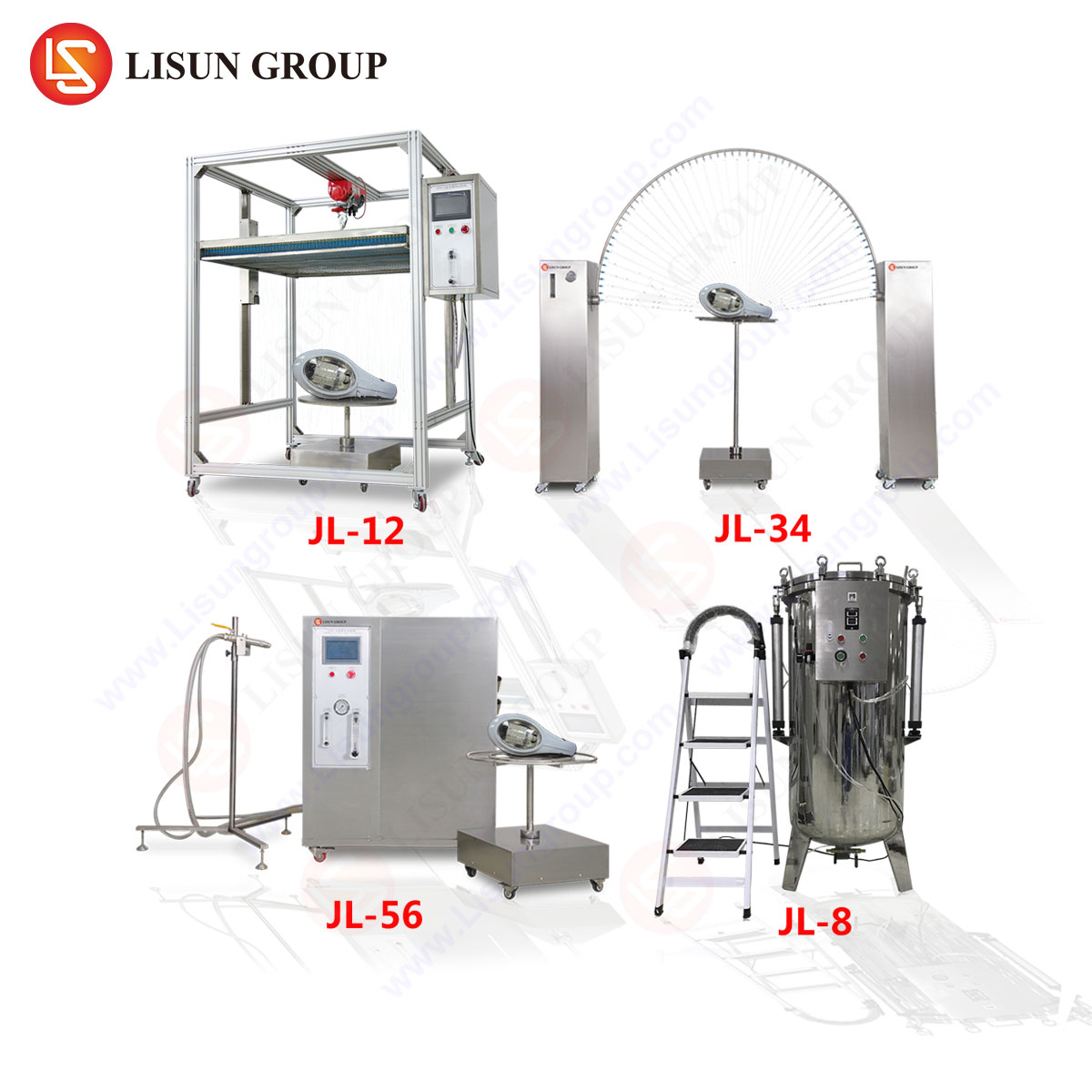
Waterproof testing equipment operates on several distinct physical principles, each tailored to simulate a specific environmental challenge. Drip testing (IPX1 and IPX2) utilizes a calibrated drip box or oscillating tube to simulate falling rain or condensation. Spray testing (IPX3 and IPX4) employs oscillating nozzles or sprinkler rings to distribute water spray across the device under test (DUT). For more aggressive simulations, jet testing (IPX5 and IPX6) uses open-ended nozzles to direct high-velocity water streams at the enclosure. Immersion testing (IPX7 and IPX8) involves submerging the DUT in a water tank at a specified depth and duration to validate static pressure resistance. The most demanding methodology, IPX9K testing, subjects the DUT to close-range, high-impact water jets from four angles at pressures up to 100 bar and temperatures up to 80°C, simulating industrial washdown or automotive under-chassis cleaning processes. Each method requires precise control over flow rate, water pressure, nozzle distance, and test duration to ensure alignment with the standard’s stipulations.
The JL-XC Series: A Paradigm of Integrated Testing Capability
The LISUN JL-XC Series of waterproof test equipment exemplifies a modular, multi-standard testing platform engineered for high-volume laboratory and production line applications. This series integrates multiple testing methodologies into a single, unified system, allowing for the sequential or independent execution of IPX5, IPX6, IPX7, IPX8, and IPX9K tests without requiring manual reconfiguration or DUT transfer between separate stations. The system’s architecture is predicated on a robust stainless-steel frame, corrosion-resistant components, and a centralized programmable logic controller (PLC) that orchestrates all test parameters. A key feature is its dual-tank design: one tank for immersion tests (IPX7/IPX8) and a separate, integrated chamber for jet and spray testing (IPX5/IPX6/IPX9K). This eliminates cross-contamination and significantly enhances testing throughput. The human-machine interface (HMI) is a touchscreen panel that provides intuitive access for setting pressure, flow rate, immersion depth, test time, and angular positioning of the IPX9K spray arm.
Technical Specifications and Operational Parameters of the JL-XC Series
The JL-XC Series is characterized by a comprehensive set of technical specifications that ensure rigorous compliance with international standards. For IPX5 testing, the nozzle diameter is 6.3mm with a flow rate of 12.5 ± 0.625 L/min at a distance of 2.5 to 3 meters. The IPX6 nozzle is 12.5mm, delivering 100 ± 5 L/min at the same distance. The IPX9K test is conducted using a specialized 0.8mm nozzle, with water pressure adjustable from 8,000 to 10,000 kPa (80-100 bar) and a flow rate of 14-16 L/min. The water temperature for the IPX9K test can be controlled within a range of up to 80°C ± 5°C. The immersion tank is designed to accommodate DUTs for IPX7 (1 meter depth) and IPX8 testing, with the latter’s pressure and duration being user-definable to meet specific product requirements. The entire system is powered by a high-pressure pump capable of maintaining stable pressure outputs, while all critical parameters are logged for traceability and quality audit purposes.
Cross-Industry Application Scenarios for Comprehensive Testing
The versatility of a system like the JL-XC Series is demonstrated by its applicability across a broad industrial spectrum. In the automotive sector, it is indispensable for validating components such as electronic control units (ECUs), lighting assemblies, sensors, and charging connectors, ensuring they withstand high-pressure car washes (IPX9K) and driving rain (IPX4/5/6). For household appliances like dishwashers, outdoor lighting fixtures, and smart garden equipment, the system verifies resistance to jets of water and prolonged exposure to humid conditions. Within telecommunications, 5G outdoor base stations and fiber optic terminal enclosures are tested to IPX5/6/7 standards to guarantee uninterrupted service in all weather. The medical device industry utilizes the JL-XC to certify the ingress protection of portable diagnostic equipment, surgical tools designed for sterilization, and hospital bedside monitors against accidental spills and cleaning fluids. Aerospace and aviation components, including external navigation lights and cockpit interface panels, undergo rigorous IP-rated testing to ensure functionality under extreme atmospheric conditions.
Comparative Analysis: The JL-XC Series in a Competitive Landscape
The competitive advantage of the JL-XC Series lies in its integrated multi-test capability, which directly addresses key pain points in quality assurance workflows. Traditional testing setups often require separate, dedicated machines for low-pressure spray, high-pressure jet, and immersion tests. This fragmented approach consumes valuable laboratory floor space, increases capital expenditure, and introduces logistical bottlenecks as the DUT must be physically moved and re-fixtured between tests, increasing the risk of handling damage and test result variability. The JL-XC’s unified platform consolidates these functions, streamlining the workflow and enhancing repeatability. Furthermore, its automated PLC control and data logging minimize operator-induced errors and provide a complete, auditable test record. The system’s construction from stainless steel and other corrosion-resistant materials ensures long-term durability and reduces maintenance downtime, even when testing with heated water for IPX9K, a feature not always available in less robust, modular systems.
Standards Compliance and Calibration Protocols
Adherence to international standards is not a suggestion but a mandate for credible test results. The design and operation of the JL-XC Series are meticulously aligned with IEC 60529, as well as equivalent regional standards such as ISO 20653 (road vehicles) and various MIL-STD-810G methods for military equipment. Beyond the initial design, maintaining compliance requires a rigorous calibration schedule. Critical parameters including nozzle diameter, water flow rate, jet pressure, and tank temperature must be periodically verified against certified reference instruments. For instance, the flow rate for IPX5 and IPX6 tests is typically calibrated using a precision flow meter, while pressure transducers are used to validate the high-pressure outputs for IPX9K. A documented calibration history, traceable to national standards, is essential for laboratories operating under ISO/IEC 17025 accreditation, ensuring that the data generated is legally and technically defensible.
Implementation and Best Practices for Test Laboratory Integration
Successful integration of a comprehensive testing system like the JL-XC Series into a quality control laboratory necessitates careful planning. The facility must provide adequate floor space to accommodate the system’s footprint, along with access to a reliable supply of clean water, a drain, and sufficient electrical power for the pump, heater, and control systems. The water quality is a critical consideration; demineralized or deionized water is often required, particularly for IPX9K testing, to prevent nozzle clogging and mineral deposition on the DUT. Operator training is another vital component. Personnel must be proficient in fixture design to ensure the DUT is mounted in its “worst-case” orientation for testing, as well as in programming test sequences, interpreting standards, and performing routine maintenance. Establishing a preventative maintenance schedule for pump inspection, filter replacement, and nozzle cleaning is crucial for ensuring the long-term accuracy and reliability of the test equipment.
Interpreting Test Results and Failure Analysis
The culmination of a waterproof test is the pass/fail determination, which is based on a post-test inspection of the DUT’s interior. Following the test cycle, the enclosure is opened and meticulously examined for any traces of moisture ingress. The presence of water droplets, dampness, or a water meniscus on internal components constitutes a failure. For some electrical products, a functional test may be performed during or immediately after the water exposure to detect any performance degradation. In the event of a failure, a systematic root cause analysis is initiated. This investigation may involve examining the integrity of gaskets and seals, verifying the correctness of assembly procedures, inspecting for micro-fissures in housing materials, or assessing the design of seams and joints. The findings from this analysis feed directly back into the product design and manufacturing process, enabling iterative improvements that ultimately enhance product robustness and field reliability.
Frequently Asked Questions
What is the primary distinction between IPX7/IPX8 immersion testing and IPX9K high-pressure testing?
IPX7 and IPX8 tests evaluate a product’s ability to withstand static water pressure during temporary or prolonged immersion. The enclosure is under uniform pressure from all sides. Conversely, IPX9K testing subjects the product to dynamic, high-impact, high-temperature water jets from specific angles, simulating an aggressive washdown. A product that passes IPX9K is not necessarily rated for IPX7/8, and vice-versa, as the failure mechanisms—static sealing versus resistance to high-velocity penetration—are fundamentally different.
Can the JL-XC Series be customized for non-standard test parameters?
Yes, the JL-XC platform is designed with a degree of modularity. While it is pre-configured for standard IP tests, parameters such as immersion pressure and duration for IPX8, or specific angular sequences for IPX9K, can often be programmed to meet proprietary or emerging test specifications that may not be fully covered by existing standards.
How critical is water quality, particularly for the IPX9K test with heated water?
Water quality is paramount. The use of hard or impure water in high-pressure and high-temperature testing can lead to rapid nozzle erosion, clogging from mineral deposits, and contamination of the device under test. This can cause false failures and damage the equipment. The consistent use of demineralized water is strongly recommended to ensure test accuracy and equipment longevity.
What is the typical lead time for conducting a full IPX5 to IPX9K test sequence on a single product?
The total test time is the sum of the individual test durations, plus any required DUT drying and inspection periods between stages. A standard sequence might involve 3 minutes for IPX5, 3 minutes for IPX6, 30 minutes for IPX7, a user-defined period for IPX8, and 30 seconds per angle (4 angles total) for IPX9K. With setup and inspection, a comprehensive validation can take several hours per unit, though the integrated nature of the JL-XC Series minimizes the non-test time associated with equipment reconfiguration.