




Precision Metrology in Horology: The Role of Automated Waterproof Testing Machines
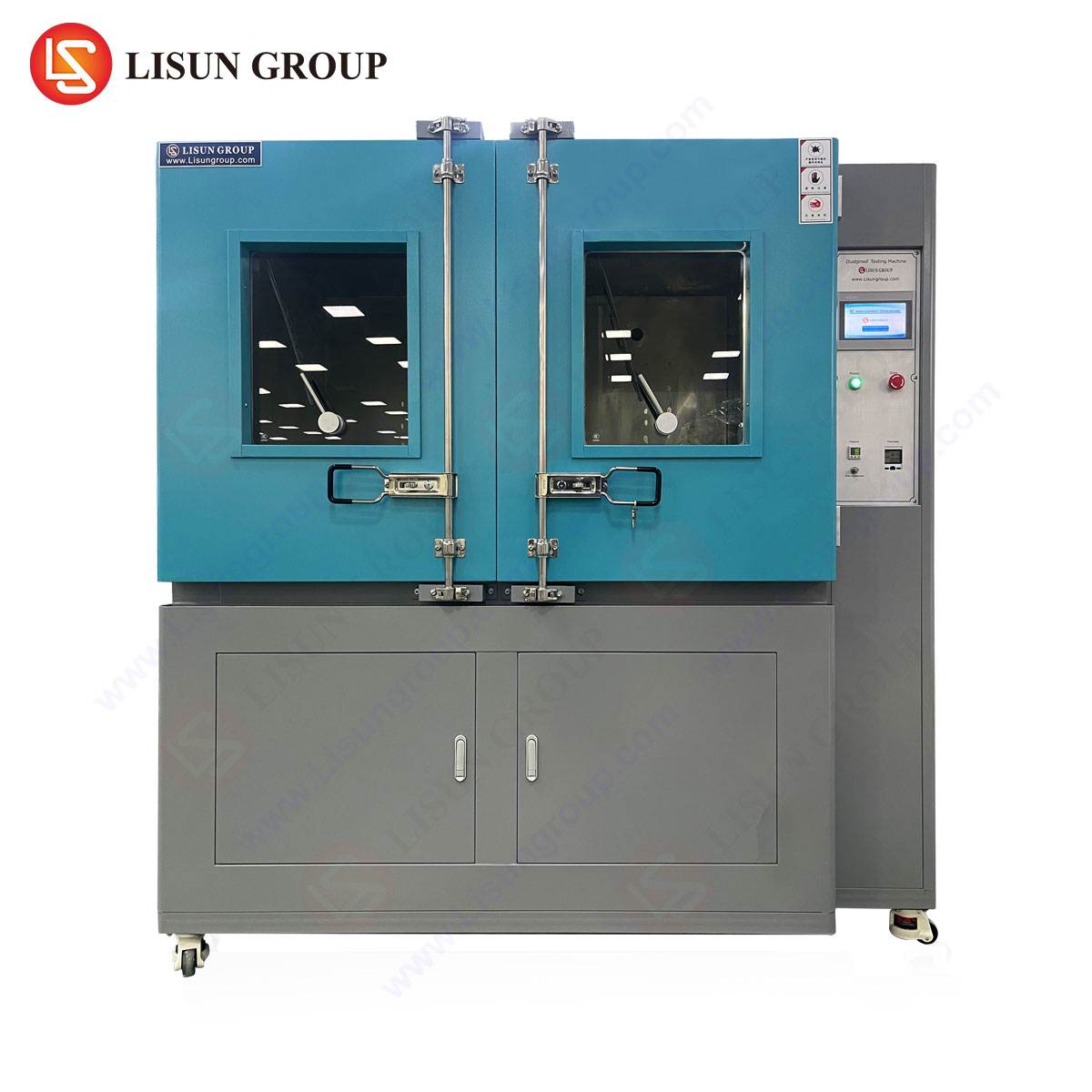
The integrity of a timepiece against water ingress represents a critical performance metric, one that transcends mere consumer convenience to become a fundamental reliability criterion. For manufacturers across the horological spectrum—from luxury mechanical watches to ruggedized smart devices—ensuring adherence to declared water resistance ratings is a non-negotiable aspect of quality assurance. This assurance is predicated on rigorous, repeatable, and non-destructive testing methodologies, a domain where specialized waterproof testing machines have become indispensable laboratory and production-line instruments. This article examines the technical principles, operational parameters, and industrial applications of these systems, with a detailed analysis of a representative advanced solution: the LISUN JL-XC Series waterproof test chamber.
Fundamental Principles of Water Resistance Verification
Waterproof testing for watches is not a singular test but a suite of evaluations designed to simulate various environmental stressors. The core methodologies are defined by international standards, primarily ISO 22810 (for watches) and the more stringent ISO 6425 (for diver’s watches). These standards prescribe specific pressure thresholds, dwell times, and inspection procedures corresponding to marked ratings such as 3 ATM (30 meters), 5 ATM (50 meters), or 10 ATM (100 meters). It is crucial to clarify that these ratings denote static pressure resistance under controlled laboratory conditions, not dynamic depth capabilities for aquatic activities.
The two predominant physical principles employed are dry testing and wet testing. Dry testing, often utilizing air pressure (pneumatic) or vacuum decay techniques, is a non-destructive, indirect method. A watch is placed in a sealed chamber, and pressure is applied or removed. Sensors then monitor for minute pressure changes over a set period. A decay in pressure differential indicates air leakage from the chamber into the watch (or vice versa in a vacuum test), implying a potential pathway for water. This method is highly sensitive, fast, and leaves no residue, making it ideal for production-line screening. Wet testing, typically a water immersion or condensation test, is a direct method. Watches are submerged in water while pressurized (or placed in a chamber with alternating pressure and condensation). Post-test, they are inspected for internal condensation or directly examined for water ingress. While potentially more definitive, it requires careful drying and can be slower.
Modern testing machines often integrate both principles, employing dry testing for 100% unit verification and periodic wet testing for batch validation or failure analysis. The selection of methodology hinges on required throughput, sensitivity, product standards, and the necessity for destructive versus non-destructive analysis.
Architectural Overview of the LISUN JL-XC Series Testing System
The LISUN JL-XC Series embodies a modular, automated approach to waterproof verification, engineered for high-volume production environments demanding uncompromising precision and data integrity. Its design philosophy centers on integrating precise pressure control, sophisticated sensor arrays, and programmable logic to automate the entire test cycle, from sealing to pass/fail judgment and data logging.
The system’s core architecture comprises a high-precision stainless steel test chamber, a multi-stage pneumatic control unit with servo-regulated valves, a bank of differential pressure transducers with resolution down to 1 Pa, and a human-machine interface (HMI) running dedicated control software. The chamber is designed with specialized, interchangeable fixtures to accommodate a wide array of watch geometries, from traditional wristwatches to bulky GPS-enabled sports models, ensuring a hermetic seal without applying damaging stress to cases or crowns.
The control system is the intellectual center of the JL-XC. It allows engineers to program complex multi-step test profiles that mirror real-world scenarios beyond basic static pressure. For instance, a profile may include a rapid pressure ramp-up to simulate a sudden plunge, a sustained dwell at rated pressure, a cyclic pressure fluctuation to mimic wave action, and a final vacuum phase to check for seal integrity during decompression. All parameters—pressure setpoints, ramp rates, dwell durations, and allowable leakage thresholds—are configurable via the touchscreen HMI and stored in recipe libraries for different product lines.
Quantitative Performance Specifications and Calibration Protocols
The efficacy of any testing machine is quantified by its specifications, which dictate its applicability to certain standards and product categories. The JL-XC Series is characterized by the following key technical parameters:
- Pressure Range: Capable of both positive pressure and vacuum testing, with a typical operational range of -100 kPa to +1000 kPa. This breadth covers all standard watch ratings and allows for over-pressure testing used in design validation.
- Pressure Control Resolution: ≤ 0.1% of full scale, enabling the creation of extremely stable pressure environments critical for detecting minuscule leaks.
- Leakage Detection Sensitivity: As low as 0.05 Pa/s (0.0005 mbar/s) in differential pressure decay mode. This sensitivity is paramount for identifying micro-leaks that would only manifest as condensation issues after prolonged wear, not immediate failure.
- Test Chamber Volume: Multiple chamber sizes are available, with standard volumes of 0.5L, 2L, and 5L. Smaller volumes increase the system’s sensitivity to minute leaks, as a given leak rate causes a more rapid pressure change in a confined space.
- Data Acquisition & Output: Full digital recording of the entire pressure-time curve for each test. Data is exported in .CSV format for Statistical Process Control (SPC) analysis, and each unit test record includes a timestamp, serial number, test profile, and measured leakage rate.
Calibration is not an ancillary activity but a foundational requirement for metrological credibility. The JL-XC system incorporates traceable calibration routines for its pressure transducers against national standards. Regular maintenance schedules involve checks for chamber seal integrity, pneumatic line cleanliness, and sensor zero-point drift. The system software often includes self-diagnostic routines and calibration reminder flags to ensure ongoing compliance with ISO 17025 requirements for testing laboratories.
Cross-Industrial Applications and Parallel Testing Paradigms
While horology is the primary focus, the underlying technology of pressurized enclosure testing has profound relevance across adjacent and disparate industries. The JL-XC’s principle of detecting minute pressure differentials caused by leakage is directly transferable to any sealed or ingress-protected (IP-rated) device.
- Consumer Electronics & Telecommunications: Smartphones, tablets, and wearable electronics (e.g., fitness trackers, smartwatches) require IP67 or IP68 rating verification. The test profiles are analogous to watch testing but may include additional dust ingress pre-conditioning per IEC 60529.
- Automotive Electronics: Sensors, control units (ECUs), and lighting assemblies mounted in wheel wells, underbodies, or engine compartments must withstand high-pressure spray, humidity, and temperature cycling. Waterproof testing forms part of a larger environmental stress screening (ESS) regimen.
- Medical Devices: Portable diagnostic equipment, wearable monitors, and surgical tool handpieces demand rigorous fluid ingress protection to ensure patient safety and device reliability during sterilization or use in humid environments.
- Aerospace and Aviation Components: Avionics bay components, external sensors, and cabin entertainment systems are tested for integrity under rapid pressure changes experienced during ascent and descent, a test profile directly replicable on the JL-XC.
- Lighting Fixtures & Industrial Controls: Outdoor LED luminaires, marine navigation lights, and factory floor control panels (with IP65+ ratings) are validated using similar pressure decay techniques to ensure long-term performance in wet conditions.
- Electrical Components & Connectors: Waterproof switches, sockets, and cable gland assemblies are batch-tested to confirm their sealing gaskets and O-rings perform to specification, preventing short circuits and corrosion.
In each case, the test apparatus—be it specifically designed for watches or a more generalized chamber—serves as a critical gatekeeper, preventing field failures that lead to warranty claims, brand damage, and, in critical industries, safety incidents.
Operational Advantages in High-Throughput Manufacturing
The transition from manual, water-tank-based testing to automated dry-test systems like the JL-XC Series confers several tangible operational advantages that impact both quality and cost.
First is throughput and efficiency. A typical dry test cycle on an automated system can be completed in 30-90 seconds, including loading and unloading. This allows for 100% testing of production output without creating a bottleneck. Manual wet tests, involving submersion, drying, and visual inspection, can take orders of magnitude longer.
Second is objectivity and data integrity. The system provides a quantitative, numerical result—a leakage rate in Pa/s—eliminating the subjectivity of a technician looking for bubbles in a water tank or condensation under a magnifier. This digital record is indispensable for traceability, trend analysis, and resolving disputes with component suppliers (e.g., gasket or crystal manufacturers).
Third is non-destructive testing and cost savings. Since no water or condensation is introduced, passing units require no disassembly, drying, or potential secondary damage from the test itself. This preserves the product and eliminates the cost and time associated with post-test processing. Furthermore, the high sensitivity allows for the detection of leaks at a stage where they can be repaired easily on the line, rather than after full assembly, drastically reducing rework cost.
Finally, flexibility and future-proofing are inherent in the programmable design. As new watch models with different pressure ratings or novel sealing technologies (e.g., acoustic welding, liquid gaskets) are developed, new test profiles can be created and validated without hardware modifications. This adaptability protects the capital investment against product line evolution.
Integration with Quality Management and Regulatory Frameworks
Implementing an automated waterproof tester is not merely a procurement decision but a strategic integration into a manufacturer’s Quality Management System (QMS). The data generated by the JL-XC system feeds directly into key QMS processes.
For Incoming Quality Control (IQC), batches of watch cases, crystals, crowns, and case-backs can be sampled and tested to validate supplier components before they enter assembly. In In-Process Quality Control (IPQC), the machine can be used after specific assembly stages, such as after crystal fitting and before movement installation, to isolate the source of any sealing failure. In Final Quality Assurance (FQA), it serves as the definitive gate before packaging.
From a regulatory standpoint, the machine’s calibration records, validated test procedures, and comprehensive data logs provide the objective evidence required for audits against standards like ISO 9001. For manufacturers supplying to military or aerospace contractors, the ability to execute and document tests per specific MIL-STD or DEF-STAN protocols is often a contractual necessity, a requirement met by the programmability and reporting features of advanced systems.
Conclusion
The modern waterproof testing machine, as exemplified by the LISUN JL-XC Series, has evolved from a simple pressure vessel into a sophisticated, data-centric metrology platform. It sits at the intersection of precision engineering, fluid dynamics, and automated control systems. Its role is to provide an unambiguous, quantitative assessment of a product’s barrier integrity, a characteristic that is increasingly central to the value proposition and reliability of not just timepieces, but a vast array of sealed electronic and mechanical assemblies. By enabling fast, non-destructive, and fully documented testing, these systems underpin both the quality assurance protocols and the continuous improvement cycles that define leading manufacturers in today’s globally competitive landscape.
Frequently Asked Questions (FAQ)
Q1: What is the fundamental difference between a “dry” pressure decay test and a traditional “wet” water immersion test?
A dry test measures the minute change in air pressure within a sealed chamber containing the test specimen. A pressure decay over time indicates air leakage, which correlates to a potential water leak path. It is indirect, non-destructive, fast, and highly sensitive. A wet test directly uses water, either through submersion under pressure or condensation generation. It can provide visual confirmation of failure (bubbles or internal condensation) but is slower, potentially destructive, and requires careful drying of the unit afterward. Dry testing is preferred for production-line 100% inspection, while wet testing is often used for type approval or failure analysis.
Q2: How does the test chamber volume affect the sensitivity of a pressure decay test?
Sensitivity is inversely related to chamber volume. A smaller free volume inside the test chamber (the space not occupied by the watch) means that a given leak rate (e.g., 0.1 cc/min of air) will cause a more rapid and detectable change in pressure. Therefore, for testing very small watches or components for micro-leaks, a chamber with minimal internal volume or using a dedicated, volume-optimized fixture is critical to achieving the highest possible sensitivity and test accuracy.
Q3: Can a single testing machine like the JL-XC handle all water resistance ratings from 3 ATM to 20 ATM+ for diver’s watches?
Yes, provided the machine’s specified pressure range encompasses the required test pressures. ISO 6425 for diver’s watches requires an over-pressure test, often at 125% of the rated pressure. A 200m-rated diver’s watch, for example, requires testing at 25 bar (250m) of pressure. The JL-XC Series, with its upper pressure limit of 1000 kPa (10 bar/100m) in a standard configuration or higher in specialized builds, is designed to cover this full spectrum. The correct model must be selected based on the maximum pressure required for the product line.
Q4: How is test data typically used beyond a simple pass/fail decision?
The quantitative leakage data is a rich source for process analytics. Trend analysis of leakage rates can signal gradual tool wear in gasket installation equipment, batch variations in sealant application, or subtle changes in component tolerances from suppliers. This enables predictive maintenance and proactive quality control. Furthermore, the data is essential for creating capability indices (Cpk) for the sealing process and provides irrefutable evidence for compliance during customer or regulatory audits.
Q5: What regular maintenance is critical for ensuring the long-term accuracy of an automated waterproof tester?
Key maintenance activities include: periodic calibration of the pressure transducers against a traceable standard (e.g., annually); regular inspection and replacement of the main chamber seal and fixture O-rings to prevent false failures; ensuring the compressed air supply is clean and dry through proper filtration; and running the system’s built-in self-diagnostic and “null test” routines (testing a known-good, sealed reference artifact) to verify baseline performance. Adherence to the manufacturer’s prescribed maintenance schedule is vital for sustained metrological integrity.