

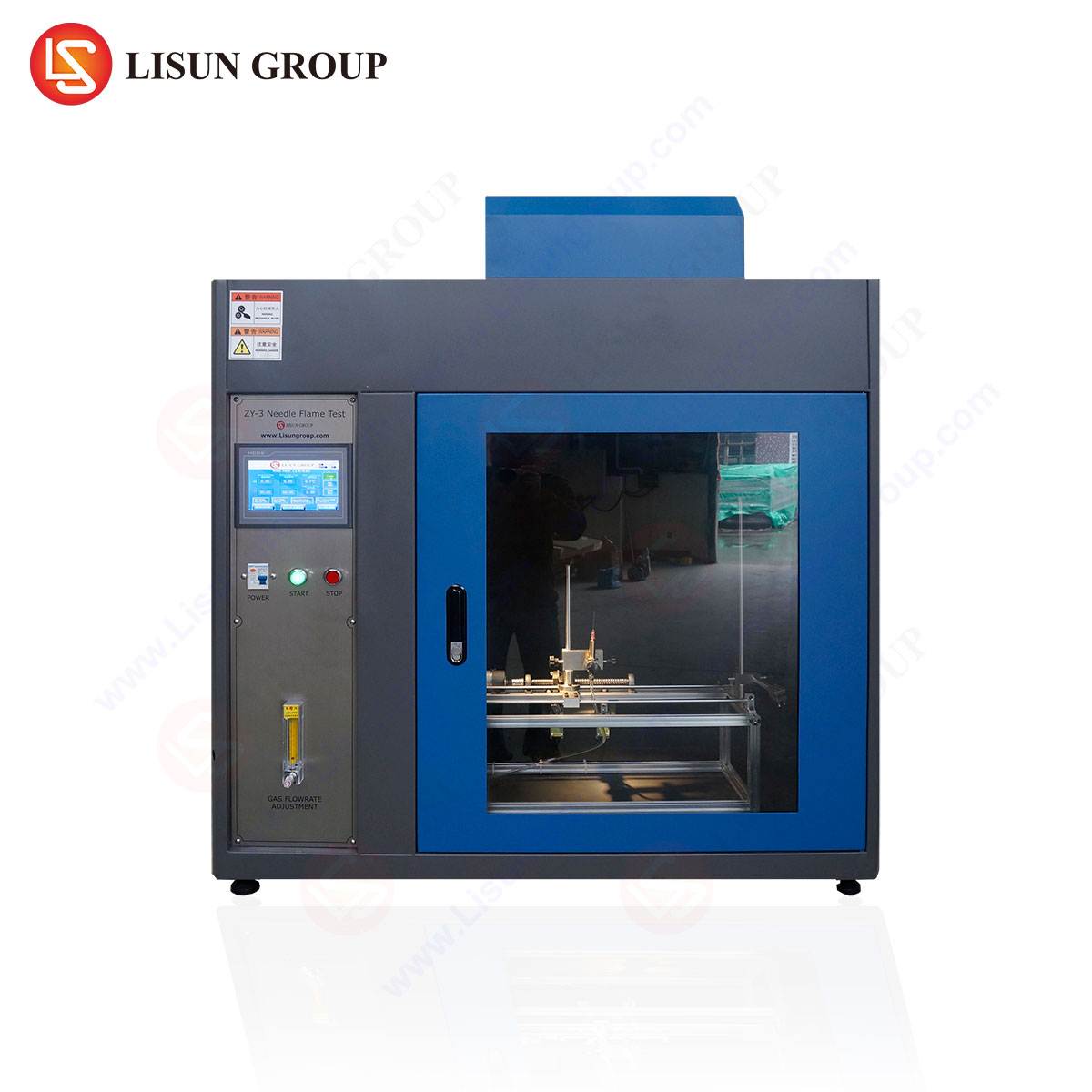



A Comprehensive Guide to Waterproof Testing for Electronic Enclosures and Timepieces
The integrity of an electronic enclosure against liquid ingress represents a critical performance parameter across a vast spectrum of industries. From the smartwatch worn during athletic activity to the control module embedded within an automotive chassis, the ability to withstand specified water pressure or immersion is paramount for reliability, safety, and regulatory compliance. This guide provides a formal examination of waterproof testing methodologies, with a specific focus on chamber-based testing systems as employed for validating enclosures ranging from wrist-worn devices to substantial industrial components. The principles discussed herein are foundational to quality assurance protocols in sectors including consumer electronics, automotive, telecommunications, and medical device manufacturing.
Fundamentals of Ingress Protection (IP) and Waterproof Ratings
The international standard IEC 60529, commonly referenced as the IP Code, provides a systematic classification for the degrees of protection offered by enclosures against solid foreign objects and water. The code is denoted as “IP” followed by two characteristic numerals. The first numeral (0-6) indicates protection against solids. The second numeral (0-9K) specifies protection against water. For waterproof testing, the second numeral is of primary concern. Key ratings relevant to water resistance include IPX4 (splashing water from any direction), IPX7 (immersion up to 1 meter for 30 minutes), IPX8 (continuous immersion beyond 1 meter, as specified by the manufacturer), and IPX9K (high-pressure, high-temperature jet cleaning). It is crucial to note that these are laboratory test conditions, not direct translations to real-world depth or pressure equivalents for dynamic activities like swimming or diving. Watch-specific standards, such as ISO 22810 for water-resistant watches, provide analogous but distinct testing regimens, often involving pressure and vacuum phases to simulate real-world conditions more accurately for timepieces.
The Role of Chamber-Based Waterproof Testing Systems
While simple drip or spray tests suffice for lower IP ratings, validating higher levels of water resistance (IPX7, IPX8, IPX9K) requires controlled, repeatable, and measurable pressure environments. This is the domain of dedicated waterproof test chambers. These systems function by creating a sealed environment where the unit under test (UUT) is subjected to precisely regulated air or water pressure, simulating the static pressures encountered at various depths. The core testing principle involves pressurizing the chamber with the UUT inside and monitoring for pressure decay, which would indicate leakage from the enclosure. Alternatively, for destructive or qualitative tests, the UUT is immersed under pressure and subsequently inspected internally for moisture ingress.
Operational Principles of Pressure Decay Leak Testing
The most common non-destructive test method employed by advanced chambers is pressure decay leak testing. The process is methodical. First, the UUT is placed within the chamber’s sealed test cavity. The chamber is then pressurized to a user-defined level, typically corresponding to a target water depth (e.g., 1.5 bar absolute pressure for ~5 meters of water depth). Once stabilized, the system isolates the test volume and monitors pressure with a high-resolution transducer over a specified dwell time. Any drop in pressure exceeding a predefined threshold—the leak rate—is indicative of a breach in the UUT’s seal. The sensitivity of this method allows for the detection of extremely minor leaks that could lead to long-term failure, making it indispensable for high-value or safety-critical components.
Introducing the LISUN JL-XC Series Waterproof Test Chamber
As a representative example of a modern, versatile testing solution, the LISUN JL-XC Series waterproof test chamber embodies the technical requirements discussed. This product line is engineered to perform a comprehensive range of tests from IPX7 to IPX9K, accommodating UUTs of varying sizes and complexities. Its design philosophy centers on precision, user safety, and adaptability to diverse production line or laboratory integration needs.
Technical Specifications and System Architecture
The JL-XC Series is constructed with a high-grade stainless-steel pressure vessel, ensuring corrosion resistance and long-term structural integrity under cyclic testing. It incorporates a closed-loop air pressure system driven by a silent, oil-free air compressor, eliminating contamination risk to the UUT or test environment. Pressure control is managed via a high-precision proportional valve and monitored by a traceable digital pressure sensor, typically with a resolution of 0.001 bar. The human-machine interface (HMI) is a touch-screen PLC controller, allowing for the programming and storage of multiple test profiles (e.g., specific pressure setpoints, ramp rates, dwell times, and leak rate thresholds). Safety is paramount; the design includes an automatic pressure relief valve, a mechanical safety valve, and a door interlock system that prevents opening while the chamber is pressurized.
Testing Capabilities and Industry Application Scenarios
The versatility of the JL-XC Series is demonstrated through its application across multiple industries, each with unique requirements.
- Consumer Electronics & Wearables: For smartwatches, fitness trackers, and ruggedized smartphones, testing to IP67/68 is standard. The chamber can perform sequential tests, such as a pressure decay test at 1.3 bar (simulating IPX7) followed by a deeper pressure cycle for IPX8 validation. This ensures the device can survive accidental submersion.
- Automotive Electronics: Control units for braking (ECU), lighting, and battery management systems (BMS) in electric vehicles often require IP6K9K rating due to exposure to high-pressure washdowns in under-hood or wheel-well locations. The JL-XC can be configured for IPX9K testing, utilizing heated water and high-pressure jets as per the standard’s stringent angle and flow requirements.
- Medical Devices: Portable diagnostic equipment, surgical tool handles, and wearable monitors must resist cleaning fluids and bodily fluids. Testing to IPX7/IPX8 ensures they can be thoroughly disinfected without compromising internal electronics, a critical aspect of patient safety and device longevity.
- Lighting Fixtures & Industrial Controls: Outdoor LED luminaires, traffic signals, and factory floor control panels are exposed to rain, humidity, and cleaning. The chamber provides a quantifiable method to verify the seal integrity of gaskets and O-rings on these often-large enclosures before field deployment.
- Telecommunications & Aerospace: Outdoor routers, base station components, and aviation black box enclosures demand extreme reliability. The ability to test with negative pressure (vacuum) cycles can simulate altitude-induced stress on seals, a capability inherent in advanced chamber designs.
Comparative Advantages in Precision Manufacturing
The competitive advantage of a system like the JL-XC lies in its transition from qualitative pass/fail immersion to quantitative measurement. Traditional bucket immersion tests only reveal gross failures. In contrast, pressure decay testing provides a numeric leak rate (e.g., mbar/min), enabling manufacturers to:
- Establish Baseline Quality: Define an acceptable maximum leak rate for a product design.
- Monitor Process Drift: Detect gradual degradation in seal quality from assembly line processes, such as gasket misalignment or screw torque variation.
- Perform Root Cause Analysis: Correlate specific leak rates with failure modes.
- Reduce Destructive Testing: The non-destructive nature allows for 100% production line testing if required, without scrapping functional units.
This data-driven approach facilitates continuous improvement, reduces warranty returns, and strengthens compliance documentation for audits against standards like IATF 16949 in automotive or ISO 13485 in medical devices.
Integration with Broader Quality Assurance Frameworks
Waterproof testing is not an isolated activity. Data from chambers like the JL-XC Series should be integrated into a broader Quality Management System (QMS). Modern units often feature Ethernet, RS-232, or USB outputs for connectivity, allowing test results—including pressure curves, leak rates, timestamps, and operator IDs—to be logged directly to a database. This creates an auditable trail for each unit tested, supporting production lot traceability and regulatory submissions. Furthermore, the test parameters themselves are derived from a Failure Mode and Effects Analysis (FMEA), where potential ingress points are identified, and the test is designed to detect those specific failures.
Considerations for Test Fixture Design and Calibration
The accuracy of any chamber test is contingent upon proper fixturing and calibration. A poorly designed fixture that itself leaks or has excessive internal volume will mask the leak rate of the UUT. Best practices dictate designing minimal-volume fixtures that seal against the product’s own gasketed surfaces. Regular calibration of the pressure transducer against a master gauge is essential to maintain measurement traceability to national standards. Furthermore, environmental compensation—adjusting for the effects of ambient temperature fluctuations on the air inside the test volume—is a critical feature of high-end systems to prevent false failures or passes.
Conclusion: Ensuring Reliability Through Validated Testing
The demand for water and dust-resistant products continues to grow across all engineering disciplines. Implementing a rigorous, repeatable, and data-rich waterproof testing protocol is no longer a luxury but a necessity for market competitiveness and risk mitigation. Chamber-based systems, exemplified by the technical capabilities of the LISUN JL-XC Series, provide the controlled environment and precise measurement required to move beyond simple validation and into the realm of predictive quality assurance. By adopting these methodologies, manufacturers of electronic enclosures and timepieces can deliver on the promise of durability, safeguarding their brand reputation and ensuring end-user safety in an increasingly demanding technological landscape.
Frequently Asked Questions (FAQ)
Q1: What is the fundamental difference between an IPX7 and an IPX8 test, and can one chamber perform both?
A1: IPX7 involves immersion at 1 meter depth (approximately 1.1 bar absolute pressure) for 30 minutes. IPX8 is defined by the manufacturer for continuous immersion at a depth greater than 1 meter. The test is thus more severe, at a higher pressure and often for a longer duration. A competent chamber like the JL-XC Series is fully capable of performing both tests, as it allows the user to program the specific pressure and time parameters required for the IPX8 validation per the product specification.
Q2: How does pressure decay testing detect a leak without submerging the product in water?
A2: The product is sealed in a dry chamber. The chamber is pressurized, forcing air into any potential leak path in the product’s enclosure. After stabilization, the system monitors the pressure in the isolated test volume. If the product leaks, air escapes from the chamber volume into the product, causing a measurable drop in the chamber pressure. The rate of this pressure decay is directly proportional to the size of the leak.
Q3: Our product has a one-way vent or membrane for pressure equalization. Can it be tested in a standard waterproof chamber?
A3: Standard pressure decay testing will not work reliably on a vented enclosure, as the vent will allow air to pass, causing a pressure drop that mimics a leak. Testing such products requires a different method, often a “water ingress” test under pressure (a destructive test) or the use of specialized tracer gas leak detection equipment. The test method must be carefully selected based on the product’s design intent.
Q4: What regular maintenance is required for a waterproof test chamber to ensure accuracy?
A4: Key maintenance tasks include regularly draining moisture from the internal air compressor tank, checking and cleaning air filters, verifying the door seal for wear or damage, and performing scheduled calibration of the pressure transducer using a certified reference gauge. The frequency depends on usage intensity but should be defined in a formal maintenance schedule.
Q5: Can these chambers simulate the temperature cycling often experienced by products in real use?
A5: Standard waterproof test chambers control pressure, not temperature. However, temperature is a critical factor as it causes materials to expand and contract, potentially compromising seals. Some advanced systems integrate thermal cycling capabilities, where the chamber can alternate between hot and cold air while performing pressure tests. This combined environmental stress screening is used for higher-reliability validation in automotive, aerospace, and military applications.