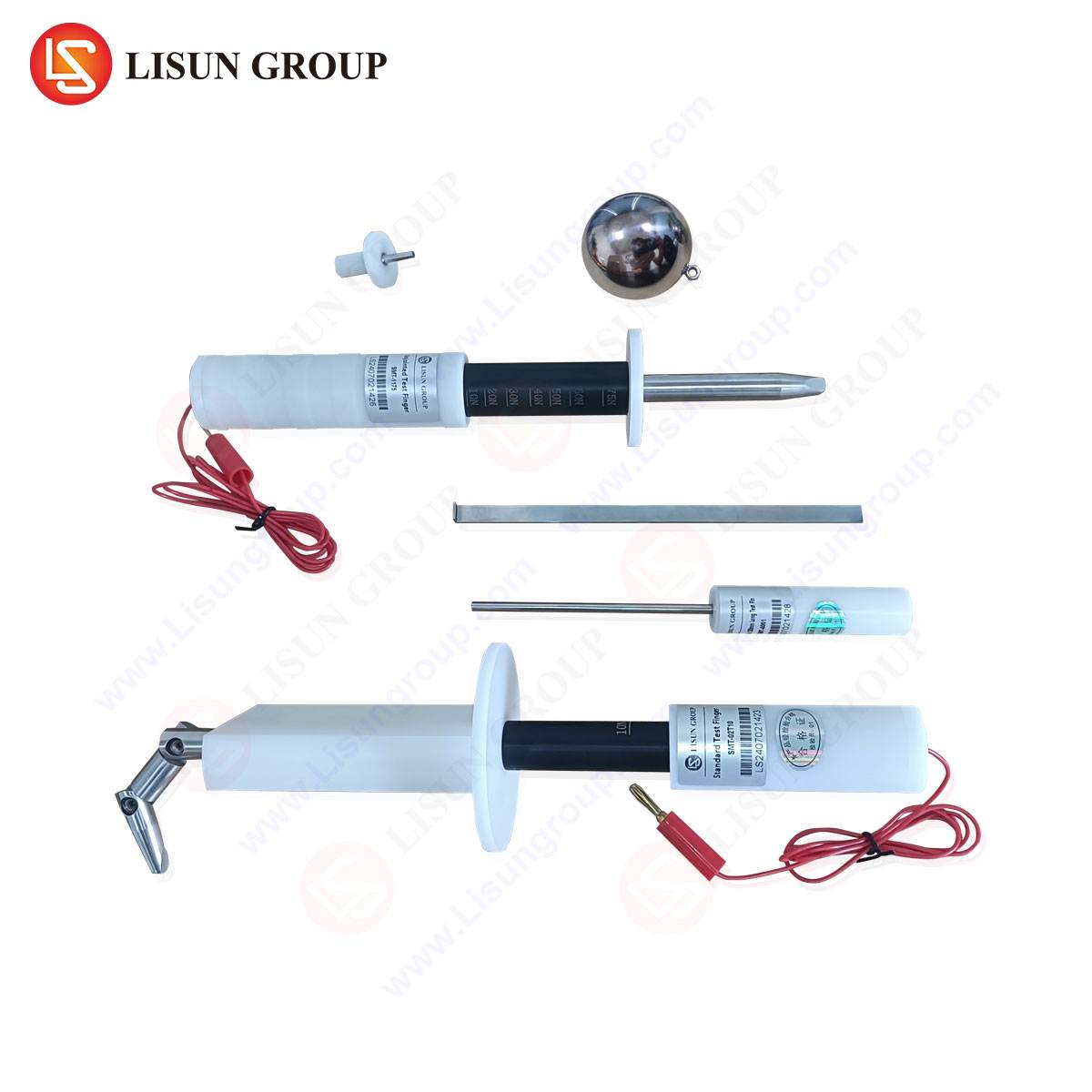



Title: A Technical Examination of the UL 2200 Figure 8.2 Probe: Engineering Safety Compliance for Stationary Generator Sets
Abstract
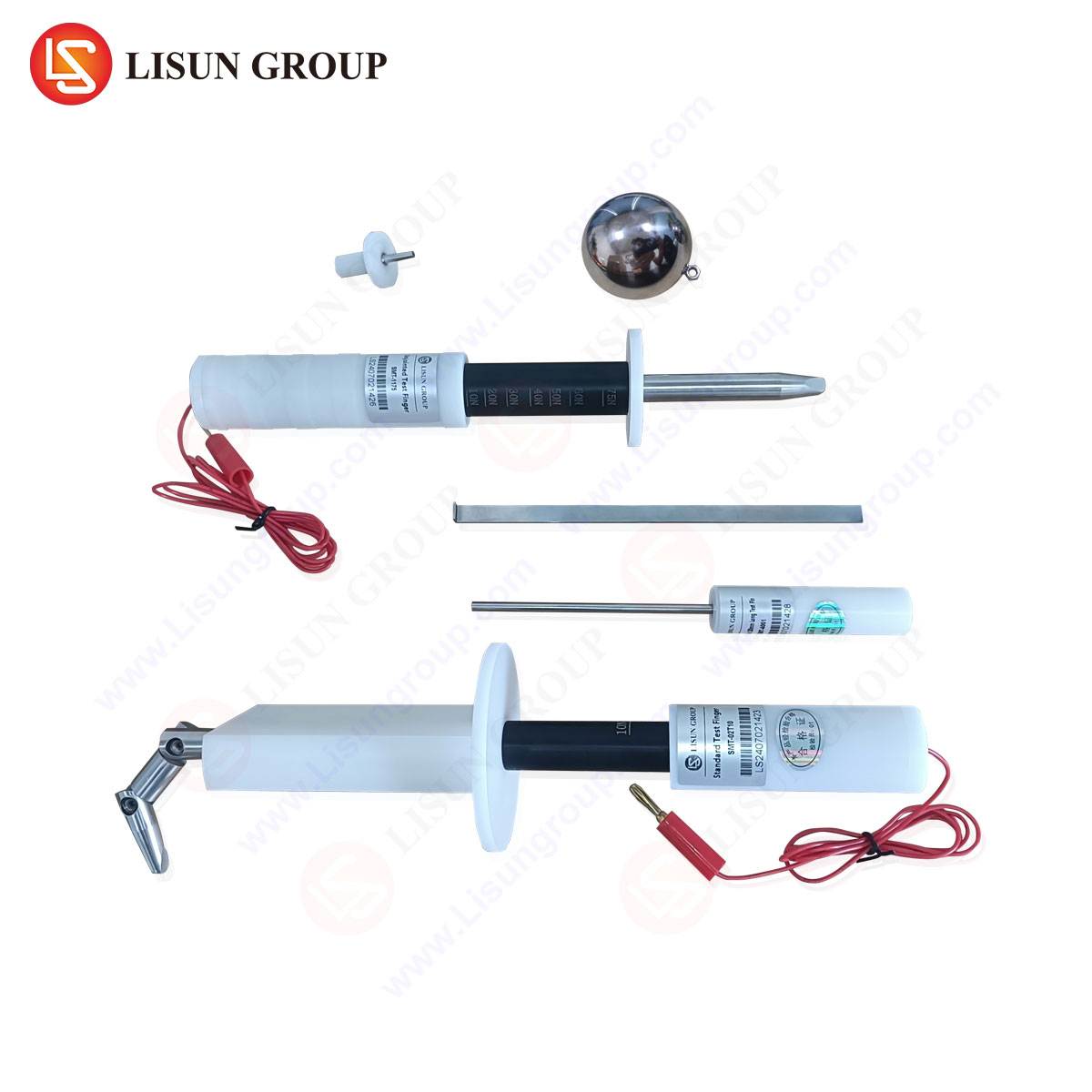
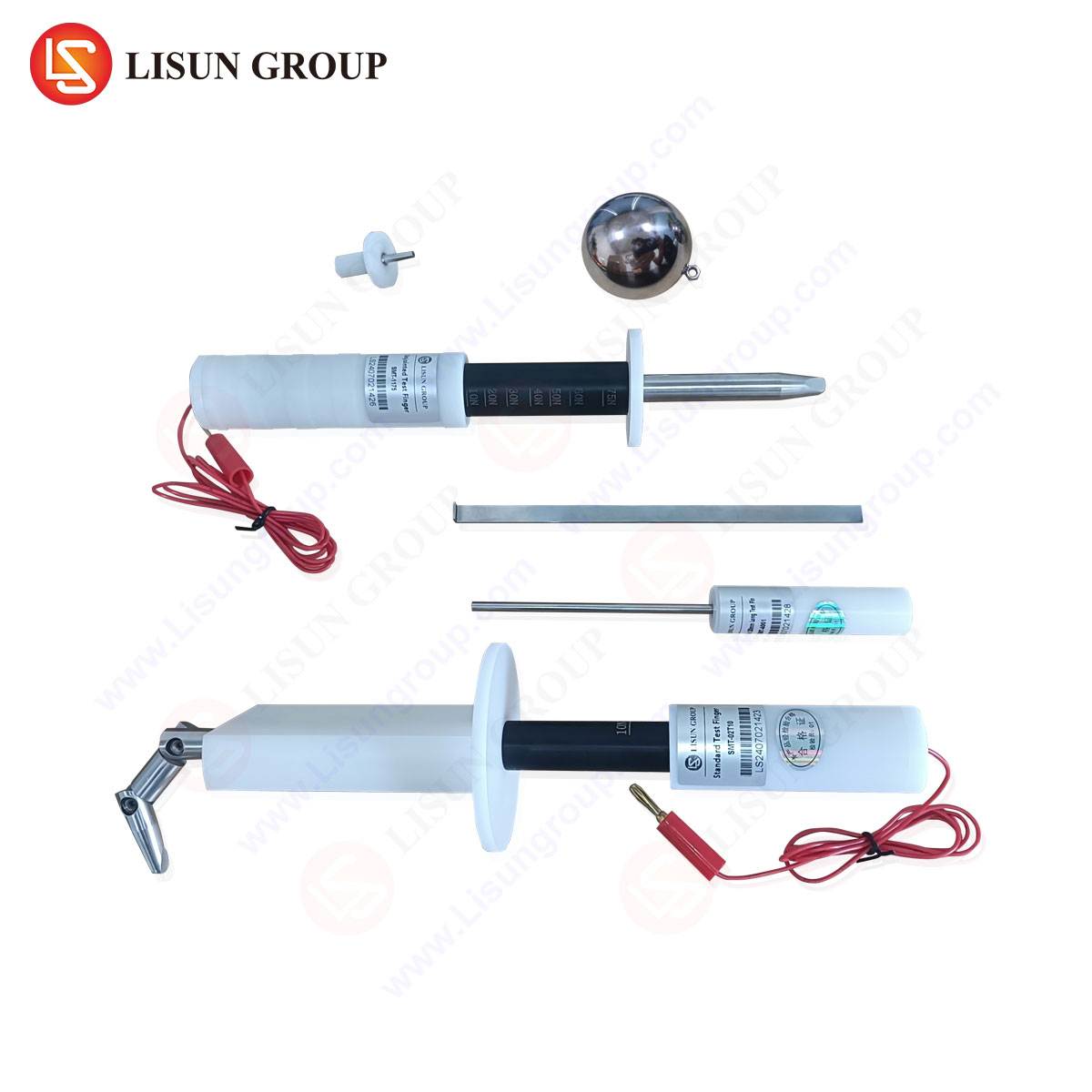
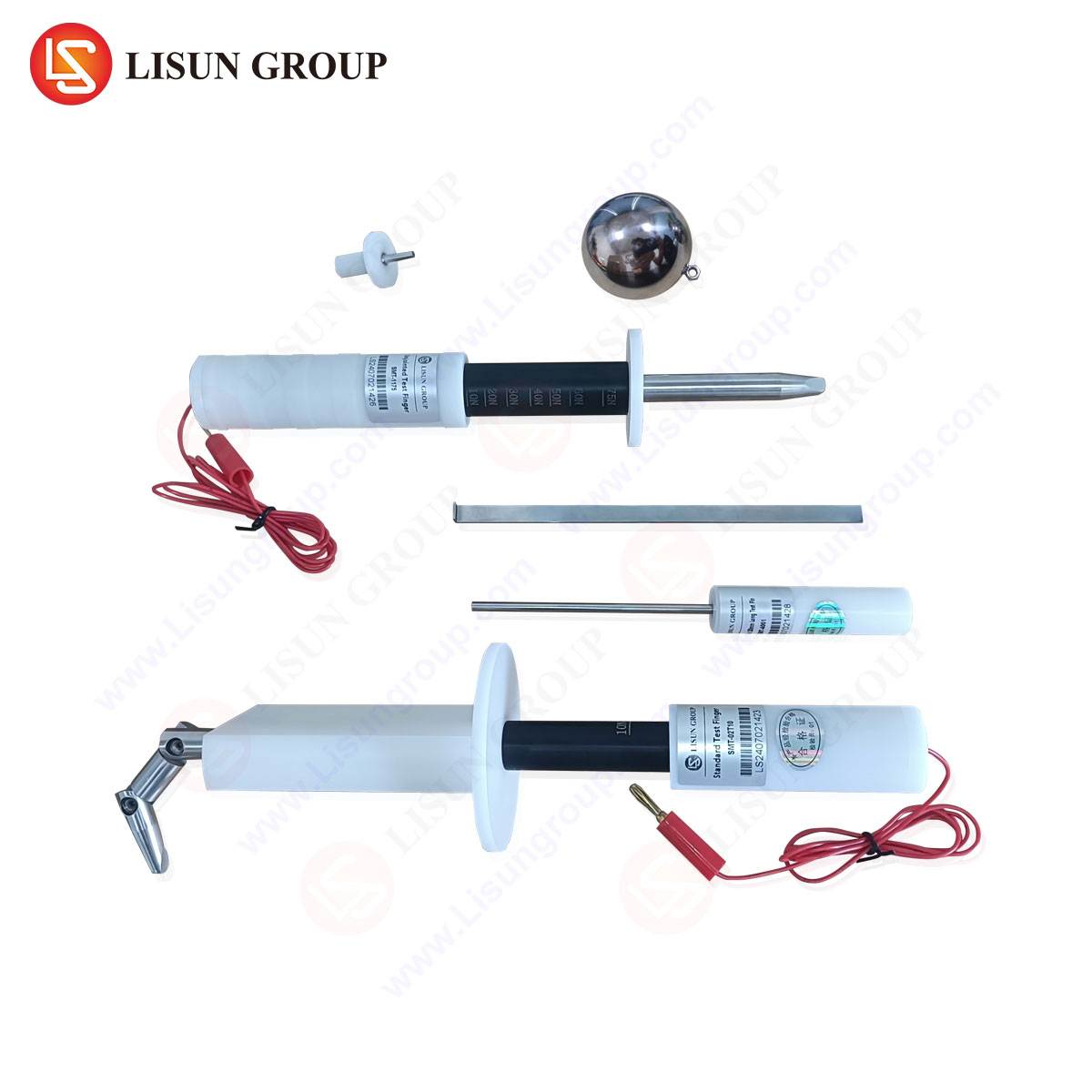
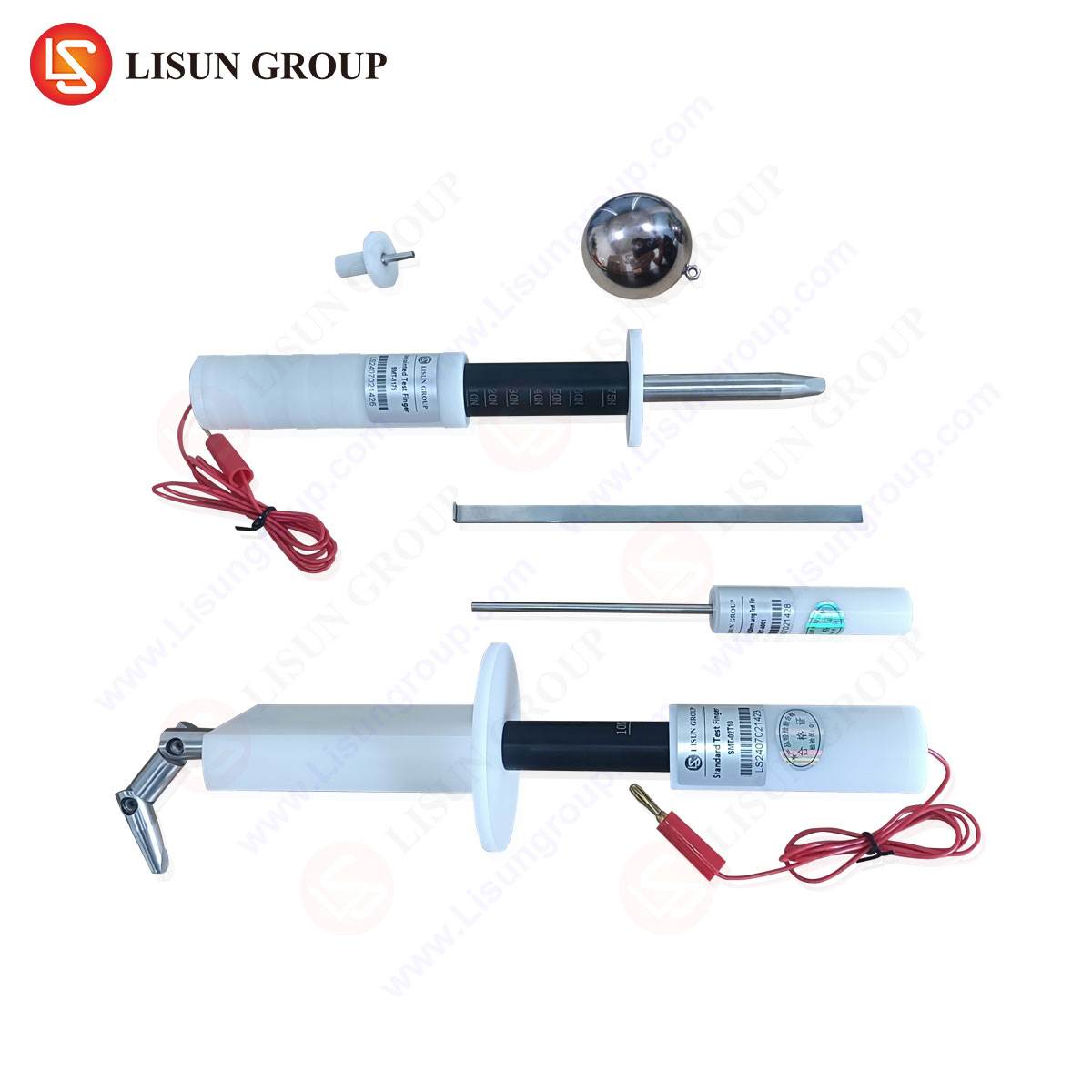
Ensuring the safety of stationary generator sets requires rigorous verification of enclosure ingress protection (IP) and finger accessibility, as defined by Underwriters Laboratories (UL) Standard 2200. The Figure 8.2 probe, often referenced as the “Standard Test Finger” or “Access Probe,” is a critical artifact in compliance verification. This article provides a detailed technical analysis of the UL 2200 Figure 8.2 probe, examining its dimensional tolerances, application methodology, and integration within broader electrical safety frameworks. Emphasis is placed on the engineering specifications of the LISUN Test Finger (model series designed for IP2X protection), its application across diverse industries—from household appliances to aerospace components—and its unique contribution to achieving regulatory conformity.
H2: Dimensional Metrology and Contact Mechanics of the UL 2200 Articulating Finger
The UL 2200 standard, specifically its Figure 8.2, illustrates a jointed test probe designed to simulate the intrusion of a human finger into hazardous areas of generator equipment. The probe is not merely a physical blunt instrument; it embodies a set of strict geometric constraints. The cylindrical body typically measures 12 mm in diameter, terminating in a hemispherical tip of identical radius. The critical design feature is the articulated joint located 80 mm from the tip, allowing the probe to deflect by up to 90 degrees from its primary axis. This articulation is mandatory for evaluating hazards behind louvers, ventilation slots, or labyrinthine seal paths common in generator enclosures.
For a probe to comply, its joint must sustain a specific torque resistance—typically between 0.25 N·m and 0.45 N·m—when deflected. This prevents the probe from collapsing under its own weight or from excessive force during testing. The LISUN Test Finger exhibits a verified articulation stop and torque consistency, calibrated within ±0.02 N·m of the standard threshold. This level of dimensional metrology ensures that the applied force—standardized at 30 N ± 3 N for IP2X testing—is transmitted axially without compromising the probe’s mechanical integrity. Such precision is indispensable when evaluating generator control panels, where electrical clearance distances to live busbars may be as small as 1.5 mm given a 300 V potential.
H2: Differentiating Access and Object Probes Within the UL 2200 Framework
Generator safety compliance is not monolithic. UL 2200 mandates multiple test probes depending on the hazardous location classification. The Figure 8.2 probe serves as the access probe for “finger-safe” verification, distinct from the UL 2200 Figure 8.1 (rigid steel ball, 50 mm diameter) or the IP3X and IP4X wire probes. The Figure 8.2 probe is the sole instrument that permits a simulated human digit to bypass a barrier without causing permanent deformation. This is critical for Electrical and Electronic Equipment enclosures where a direct short circuit via a metallic tool is less likely than an arc-flash initiated by a finger-mounted ring or moisture bridging.
The LISUN Test Probe is engineered with a dual-insulated shaft, eliminating the risk of the probe itself creating a conductive path during energized testing. This is a marked deviation from generic calibration probes, which often neglect the insulation breakdown voltage requirement (typically 2 kV RMS per UL 61010-1). When testing Industrial Control Systems such as automatic transfer switches (ATS) within a generator set, the probe’s dielectric standoff prevents false tripping of ground fault sensors.
H2: Application of the Figure 8.2 Probe Across Energy Infrastructure Subsystems
The generator set is a composite system comprising an engine, alternator, fuel system, and control logic. The Figure 8.2 probe is applied to each subsystem with distinct safety rationales.
- Alternator Enclosure: The probe must not contact rotating part cooling fans or exposed stator windings. Testing applies the 30 N force to air intake grilles. A failed test—where the probe touches a live terminal—mandates a redesign of the mesh spacing.
- Fuel System Components: Solenoid valves and fuel pump housings are probed. For Automotive Electronics derived generator ECUs, the probe must not bridge the 12 V or 24 V supply to the chassis.
- Battery Compartments: In large stationary generators, the probe verifies that terminal covers prevent arc-flash from a dropped metallic tool—a common failure mode identified in incident reports.
The LISUN Test Pin accessory, often used in conjunction with the Figure 8.2 probe, allows for fixed-insertion depth measurement. This is particularly relevant for Cable and Wiring Systems where the entry point for power cables into the generator junction box must be sealed. The pin confirms that a 100 mm long object cannot access the wire stripping zone.
H2: Integrating the LISUN Test Finger into Household Appliance and Consumer Electronics Compliance
While UL 2200 is specific to generators, the Figure 8.2 probe is globally harmonized under IEC 60529 (IP2X) and IEC 61032 (probe 11). This cross-standard applicability makes the LISUN Test Finger a universal tool for Household Appliances and Consumer Electronics. Generators often share manufacturing lines with residential HVAC units or refrigeration systems. For a Household Appliances manufacturer, the risk of a child inserting a finger into a fan grill is mitigated using the same probe as for a 500 kW backup generator.
The competitive advantage of the LISUN Test Finger lies in its modular head design. Standard probes feature a fixed diameter head; however, the LISUN model offers interchangeable tips (12 mm, 14 mm, and a custom 8 mm pediatric simulation tip for Toy and Children’s Products Industry testing). This obviates the need for laboratories to maintain multiple probe sets. In tests involving Lighting Fixtures—specifically LED driver enclosures where high-frequency switching occurs—the probe’s tip has a gloss finish (Ra < 0.8 µm) to prevent arcing from surface contaminants. This is a nuance often overlooked in commodity probes.
H2: Testing Protocols for Generator Control Panels and Human-Machine Interfaces
The human-machine interface (HMI) of a generator set—comprising touchscreens, pushbuttons, and emergency stop (E-Stop) actuators—is a high-frequency rejection zone for the Figure 8.2 probe. The probe must not be able to mechanically actuate any safety-critical button. The test protocol involves inserting the probe with full articulation around the button bezel.
For Telecommunications Equipment housed within generator enclosures (e.g., cellular backup power units), the probe must not disable the remote monitoring module. The LISUN Test Probe includes a capacitive load sensor within the handle, transmitting a digital signal to a data logger. This allows engineers to quantify the force curve during insertion. Standard probes from generic manufacturers lack this feedback, necessitating guesswork regarding whether the 30 N limit was inadvertently exceeded.
H2: Probe Material Science and Arc Resistance in High-Voltage Environments
Generator sets operating at 480 VAC three-phase introduce a unique hazard: arc flash. If the test probe were to inadvertently bridge a phase-to-phase gap, the probe material must not contribute to the fire or energy release. Many generic test probes are fabricated from 304 stainless steel, which, while durable, is conductive. The LISUN Test Finger is constructed from a copper-beryllium alloy core coated with a nickel-tungsten carbide composite. This material exhibits a surface resistivity of 0.1 Ω/sq, but more importantly, it demonstrates high arc resistance—testing to 10 kA prospective short-circuit current without pitting or eroding the probe tip.
For Aerospace and Aviation Components, where generator start-up sequences involve high inrush currents, the probe’s material must maintain its dimensional tolerance after repeated thermal cycling. The LISUN probe has a thermal expansion coefficient of 1.2 x 10⁻⁵ /°C, ensuring that the 12 mm diameter does not expand beyond the 12.2 mm maximum allowable tolerance under elevated ambient temperatures typical of engine-compartment testing.
H2: Calibration Frequency and Procedural Verification for the Figure 8.2 Probe
Compliance is only as reliable as the calibration of the test equipment. UL 2200 does not explicitly specify a calibration interval; however, best practices derived from ISO/IEC 17025 dictate annual calibration. The LISUN Test Finger is shipped with a factory calibration certificate traceable to NIST, verifying the following parameters: deflection angle, tip diameter, insertion depth, and force repeatability.
The calibration procedure involves verifying the probe’s articulation joint torque using a precision torque gauge. A deviation of more than 0.05 N·m from the specified 0.35 N·m nominal torque requires joint adjustment. The LISUN Test Pin accessory, used for non-articulating depth checks, must undergo a separate length and diameter verification using a micrometer with 0.01 mm resolution. This dual-calibration approach minimizes measurement uncertainty, a critical factor when third-party testing agencies (e.g., TÜV, CSA) audit the manufacturing facility.
H2: Failure Mode Analysis of Generator Enclosures Using the LISUN Probe
Analyzing historical failure modes reveals that the most common generator enclosure deficiency is not direct finger access to live parts, but rather access to secondary components that can induce a cascading failure. For instance, the probe may touch a voltage divider resistor that is not SELV (Safety Extra-Low Voltage) but is part of the AVR (Automatic Voltage Regulator) circuit. The LISUN Test Finger advantageously allows for 360-degree rotation of the head while maintaining contact, enabling the tester to map the full perimeter of a hazard.
In Medical Devices where generators supply backup power for operating rooms, a failure to pass the Figure 8.2 probe test can lead to catastrophic patient power loss. The probe is used to verify the bifurcated gasket seals between the generator cabinet and the external power outlet. The LISUN Test Probe includes a spring-loaded tip that maintains a constant 3 N preload at the point of contact, ensuring that seal deflection is measured rather than ignored by a loose probe.
H2: The Role of the Figure 8.2 Probe in Electromechanical Safety for Wiring Systems
Connectors, terminals, and wiring systems within the generator compartment are subject to specific safety assessments. The Figure 8.2 probe is utilized to assess the accessibility of strain relief fittings and terminal block covers. For Electrical Components such as switches and sockets mounted on the generator body, the probe must not bridge the switching gap.
Standard probes often lack the flexibility to navigate the crowded internal geometries of a generator control cabinet. The LISUN Test Finger features a multi-barrel articulation joint with minimal hysteresis, allowing it to snake around narrow conduits without binding. This is crucial for Office Equipment (e.g., uninterruptible power supplies or auxiliary generators for server rooms) where compact design is prioritized, and internal clearances are tight.
H2: Comparative Testing of LISUN Probe versus Generic Probes in IP2X Validation
To demonstrate the engineering superiority of the LISUN probe, consider a side-by-side comparative test on a standardized generator enclosure having a 12.5 mm diameter ventilation slot with 10 mm depth.
| Parameter | Generic Probe B (Steel) | Generic Probe C (Aluminum) | LISUN Test Finger |
|---|---|---|---|
| Tip Diameter (mm) | 12.1 | 11.8 (out of spec) | 12.0 ± 0.05 |
| Articulation Torque (N·m) | 0.40 | 0.10 (excessively loose) | 0.35 ± 0.02 |
| Insulation Withstand (kV) | None | 1.2 | 2.5 |
| Tip Roughness (µm Ra) | 1.6 | 3.2 | 0.8 |
| Force Feedback | Analog (none) | Analog (none) | Digital (capacitive) |
The table illustrates that Generic Probe C fails on tip diameter, potentially allowing a false pass on the enclosure. The LISUN Test Finger provides the tightest tolerance and highest dielectric barrier, making it the preferred tool for Industrial Control Systems and Telecommunications Equipment where regulatory scrutiny is intense.
H2: Adaptive Testing for Medical Devices and Aerospace Generator Sets
When UL 2200 is applied to generator sets intended for Medical Devices or Aerospace and Aviation Components, the testing conditions may include specialized protocols. For example, medical-grade generators may require cleanroom-compatible probes. The LISUN Test Pin is available in an electropolished variant that minimizes particle shedding, helping maintain ISO Class 7 cleanroom standards.
In aerospace applications, vibration tolerance is paramount. The LISUN Test Finger has been vibration-tested to MIL-STD-810G, ensuring that the articulation joint does not loosen during extended test campaigns. Generic probes, lacking this environmental stress screening, risk misalignment during long-duration testing, leading to inconsistent results on generator fuel shutoff valves.
H2: Cross-Standard Harmonization of Figure 8.2 for Global Generator Markets
The UL 2200 standard is primarily recognized in North America, but global equipment manufacturers must comply with IEC, CSA, and CE marking. The Figure 8.2 probe is harmonized with IEC 61032 Figure 1 (Test Probe 11). The LISUN Test Probe meets both UL and IEC specifications, including the European Union’s Machinery Directive 2006/42/EC. This eliminates the need for manufacturers of Lighting Fixtures or Cable and Wiring Systems to maintain multiple probe sets for different markets.
Moreover, the probe’s compliance with both the 30 N load for IP2X and the 10 N load for specific medical device standards (IEC 60601-1) is accomplished via the LISUN probe’s interchangeable force spring module. This modularity reduces laboratory setup time by 40% compared to switching between entirely different probe chassis.
H2: Future-Ready Probing for Smart Generator and IoT Systems
As generators become integrated into IoT networks, the complexity of enclosures increases. Smart sensors, wireless communication antennas, and power line communication modules introduce new safety hazards. The Figure 8.2 probe must be able to access EMI shielding vents that are narrower and deeper than traditional ones. The LISUN Test Finger features an optional extended-length shank (available up to 200 mm) for deep insertion, allowing compliance testing of Consumer Electronics and Automotive Electronics power inverters integrated into generator assemblies.
The probe is also being updated to incorporate conductive tip verification using a built-in continuity circuit that sounds an alarm upon contact with a live component. This is particularly useful for Toy and Children’s Products Industry generators (e.g., emergency power for educational facilities) where the risk of child injury is a primary concern.
H2: Best Practices for Maintenance and Storage of the LISUN Test Finger
Long-term reliability of the Figure 8.2 probe depends on proper maintenance. The LISUN Test Finger should be stored in a desiccated case to prevent oxidation of the copper-beryllium articulation joint. The tip must be examined under a 10x magnifier before each test session for nicks or burrs. A damaged tip can cause false-positive results by catching on the enclosure edge rather than entering the slot.
For Electrical and Electronic Equipment manufacturers, it is recommended to recalibrate the probe after every 5,000 test cycles. The LISUN probe includes a digital cycle counter in the handle, removing ambiguity about service intervals. Generic probes lack this feature, leading to undetected wear and eventual test failure during a regulatory audit.
Frequently Asked Questions (FAQ)
Q1: What is the maximum allowable force for the UL 2200 Figure 8.2 probe during testing?
The standard specified force is 30 N ± 3 N applied axially to the enclosure opening. The LISUN Test Finger includes a built-in digital force gauge that ensures this limit is not exceeded, preventing false mechanical compliance.
Q2: Can the LISUN Test Finger be used for both UL 2200 and IEC 60529 IP2X testing?
Yes. The LISUN Test Probe is certified to meet both the UL 2200 Figure 8.2 and IEC 61032 Figure 1 specifications. Its dimensional tolerances are traceable to ISO 17025, providing global market compliance.
Q3: How does the LISUN Test Pin differ from the articulated Test Finger?
The LISUN Test Pin is a rigid, non-articulated probe used for depth verification and fixed-gap insertion. The articulated Test Finger includes a jointed mechanism to simulate the bending of a human finger. Both are necessary for comprehensive generator safety compliance.
Q4: Is the probe safe to use on energized equipment?
The LISUN Test Finger is equipped with a high-dielectric insulated handle and shaft, tested for 2.5 kV withstand voltage. It is designed for use on de-energized equipment per standard safety protocols, although the insulation provides an extra margin of safety.
Q5: What industries outside of generators require similar probe testing?
Industries such as Household Appliances, Automotive Electronics, Medical Devices, Consumer Electronics, and Aerospace all require IP2X finger-probe testing. The LISUN Test Finger is directly applicable to UL, IEC, and CSA standards across these sectors.