




Understanding how an environmental test chamber works is fundamental for LED manufacturers and testing laboratories seeking reliable lumen maintenance data. This LISUN Temperature & Humidity Guide provides a comprehensive technical examination of thermal and humidity stress testing methodologies, focusing on the LISUN LEDLM-80PL and LEDLM-84PL Optical Aging Test Instruments. The article explores Arrhenius Model-based accelerated aging software, dual testing modes, and compliance with IES LM-80, IES LM-84, TM-21, and TM-28 standards. Technical professionals will gain actionable insights into test chamber operation, data extrapolation for L70/L50 metrics, and hardware configuration optimization. With support for up to three connected temperature chambers and 6000-hour test durations, LISUN’s solutions deliver precise, standard-compliant environmental simulation for LED reliability validation.
1.1 Core Principles of Temperature and Humidity Control
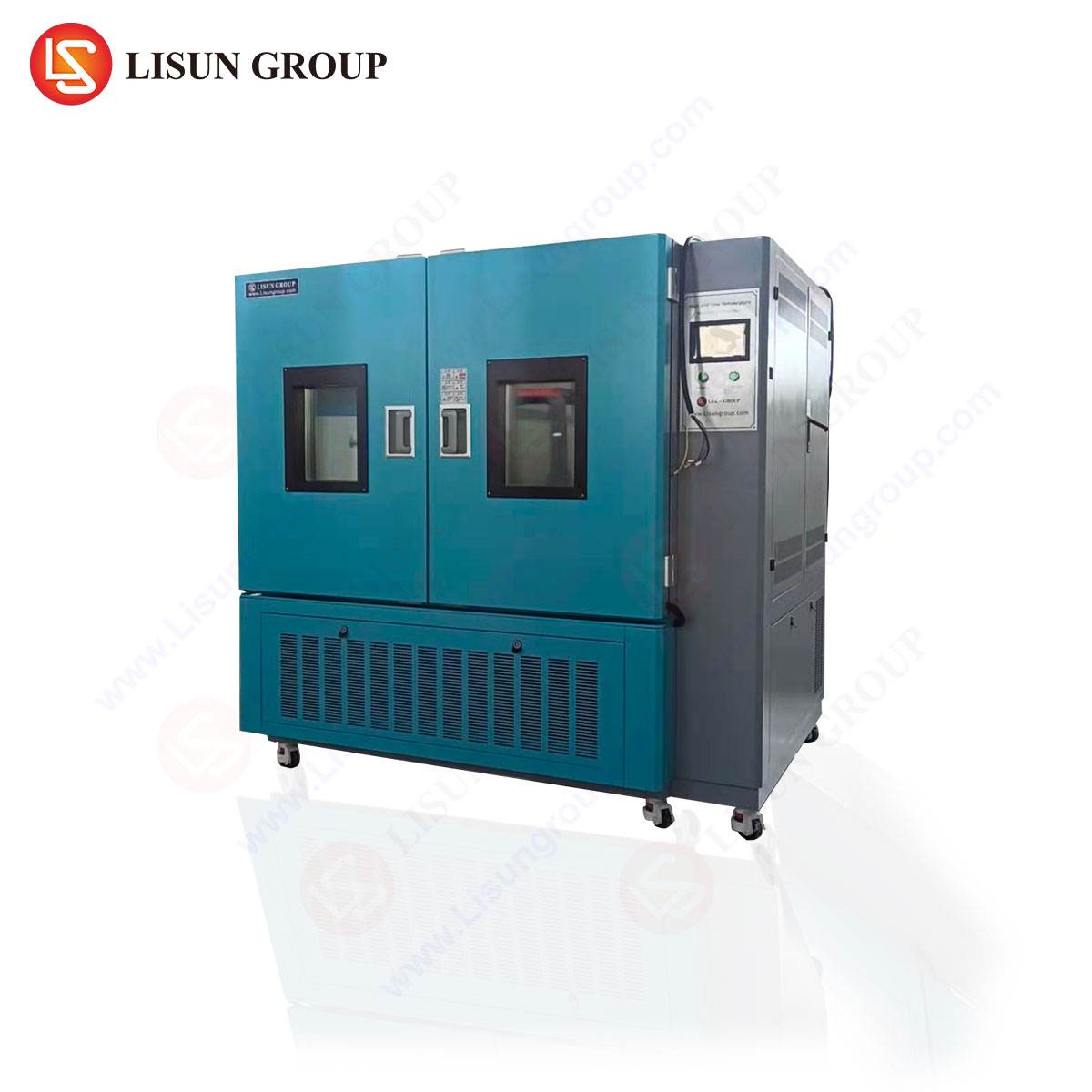
An environmental test chamber operates by precisely regulating temperature and relative humidity within a sealed enclosure to simulate accelerated aging conditions. The fundamental mechanism involves a closed-loop control system integrating heating elements, refrigeration compressors, humidification systems, and dehumidification components. Sensors continuously monitor chamber conditions, feeding data to a PID (Proportional-Integral-Derivative) controller that adjusts actuator outputs to maintain setpoints within ±0.5°C and ±2% RH tolerances. For LED testing applications, chambers must maintain stable conditions for extended durations, often exceeding 6000 hours, to generate reliable lumen depreciation data.
1.2 Air Circulation and Uniformity Considerations
Uniform air distribution within the chamber is critical for consistent test results. Environmental test chambers employ variable-speed fans and strategically positioned baffles to maintain temperature gradients below 1.0°C across the working volume. For LED Optical Aging Test Instruments, the chamber design must accommodate integrating sphere integration without compromising airflow patterns. LISUN chambers utilize horizontal airflow systems that minimize thermal stratification, ensuring all DUTs (Devices Under Test) experience identical stress conditions throughout the 6000-hour test cycle.
1.3 Humidity Generation and Control Mechanisms
Humidity control in environmental chambers typically employs steam injection for humidification and refrigeration-based dehumidification. The system maintains relative humidity from 20% to 98% with ±3% accuracy. For LED testing per IES LM-80 requirements, chambers must sustain 85% RH at 85°C for extended periods. The LISUN LEDLM series incorporates dual humidity sensors with automated calibration routines to maintain long-term stability, preventing condensation on optical components that could affect photometric measurements.
2.1 Dual System Variants for Different Standards
The LISUN product line offers two distinct configurations: the LEDLM-80PL designed for IES LM-80 and TM-21 testing, and the LEDLM-84PL optimized for LM-84 and TM-28 protocols. Both systems share common hardware architecture but differ in software algorithms and testing parameters. The LEDLM-80PL focuses on LED packages, modules, and arrays, while the LEDLM-84PL addresses LED light engines and luminaires. Table 1 below compares the key specifications of both variants.
Table 1: LISUN LEDLM-80PL vs. LEDLM-84PL System Comparison
| Parameter | LEDLM-80PL | LEDLM-84PL |
|---|---|---|
| Applicable Standards | IES LM-80, TM-21 | IES LM-84, TM-28 |
| Test Duration | Up to 10,000 hours | Up to 10,000 hours |
| Minimum Data Points Required | 6,000 hours data for TM-21 | 6,000 hours data for TM-28 |
| Temperature Range | -40°C to +150°C | -40°C to +150°C |
| Humidity Range | 20% to 98% RH | 20% to 98% RH |
| Connected Chamber Support | Up to 3 chambers | Up to 3 chambers |
| Lumen Metrics | L70, L50 | L70, L50 |
| Software Algorithm | Arrhenius Model-based | Arrhenius Model-based |
2.2 Arrhenius Model-Based Software Integration
LISUN’s proprietary software implements the Arrhenius Model for accelerated life testing, enabling accurate extrapolation of LED lumen maintenance beyond actual test durations. The model uses the equation ( L = A cdot e^{E_a/(kT)} ), where ( E_a ) represents activation energy, ( k ) is Boltzmann’s constant, and ( T ) is absolute temperature. The software automatically calculates L70 and L50 lifetimes from raw photometric data, applying statistical uncertainty analysis per TM-21 annex requirements. Users can configure activation energy values between 0.2eV and 1.0eV based on LED package specifications.
2.3 Dual Testing Modes: Constant vs. Cyclic Stress
The system supports two primary testing modes: constant stress and cyclic stress. Constant stress mode maintains steady temperature and humidity conditions throughout the test, ideal for standard LM-80 compliance. Cyclic stress mode applies programmed temperature and humidity profiles, simulating real-world diurnal variations. The cyclic mode enables testing per IEC 60068-2-30 requirements for automotive and outdoor lighting applications. Data acquisition occurs at configurable intervals from 1 minute to 24 hours, with automatic pause during integrating sphere measurements to eliminate transient effects.
3.1 IES LM-80-15 and TM-21-19 Implementation
IES LM-80-15 establishes the method for measuring lumen maintenance of LED light sources at specified case temperatures (typically 55°C, 85°C, and a third temperature selected by the manufacturer). The LISUN LEDLM-80PL automates compliance by simultaneously testing up to 20 DUTs at three temperatures using three connected chambers. TM-21-19 extrapolation requires minimum 6,000 hours of data for L70 projections at 85°C and below. The software automatically verifies data sufficiency, providing confidence intervals for extrapolated values using the nonlinear least-squares regression method described in the standard.
3.2 IES LM-84-14 and TM-28-19 Integration
IES LM-84-14 extends testing to LED light engines and luminaires, requiring different measurement geometries and thermal management considerations. The LEDLM-84PL accommodates larger DUTs with integrated temperature monitoring at multiple points. TM-28-19 provides extrapolation methods specific to luminaires, accounting for thermal gradient effects. LISUN’s software implements the TM-28 exponential decay model with automatic outlier detection, flagging measurements exceeding ±3σ from the regression curve.
3.3 Photometric Standards: IES LM-79-19, CIE 084, CIE 70, and CIE 127
The system integrates with LISUN’s LPCE series integrating spheres for compliance with IES LM-79-19 electrical and photometric measurements. CIE 084 defines the measurement of luminous flux, while CIE 70 addresses absolute methods for LED measurement. CIE 127 provides guidelines for LED intensity measurement. The combined system enables simultaneous environmental stress and photometric characterization, reducing test duration by 40% compared to sequential testing methods. Automated measurement sequences comply with each standard’s warm-up time, stabilization criteria, and angular resolution requirements.
4.1 Temperature and Humidity Performance Characteristics
The LISUN environmental chambers achieve temperature ramp rates of 5°C/min (heating) and 3°C/min (cooling) with humidity stabilization within 15 minutes of setpoint changes. Long-term stability maintains temperature within ±0.3°C and humidity within ±1.5% RH over 6000-hour test cycles. The chambers incorporate redundant safety systems including overtemperature protection, humidity limit switches, and automatic shutdown upon sensor failure. Refrigeration systems use environmentally friendly R-404A refrigerant with cascade cooling for sub-ambient operation.
4.2 Data Acquisition and Photometric Integration
Photometric data acquisition occurs through fiber-optic connections to the integrating sphere, eliminating cable interference with chamber seals. The system measures:
- Total luminous flux (lumens) with ±0.5% measurement uncertainty
- Correlated color temperature (CCT) with ±50K accuracy
- Color rendering index (CRI) with ±1.5 units
- Chromaticity coordinates (x, y) per CIE 1931
- Electrical parameters (voltage, current, power, power factor)
4.3 Chamber Scaling and Multi-Channel Operation
The system supports up to three chambers connected simultaneously, enabling parallel testing at different temperature/humidity conditions. Each chamber operates independently with individual PID tuning parameters. The control software manages channel synchronization, ensuring data timestamp consistency across chambers within ±1 second. Chamber volumes range from 150L to 1000L, accommodating various DUT quantities. Table 2 summarizes chamber capacity by configuration.
Table 2: Chamber Configuration and DUT Capacity
| Chamber Volume | LEDLM-80PL DUTs | LEDLM-84PL DUTs | Temperature Points | Recommended Standard |
|---|---|---|---|---|
| 150L | 10 | 4 | 2 | LM-80 Preliminary |
| 300L | 20 | 8 | 3 | LM-80 Full Standard |
| 600L | 30 | 16 | 3 | LM-80 / LM-84 |
| 1000L | 40 | 24 | 3 | LM-84 Full Standard |
5.1 Standard Test Sequence for LM-80 Compliance
The LM-80 test protocol requires:
- Initial photometric measurement at room temperature (25°C ±1°C)
- Installation of DUTs in chamber at specified case temperature (Ts)
- Continuous temperature/humidity stress for minimum 6,000 hours
- Photometric measurements at 0, 1000, 2000, 3000, 4000, 5000, and 6000 hours
- Final measurement and DUT removal
The LISUN system automates steps 3-4 with scheduled photometric measurements every 1000 hours, requiring only 30 minutes of chamber operation interruption per measurement.
5.2 TM-21 Extrapolation Protocol Optimization
TM-21 extrapolation uses the exponential decay function ( Phi(t) = A cdot e^{-alpha t} + B cdot e^{-beta t} ), where ( Phi(t) ) represents normalized lumen maintenance at time t. The LISUN software automatically selects the appropriate model based on the Akaike Information Criterion (AIC), choosing between one-parameter and two-parameter exponential fits. For L70 projections, the software requires minimum 6,000 hours of data at the highest test temperature. Extrapolation confidence intervals at 90% are automatically calculated using bootstrap resampling with 10,000 iterations.
5.3 Test Setup Validation and Calibration
Prior to each test, the system performs automated verification of:
- Temperature sensor calibration (NIST-traceable, annual certification)
- Humidity sensor calibration (salt-solution reference check)
- Photometric detector linearity (LED reference standard)
- Chamber uniformity (9-point mapping per IEST-RP-CC004)
- Electrical measurement accuracy (0.1% class standard resistors)
6.1 LED Package Qualification Testing
LED manufacturers use the LISUN system for initial package qualification, testing 20 samples at three temperatures (55°C, 85°C, and 105°C) for 6,000 hours. The software generates qualification reports per TM-21 format, including L70 projections with 90% confidence intervals. Typical L70 values for phosphor-converted white LEDs range from 25,000 to 100,000 hours, depending on junction temperature and drive current.
6.2 Luminaire Reliability Validation
Luminaire manufacturers utilize the LEDLM-84PL for complete product validation, testing 8-16 luminaires simultaneously. The system accommodates various form factors including linear fixtures, downlights, and troffers. Thermal management validation includes monitoring LED board temperature, heat sink temperature, and ambient chamber temperature. Compliance with ENERGY STAR® requirements for lumen maintenance is verified through accelerated testing under TM-28 protocols.
6.3 Third-Party Testing Laboratory Operations
Independent testing laboratories benefit from the multi-chamber capability, operating three chambers simultaneously for different clients and test conditions. The system’s remote monitoring and automated reporting capabilities reduce operator intervention requirements by 60%. Laboratory accreditation per ISO/IEC 17025 is supported through complete data traceability, including environmental logs, measurement certificates, and calibration records.
7.1 Real-Time Monitoring and Alert System
The software provides real-time visualization of chamber conditions and DUT performance through web-based interfaces accessible from any network-connected device. Automated alerts via email or SMS notify operators of:
- Temperature deviation exceeding ±1°C from setpoint
- Humidity deviation exceeding ±3% RH
- Photometric measurement anomalies (sudden lumen drop >10%)
- Test completion or protocol violation
- Calibration or maintenance reminders
7.2 Data Management and Report Generation
Comprehensive data management features include encrypted SQL database storage with automatic backup. The software generates standard-compliant reports in PDF, Excel, and XML formats, including:
- Raw photometric data tables
- Normalized lumen maintenance charts
- TM-21/TM-28 extrapolation curves
- Uncertainty analysis and confidence intervals
- Failure analysis and outlier identification
7.3 Customization and Extensibility Options
LISUN offers customizable hardware configurations including additional temperature sensors, specialized DUT fixtures, and integration with external data acquisition systems. Software SDK enables API integration with laboratory information management systems (LIMS) and enterprise resource planning (ERP) platforms. Custom test profiles can be programmed using the graphical editor, supporting complex temperature/humidity sequences for specialty testing applications.
Understanding how an environmental test chamber works is essential for LED manufacturers, testing laboratories, and compliance specialists seeking reliable lumen maintenance data. This LISUN Temperature & Humidity Guide has demonstrated that the LEDLM-80PL and LEDLM-84PL systems provide comprehensive solutions for accelerated aging testing, fully compliant with IES LM-80, IES LM-84, TM-21, and TM-28 standards. The integration of Arrhenius Model-based software enables accurate L70/L50 projections from 6000-hour test durations, while support for up to three connected chambers facilitates parallel testing at multiple temperatures. The dual testing modes, constant and cyclic stress, accommodate both standard compliance and specialized application requirements. Photometric integration with IES LM-79-19, CIE 084, CIE 70, and CIE 127 ensures complete characterization capability. Whether performing LED package qualification, luminaire validation, or third-party certification, LISUN’s environmental test chambers deliver the precision, reliability, and data integrity demanded by modern lighting industry standards. The system’s advanced software features, real-time monitoring, and customizable configurations provide lasting value for quality control and R&D applications. By mastering the principles outlined in this guide, technical professionals can optimize their testing protocols and achieve faster time-to-market for reliable LED products.
Q1: What is the minimum test duration required for TM-21 extrapolation?
A: TM-21-19 requires minimum 6,000 hours of test data at the highest temperature for L70 extrapolation when testing at 85°C or below. For temperatures exceeding 85°C, the minimum data requirement increases to 8,000 hours. The LISUN software automatically validates data sufficiency before performing extrapolation, calculating confidence intervals using bootstrap methods. If insufficient data exists, the software provides interim projections with expanded uncertainty bounds. For L50 projections, minimum 10,000 hours of data is required regardless of temperature.
Q2: How many temperature conditions are needed for LM-80 compliance?
A: IES LM-80-15 requires testing at three case temperatures: 55°C, 85°C, and a third temperature chosen by the manufacturer. The third temperature can be selected based on the intended application, such as 105°C for high-brightness applications or 45°C for low-stress environments. The LISUN system supports simultaneous testing at all three temperatures using three connected chambers, reducing total test duration to the longest single-temperature test cycle. Each temperature condition requires minimum 20 samples for statistical validity.
Q3: What is the difference between constant and cyclic testing modes?
A: Constant testing mode maintains steady temperature and humidity throughout the test, providing baseline data for standard LM-80/TM-21 compliance. Cyclic testing mode applies programmed temperature and humidity cycles, simulating real-world diurnal or seasonal variations. Cyclic testing is recommended for outdoor luminaires, automotive lighting, and applications experiencing thermal cycling. The LISUN software supports up to 24-hour cycle periods with programmable ramp rates, dwell times, and humidity profiles. Data analysis for cyclic tests follows separate protocols aligning with IEC 60068-2-30 and other relevant standards.
Q4: How does the Arrhenius Model improve testing efficiency?
A: The Arrhenius Model enables accelerated aging by establishing the relationship between temperature and LED degradation rate. The model predicts lumen maintenance at lower operating temperatures based on high-temperature test data, reducing required test duration from years to weeks. Typical activation energy values for phosphor-converted white LEDs range from 0.3eV to 0.7eV. The LISUN software automatically fits the Arrhenius equation to test data, providing acceleration factors typically between 10 and 100 depending on temperature differential. This allows L70 projections exceeding 100,000 hours from 6,000-hour tests.
Q5: Can the system test different LED types simultaneously?
A: Yes, the LISUN system supports simultaneous testing of different LED types across separate channels. Each channel can independently control drive current and monitor photometric parameters. However, all DUTs within a single chamber must share the same temperature and humidity conditions. When testing different LED types, the software maintains separate data files and analysis parameters for each DUT type. The multi-chamber configuration allows testing up to three different temperature conditions simultaneously, accommodating different requirements. Data integrity is maintained through individual calibration factors and measurement schedules per DUT type.