




Abstract
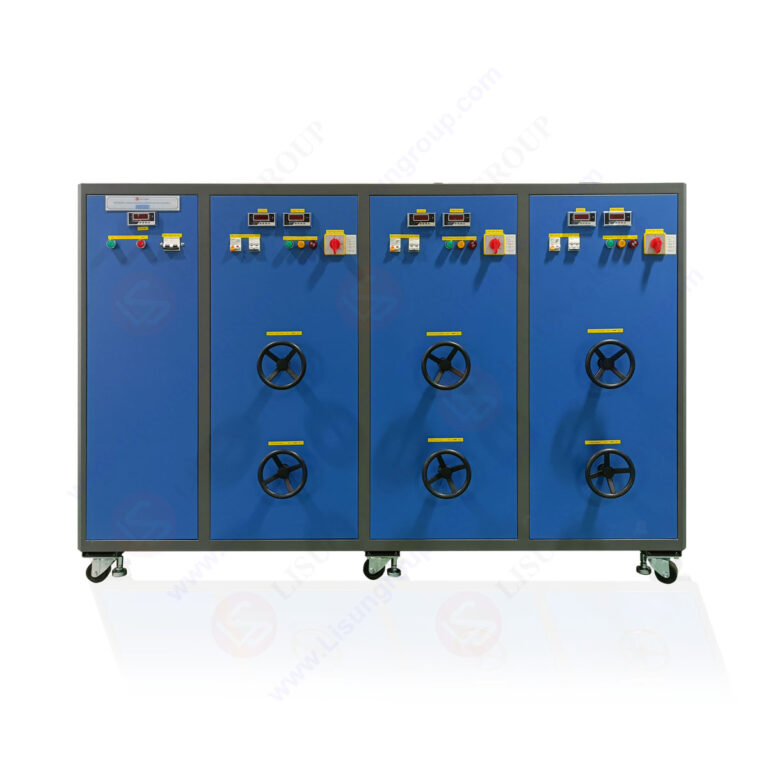
In the rigorous world of electrical accessory compliance testing, accurately simulating real-world load conditions is paramount. The LISUN DFX series Externally Ballasted Fluorescent Lamp Test Load Cabinet serves as a critical instrument for this purpose, enabling manufacturers and testing laboratories to validate the performance and safety of switches, sockets, and other accessories under standardized load profiles. This programmable DC load system, with its multi-channel architecture, provides precise control over resistive, inductive, and capacitive load parameters, directly supporting compliance with key international standards. For engineers focused on IEC and GB standard alignment, the DFX series offers a reliable, data-driven solution for conducting endurance, temperature rise, and abnormal condition tests, ensuring product reliability and market access. This article delves into the technical capabilities, standard-specific applications, and integration potential of this essential load test cabinet.
1.1 Core Function and Purpose
The LISUN DFX series is engineered to simulate the electrical load characteristics of externally ballasted fluorescent lamps and other specified loads as mandated by international safety standards. Its primary function is to provide a stable, programmable, and measurable load for testing the electrical endurance and thermal performance of wiring accessories. By replacing unpredictable real lamps with a precise electronic simulator, the DFX load test cabinet ensures test repeatability, enhances laboratory safety, and accelerates the testing workflow for switches, socket-outlets, and connection devices.
1.2 Target Applications and Industries
This equipment is indispensable for electrical product manufacturers conducting in-house R&D and quality validation, as well as for third-party certification bodies (e.g., TÜV, UL, Intertek) and national testing laboratories. Its applications are centered on compliance testing for products falling under the scope of standards such as IEC 60669-1 (switches), IEC 60884-1 (plugs and socket-outlets), and IEC 61058-1 (appliance switches). The load test cabinet is specifically used for tests including but not limited to normal operation, endurance, temperature rise, and short-circuit current withstand capability.
2.1 Multi-Channel Programmable DC Load Design
The DFX series employs a sophisticated multi-channel DC load design, allowing independent configuration and control of up to three channels in the DFX-20-3CH model. Each channel can be programmed as a precise constant current sink, simulating the desired test current. This architecture enables simultaneous testing of multiple poles of a switch or different circuits, significantly improving testing efficiency. The system’s high-speed electronic switching replaces mechanical contactors, offering superior longevity and precise timing control for cyclic endurance tests.
2.2 Detailed Performance Parameters
The performance of the DFX load test cabinet is defined by its accuracy, resolution, and stability. Key specifications include a current setting resolution of 0.01A and a measurement accuracy of ±(0.5% of reading + 0.1% of range). The load capacitance is adjustable within a range of 0.1μF to 10μF, crucial for simulating the capacitive component of lamp loads as per standard requirements. The power factor of the simulated load can be adjusted, typically within a range that accommodates the lagging power factor of inductive ballasts, ensuring the test condition accurately reflects real appliance characteristics.
3.1 Alignment with IEC Standard Clauses
The design and functionality of the DFX series are directly mapped to specific clauses within core IEC standards. For switch testing per IEC 60669-1, it fulfills the requirements of Clause 19 (Temperature rise) and Clause 20 (Normal operation), providing the specified resistive and inductive loads. For plug and socket-outlet testing per IEC 60884-1, it is essential for Clause 20 (Temperature rise of fixed socket-outlets) and Clause 21 (Normal operation). The programmable counter automates the number of operating cycles mandated in these clauses.
3.2 Support for GB and Other Regional Standards
Beyond IEC standards, the DFX load test cabinet is fully applicable for testing to the Chinese GB standards, which are largely harmonized with IEC. This includes GB/T 16915.1 (identical to IEC 60669-1) and GB/T 2099.1 (identical to IEC 60884-1). Its capability to simulate the exact load profiles specified ensures that products destined for the Chinese market meet the Compulsory Certification (CCC) requirements. The same technical rationale applies to other regional derivatives of IEC standards.
4.1 DFX Series Model Specification Table
Selecting the appropriate model depends on the maximum test current and the required number of independent channels. The following table compares key specifications across the LISUN DFX series.
| Model | Output Current per Channel | Number of Channels | Total Maximum Current | Primary Input Voltage | Typical Application Scope |
|---|---|---|---|---|---|
| DFX-20 | 0-20A | 1 | 20A | AC 220V ±10%, 50/60Hz | Single-pole switches, basic socket testing |
| DFX-20-3CH | 0-20A | 3 | 60A (3x20A) | AC 220V ±10%, 50/60Hz | Multi-pole switches (e.g., 3-phase), multi-gang sockets, complex accessories |
| DFX-40 | 0-40A | 1 | 40A | AC 220V ±10%, 50/60Hz | Higher-current switches and connection devices |
| DFX-60 | 0-60A | 1 | 60A | AC 220V ±10%, 50/60Hz | Industrial switches, heavy-duty socket-outlets |
| DFX-80 | 0-80A | 1 | 80A | AC 220V ±10%, 50/60Hz | High-current industrial applications, specialized accessories |
4.2 Matching the Load Test Cabinet to Standard Requirements
A critical selection factor is ensuring the equipment’s capacity meets or exceeds the worst-case load specified in the applicable standard. For example, IEC 60884-1 Clause 20 specifies tests at the rated current of the socket-outlet. A 16A socket would require a load test cabinet capable of delivering a stable 16A current. The DFX-20 or one channel of the DFX-20-3CH would be suitable. For a 32A industrial device, the DFX-40 model would be the minimum requirement.
5.1 End-to-End Testing Workflow with LISUN Equipment
The DFX series is not a standalone instrument but a core component within a comprehensive compliance testing ecosystem. It is designed for seamless integration with other LISUN apparatus to automate complete test sequences. For instance, it can be connected to a LISUN CZKS Series Life Tester (Mechanical Endurance Tester). In this setup, the CZKS provides the mechanical actuation of the switch under test, while the DFX supplies and monitors the electrical load, creating a fully automated electrical endurance test station as per IEC 60669-1 Clause 20.
5.2 Complementary Test Equipment
Beyond life testers, the DFX load test cabinet complements other specialized testers. When performing temperature rise tests, its stable load is used while temperature measurements are taken, often using data acquisition systems. It can also function in conjunction with LISUN SW Series Ball Pressure Testers or Bending Testers for tests that require a powered state during or after mechanical stress. This interoperability underscores its role as a fundamental power source within a holistic laboratory setup.
6.1 Configuring Load Parameters for a Standard Test
A typical test procedure begins with configuring the DFX load test cabinet to the parameters specified in the relevant standard clause. For a resistive load test, the power factor is set to unity (1.0). For an inductive load simulating a fluorescent lamp ballast, the appropriate lagging power factor (e.g., 0.6 to 0.9) and any specified capacitive component are set. The test current is precisely entered, and the cycle count is programmed into the built-in electronic counter. Connections are made using appropriately rated cables to the Device Under Test (DUT).
6.2 Safety and Maintenance Protocols
Operational safety is paramount. The cabinet must be properly grounded, and all connections checked before energizing. The DUT should be securely mounted. Regular maintenance includes verifying calibration of current measurement, ensuring cooling vents are unobstructed, and checking the integrity of output terminals and cables. Logging all tests with configured parameters and results is a critical best practice for audit trails and test reproducibility.
7.1 Programmable Cycling and Data Monitoring
A significant advantage over simple resistive load banks is programmability. The DFX allows users to set complex test profiles, including the number of “ON” and “OFF” cycles, dwell times, and even different load levels for different phases of a test. Integrated voltage and current monitoring provides real-time data, allowing engineers to detect failures (such as contact welding or excessive voltage drop) immediately, rather than only at the end of a lengthy test sequence.
7.2 Enhanced Accuracy and Repeatability
The use of solid-state electronic loads eliminates the drift and variability associated with aging tungsten lamps or resistive coils. This ensures that the load current applied on the first day of testing is identical to that applied months later, a cornerstone of reliable quality control data. The high measurement accuracy provides confidence that products are being tested against the precise limits of the standard, reducing compliance risk.
The LISUN DFX series Externally Ballasted Fluorescent Lamp Test Load Cabinet represents a sophisticated and essential tool for modern electrical compliance laboratories. By providing precise, programmable, and multi-channel load simulation, it directly addresses the rigorous requirements of key IEC and GB standards for wiring accessories. Its technical architecture, emphasizing accuracy, repeatability, and integration capability, moves beyond basic compliance to enable efficient R&D and robust quality assurance workflows. For engineers tasked with ensuring product safety and reliability, the DFX series transforms a critical but complex testing requirement into a controlled, data-driven, and reliable process. Investing in such a system is an investment in test integrity, laboratory efficiency, and ultimately, market confidence in the finished electrical products.
Q1: How does the DFX load test cabinet simulate an inductive fluorescent lamp load compared to using actual ballasts and lamps?
A: The DFX uses an electronic circuit to present a lagging power factor load to the Device Under Test (DUT), mimicking the current waveform phase shift caused by an inductive magnetic ballast. It allows precise adjustment of the power factor (e.g., to 0.6, 0.8, etc.) as required by standards like IEC 60669-1. This method is superior to using physical ballasts and lamps, which can vary in characteristics due to manufacturing tolerances, temperature, and aging. The electronic simulation ensures consistent, repeatable test conditions, eliminates the maintenance and replacement of physical lamps, and allows for easy parameter adjustment via the digital interface.
Q2: Can the DFX-20-3CH be used to test a 3-phase switch by loading all three poles simultaneously?
A: Yes, this is a primary application for the multi-channel DFX-20-3CH model. Each of its three independent channels can be connected to one pole of a 3-phase switch. All channels can be programmed with the same current value and started simultaneously, applying a balanced load across all poles. This accurately simulates the switch’s real operating condition in a 3-phase circuit. The cabinet’s monitoring system can track the performance of each pole individually, allowing engineers to identify if one pole fails (e.g., excessive voltage drop) during the endurance test while the others remain functional.
Q3: What standards specifically require the use of an externally ballasted fluorescent lamp load, and how does the DFX meet these requirements?
A: Key standards mandating this specific load profile include IEC 60669-1 Clause 19.2 (Temperature rise test for switches) and Clause 20.2 (Normal operation test for switches), which specify tests under resistive and inductive load conditions, the latter representing a fluorescent lamp circuit. Similarly, IEC 60884-1 Clause 20 (Temperature rise) and Clause 21 (Normal operation) for socket-outlets reference these loads. The DFX series meets these requirements by providing a programmable load with adjustable power factor to simulate the inductive component, adjustable capacitance for compensation, and precise current control to the rated value specified in the standard, all within the required accuracy tolerances.
Q4: Is the DFX load test cabinet suitable for performing short-circuit tests on accessories?
A: The DFX series is designed primarily for endurance, temperature rise, and normal operation testing at rated or specified currents. It is not a high-fault current source for short-circuit withstand testing as required by clauses such as IEC 60884-1 Clause 24. Short-circuit tests require a specialized high-current power source or a prospective short-circuit current tester capable of delivering currents of several hundred or thousand amperes. The DFX should be used in conjunction with such equipment for a complete test regimen, where it handles the sustained load testing before and after the short-circuit event.