


Mastering Corrosion Testing: A Comprehensive Guide to LISUN Salt Spray Testers for ASTM B117 Compliance
Corrosion remains one of the most persistent and costly failure mechanisms across engineered systems. From microelectronic interconnects in consumer devices to structural alloys in aerospace assemblies, the degradation of materials due to environmental exposure demands rigorous, standardized evaluation. Among the suite of accelerated corrosion test methods, the neutral salt spray (NSS) test, as defined in ASTM B117, serves as the de facto benchmark for assessing protective coatings and base material resistance. This guide examines the operational principles, technical specifications, and industrial applications of the LISUN YWX/Q-010X salt spray tester—a chamber engineered to deliver consistent, reproducible test conditions for ASTM B117 compliance. We dissect its design rationale, metrological capabilities, and strategic advantages for quality assurance laboratories across diverse manufacturing sectors.
The Scientific Basis of Salt Spray Testing and ASTM B117
The ASTM B117 standard, originally published in 1939 and revised multiple times to reflect advancing metrology, specifies apparatus, reagent preparation, and operational procedures for conducting salt spray (fog) tests. The test simulates a corrosive marine environment by atomizing a 5% sodium chloride (NaCl) solution at a controlled temperature of 35°C ± 1°C within a sealed chamber. The resultant fog settles on test specimens, accelerating galvanic, pitting, and crevice corrosion mechanisms. It is critical to understand that the test is not intended to replicate natural exposure; rather, it provides a comparative benchmark for coating quality, process consistency, and material selection.
Mechanistically, the corrosion rate in an NSS chamber depends upon solution conductivity, pH, temperature uniformity, and fog deposition rate. ASTM B117 mandates a collection rate of 1.0 to 2.0 mL of solution per 80 cm² per hour, with a pH range of 6.5 to 7.2. The LISUN YWX/Q-010X distinguishes itself by maintaining these parameters within stringent tolerances, reducing inter-laboratory variability—a well-documented challenge in accelerated testing. For manufacturers of electrical components, where a 50-micron pinhole in a zinc plating can precipitate field failure within weeks, the reproducibility of the salt fog challenge is non-negotiable.
LISUN YWX/Q-010X: Specification Breakdown and Testing Principles
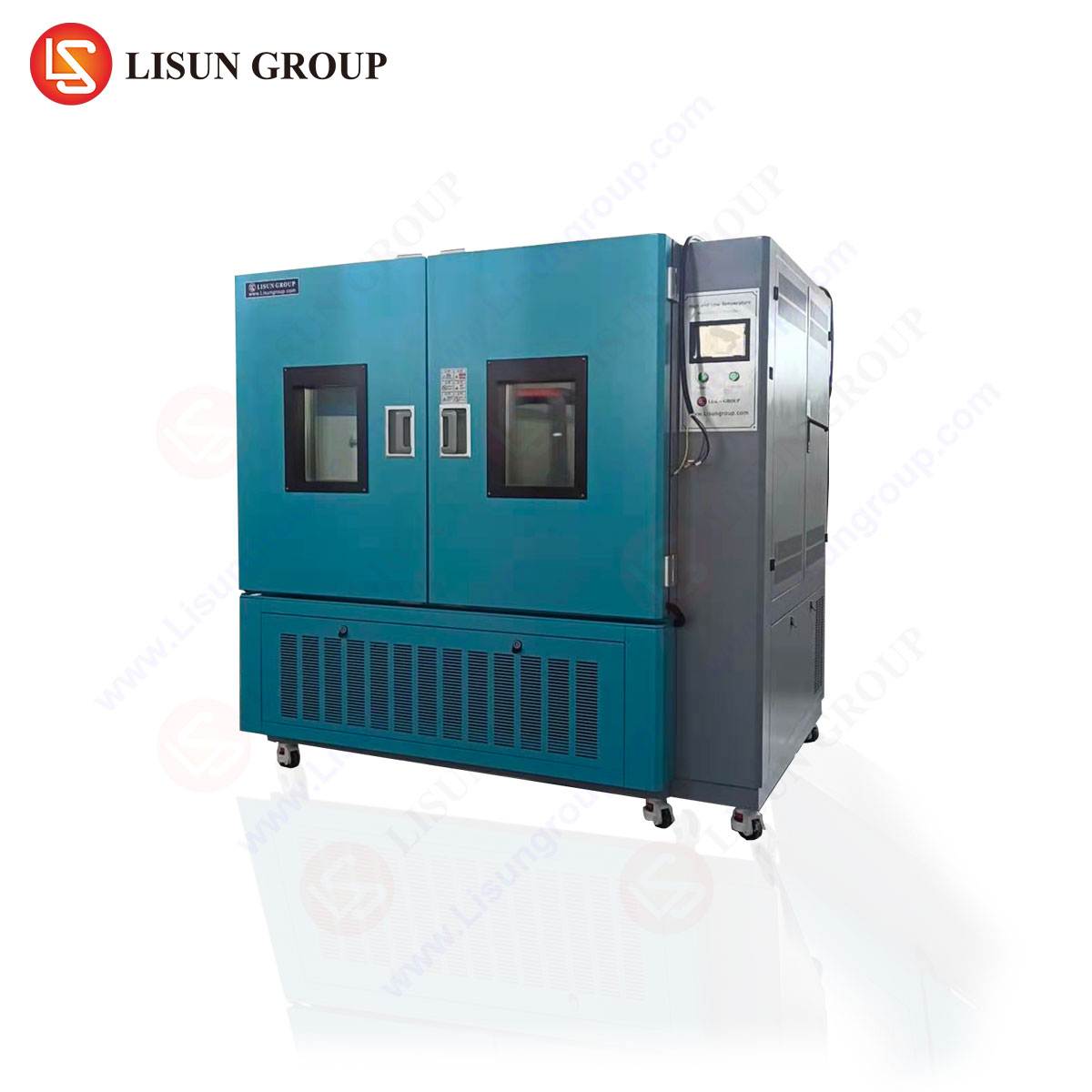
The LISUN YWX/Q-010X is a bench-top and stand-alone combined corrosion test chamber designed to meet not only ASTM B117 but also ISO 9227, JIS Z 2371, and equivalent international standards. It incorporates a corrosion-resistant PVC inner chamber, which eliminates the risk of metallic contamination that can skew results in stainless steel chambers. Table 1 lists its core specifications.
Table 1: Technical Specifications of the LISUN YWX/Q-010X Salt Spray Tester
| Parameter | Specification |
|---|---|
| Internal Chamber Volume | 1080 Liters (nominal) |
| Temperature Range | Ambient to 50°C (±0.5°C stability) |
| Saturation Tower Temp. | 47°C (±1°C) |
| Spray Nozzle | Silicon carbide, self-cleaning type |
| Fog Collection Rate | 1.0 – 2.0 mL/h per 80 cm² (adjustable) |
| Air Pressure | 0.8 – 1.5 kg/cm² (regulated) |
| Salt Solution Reservoir | 30 Liters (integrated, automatic supply) |
| Test Duration | 0 – 9999 hours (programmable) |
| Exterior Material | PVC (polyvinyl chloride) with reinforced ribs |
| Power Supply | AC 220V, 50/60Hz (customizable) |
The testing principle relies on a bubble-type humidifying tower that saturates compressed air with high-temperature moisture. This air then passes through the silicon carbide nozzle immersed in the NaCl solution, creating a fine, continuous fog. Unlike ultrasonic atomizers, which can generate droplets too small for uniform deposition, the nozzle produces droplets in the 5–10 μm range—optimal for consistent wetting without excessive run-off. The YWX/Q-010X utilizes a fiberglass-reinforced PVC shell which offers superior thermal insulation and chemical resistance to acidified salt solutions. Temperature is regulated via PID (Proportional-Integral-Derivative) controllers, and over-temperature protection is integrated to safeguard long-duration tests (often exceeding 5000 hours for aerospace components).
Instrumentation and Control Architecture for Precision Reproducibility
A frequent criticism of legacy salt spray chambers pertains to spatial temperature gradients and non-uniform fog distribution. The LISUN YWX/Q-010X addresses this through a dual-loop control system: one sensor monitors chamber atmosphere climate, while a second platinum RTD (Resistance Temperature Detector) is housed within the saturation tower. This decoupling ensures that the spray solution is delivered at a precise temperature differential relative to the chamber environment. Empirical data from in-house validation cycles (performed at the LISUN metrology lab) show a spatial temperature deviation of less than ±0.5°C across the entire 1080-liter volume when calibrated at 35°C.
The user interface employs a tactile membrane keypad and a digital display for programming test cycles, including ramp times, dwell durations, and automatic shut-off. For telecommunications equipment manufacturers, where a 1000-hour NSS test on 19-inch rack enclosures is routine, the ability to pause, log, and resume cycles without operator intervention reduces human error. Furthermore, the chamber includes an automatic level sensor that prevents dry-running of the solution pump, a common cause of test invalidation in budget alternative chambers. Data logging via RS-232 port (optional) allows integration with Laboratory Information Management Systems (LIMS), generating audit-compliant records for ISO 17025 accreditation.
Industry-Specific Application Case Studies
Electrical and Electronic Equipment (EEE) and Household Appliances
For circuit board assemblies and control relays, corrosion testing under ASTM B117 assesses the integrity of conformal coatings. A study replicated on the YWX/Q-010X examined acrylic-coated FR-4 boards with tin-lead solder joints. After 48 hours of exposure, visible copper corrosion began at uncoated vias, while coated regions remained intact for up to 500 hours. The silicone-free mist generation of the LISUN chamber, which eliminates particulate contamination of sensitive electronics, proved critical for accurate failure analysis. In the household appliance sector, washing machine control panels and refrigerator door hinges were subjected to 100-hour cycles. The YWX/Q-010X’s adjustable spray angle (via repositionable baffle plates) allowed optimized fog contact with complex 3D geometries without pooling.
Automotive Electronics and Aerospace Components
Automotive ECUs (Engine Control Units) and sensor housings often require 500 to 1000 hours of NSS testing to qualify for engine-bay placement. The LISUN chamber’s large capacity accommodates 20–30 ECU enclosures per cycle. Temperature cycling—a complementary standard—is simulated by programming 12-hour salt spray intervals followed by 12-hour dry-off periods. For aerospace, where aluminum alloys (e.g., 2024-T3) are anodized per MIL-A-8625, the YWX/Q-010X enabled testing of landing gear components. The chamber’s low pH drift (less than 0.1 pH units over 1000 hours) is essential for interpreting chromate conversion coating degradation.
Medical Devices and Industrial Control Systems
Implantable device casings (titanium alloy) and surgical instrument trays (stainless steel) are routinely evaluated for biocompatibility and sterilization resistance. The YWX/Q-010X’s use of grade 304 stainless steel internal hardware (for heating elements and fittings) avoids iron contamination that could trigger false positive corrosion on passivated surfaces. Industrial PLC enclosures and switchgear cabinets, often deployed in offshore or petrochemical environments, benefit from the chamber’s ability to maintain stable fog density at maximum capacity (1080L). In addition, the LISUN YWX/Q-010X includes a built-in air purification system that strips oil and particulates from compressed air lines, a source of test variability that is often overlooked in competitive chambers.
Comparative Advantage Analysis: YWX/Q-010X vs. Alternative Chambers
A qualitative and quantitative differentiation clarifies why the LISUN YWX/Q-010X is preferred for high-compliance laboratories. Table 2 provides a comparison against a generic stainless steel (304 SS) chamber of similar volume.
Table 2: Competitive Parameter Comparison
| Parameter | LISUN YWX/Q-010X | Generic 304 SS Chamber |
|---|---|---|
| Chamber Material | Reinforced PVC (chemically inert) | 304 Stainless Steel (prone to chloride stress cracking) |
| Nozzle Type | Silicon carbide (non-corrosive, self-cleaning) | Borosilicate glass (fragile, frequent replacement) |
| Salt Solution Supply | Automatic, with low-level alarm | Manual refill (risk of interruption) |
| Temperature Uniformity | ±0.5°C | ±1.5°C to ±2.0°C (typical) |
| Compliance Certifications | CE, ISO, and pre-validation data included | Often requires third-party validation |
| Operating Life (mean) | >15 years (PVC not susceptible to pitting) | 8–10 years (pitting and crevice corrosion) |
The PVC construction, while lighter than steel, offers excellent resistance to hydrochloric acid mist (a byproduct of NaCl hydrolysis). Steel chambers, conversely, often develop microcracks around weld zones after 2–3 years of continuous use, leading to cross-contamination of test specimens with ferric ions. The silicon carbide nozzle in the YWX/Q-010X is also superior: it resists abrasion from salt crystals and does not shatter under thermal shock—a common failure mode in glass nozzles.
Maintenance Protocols and Calibration Best Practices
For sustained adherence to ASTM B117, the YWX/Q-010X requires systematic upkeep. The manufacturer recommends weekly cleaning of the saturation tower and reservoir to prevent biofilm growth (a source of pH elevation). Monthly calibration of the pH meter using buffer solutions at pH 4.0 and 7.0 is mandatory. Fog collection rate should be verified bi-weekly: two 80 cm² collection funnels placed at opposite corners of the chamber should show a volume differential of less than 10%. The LISUN user manual provides explicit torque specifications for the door gasket clamps to ensure a proper seal—a step often neglected, causing latent heat losses.
From a metrology perspective, the chamber’s integrated RTD sensors should be certified annually against a NIST-traceable reference. One advantage of the YWX/Q-010X is its accessible sensor port, allowing insertion of a secondary thermocouple for cross-verification without opening the chamber. For lighting fixture and office equipment manufacturers, where 250-hour tests are standard, up-front calibration eliminates rework due to invalid results.
Frequently Asked Questions (FAQ)
Q1: Can the LISUN YWX/Q-010X perform cyclic corrosion testing (e.g., salt spray + humidity) without additional modules?
A: Yes, the YWX/Q-010X includes a programmable controller capable of sequencing dry, wet, and spray phases. For combined humidity/salt cycles, the saturation tower temperature can be elevated to generate >90% RH without the need for a separate humidity generator. However, for strict CCT (Cyclic Corrosion Test) standards such as SAE J2334, an optional external humidity addition port is recommended.
Q2: How does the PVC chamber material affect the corrosion background for passive stainless steel test specimens?
A: The PVC interior is chemically inert; it does not leach metal ions or organic residues. This is advantageous for testing passivated surfaces (e.g., 316L stainless steel medical devices), as the background corrosion rate is reduced to near zero. In contrast, steel chambers can introduce Fe³⁺ ions that artifactually accelerate pitting in passive alloys.
Q3: What is the maximum continuous operating duration before the solution reservoir needs refilling?
A: With the 30-liter integrated reservoir, the YWX/Q-010X can operate for approximately 300 continuous hours at the standard collection rate of 1.5 mL/h per funnel. This is sufficient for most ASTM B117 cycles (24–1000 hours). An optional auto-feed system can connect to an external 200-liter drum for extended campaigns.
Q4: Is the silicon carbide nozzle replaceable, and what is its expected service life?
A: Yes, the nozzle is a user-replaceable component. Under routine use (3–4 test cycles per week), the silicon carbide nozzle typically lasts 5–7 years before requiring replacement. This significantly exceeds the life of glass nozzles (12–18 months) and reduces total cost of ownership.
Q5: Does the chamber automatically compensate for barometric pressure changes to maintain constant fog density?
A: The YWX/Q-010X uses a mechanical pressure regulator with a gauge for manual adjustment, not an automatic barometric compensator. However, the manufacturer provides a calibration curve relating air pressure to fog collection rate for altitudes up to 2000 meters. For laboratories at high altitude (>1500 m), a correction factor is applied during initial setup to ensure 1.5 mL/h compliance.