




Abstract
Ensuring the electromagnetic compatibility (EMC) of automotive electronics against harsh electrical transients is a fundamental pillar of vehicle safety and reliability. This comprehensive technical article provides a detailed procedural guide on How to Perform ISO 7637 Transient Immunity Tests | LISUN Automotive EMC System. Authored from the perspective of a senior EMC engineer, it demystifies the core principles, test setups, and execution workflows defined by ISO 7637-2 and -3. The article focuses on the application of the LISUN EMS-ISO7637 Automotive Electronics Transient Immunity EMC Testing System, detailing its role in validating components like ECUs, OBCs, and BMS for passenger, commercial, and new energy vehicles. Readers will gain actionable insights into achieving compliance with global standards through precise, automated testing methodologies.
1.1 The Critical Role of Transient Immunity in Vehicle EMC
1.2 Overview of the ISO 7637 Standard Series
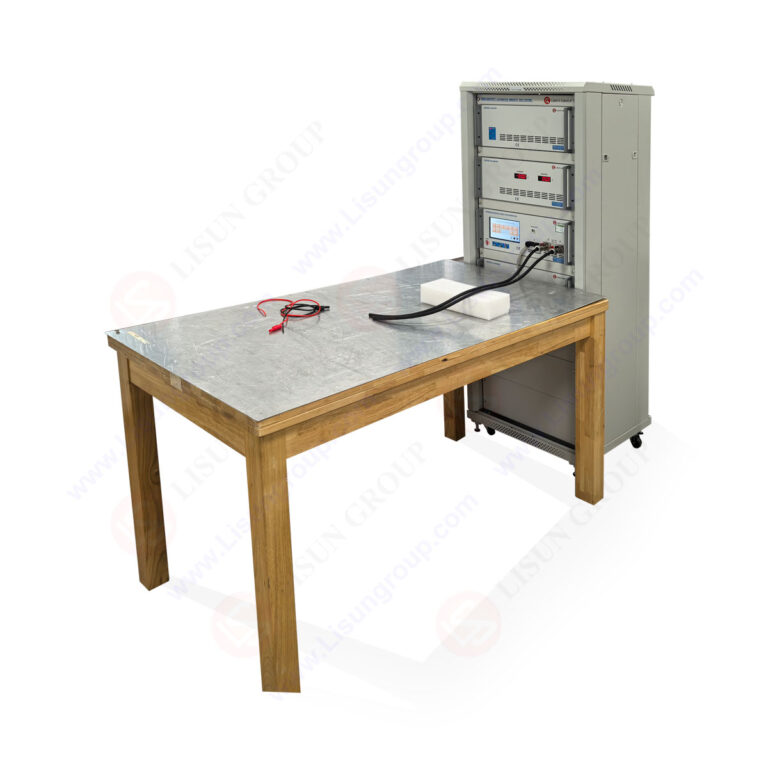
1.3 The LISUN EMS-ISO7637 System: A Modern Testing Solution
2.1 Pulse P1, P2a, P2b, P3: Switching Inductive Load Transients
2.2 Pulse P4: Starting Transient Simulation
2.3 Pulse P5a/P5b: Load Dump and Alternative Load Dump
3.1 Key Components of the LISUN EMS-ISO7637 Testing System
3.2 The Role of Coupling/Decoupling Networks (CDNs) and Artificial Networks (ANs)
3.3 System Calibration and Verification Procedures
4.1 Pre-Test Preparation and Device Under Test (DUT) Setup
4.2 Test Pulse Selection and Parameter Configuration
4.3 Executing the Test Sequence and Monitoring DUT Performance
5.1 LISUN EMS-ISO7637 System Capabilities and Specifications
5.2 Comparative Analysis Against Industry Standards and Requirements
The LISUN EMS-ISO7637 system is engineered to meet and exceed the stringent requirements of contemporary automotive EMC standards. The following table provides a technical comparison of its core pulse generation capabilities against the specifications outlined in key international and national standards.
| Test Pulse | Standard Reference (e.g., ISO 7637-2:2021) | LISUN EMS-ISO7637 Specification | Key Performance Advantage |
|---|---|---|---|
| P1 (12V System) | Us = -100 V, Ri = 10 Ω, td = 2 ms | Us: -75 to -150 V, Ri: 10 Ω, td: 0.5-4 ms | Wider parameter adjustment range for margin testing. |
| P3a (24V System) | Us = -150 V, Ri = 50 Ω, td = 0.5 ms | Us: -112 to -225 V, Ri: 50 Ω, td: 0.25-1 ms | Precision timing control per ISO 7637-2:2021, Clause 5.4. |
| P5b (Load Dump) | Us = +35 V, td = 40-400 ms | Us: +18 to +40 V, td: 40-400 ms | Fully covers ISO 16750-2:2023 and GM 3172 requirements. |
| Pulse Repetition | As per test plan (0.5-5 Hz typical) | 0.1 Hz to 10 Hz programmable | Enables accelerated stress testing and high-resolution fault finding. |
| Voltage System Support | 12V, 24V, (42V legacy) | Native 12V, 24V, and 36V (for NEV) support | Direct compatibility with 36V systems in mild-hybrids, referencing VW 80000. |
| Calibration Accuracy | Dependent on external equipment | Integrated automatic calibration with < ±3% voltage accuracy. | Reduces setup time and ensures traceable measurement uncertainty. |
6.1 R&D and Design Verification for Electronic Control Units (ECUs)
6.2 Compliance and Type Approval Testing for Third-Party Labs
6.3 High-Volume Production Line End-of-Line (EOL) Sampling
6.4 Special Focus: New Energy Vehicle (NEV) Component Testing
7.1 Implementing Test Severity Levels and Functional Status Monitoring
7.2 Automated Data Logging, Reporting, and Standard Compliance Documentation
Mastering the methodology of How to Perform ISO 7637 Transient Immunity Tests | LISUN Automotive EMC System is indispensable for engineers tasked with safeguarding automotive electronics. The procedural rigor defined by ISO 7637, coupled with a capable test system like the LISUN EMS-ISO7637, transforms subjective validation into objective, repeatable science. This system’s comprehensive pulse coverage, support for 12V/24V/36V architectures, and dual-operation software interface directly address the evolving complexities of modern vehicles, from conventional powertrains to high-voltage electric drives. The technical value lies in its precision and automation, which reduce human error, accelerate test cycles, and generate auditable reports essential for certifications against standards like GB/T 21437.2-2021. Ultimately, rigorous transient immunity testing is not merely a compliance checkbox but a critical engineering practice that directly correlates to reduced warranty claims, enhanced brand reputation, and, most importantly, vehicle functional safety and reliability on the road.
Q1: What is the fundamental difference between test pulses P5a and P5b, and when should each be applied?
A: Pulses P5a and P5b both simulate load dump transients but with distinct characteristics and applications. P5a, defined in ISO 7637-2:2021 Annex B, simulates a load dump suppressed by a central suppressor (e.g., a varistor near the alternator). It features a lower peak voltage (e.g., +35V for 12V systems) and a longer duration. P5b, the “alternative pulse,” simulates a load dump suppressed by a suppressor closer to the DUT or in an unsuppressed scenario, with a higher peak voltage (e.g., +79V) and shorter rise time. The choice is dictated by the vehicle manufacturer’s specification (e.g., VW 80000 may mandate P5b) and the DUT’s location in the power network. The LISUN system can generate both pulses to meet all OEM requirements.
Q2: How does the LISUN system handle testing for 36V/48V mild-hybrid systems, which are not explicitly covered in older editions of ISO 7637?
A: While traditional ISO 7637-2 focuses on 12V and 24V systems, modern architectures like 36V/48V mild-hybrids require adapted testing. The LISUN EMS-ISO7637 system natively supports 36V testing by providing appropriate pulse amplitude scaling and coupling networks. Testing follows the same principles as ISO 7637-2:2021 but applies test levels defined by specific OEM standards such as VW 80000 or LV 148. The system’s programmable voltage source and pulse generators allow engineers to define custom pulse parameters (Us, Ri, td) that accurately reflect the energy and impedance of the higher-voltage boardnet, ensuring relevant immunity assessment for components like belt-starter generators or DC-DC converters.
Q3: Why is the use of a Coupling/Decoupling Network (CDN) or an Artificial Network (AN) mandatory during ISO 7637-2 conducted immunity tests?
A: The CDN/AN serves two critical, standardized functions as per ISO 7637-2:2021, Clause 6.2. First, it provides a defined, repeatable coupling path to inject the transient pulse onto the DUT’s power supply line. Second, and equally important, it decouples the test generator and auxiliary equipment from the DUT’s power source. This prevents the transient energy from feeding back into the laboratory power supply or affecting other equipment, ensuring test validity and safety. Furthermore, the AN provides a standardized impedance (typically 0-50 Ω) at higher frequencies, which is essential for reproducing realistic pulse waveforms as they would appear on a vehicle’s wiring harness.
Q4: Can the LISUN EMS-ISO7637 system be used for production line end-of-line (EOL) testing, and what features facilitate this?
A: Yes, the system is well-suited for high-throughput EOL sampling. Key features enabling this include its fully automated test sequencing via PC software, where a pre-configured test plan (aligning with internal AQL standards or GB/T 21437.3-2021 for production conformity) can be executed with a single command. The system supports fast, automated pass/fail judgment based on DUT functional monitoring inputs. Its robust hardware design ensures reliability in an industrial environment, and the automated report generation creates a permanent digital record for each tested unit, which is crucial for quality traceability and potential audits by OEMs or regulatory bodies.