




A Comprehensive Framework for Water Ingress Protection: Standards, Methodologies, and Advanced Validation Systems
Introduction to Ingress Protection (IP) Rating Systems and Their Critical Role
The integrity of electrical and electronic equipment against environmental ingress, particularly water, is a non-negotiable prerequisite for reliability, safety, and longevity across virtually all modern industries. From the sealed control units in automotive engine bays to the sterilization-resistant housings of surgical tools, the ability to withstand specified water exposure defines operational boundaries and informs design parameters. This necessitates a standardized, repeatable, and scientifically rigorous testing regimen. The International Electrotechnical Commission (IEC) standard 60529, often mirrored by regional equivalents like the North American NEMA 250 or the Chinese GB/T 4208, provides the globally recognized framework for classifying degrees of protection offered by enclosures: the Ingress Protection (IP) Code. This article delineates the technical foundations of waterproofness testing, explores the application of these standards across key sectors, and examines the implementation of advanced testing instrumentation, with a specific focus on the LISUN JL-XC Series integrated waterproof test chamber as a paradigm of modern validation technology.
Deconstructing the IP Code: Numerical Designations and Test Definitions
The IP Code is expressed as “IP” followed by two characteristic numerals (e.g., IP67). The first numeral (0-6) denotes protection against solid foreign objects, from no protection to complete dust-tightness. The second numeral (0-9K) is the critical marker for water ingress protection, defining the test methodology and severity. It is imperative to understand that higher numbers do not constitute a linear scale of “better” protection but rather define different types of water exposure. For instance, an IPX7 device (protected against immersion) is not necessarily protected against powerful water jets (IPX5/6), as the physics of ingress differ substantially.
Key waterproofness test levels include:
- IPX1 & IPX2: Dripping water at defined angles, simulating condensation or light rain.
- IPX3 & IPX4: Spraying water (oscillating tube or spray nozzle) at increasing intensity, representing rain or splash exposure.
- IPX5 & IPX6: Powerful water jets from a 6.3mm or 12.5mm nozzle at specified pressure and distance, simulating deck washing, vehicle wheel spray, or storm conditions.
- IPX7: Temporary immersion, typically at 1 meter depth for 30 minutes.
- IPX8: Continuous immersion under conditions specified by the manufacturer, exceeding the IPX7 baseline.
- IPX9K: High-pressure, high-temperature water jets, as defined by DIN 40050-9, primarily for automotive and industrial cleaning scenarios.
Each test prescribes precise parameters for nozzle type, water flow rate, pressure, duration, sample positioning, and—for IPX9K—water temperature. Deviation from these parameters invalidates the test and the resulting certification claim.
Industry-Specific Applications and Compliance Imperatives
The selection of an appropriate IP rating is driven by the intended use environment and relevant sector-specific regulations.
- Automotive Electronics: Components are categorized by location (e.g., passenger compartment, underbody, engine bay). IPX4/5/6K is common for exterior sensors and lighting, while IP67/68/69K is mandated for battery management systems, charging ports, and components exposed to high-pressure cleaning. ISO 20653 supplements IEC 60529 for road vehicles.
- Medical Devices: Equipment must withstand rigorous cleaning and disinfection protocols. Surgical lights, bedside monitors, and portable diagnostic tools often require IPX4 (splash-proof) to IPX7 (washable). Standards like IEC 60601-1 for medical electrical equipment incorporate IP requirements based on the applied part classification.
- Lighting Fixtures: Outdoor luminaires, industrial high-bay lights, and underwater fixtures demand high waterproofness. IP65 is typical for dust-tight, jet-protected outdoor fixtures, IP67/68 for submerged applications in fountains or pools, and IP66 for harsh industrial settings.
- Telecommunications & Consumer Electronics: Outdoor 5G enclosures, fiber optic terminal boxes, and ruggedized smartphones target IP67/68. For consumer devices like smartwatches or wireless earbuds, IPX4 to IPX7 is common, though marketing claims require rigorous validation to prevent failure from perspiration or accidental immersion.
- Aerospace and Aviation: Components must resist humidity, condensation, and potential fluid spills in pressurized and unpressurized zones. Testing often follows RTCA/DO-160 or specific MIL-STDs, which include water resistance sections analogous to but sometimes more stringent than IEC 60529.
The Integrated Testing Paradigm: The LISUN JL-XC Series Waterproof Test Chamber
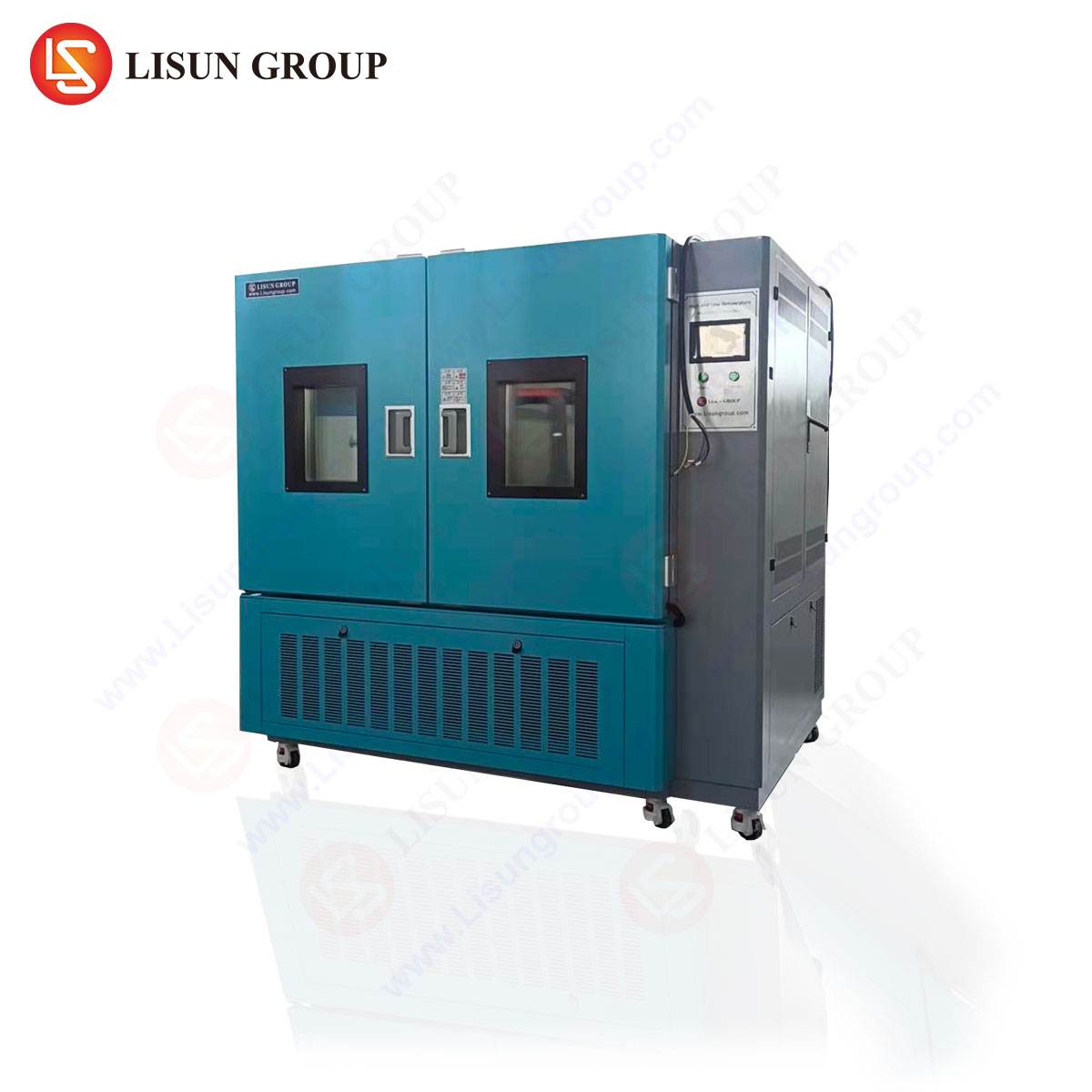
Transitioning from theoretical standards to practical, reliable, and audit-ready testing requires instrumentation that guarantees parameter control and repeatability. The LISUN JL-XC Series represents an integrated solution, consolidating multiple IP water test functionalities into a single, programmable chamber. This system is engineered to execute tests from IPX1 through IPX9K, eliminating the need for multiple discrete test setups and reducing inter-test variability.
Testing Principles and System Architecture: The JL-XC Series operates on the principle of controlled, reproducible application of water under defined mechanical and thermodynamic conditions. Its architecture typically integrates:
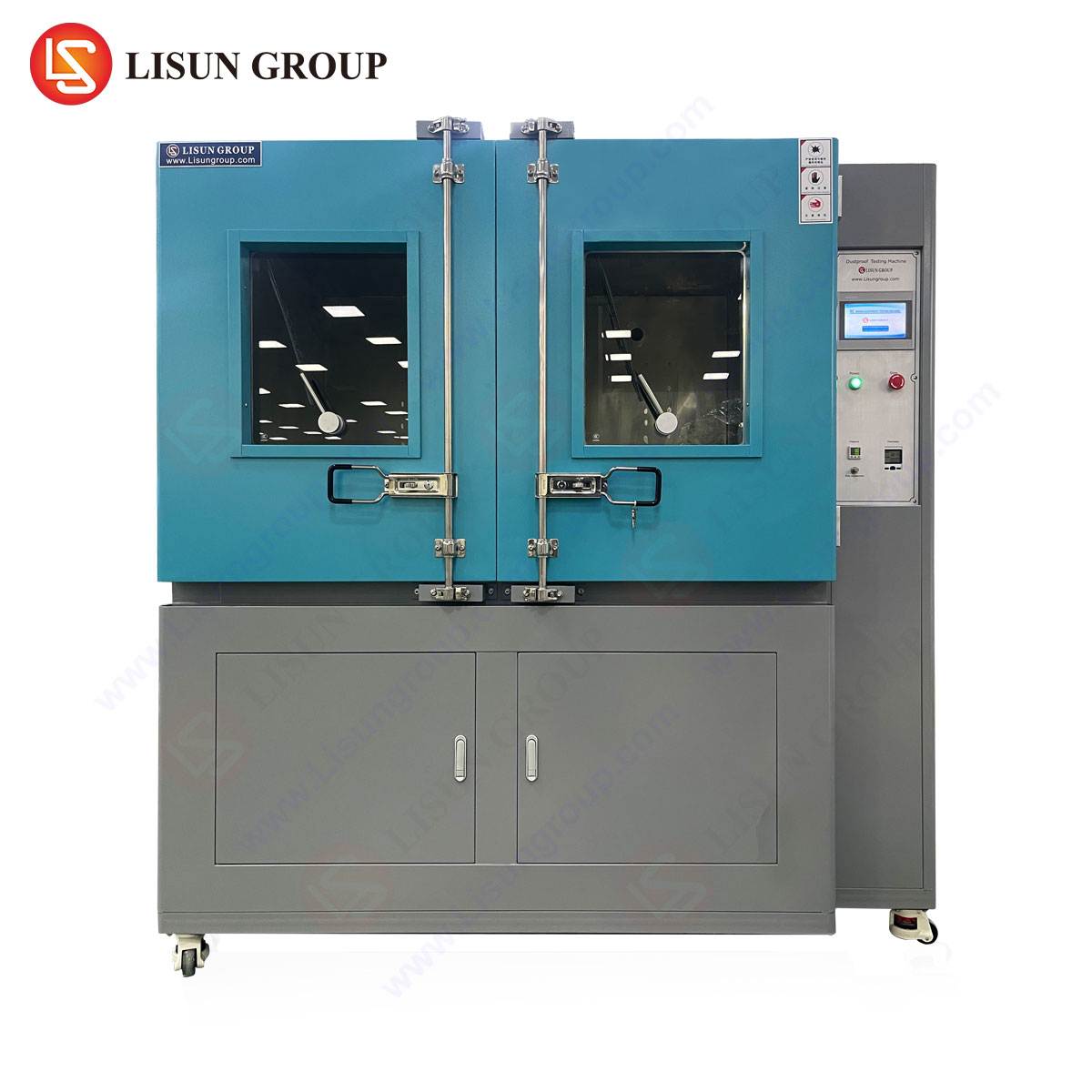
- A stainless-steel test chamber with a transparent viewing window.
- A multi-axis sample table (rotary or oscillating) to ensure uniform exposure per standard requirements.
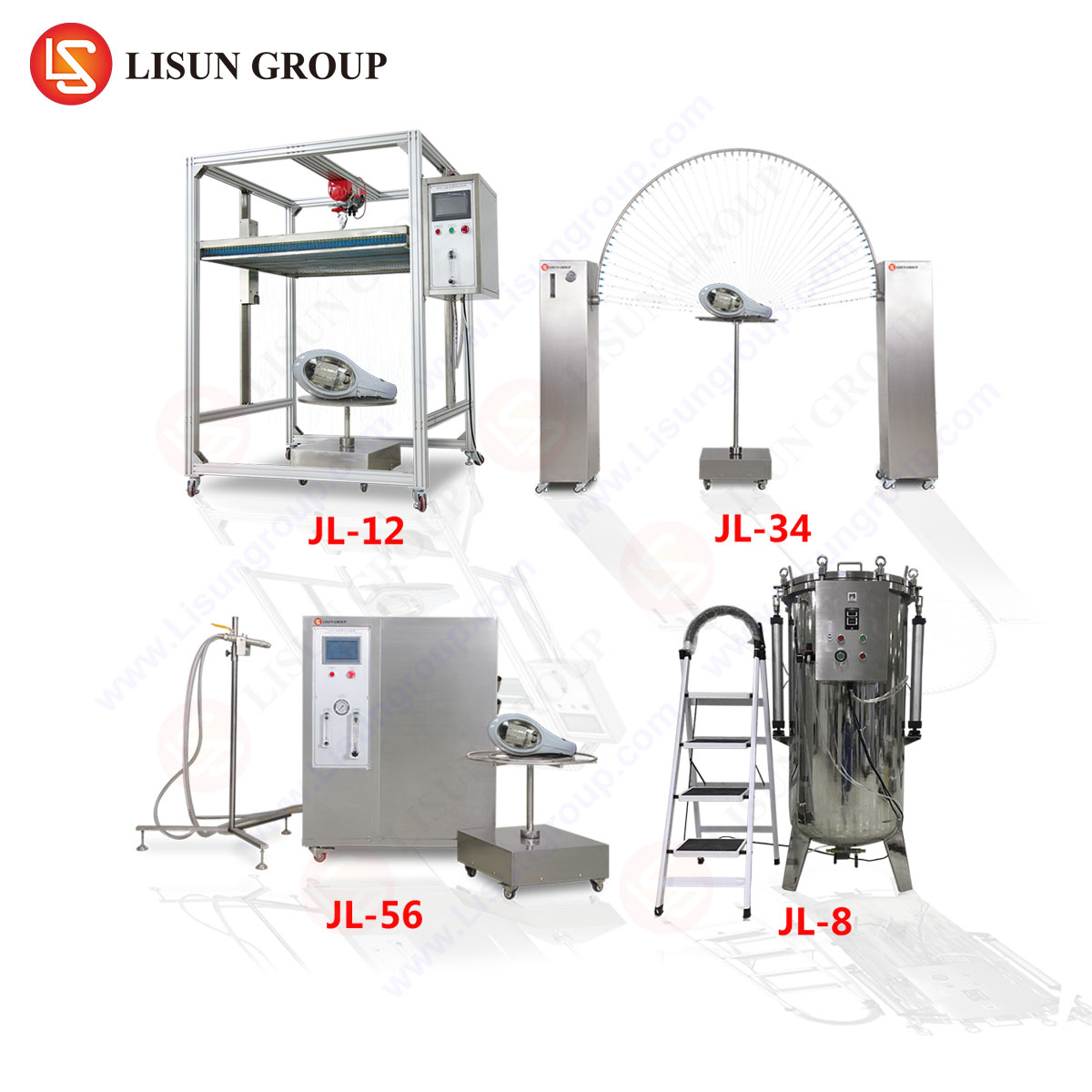
- A modular water spray system: interchangeable nozzles for drip, spray, jet (IPX5/6), and high-pressure/high-temperature (IPX9K) testing.
- A precision water circulation, filtration, and temperature control system. For IPX9K, this includes a heater capable of maintaining water at 80°C ±5°C.
- A programmable logic controller (PLC) with a human-machine interface (HMI) for storing test profiles, controlling duration, water pressure (0-10,000 kPa adjustable for IPX9K), flow rate, and sample table motion.
Technical Specifications and Competitive Advantages: The JL-XC Series distinguishes itself through several key attributes:
- Comprehensive Compliance: Its design adheres strictly to IEC 60529, ISO 20653, and DIN 40050-9, with calibration traceable to national standards. This ensures test reports are accepted by certification bodies globally.
- Operational Efficiency: The integrated design saves laboratory footprint and reduces setup time between different IP tests. Pre-programmed test profiles for common standards (e.g., IPX5, IPX6, IPX9K) minimize operator error.
- Enhanced Data Integrity: Integrated flowmeters, pressure sensors, and temperature probes provide real-time monitoring and data logging. This creates an auditable trail of test conditions, which is critical for quality assurance documentation and failure analysis.
- Durability and Precision: Constructed from corrosion-resistant 304 stainless steel and featuring industrial-grade pumps and valves, the system ensures long-term stability of test parameters, which is essential for producing statistically valid results over thousands of test cycles.
Industry Use Cases: A manufacturer of electric vehicle charging connectors would utilize the JL-XC Series to validate IP55 (jet-protected) ratings for the external housing and IP67 for the mating face seal. An industrial sensor producer would run IP65/66/67 sequences to ensure sensors survive in food processing plants with wash-down procedures. A marine lighting company would employ the IPX8 immersion capabilities to verify depth ratings for underwater luminaires.
Methodological Rigor in Test Execution and Failure Analysis
Conducting a compliant test extends beyond equipment. The sample must be conditioned (typically to a “ready-for-use” state), and for IPX7/8 tests, it is often energized and/or monitored for functionality during and after the test. The post-test examination is meticulous: the enclosure is opened, and a visual inspection is conducted for any traces of water ingress. The standard defines ingress as water entering in quantities that could impair safety or normal operation. For sealed electronic assemblies, even a minute amount of moisture can lead to dendritic growth and eventual short-circuit failure.
Testing should be performed on production-representative samples. It is also a critical tool in Design for Reliability (DfR) processes, where iterative testing identifies failure modes—such as gasket compression set, sealant voids, or capillary action along cable glands—enabling design improvements before mass production.
Beyond IP: Complementary Water Resistance Test Standards
While IEC 60529 is predominant, other standards address different failure mechanisms. MIL-STD-810G, Method 506.6 addresses rain and blowing rain, which combines water exposure with wind forces. IEC 60068-2-18 includes tests for water penetration with temperature gradients, which can induce “breathing” effects in enclosures. For household appliances, standards like IEC 60335-1 specify spillage tests for kettles or drip tests for iron soleplates. Understanding the full environmental profile of a product may necessitate a battery of tests beyond a single IP rating.
Conclusion
Waterproofness testing is a cornerstone of product validation in an increasingly electrified and environmentally exposed world. The IP rating system provides a vital common language, but its value is only realized through scrupulous adherence to test methodologies. Advanced integrated test systems, such as the LISUN JL-XC Series, empower R&D and quality assurance teams to execute these complex validations with the precision, efficiency, and documentary rigor demanded by modern manufacturing and global compliance frameworks. As products continue to evolve, pushing into more demanding environments, the role of definitive, standards-based waterproofness verification will only grow in strategic importance.
FAQ Section
Q1: Can a product certified to IP68 automatically be considered compliant with IPX5 and IPX6?
No. IP ratings are not cumulative. IP68 defines protection against continuous immersion under specified conditions, which is a different ingress mechanism than the high-pressure, localized jets defined in IPX5 and IPX6. A product must be separately tested and certified against each rating it claims. Some products are designed and tested to meet multiple ratings (e.g., IP66 and IP68), but this must be explicitly validated.
Q2: What is the significance of water temperature in the IPX9K test, and how does the JL-XC Series ensure control?
The IPX9K test specifies water at 80°C ±5°C to simulate high-temperature, high-pressure cleaning processes common in automotive, food processing, and industrial machinery maintenance. The elevated temperature can affect seal material properties (softening elastomers) and create thermal shock. The LISUN JL-XC Series integrates a closed-loop, heated water system with precision heaters and in-line temperature sensors, continuously regulating and monitoring the water temperature at the nozzle outlet to maintain strict compliance with the standard.
Q3: For an IPX7 immersion test, does the equipment need to be functional during the test?
The IEC 60529 standard does not explicitly require the equipment to be operational during the immersion. The typical requirement is that the sample is tested in its “ready-for-use” state, and then examined for ingress after the test. However, many product safety standards (e.g., for medical or automotive devices) or internal corporate specifications may impose additional “live testing” requirements to verify no hazardous failure occurs during exposure. The test plan should be defined by the relevant end-product standard.
Q4: How often should a waterproof test chamber like the JL-XC Series be calibrated, and what is involved?
Calibration frequency depends on usage intensity and quality system requirements (e.g., ISO 17025), but an annual calibration is typical. Critical parameters for calibration include: water flow rate for each nozzle type, jet pressure (especially for IPX5/6/9K), nozzle orifice diameter, distance from nozzle to sample, temperature of the water (for IPX9K), and the rotational/oscillational speed of the sample table. Calibration should be performed using traceable instruments by qualified personnel.