




An Analysis of IPX3 and IPX4 Water Resistance Ratings: Definitions, Testing Methodologies, and Industrial Applications
Introduction to Ingress Protection (IP) Ratings
The Ingress Protection (IP) rating system, codified under international standard IEC 60529, provides a systematic and universally recognized classification for the degree of protection offered by an enclosure against the intrusion of solid foreign objects and liquids. This alphanumeric code, typically expressed as “IP” followed by two digits, serves as a critical technical specification across diverse engineering and manufacturing disciplines. The first digit denotes protection against solids (e.g., dust, tools), while the second digit specifically quantifies the enclosure’s resistance to water under defined test conditions. It is within this second-digit classification that the distinctions between IPX3 and IPX4 become paramount for product design, validation, and compliance. A precise understanding of these ratings is not merely an academic exercise but a fundamental requirement for ensuring product reliability, safety, and market suitability in environments where exposure to water is a foreseeable operational condition.
Defining the IPX3 Rating: Protection Against Spraying Water
The IPX3 rating specifies that an enclosure shall withstand water sprayed at an angle from vertical. The formal test parameters are rigorously defined. The equipment under test is subjected to oscillating tube or spray nozzle testing, where water is projected as a spray at a volume flow rate of 0.07 liters per minute per nozzle for the spray nozzle test, or 10 liters per minute for the oscillating tube test. A key specification is the angle of spray: for the oscillating tube, the tube oscillates across 60° arcs on either side of vertical (total 120°), while for the spray nozzle, the enclosure is tested in four fixed positions, tilted ±60° from vertical. The test duration is a minimum of 5 minutes per square meter of the enclosure’s surface area, with a minimum total test time of 5 minutes. This simulates conditions of rain falling at an angle of up to 60°, relevant for products that may not be mounted vertically or may experience driven precipitation. It is crucial to note that IPX3 does not guarantee protection against direct, high-pressure jets or immersion.
Specifications of the IPX4 Rating: Resistance to Splashing Water
IPX4 represents a more stringent level of protection against water ingress. An enclosure rated IPX4 is designed to resist water splashed from any direction. The testing methodology for IPX4 employs a spray nozzle or an oscillating tube similar to IPX3 but with critical differences in execution. The spray is delivered from multiple directions to ensure all possible points of water ingress are challenged. The oscillating tube, for instance, covers a near-full 360° rotation around the test specimen. The water flow rate is significantly higher: approximately 10 liters per minute for the spray nozzle test, with the enclosure placed on a turntable rotating at 1-3 rpm to ensure uniform exposure from all angles. The minimum test duration is 10 minutes. This rating is indicative of protection against water splashing encountered in more aggressive environments, such as in a kitchen, on a factory floor, or on outdoor equipment subjected to heavy rain and wind-driven spray. The transition from IPX3 to IPX4 marks a substantive increase in expected environmental robustness.
Comparative Analysis: Operational Implications of IPX3 vs. IPX4
The selection between an IPX3 and an IPX4 rating carries direct implications for product application, lifecycle cost, and failure risk. An IPX3-rated component, such as an indoor lighting fixture installed under an eave or a control panel mounted on a vertical surface away from direct spray, may be perfectly adequate. However, an automotive electronic control unit (ECU) located in a wheel well, a handheld medical device used in a humid clinical environment, or an outdoor telecommunications junction box would almost invariably require an IPX4 rating or higher. The IPX4 rating’s assurance of omnidirectional protection is a non-negotiable requirement for any product where the orientation of water exposure is unpredictable. In product design, achieving IPX4 often necessitates more sophisticated sealing solutions—such as compression gaskets, ultrasonic welding, or potting compounds—compared to the simpler labyrinth seals or sheltered apertures that might suffice for IPX3. This directly impacts bill-of-materials cost, assembly complexity, and repairability.
Testing Apparatus and Principles: The Role of Precision Equipment
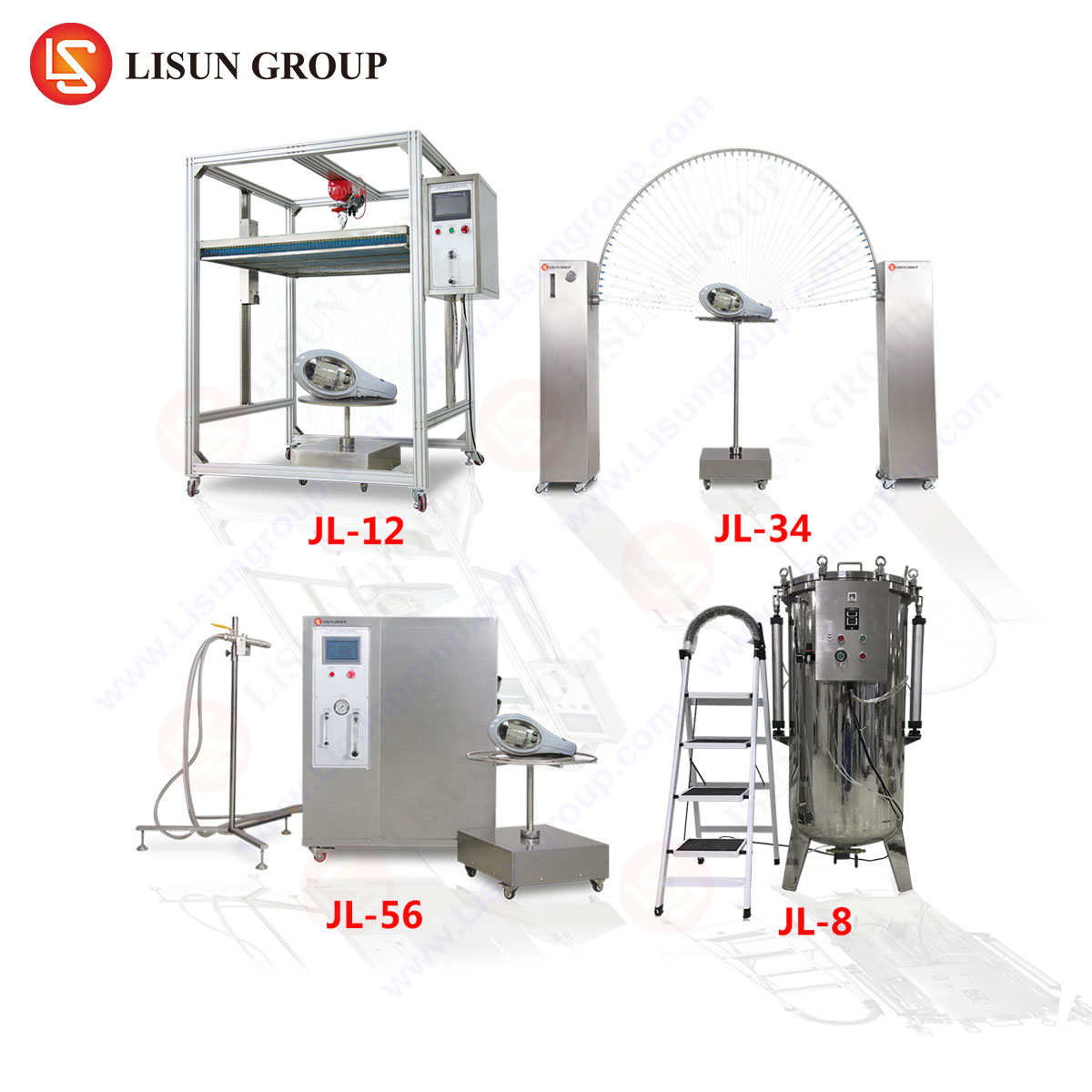
Accurate and repeatable IP rating validation is impossible without specialized, calibrated testing equipment that faithfully replicates the conditions stipulated in IEC 60529. The testing apparatus must precisely control variables including water pressure, flow rate, droplet size distribution, spray angle, oscillation speed, and test duration. Deviation from these parameters can lead to false positives (passing a sub-standard product) or false negatives (failing a compliant product), both of which carry severe commercial and safety consequences. The core principle involves mounting the test specimen on a programmable turntable inside a test chamber, subjecting it to the specified spray pattern for the mandated duration, and subsequently conducting a thorough visual and functional inspection for any signs of water ingress. Post-test examinations often include dielectric strength tests, operational checks, and internal inspection for moisture.
Introducing the LISUN JL-XC Series Multi-Function Waterproof Test Chamber
To meet the rigorous demands of IPX3, IPX4, and higher IP code testing across industries, advanced integrated test solutions are required. The LISUN JL-XC Series Waterproof Test Chamber represents a sophisticated platform designed for comprehensive compliance verification. This apparatus is engineered to perform not only IPX3 and IPX4 tests but also a range of tests up to IPX9K (high-pressure, high-temperature steam jet cleaning), making it a versatile investment for quality assurance laboratories.
The chamber’s design incorporates a stainless-steel test room, a precision rotary table with adjustable speed (1-3 rpm standard, programmable for specific standards), and a modular spray system. For IPX3 and IPX4 testing, the system utilizes standardized spray nozzles mounted on oscillating arms, with water flow meticulously regulated by calibrated flowmeters and pressure gauges. The test parameters—including water temperature (typically adjusted to be within 80°C of the specimen’s temperature to prevent internal vacuum), oscillation angle, and test time—are fully programmable via a touch-screen PLC interface, ensuring strict adherence to the standard and perfect repeatability between tests.
Industry-Specific Applications and Testing Scenarios
The necessity for IPX3/IPX4 verification permeates modern manufacturing. In Automotive Electronics, components like door control modules, external sensors, and lighting assemblies require IPX4 minimum to withstand road spray and car wash conditions. Lighting Fixtures for outdoor architectural, garden, or industrial use must be validated to IPX4 to ensure longevity against rain. Household Appliances such as blenders, food processors, and outdoor power equipment incorporate IPX4-rated switches and controls to resist cleaning splashes and liquid food ingress.
For Medical Devices, handheld monitors or portable diagnostic tools may require IPX4 to tolerate disinfection protocols and clinical spills. Telecommunications Equipment, including outdoor antennas and junction boxes, rely on these ratings to prevent network failures. Industrial Control Systems located in washdown environments (e.g., food & beverage processing) mandate IPX4 or higher to guarantee operational continuity. In each case, employing a testing solution like the LISUN JL-XC Series allows manufacturers to perform in-house design validation and production line sampling, drastically reducing time-to-market and reliance on external test houses.
Competitive Advantages of Integrated Testing Solutions
Utilizing a dedicated, multi-standard chamber such as the JL-XC Series offers distinct advantages over improvised or single-purpose test setups. First is compliance assurance: the built-in calibration and standardized nozzles eliminate guesswork, providing audit-ready test reports. Second is operational efficiency: one chamber can test multiple IP ratings, saving laboratory space and capital expenditure. Third is test integrity: the controlled environment prevents external variables from influencing results. Fourth is data logging: detailed records of test parameters are essential for traceability and failure analysis. Finally, it offers future-proofing: the ability to test higher IP ratings (IPX5-IPX9K) protects the investment as product lines evolve.
Conclusion: The Imperative of Precise Water Resistance Validation
The distinction between IPX3 and IPX4, while seemingly incremental on the IP scale, defines a critical boundary in product environmental resilience. Specifying, designing to, and validating these ratings demands a meticulous understanding of the underlying standards and access to precise testing instrumentation. As products across sectors from consumer electronics to aerospace components become more integrated and exposed to diverse environments, robust waterproof testing transitions from a quality check to a core engineering discipline. Implementing a rigorous testing protocol with equipment capable of exacting standard replication, such as the LISUN JL-XC Series, is not an overhead but a fundamental pillar of product integrity, safety certification, and brand reputation in a global marketplace.
FAQ Section
Q1: Can the LISUN JL-XC Series test for both IPX3 and IPX4 on the same unit?
A1: Yes, the JL-XC Series is a multi-function chamber. It includes interchangeable spray nozzles and programmable oscillation mechanisms that can be configured to meet the exact spray angles, flow rates, and test durations specified for both IPX3 (oscillating spray) and IPX4 (omnidirectional splash) tests, as well as numerous other IP codes.
Q2: What is the importance of water temperature during IPX3/X4 testing?
A2: IEC 60529 recommends that the temperature of the water used for testing should not be more than 5°C below the temperature of the specimen prior to testing. A significant differential can cause thermal contraction of air inside the enclosure, creating a vacuum that may draw water past seals that would otherwise be effective. The JL-XC Series allows for water temperature monitoring and adjustment to comply with this critical requirement.
Q3: For a product that passes an IPX4 test, is it automatically qualified for IPX3?
A3: Yes, the IP code system is cumulative. A higher second-digit number denotes a greater level of protection. Therefore, an enclosure certified to IPX4 (splashing water from any direction) inherently meets the requirements of IPX3 (spraying water at an angle). The reverse is not true.
Q4: How often should the flowmeters and nozzles on a waterproof test chamber be calibrated?
A4: To maintain test accuracy and compliance with quality management systems like ISO/IEC 17025, critical components such as flowmeters, pressure gauges, and spray nozzles should undergo annual calibration by an accredited laboratory. Regular visual inspection for nozzle wear or blockage should be performed before each test session.
Q5: In a production environment, is it necessary to test every single unit for IP rating?
A5: Typically, 100% testing is not feasible or necessary for most high-volume products. The standard approach involves rigorous testing during the design validation (DV) and production validation (PV) phases. In ongoing production, a statistical sampling plan (based on AQL or similar) is implemented, often using a test chamber like the JL-XC Series for routine quality audits. However, for safety-critical components (e.g., in medical or automotive applications), more frequent or even 100% testing may be mandated by the relevant industry standard.