




A Methodological Framework for Selecting Salt Fog Corrosion Test Chambers
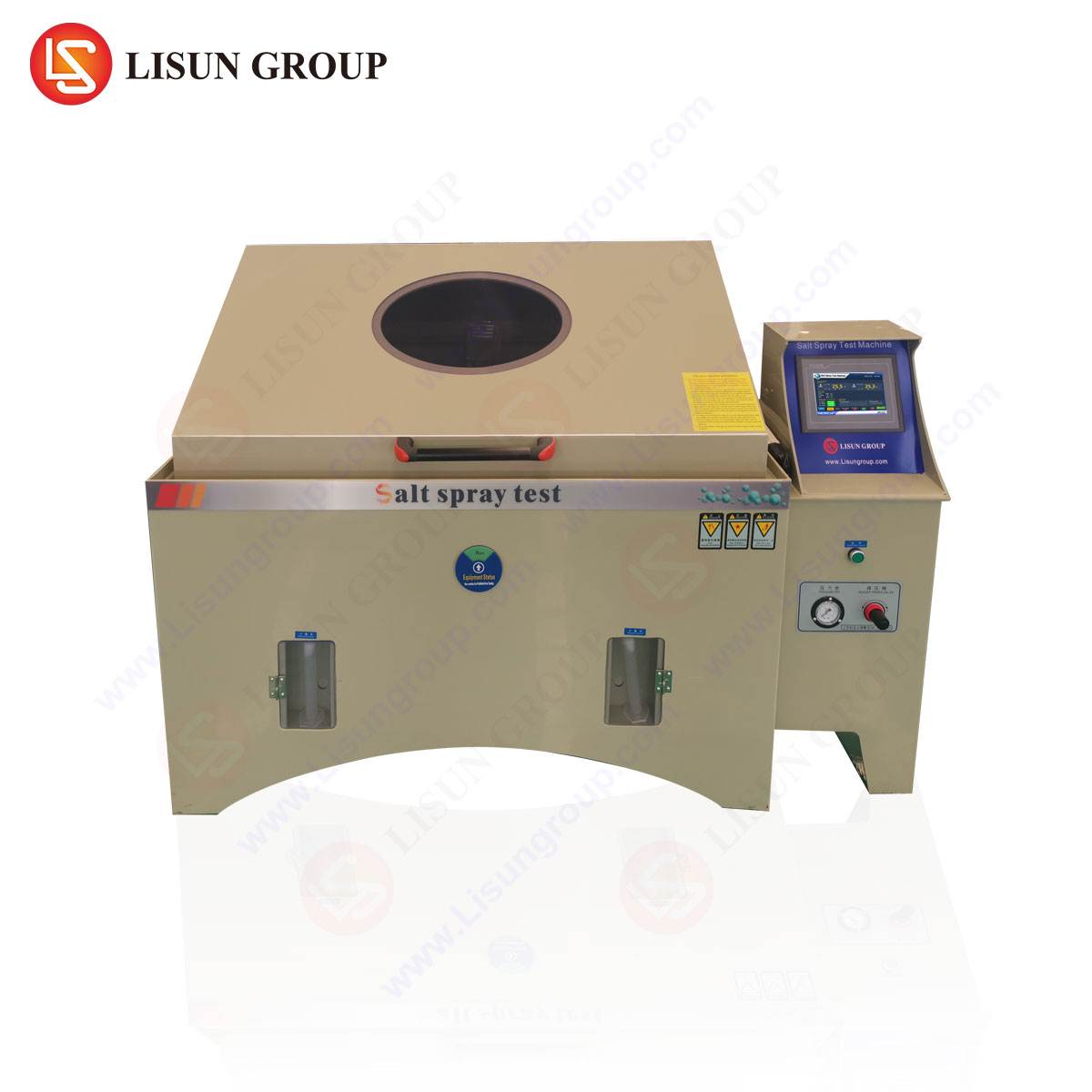
The evaluation of material and component resistance to corrosive environments is a cornerstone of reliability engineering across a multitude of industries. Among accelerated corrosion test methodologies, salt fog (spray) testing remains a preeminent and standardized technique for predicting long-term performance and identifying potential failure modes. The selection of an appropriate salt fog corrosion tester is not a trivial procurement decision; it is a strategic investment in quality assurance, product durability, and regulatory compliance. This article delineates a systematic framework for selecting a salt fog test chamber, grounded in technical specifications, applicable standards, and specific application requirements, with particular reference to the operational principles and capabilities of the LISUN YWX/Q-010 series.
Fundamental Principles of Salt Fog (Spray) Corrosion Testing
Salt fog testing operates on the principle of creating a controlled, highly aggressive corrosive environment to accelerate the degradation processes that would occur naturally over extended periods. A saline solution, typically a 5% sodium chloride (NaCl) solution per ASTM B117 or ISO 9227, is atomized into a fine fog within a sealed test chamber. This fog settles uniformly onto test specimens, forming a continuous, corrosive electrolyte film. The test induces electrochemical reactions, primarily oxidation, leading to the formation of corrosion products such as iron oxide (rust) on ferrous metals or other compounds on coated and non-ferrous substrates.
The primary objective is not to precisely replicate real-world conditions, which are variable and complex, but to provide a reproducible and severe benchmark for comparative evaluation. It assesses the relative protective qualities of metallic and organic coatings (e.g., electroplating, paint, anodization), identifies design flaws that trap electrolyte, and evaluates the efficacy of corrosion inhibitors. The reproducibility of results is intrinsically linked to the precision and stability of the chamber’s environmental controls.
Critical Technical Parameters for Chamber Selection
The core functionality of a salt fog tester is defined by a set of interdependent technical parameters. A rigorous selection process must prioritize these based on the intended testing scope.
Chamber Volume and Workspace Dimensions: The internal volume must accommodate the test specimens without overcrowding, ensuring free circulation of the salt fog. Specimens must be positioned such that condensate does not drip from one onto another. For testing large components, such as automotive electronic control units (ECUs) or sections of cable harness assemblies, a chamber with sufficient depth and height is imperative. The LISUN YWX/Q-010, for instance, offers a standard 270-liter workspace, providing ample room for standardized test panels as well as three-dimensional components from industries like aerospace (avionics boxes) or industrial control (enclosures).
Temperature Control and Uniformity: Temperature is a critical accelerating factor in corrosion kinetics. Standards strictly dictate the temperature maintenance in the exposure zone, commonly 35°C ±2°C for neutral salt fog (NSS) tests. Advanced chambers feature independent temperature control for the saturation tower (or bubbler) and the test chamber itself. The YWX/Q-010 series employs a high-precision PID (Proportional-Integral-Derivative) digital controller and high-efficiency heating elements to ensure spatial temperature uniformity better than ±1°C, a key metric for test validity.
Corrosion Fog Dispersion and Settling Rate: The atomization system, comprising a compressed air supply, saline reservoir, and nozzles, must generate a consistent fog of specified droplet size. The settling rate, measured in milliliters of solution per 80 square centimeters per hour (typically 1.0 to 2.0 ml/80cm²/h), must be collectable and verifiable. Inconsistent atomization leads to variable corrosion rates and non-comparable results. Chambers should include built-in collection funnels for routine settling rate calibration.
Construction Materials and Durability: The chamber interior is subjected to a continuous, highly corrosive atmosphere. Construction from inert, robust materials is non-negotiable. The LISUN YWX/Q-010 utilizes a molded, seamless polypropylene (PP) chamber liner, with all internal supports and fixtures fabricated from CPVC (Chlorinated Polyvinyl Chloride) or similar halogenated polymers. This prevents the chamber itself from becoming a contaminant or failing structurally due to corrosion.
Compliance with International Standards: The chamber must be designed to meet the stringent requirements of relevant industry and geographical standards. Primary references include:
- ASTM B117: Standard Practice for Operating Salt Spray (Fog) Apparatus.
- ISO 9227: Corrosion tests in artificial atmospheres – Salt spray tests.
- IEC 60068-2-11: Environmental testing – Part 2-11: Tests – Test Ka: Salt mist.
- JIS Z 2371: Methods of salt spray testing.
- GB/T 2423.17: Chinese national standard for salt fog testing.
A compliant chamber like the YWX/Q-010 is engineered to satisfy the environmental tolerances, settling rate requirements, and reporting protocols of these standards, which is essential for product certification in global markets.
Application-Specific Requirements Across Industries
The “right” tester is defined by the specific specimens and performance criteria of the end-user’s industry.
- Electrical & Electronic Equipment / Automotive Electronics: Testing focuses on printed circuit board assemblies (PCBAs), connectors, and sensors. Chambers must accommodate angled mounting to simulate installed orientations. Testing often follows IEC 60068-2-11. The non-corrosive construction of the YWX/Q-010 prevents metallic contamination that could cause short circuits on sensitive electronics.
- Lighting Fixtures & Outdoor Telecommunications Equipment: Evaluations assess the integrity of seals, gaskets, and protective coatings on aluminum housings and polycarbonate lenses against salt ingress. Test durations can be extended (e.g., 500 to 1000 hours), demanding exceptional chamber reliability and low maintenance.
- Aerospace & Aviation Components: Materials like aluminum alloys with chromate conversion coatings or anodized layers are tested. Testing may involve modified salt solutions or acidified salt fog (ASS) per ISO 9227. Chambers require precise pH control for the salt solution reservoir.
- Medical Devices & Implants: For external devices, corrosion resistance is a matter of safety and function. Testing must be meticulously documented. Chambers with data logging capabilities, a feature present in advanced models like the YWX/Q-010X with its RS-485 interface, enable traceable records of temperature and test duration for audit trails.
- Cable & Wiring Systems: Specimens are often mounted on non-conductive racks. The chamber must resist damage from sharp wire ends and provide sufficient vertical space for cable loops to be suspended.
Advanced Features and Automation Considerations
Modern salt fog testers incorporate features that enhance repeatability, reduce operator intervention, and provide richer data.
Programmable Controllers: Moving beyond simple timers, digital microprocessors allow for complex cyclic corrosion tests (CCT), which may alternate between salt fog, dry-off, and humidity phases. While the standard YWX/Q-010 excels at continuous NSS testing, its control system provides the stability required as a base for more complex routines.
Solution Level Management: Automated top-up systems for the salt solution and reservoir water prevent test interruption due to depletion, crucial for unattended long-duration tests common in the automotive and appliance industries.
Data Acquisition and Connectivity: The YWX/Q-010X model enhances the standard offering with integrated data logging and communication ports. This allows for real-time monitoring of chamber conditions and the compilation of test reports, which is invaluable for quality documentation in ISO/IATF-certified manufacturing environments for automotive electronics or industrial control systems.
Safety and Environmental Protections: Features include low solution level shutdown, over-temperature protection, and chamber over-pressure relief. For testing certain materials, a fog purge system is essential to safely evacuate corrosive atmosphere before opening the chamber.
The LISUN YWX/Q-010 Series: A Technical Reference Point
The LISUN YWX/Q-010 salt spray test chamber embodies the technical parameters discussed. It serves as a relevant benchmark for selection criteria in the mid-range, high-performance segment.
Testing Principle & Core Design: The chamber employs a pneumatic atomization system. Compressed air, filtered and humidified through a temperature-controlled saturation tower, draws the 5% NaCl solution from a reservoir and disperses it via precisely engineered nozzles into the PP test chamber. The independent PID control of the chamber and tower temperatures ensures strict adherence to the 35°C ±2°C exposure zone requirement as per ASTM B117.
Key Specifications (Representative):
| Parameter | Specification |
| :— | :— |
| Internal Volume | 270 Liters |
| Internal Material | Molded Polypropylene (PP) |
| Temperature Range | Ambient +10°C to 55°C |
| Temperature Fluctuation | ≤ ±0.5°C |
| Temperature Uniformity | ≤ ±1.0°C |
| Settling Rate | 1.0 ~ 2.0 ml/80cm²/h (adjustable) |
| Controller | Digital PID, LED Display |
| Standard Compliance | ASTM B117, ISO 9227, IEC 60068-2-11, etc. |
Industry Use Cases: Its design is applicable across the spectrum of industries requiring standardized corrosion assessment. For example:
- Household Appliances: Testing the coated steel panels of washing machine drums or dishwasher interiors.
- Office Equipment/Consumer Electronics: Evaluating the surface finish and corrosion resistance of magnesium-aluminum alloy laptop chassis or steel printer components.
- Electrical Components: Assessing the plating quality (e.g., nickel, tin) on switches, sockets, and terminal blocks.
Competitive Advantages: The YWX/Q-010 series distinguishes itself through several focused engineering choices. The seamless PP liner eliminates a primary failure point—welded seams in metallic liners that are prone to pitting and leakage. The use of industrial-grade CPVC for all fixtures (nozzles, supports, tubing) offers superior longevity compared to lower-cost acrylic alternatives. Furthermore, its precision temperature control system, with low fluctuation and high uniformity, directly contributes to the reproducibility of test results, a fundamental requirement for any accredited laboratory.
Total Cost of Ownership and Operational Factors
Selection must extend beyond the purchase price. Total cost of ownership encompasses installation, consumables, maintenance, and energy usage.
Installation Requirements: The chamber requires a supply of clean, oil-free compressed air (typically at 2-3 bar), a drain for waste neutralization, and a stable electrical connection. The YWX/Q-010’s standardized fittings simplify this setup.
Consumables and Maintenance: Regular tasks include preparing fresh salt solution (using ASTM-specified Type IV deionized water and NaCl), cleaning nozzles to prevent clogging, and periodically cleaning the chamber interior. The corrosion-resistant construction of the chamber significantly reduces long-term degradation and associated repair costs.
Energy Efficiency: A well-insulated chamber with efficient heaters and a tightly sealed design, as seen in the YWX/Q-010, minimizes heat loss, reducing electrical consumption during prolonged tests.
Conclusion
Selecting the appropriate salt fog corrosion tester is a multifaceted technical decision with direct implications for product reliability and compliance. The process must be guided by a clear understanding of the applicable standards, the physical and environmental requirements of the test specimens, and the necessary level of control and data integrity. A chamber such as the LISUN YWX/Q-010 series, with its robust polypropylene construction, precise PID temperature control, and adherence to international standards, represents a calibrated solution designed to deliver the repeatable and severe corrosive environment essential for meaningful accelerated corrosion testing across the electrical, electronic, automotive, and industrial manufacturing sectors. A methodical evaluation against the framework outlined herein will ensure the selected apparatus meets both immediate testing needs and long-term quality assurance objectives.
FAQ Section
Q1: What is the purpose of the saturation tower (bubbler) in a salt fog chamber?
The saturation tower humidifies and heats the compressed air used for atomization before it enters the test chamber. This prevents a cooling effect from the expansion of the compressed air, which would lower the temperature of the salt fog and cause excessive evaporation of the droplets, altering the solution concentration and settling rate. It is critical for maintaining the precise 35°C chamber temperature and consistent fog properties required by standards like ASTM B117.
Q2: Can the YWX/Q-010 chamber be used for tests other than the standard Neutral Salt Spray (NSS)?
The standard YWX/Q-010 is optimized for Neutral Salt Spray (NSS) testing per ASTM B117 and ISO 9227. However, with careful preparation and control, it can be used for Acidified Salt Spray (ASS, pH ~3.1-3.3) by adding acetic acid to the salt solution, or for Copper-Accelerated Acetic Acid Salt Spray (CASS, pH ~3.1-3.3) by adding copper chloride and acetic acid. It is the user’s responsibility to ensure the chamber materials are compatible with these acidic solutions and to meticulously control and document the solution pH. For frequent cyclic or specialized tests, consulting the manufacturer for configuration options is advised.
Q3: How often should the salt solution and chamber be maintained?
For continuous testing, a fresh salt solution should be prepared at least every 96 hours, or more frequently if the pH drifts outside the specified range (typically 6.5 to 7.2 for NSS). The atomizing nozzles should be inspected and cleaned if clogging is suspected, which can affect the settling rate. The chamber interior should be thoroughly rinsed with deionized water and dried after each test series to prevent salt accumulation that could fall onto future specimens and cause contamination.
Q4: What is the significance of the “settling rate,” and how is it verified?
The settling rate quantifies the volume of salt solution that settles onto a unit area per hour. It is a direct measure of the corrosion load applied to the specimens. An inconsistent rate invalidates comparative testing. Verification is performed by placing at least two clean collection funnels (with cylinders) in the exposure zone, running the chamber for a minimum of 16 hours, and calculating the average collection volume per funnel per hour. The chamber’s atomization pressure and solution level are adjusted if the rate falls outside the 1.0-2.0 ml/80cm²/h range.
Q5: For testing electronic assemblies, are there special mounting considerations?
Yes. Electronic assemblies should be mounted in a manner representative of their service orientation. They should not be placed flat unless that is their use position, as this can pool electrolyte. A typical angle is 15° to 30° from vertical. Components must be arranged so condensate from one does not drip onto another. Non-conductive, inert supports (e.g., glass, plastic) must be used to avoid galvanic coupling. The test is severe and often used as a “go/no-go” test for conformal coating integrity or to identify vulnerable circuitry.