

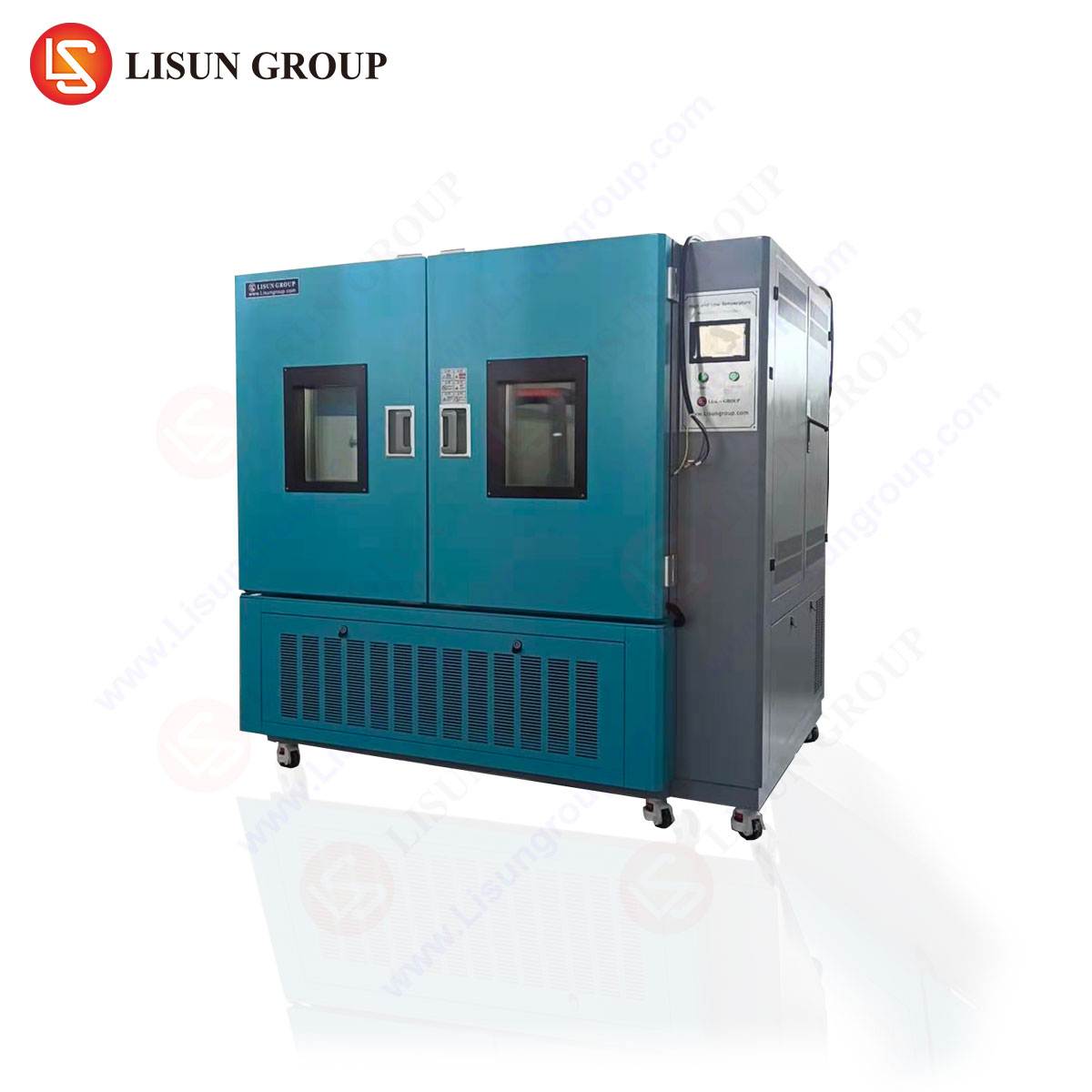



Evaluating Product Resilience: The Critical Role of Blowing Sand and Dust Test Chambers in Modern Industry
Introduction to Particulate Environmental Stress Testing
The operational lifespan and functional reliability of products across a vast spectrum of industries are perpetually challenged by harsh environmental conditions. Among these, the ingress and abrasive effects of airborne particulate matter—specifically sand and dust—represent a pervasive and insidious threat. These particulates can infiltrate sealing interfaces, abrade surfaces, interfere with mechanical movements, compromise electrical conductivity, and degrade optical clarity. To preemptively quantify and mitigate these failure modes, engineered simulation through blowing sand and dust test chambers has become an indispensable component of product validation and qualification protocols. These chambers provide a controlled, reproducible, and accelerated environment to subject components and assemblies to conditions that mimic deserts, construction sites, industrial facilities, and other particulate-laden operational theaters. The data derived from such testing informs design improvements, material selection, sealing strategies, and ultimately, compliance with international reliability standards.
Fundamental Principles of Sand and Dust Ingress Simulation
The technical objective of a blowing sand and dust test chamber is not merely to expose a test specimen to particulates, but to do so under precisely regulated parameters that correlate with real-world physics. The testing encompasses two primary, though interrelated, failure mechanisms: abrasion and ingress. Abrasion testing evaluates the wear resistance of surfaces, coatings, and moving parts when subjected to high-velocity particulate streams. Ingress testing, often governed by standards like IEC 60529 (IP Code), assesses the effectiveness of enclosures in preventing the penetration of fine dust particles that can cause electrical short circuits, contamination of sensitive mechanisms, or performance degradation.
Key controlled variables within a chamber include particulate concentration (grams per cubic meter), air velocity (meters per second), particulate composition and size distribution, temperature, humidity, and test duration. The chamber must generate a homogeneous, turbulent cloud of particulates with a known particle size distribution. For sand testing, typically larger, more abrasive particles (e.g., 150-850 µm) are propelled at higher velocities. For dust testing, finer talcum powder or Arizona Test Dust (e.g., 0-150 µm) is used to simulate the penetrating qualities of silt. The test specimen may be subjected to static exposure within the cloud or mounted on a rotating table to ensure uniform exposure on all faces. Differential pressure may also be applied across seals to simulate conditions like the vacuum created by a cooling fan, actively drawing particulates toward potential ingress points.
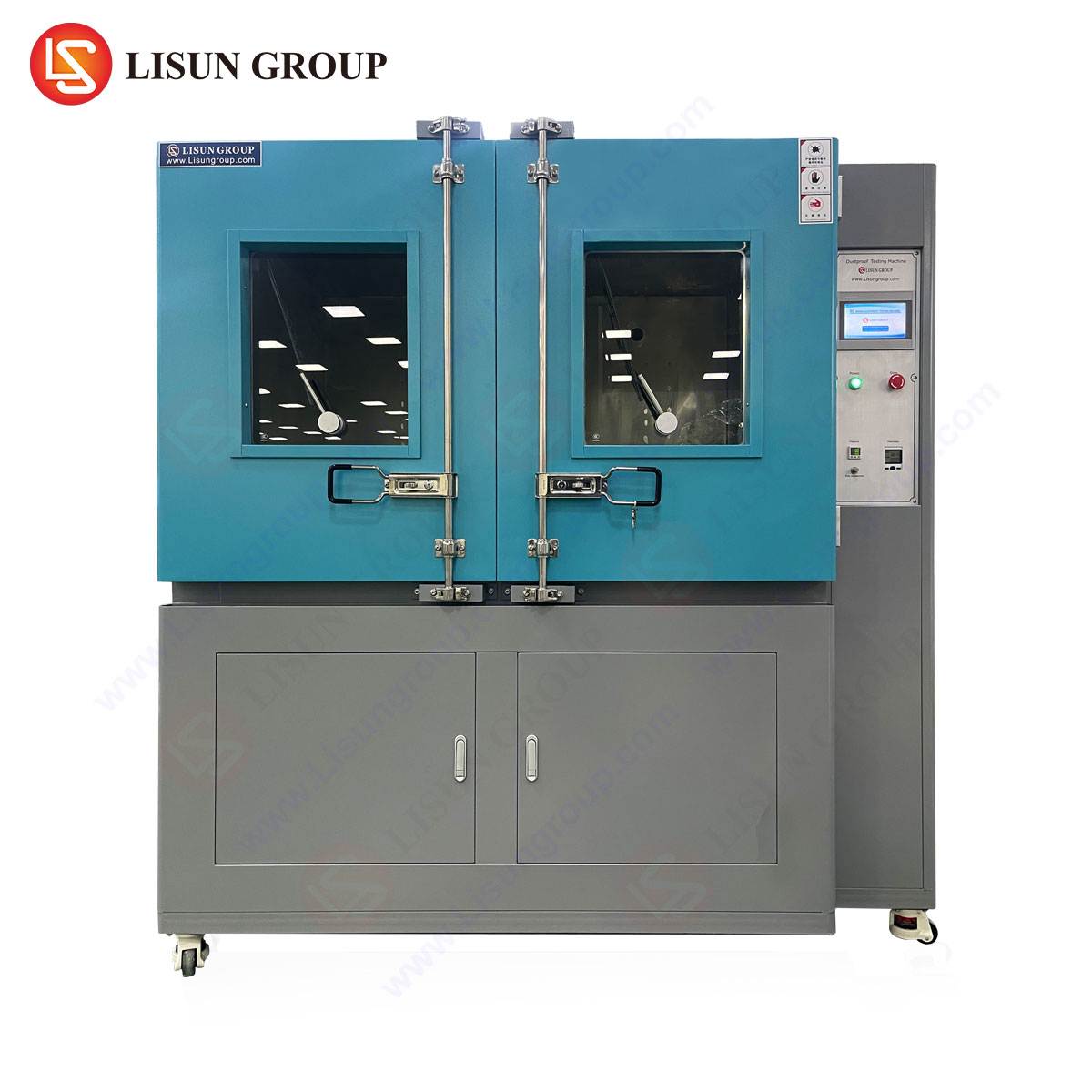
The LISUN SC-015 Dust Sand Test Chamber: A Technical Overview
The LISUN SC-015 Dust Sand Test Chamber represents a engineered solution designed to meet the rigorous demands of contemporary compliance testing. It is constructed to facilitate testing per a range of critical standards, including IEC 60529, ISO 20653, GB/T 4208, and other equivalent national specifications for dustproof testing (IP5X, IP6X). Its design philosophy centers on precise environmental control, user operational safety, and repeatable results.
The chamber employs a closed-loop airflow system. A centrifugal blower draws air from the test workspace, mixes it with a precisely metered quantity of test dust from a reservoir via a vibrating sieve mechanism, and propels the homogeneous mixture into the test chamber through a diffuser. This ensures a consistent and uniform dust concentration throughout the exposure period. For sand abrasion testing, a separate sand injection system is utilized. The interior is constructed with corrosion-resistant materials, and a large viewing window with sealed lighting allows for continuous observation without interrupting test conditions.
A critical component is the integrated vacuum system required for IP6X testing. This system maintains a constant under-pressure inside the test specimen (typically 2 kPa below ambient) via a regulated pump and flowmeter, actively attempting to draw dust into any vulnerable openings. The chamber’s control system allows for programmable test cycles, including pre-test specimen conditioning, exposure duration, and post-test stabilization.
Table 1: Representative Specifications of the LISUN SC-015 Chamber
| Parameter | Specification |
| :— | :— |
| Internal Workspace Dimensions | 1000 x 1000 x 1000 mm (Customizable) |
| Dust Concentration | Adjustable, typically 2-5 kg/m³ per relevant standards |
| Airflow Velocity | Adjustable range, e.g., 0-5 m/s for dust, higher for sand |
| Test Dust | Arizona Test Dust (Powdered Talcum) per standard specifications |
| Vacuum System | Flow rate adjustable, typically 60-80 times the specimen volume/hour |
| Sieve Vibration Period | Programmable on/off cycles (e.g., 15s on / 15s off) |
| Compliance Standards | IEC 60529, ISO 20653, GB/T 4208, MIL-STD-810G Method 510.5 |
Applications in Electrical and Electronic Equipment Validation
For electrical and electronic equipment (EEE), dust ingress poses a direct threat to functional safety and longevity. In industrial control systems, particulate accumulation on printed circuit boards (PCBs) can create leakage currents, leading to signal corruption or component failure. Programmable logic controllers (PLCs), motor drives, and sensor housings must be validated to IP5X or IP6X levels to ensure reliable operation in manufacturing plants or outdoor installations. The LISUN SC-015 chamber facilitates this by testing the integrity of cable glands, housing seams, connector seals, and ventilation filters. The abrasive effect of blowing sand is particularly relevant for enclosures and external components installed in mining, agricultural, or maritime environments, where surface erosion can compromise structural integrity and corrosion protection.
Ensuring Reliability in Automotive Electronics and Components
The automotive environment is exceptionally demanding, with electronics located in wheel wells, underbody, and engine compartments exposed to road dust, brake pad debris, and sand. Automotive electronics, from engine control units (ECUs) and ABS modules to LiDAR sensors and infotainment systems, must withstand these conditions over a 10-15 year lifespan. Testing per ISO 20653 (which defines IP codes for road vehicles) is mandatory. A chamber like the SC-015 is used to validate that sealed connectors, housing for cameras and radar sensors, and ventilation systems for battery packs effectively exclude particulates. Failure here can lead to sensor obscuration, connector pin corrosion, or thermal management issues due to clogged heat sinks.
Verification of Sealing Integrity in Lighting Fixtures and Consumer Electronics
Lighting fixtures, both indoor industrial and outdoor architectural or automotive, are highly susceptible to performance degradation from dust. Particulate accumulation on reflectors, lenses, and LED chips reduces luminous efficacy and can cause overheating. IP6X testing confirms that the seal between the lens and housing, as well as any adjustment mechanisms, prevents ingress. Similarly, consumer electronics such as smartphones, tablets, and outdoor speakers are increasingly rated for dust resistance as a key market differentiator. The fine talcum dust used in the SC-015 is ideal for probing the microscopic gaps around buttons, speaker meshes, and charging ports.
Critical Role in Aerospace, Aviation, and Medical Device Qualification
In aerospace and aviation, components must endure the extreme particulate environments of desert operations, unpaved runways, and high-altitude dust clouds. Avionics bay cooling systems, external sensors, and landing gear electronics are subjected to rigorous blowing sand and dust testing per MIL-STD-810G Method 510.5. The chamber must be capable of generating the high velocities and specific particle sizes mandated by such military standards. For medical devices, particularly those intended for field hospitals, ambulances, or home use in dusty regions, ingress protection is a matter of patient safety. Ventilators, portable diagnostic equipment, and surgical tool housings are tested to ensure no contamination can enter and compromise sterility or electrical safety, aligning with regulatory frameworks from bodies like the FDA, which reference IEC 60601-1 for general safety.
Testing Electrical Components, Cable Systems, and Telecommunications Gear
Discrete electrical components such as switches, sockets, and circuit breakers are foundational to any system’s reliability. Dust ingress can prevent proper mechanical actuation or cause arcing across contacts. The SC-015’s ability to test these components under a controlled dust cloud validates their suitability for installation in harsh environments. Cable and wiring systems, including connectors and junction boxes, are tested for seal integrity where the cable enters the housing. In telecommunications, outdoor equipment like 5G small cells, base station radios, and fiber optic network terminals are deployed in environments ranging from urban rooftops to rural poles. Their thermal management systems, which often rely on filtered air intakes, must be designed to prevent clogging while maintaining IP ratings, a balance rigorously evaluated in dust test chambers.
Methodology and Compliance with International Standards
A typical test sequence in a chamber like the LISUN SC-015 follows a regimented protocol. First, the specimen is prepared, often cleaned and conditioned to a specified temperature. It is then placed in the chamber, which is loaded with a predetermined mass of test dust (e.g., 2 kg of talcum powder per cubic meter of chamber volume for IP5X). The chamber is sealed, and the circulation system is activated. The sieve mechanism cycles to keep the dust agitated and airborne. For IP6X, the vacuum system is connected to the specimen’s internal volume, creating a sustained partial vacuum. After the prescribed duration (commonly 8 hours for dust), the test is concluded.
The post-test examination is critical. The specimen is carefully extracted, and external dust is removed without introducing particulates into the interior. It is then inspected internally for any trace of dust ingress. For electrical equipment, a functional test is also performed to ensure no degradation has occurred. The findings are documented against the acceptance criteria defined in the relevant standard (e.g., no dust ingress inside that could interfere with normal operation or impair safety for IP6X).
Competitive Advantages of Engineered Test Solutions
The value of a sophisticated test chamber lies in its ability to deliver repeatable, standards-compliant data that engineers can trust. The LISUN SC-015 incorporates several features that contribute to this. The closed-loop airflow with precise dust metering ensures consistent concentration, eliminating test result variability due to particulate settling. The integrated and calibrated vacuum system removes the need for external, potentially inconsistent apparatus for IP6X testing. Robust construction with high-quality seals ensures the chamber itself does not leak, preventing false negatives. Programmable logic controller (PLC)-based automation reduces operator error and allows for complex, multi-phase test profiles. Furthermore, the design prioritizes operator safety by containing the fine, potentially hazardous dust within the system during both testing and the subsequent cleaning cycle via dedicated filtration.
Conclusion: Integrating Particulate Testing into the Product Development Lifecycle
Blowing sand and dust testing is not a mere compliance checkbox but a fundamental engineering tool. By integrating chambers like the LISUN SC-015 into the product development lifecycle—from prototype validation to production batch sampling—manufacturers can de-risk product launches, reduce warranty claims, and enhance brand reputation for durability. The data generated drives tangible improvements: selecting more robust elastomers for seals, redesigning labyrinth paths for cooling air, specifying protective coatings, or validating the service intervals for replaceable filters. In an increasingly global market where products are deployed in diverse and challenging climates, the ability to scientifically verify resilience against particulate environments is a cornerstone of product integrity and commercial success.
Frequently Asked Questions (FAQ)
Q1: What is the key difference between IP5X and IP6X dust testing, and how does the SC-015 chamber accommodate both?
IP5X (Dust Protected) testing exposes the enclosure to a dust cloud without creating a pressure differential. A small amount of ingress is permitted if it does not interfere with operation. IP6X (Dust Tight) is more severe, requiring that no dust ingress occurs. The SC-015 accommodates both: for IP5X, it generates the standard dust cloud. For IP6X, it additionally utilizes its integrated vacuum system to create a sustained partial pressure inside the test specimen (typically 2 kPa below ambient), actively attempting to suck dust in through any openings, thus providing a more rigorous test of sealing integrity.
Q2: Can the SC-015 chamber test for both abrasive sand effects and fine dust ingress, and does it require different setups?
Yes, the chamber is designed for both test types, but they involve different principles and setups. For fine dust ingress (per IEC 60529), the chamber uses powdered talcum or Arizona Test Dust circulated at moderate velocities. For blowing sand abrasion testing (often per MIL-STD-810 or automotive standards), a separate sand injection system is used to introduce larger, more abrasive silica sand particles at higher velocities. The test setup, including the nozzle configuration, particle type, and concentration, is changed according to the specific standard being followed.
Q3: How is the uniformity of the dust concentration inside the chamber workspace verified and maintained?
Uniformity is achieved through the chamber’s aerodynamic design. A centrifugal fan and a carefully engineered diffuser ensure turbulent, homogeneous mixing of the air and dust throughout the entire workspace. The vibrating sieve mechanism continuously feeds dust into the airstream to maintain concentration. Compliance with standards like IEC 60529 requires that this uniformity is validated during chamber commissioning. Maintenance of concentration is managed by the control system, which regulates the sieve cycle and fan speed based on calibrated parameters.
Q4: What are the critical maintenance procedures for a dust test chamber like the SC-015 to ensure long-term accuracy?
Regular maintenance is essential. Key tasks include: thoroughly cleaning the interior and airflow ducts after each test to prevent cross-contamination; inspecting and replacing the HEPA or other final filters in the exhaust/vacuum system; calibrating the vacuum system flowmeter and pressure gauges annually; checking the integrity of door seals and gaskets; and verifying the function of the sieve mechanism and ensuring its mesh is not clogged or damaged. A log of all maintenance and calibration should be kept for quality audit purposes.
Q5: For a product with external cooling vents, how is the conflict between preventing dust ingress and allowing airflow resolved in testing?
This is a common engineering challenge. The test evaluates the chosen solution. If the product uses a filter, the test validates that the filter housing seal is effective (IP6X) and that, over time, dust does not bypass it. The test may also inform the filter’s service life by assessing clogging rates. Some designs use labyrinth seals or passive convection cooling without vents. The dust test provides empirical data on whether the thermal performance remains within spec after exposure to dust, guiding the balance between cooling efficiency and ingress protection.